Tag

Cardiometabolic Health

All articles tagged with #cardiometabolic health

science2 days ago

Gut Microbes Transform Veggie Nitrates and Iron into Molecules Potentially Boosting Heart Health

Karolinska Institutet researchers found gut bacteria convert dietary nitrate and nonheme iron from vegetables into dinitrosyl iron complexes (DNICs), which circulate to tissues and may support cardiovascular and metabolic health. DNICs were absent in germ-free mice, confirming a microbiome role. In animal models, boosting DNIC levels improved blood pressure, vascular function, glucose control, and reduced liver fat, suggesting a mechanism by which vegetables may reduce disease risk, though human relevance and measurement methods require further study.

science8 days ago

Short Sprints, Big Molecular Shifts: 3 Minutes Reshape Blood Chemistry

Rockefeller University researchers found that six 30-second all-out sprints trigger rapid, widespread changes in blood proteins and metabolites—far more than 90 minutes of moderate cycling—with many affected proteins linked to lower risk of obesity, diabetes, and cardiovascular disease, illustrating how brief, high-intensity bursts can drive powerful interorgan signaling that persists with training.

Three Minutes of Sprinting Overhauls Blood Signals More Than 90 Minutes of Steady Cardio
science12 days ago

Three Minutes of Sprinting Overhauls Blood Signals More Than 90 Minutes of Steady Cardio

A Cell Reports Medicine study found that three minutes of all-out cycling sprint intervals altered about 714 blood proteins—far more than the 7 proteins shifted after 90 minutes of moderate cycling. Some sprint-induced proteins linked to lower heart disease, obesity, and type 2 diabetes risk in a database of over 53,000 people, though causation isn’t proven. The findings suggest muscle and fat tissues communicate after intense exercise, with fat cells notably responding to sprint-derived signals. The study’s small, mostly male sample limits generalization to women, and while the protein changes align with healthier profiles in real-world data, it remains unclear whether they cause better health outcomes. The work highlights that short, intense efforts can elicit a stronger internal biochemical response than longer moderate workouts, but long-term health benefits require further research.

Move More, Improve Heart Health: Exercise Benefits Obesity Beyond Weight Loss
health2 months ago

Move More, Improve Heart Health: Exercise Benefits Obesity Beyond Weight Loss

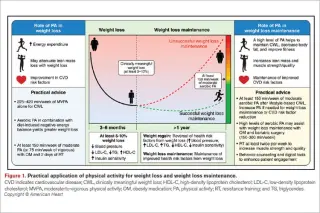
A new scientific statement emphasizes that physical activity improves major cardiovascular risk factors—blood pressure, insulin resistance, and cholesterol—independently of weight loss, underscoring its value in obesity treatment. While exercise alone has a modest impact on body weight, combining activity with interventions such as bariatric surgery and GLP-1 therapies can enhance outcomes. Clinicians are encouraged to use evidence-based approaches like the 5A model (assess, advise, agree, assist, arrange) and to emphasize that 'some is better than none' to engage physically inactive patients.

Eating Earlier at Night May Boost Heart Health, Study Finds
health6 months ago

Eating Earlier at Night May Boost Heart Health, Study Finds

A Northwestern University study on overweight and obese adults found that delaying the last meal to at least three hours before bedtime improved nighttime heart rate and blood pressure, as well as morning glucose regulation, without calorie restriction, suggesting an earlier dinner window may benefit overall cardiometabolic health—though the small, mostly female sample and lack of meal-content data limit generalizability.

Circadian-aligned overnight fasting lowers blood pressure, study finds
cardiovascular-cardiology6 months ago

Circadian-aligned overnight fasting lowers blood pressure, study finds

A randomized study of 39 overweight or obese adults found that finishing meals at least three hours before bedtime and extending overnight fasting to about 12–14 hours—tied to the body’s circadian rhythm—reduced nighttime blood pressure by about 3.5%, lowered heart rate by 5%, and improved daytime blood sugar, suggesting meal timing may meaningfully affect cardiometabolic health; larger, more diverse trials are needed.

Sleep-Aligned Eating Window Boosts Heart Health
health-and-medicine6 months ago

Sleep-Aligned Eating Window Boosts Heart Health

A 7.5-week Northwestern Medicine study found that adults at risk for cardiometabolic disease who stopped eating three hours before bed and extended their overnight fast by about two hours saw lower nighttime blood pressure and heart rate, and better daytime glucose control, without cutting calories; aligning eating windows with sleep rhythms may boost cardiovascular health, with strong adherence and plans for larger trials.

Wild Blueberries May Boost Vascular Health—and More—Within Hours
health7 months ago

Wild Blueberries May Boost Vascular Health—and More—Within Hours

A review of 12 clinical trials over 24 years finds wild blueberries rapidly improve vascular function, with potential downstream benefits for blood pressure, cholesterol, blood sugar, and gut microbiome, plus measurable cognitive gains in older adults. Effects are linked to polyphenols like anthocyanins influencing nitric oxide signaling and inflammation, but larger studies are needed to define optimal doses and long-term outcomes.

Tiny Wild Blueberries Linked to Big Cardiometabolic Benefits
health7 months ago

Tiny Wild Blueberries Linked to Big Cardiometabolic Benefits

A comprehensive review of 12 human trials and related studies finds that wild blueberries may support cardiometabolic health, with the strongest evidence for improved vascular function; additional but promising signals exist for blood pressure, lipids, and glucose control, plus gut microbiome changes that may mediate benefits. Some cognitive improvements in older adults have been observed, and effects vary by baseline health and metabolism. A daily intake around one cup is practical, and while the findings are encouraging, larger, well-controlled trials are needed to identify who benefits most and optimal doses.

Research Suggests Alternate-Day Fasting May Outperform Daily Dieting
health1 year ago

Research Suggests Alternate-Day Fasting May Outperform Daily Dieting

A comprehensive review of 99 clinical trials suggests that intermittent fasting, especially alternate day fasting, may be as effective as traditional calorie restriction for modest weight loss and improving certain health markers, though longer studies are needed to confirm these benefits. The findings position intermittent fasting as a viable, sustainable dietary option within personalized nutritional care, emphasizing the importance of long-term adherence and support.

Cognitive Health Risks Tied to Neighborhood Disadvantage
health1 year ago

Cognitive Health Risks Tied to Neighborhood Disadvantage

A study by Wake Forest University reveals that living in disadvantaged neighborhoods is linked to higher blood pressure and lower cognitive performance, even in those without mild cognitive impairment. The research highlights how poor social and economic resources exacerbate cardiometabolic health issues and cognitive decline, emphasizing the need to address social determinants of health to mitigate dementia risks.