Tag

Carl Sagan

All articles tagged with #carl sagan

Voyager's interstellar greeting shifts from nudity to silhouette
space2 days ago

Voyager's interstellar greeting shifts from nudity to silhouette

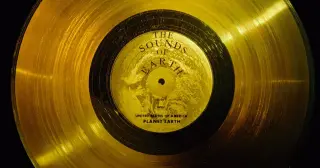
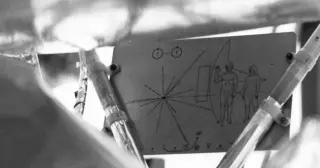
NASA's Voyager Golden Record team, led by Carl Sagan, briefly considered including a nude photograph of a man and a pregnant woman, but public backlash over the nude Pioneer plaque led to a silhouette image instead—a pure black outline showing a pregnant silhouette with the fetus visible inside, while a separate vertebrate-evolution diagram was approved. The record, carrying greetings, sounds, and images, was designed to endure for millions of years as humanity's interstellar message, but the nude depiction was ultimately rejected.

Sagan’s Push Turned Voyager 1's Earth Photo into a Cosmic Icon
science2 days ago

Sagan’s Push Turned Voyager 1's Earth Photo into a Cosmic Icon

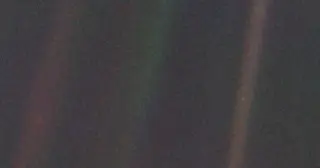
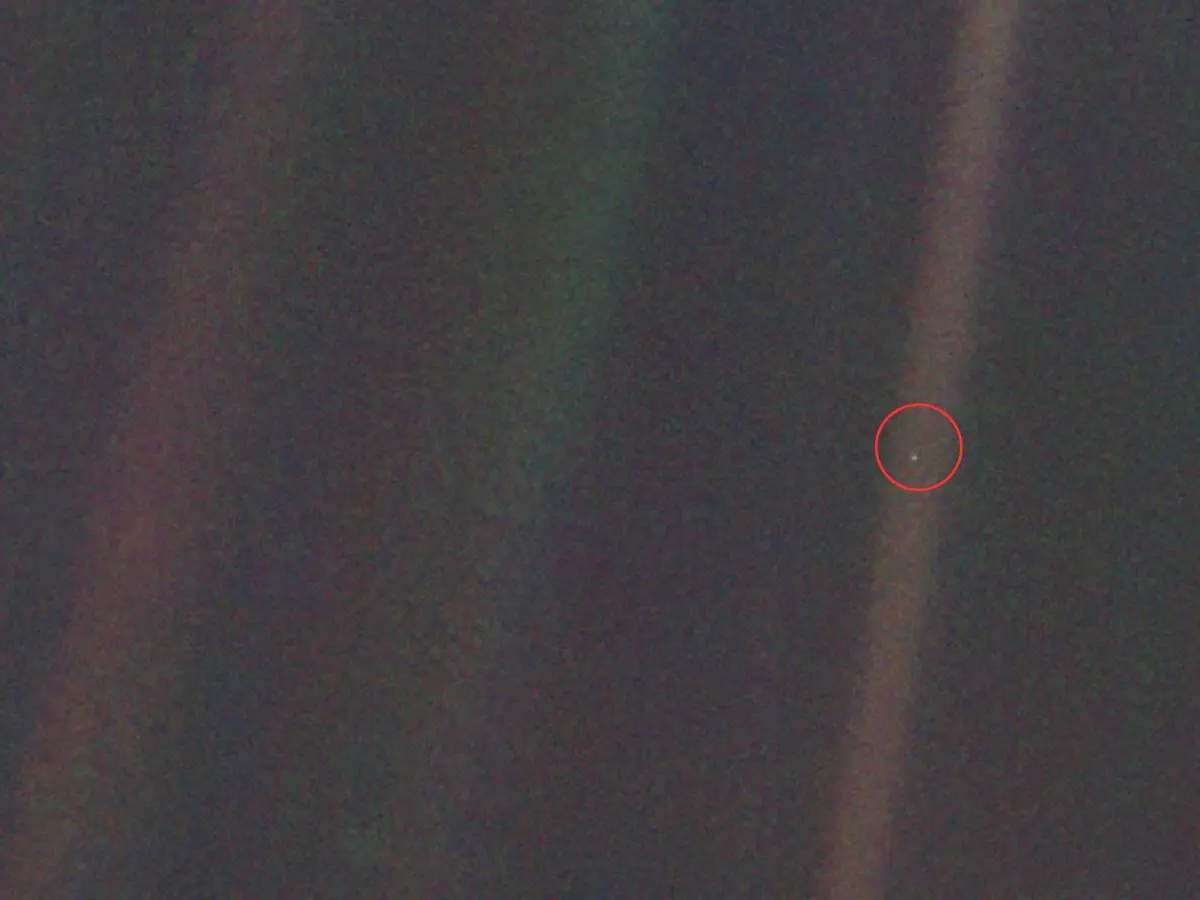
Voyager 1’s Earth image—the Pale Blue Dot—almost didn’t get taken because engineers feared solar glare would damage the cameras and mission resources were being cut; Carl Sagan repeatedly pitched turning the camera back toward Earth, and after eight years and six requests NASA approved the shot in 1990, producing a tiny pixel-sized dot that became a defining perspective on humanity.

Earth’s Sub-Pixel Spotlight: Sagan’s Push Turns Voyager 1 Photo into a Timeless Icon
space3 days ago

Earth’s Sub-Pixel Spotlight: Sagan’s Push Turns Voyager 1 Photo into a Timeless Icon

In 1990, after Carl Sagan urged it, Voyager 1 photographed Earth from about 6 billion kilometers away, capturing a sub-pixel Pale Blue Dot; though scientifically minimal, the image gained iconic status through Sagan’s writing and a 2020 processing update, and with Voyager’s cameras long since turned off, it stands as the mission’s last full-family portrait of the solar system.

A 1976 NASA satellite carries a Sagan-designed plaque that timestamps Earth through deep time
space4 days ago

A 1976 NASA satellite carries a Sagan-designed plaque that timestamps Earth through deep time

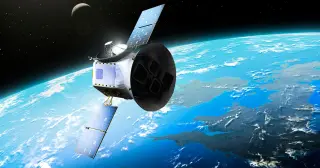
NASA’s LAGEOS-1, launched in 1976, is a bare-bones, durable satellite designed to reflect laser pulses for geodynamics research. It carries two Carl Sagan–designed stainless-steel plaques with three maps showing Earth’s continents 268 million years ago (Pangaea), at launch in 1976, and about 8.4 million years in the future—the latter date aligned with the satellite’s expected re-entry. The plaque is not targeted at aliens but serves as a timekeeping message, dating itself via continental drift while the satellite—an electronics-free sphere studded with reflectors—awaits eventual opening when it returns to Earth.

Astronomer Who Bridged the Gap to the Stars
science1 year ago

Astronomer Who Bridged the Gap to the Stars

Carl Sagan, a renowned astronomer and science communicator, profoundly influenced public understanding of the cosmos through his insatiable curiosity and passion for making science accessible. From his early fascination with stars to his groundbreaking work on planetary science and astrobiology, Sagan's contributions extended beyond academia to popular media, notably through his Emmy-winning series "Cosmos." Despite facing criticism for his public engagement and controversial stances, such as the nuclear winter theory, Sagan's legacy endures in his efforts to communicate the wonders of the universe and the importance of scientific inquiry.

Daily Horoscope Highlights for November 9, 2024
lifestyle1 year ago

Daily Horoscope Highlights for November 9, 2024

Today's horoscopes offer guidance for each zodiac sign, with themes of self-discovery, decision-making, and interpersonal dynamics. Scorpio is advised to play their cards wisely, while Sagittarius should trust their instincts amidst strong influences. Capricorn experiences evolving emotions, and Aquarius is encouraged to express their true voice selectively. The horoscopes are presented in the context of Carl Sagan Day, celebrating the renowned scientist's contributions to science communication and exploration.

Beyond 'Cosmos': The Enduring Impact of Carl Sagan's Legacy
science1 year ago

Beyond 'Cosmos': The Enduring Impact of Carl Sagan's Legacy

Carl Sagan, renowned for his work on the 'Cosmos' series, left a lasting scientific legacy that extends beyond his popular media presence. He made significant contributions to planetary science, astrobiology, and the study of climate change, while also advocating for nuclear disarmament and the search for extraterrestrial intelligence. Despite being overlooked by the National Academy of Sciences, Sagan's work continues to inspire scientists and promote critical thinking. His 90th birthday in 2024 serves as a reminder of his enduring impact on science and society.

"Carl Sagan's Final Message to Future Martians"
space-and-astronomy2 years ago

"Carl Sagan's Final Message to Future Martians"

Shortly before his death, Carl Sagan, a prominent astronomer and science communicator, recorded a message for future astronauts who would set foot on Mars, expressing his support for the exploration of the Red Planet and the potential reasons for human presence there. The recording, sent to Mars by The Planetary Society, arrived on the planet in 2008 and remains on the surface on an archival silica-glass mini-DVD, serving as a lasting tribute to Sagan's advocacy for space exploration.

"Intersecting Realms: The Symbiotic Relationship Between Art and Science"
science-and-technology2 years ago

"Intersecting Realms: The Symbiotic Relationship Between Art and Science"

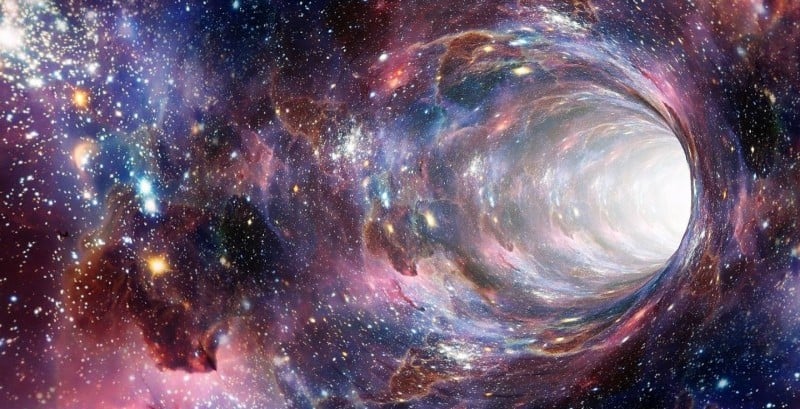
Physicist Kip Thorne and astronomer Carl Sagan collaborated to explore the concept of traversable wormholes for Sagan's novel Contact. Thorne's research led to the discovery of a theoretical solution involving enormous amounts of matter and exotic matter with negative mass. While constructing such wormholes remains beyond current capabilities, their work has inspired further exploration in physics and science fiction, including the portrayal of traversable wormholes in the movie Interstellar.

"The Science of Laughter: 90 Hilarious Memes That Explore Both Light and Dark Sides"
science-and-humor2 years ago

"The Science of Laughter: 90 Hilarious Memes That Explore Both Light and Dark Sides"

A collection of 50 hilarious and relatable science memes has been compiled from "The Lighter Side of Science" Facebook group. Science, with its vast and multilayered nature, can be challenging to learn, but science communicators play a crucial role in making it accessible and enjoyable for everyone. Carl Sagan, a renowned astronomer, became a popular figure through his show "Cosmos" in 1980, where he explored various space-related topics and sparked excitement about the universe. His catchphrase "billions and billions" became part of the cultural vocabulary, and his name is now used as a unit of measurement for a large number. Although this list of memes can't compare to Sagan's masterpiece, it still provides a humorous take on science.

Lessons from Carl Sagan's Bold Experiment: Searching for Life on Earth
science2 years ago

Lessons from Carl Sagan's Bold Experiment: Searching for Life on Earth

In 1993, Carl Sagan and his team conducted an audacious experiment to search for evidence of life on Earth that could be detected from space. By using NASA's Galileo spacecraft, they found evidence of oxygen, water vapor, ice, and other greenhouse gases, as well as amplitude-modulated waves not known to occur naturally. This experiment, which tested the accuracy and relevance of methods used to detect extraterrestrial life, has since stood the test of time and provided valuable lessons for researchers and science publishers. It emphasizes the importance of testing what we think we know, conducting control experiments, and carefully reporting findings in the search for life beyond Earth.

Unraveling the Cosmic Connection: Exploring the 'Star Stuff' within Us
science-and-astronomy2 years ago

Unraveling the Cosmic Connection: Exploring the 'Star Stuff' within Us

In a new video from the European Southern Observatory, astrophysicist Suzanna Randall explains how the elements that make up our bodies were formed in the universe. Shortly after the Big Bang, the universe was mainly composed of hydrogen and helium. The first generation of stars fused hydrogen in their cores to create helium, and when these stars died, they released heavier elements like carbon and oxygen. Supernova explosions flung these elements into the cosmos, where they eventually integrated into nebulas and formed the next generation of stars, including our sun. The planets, including Earth, formed from a disk of material around the sun, and it is from this disk that the elements that make up our bodies are derived. In essence, we are made of "star stuff."