Tag

Chemosynthesis

All articles tagged with #chemosynthesis

Whale Falls Spark Hidden Deep-Sea Ecosystems
science28 days ago

Whale Falls Spark Hidden Deep-Sea Ecosystems

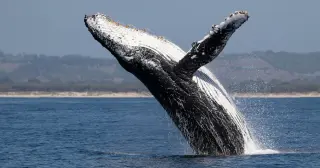
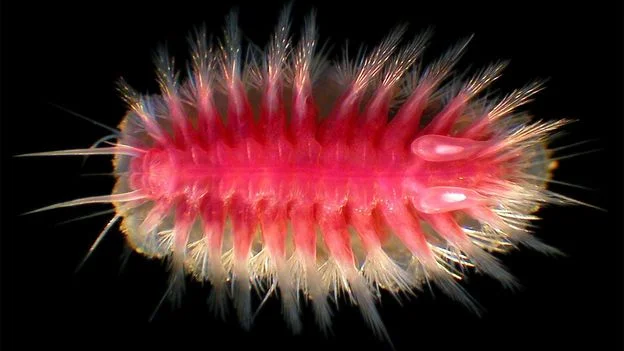
When a whale carcass sinks to the deep ocean, it becomes a long-lasting, multi-stage feast: initial scavengers strip flesh, bone‑eating worms (Osedax) and bone‑eating snot‑flowers bore into bone, and later sulphur‑loving chemoautotrophs sustain a thriving community for decades, turning a single whale into a whole new ecosystem and aiding the dispersal of specialized deep‑sea life.

Antarctica’s Cold Vent Breaks Hydrothermal Norms
science1 month ago

Antarctica’s Cold Vent Breaks Hydrothermal Norms

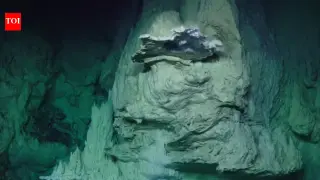
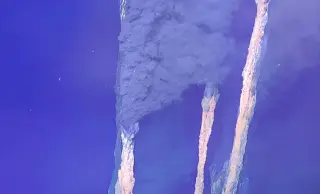
British researchers have discovered Hook Ridge, a cold, irregular hydrothermal vent off Antarctica that emits a low-temperature plume rather than the hot fluids typical of vents, and shows no current life due to its irregular activity; a relict mineral chimney reveals past hydrothermal activity and warmth. The finding suggests unusual vents can still influence deep-sea biology and may act as stepping stones for genetic material across the oceans.

Morocco wrinkle fossils hint at chemosynthetic life deep beneath ancient seas
planet-earth2 months ago

Morocco wrinkle fossils hint at chemosynthetic life deep beneath ancient seas

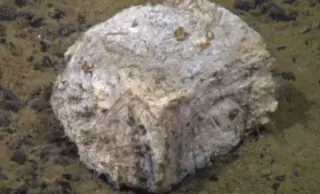
Scientists found wrinkle-like fossil imprints in 180-million-year-old turbidites in Morocco's Central High Atlas, likely formed by ancient chemosynthetic microbial communities rather than photosynthetic life, suggesting deep-water habitats preserved in rocks may hold clues to early life and expanding where researchers search for oldest microbial life.

Ancient Microbes Leave Deep-Sea Wrinkles, Redefining Life’s Origins
earth-science2 months ago

Ancient Microbes Leave Deep-Sea Wrinkles, Redefining Life’s Origins

Geologists report wrinkle-like textures in 180-million-year-old deep-sea turbidites in Morocco that are biotic, formed by chemosynthetic microbial mats in sunless, low-oxygen waters. Carbon-rich layers beneath the wrinkles and modern deep-sea analogs support a biotic origin, suggesting such textures can record ancient life in deep-water settings and may widen where researchers search for early Earth life.

Exploring the Depths: Discoveries of the World's Deepest Fish
science3 years ago

Exploring the Depths: Discoveries of the World's Deepest Fish

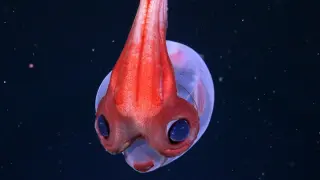
Scientists have recorded the deepest fish ever on camera, a snailfish swimming at a depth of 8,336m in the Izu-Ogasawara trench, south-east of Japan. The hadal zone, which extends from 6 to 11km, is a forbidding place, characterised by complete darkness, crushing pressure and near-freezing temperatures. Marine animals living in the hadal zone have adapted on a cellular level to enable them to withstand the oppressive conditions, including high concentrations of organic molecules called piezolytes, which stop their cellular membranes and proteins from being crushed under extremely high pressure.