Tag

Color Science

All articles tagged with #color science

Study tests if one 3D filament recipe yields consistent color across flat, sloped, and vertical surfaces
technology4 days ago

Study tests if one 3D filament recipe yields consistent color across flat, sloped, and vertical surfaces

A new material study protocol investigates whether a single digital color swatch accurately represents a 3D printed object across different surface orientations. The research focuses on a specific pink filament blend (55% magenta, 45% white) to determine if the color appears consistent on flat tops, 30-degree ramps, and 90-degree vertical walls. The study emphasizes that surface geometry and lighting conditions significantly affect perceived color, suggesting that material swatches may need specific viewing condition notes rather than relying on a single generic prediction.


Chromagraph Camera: Rian Johnson and Steve Yedlin Launch $13 iPhone App for Film-Grade Color
technology23 days ago

Chromagraph Camera: Rian Johnson and Steve Yedlin Launch $13 iPhone App for Film-Grade Color

Rian Johnson and cinematographer Steve Yedlin have launched Chromagraph Camera, a $12.99 iPhone app that bypasses standard computational photography to process raw images using the same color science employed in Johnson’s films, including 'Knives Out' and 'Star Wars: The Last Jedi.' The app, developed with color science coder Eric Cameron, quickly became the top paid download in the iOS Photo & Video category after Johnson promoted it on social media in late October. Unlike filters, Chromagraph processes raw data from the start, offering a curated, artful look that prioritizes aesthetic beauty over photometric accuracy. While the app includes tools for adjusting color, exposure, grain, and halation, it currently supports only still photos and is exclusive to iOS, with no Android version or video capabilities planned.

Chromologium Launches MCP Server to Bridge Historical Materials and Modern UI Design
technology1 month ago

Chromologium Launches MCP Server to Bridge Historical Materials and Modern UI Design

The Chromologium has released a live Model Context Protocol (MCP) server that connects historical material archives with modern interface design. The system allows AI agents to query 177 mapped places, 32 material dossiers, and 20 archival pigments to generate accessible, physics-based design tokens. It supports exports for platforms including SwiftUI, Jetpack Compose, and Tailwind, ensuring that historical evidence is preserved alongside contemporary UI interpretations.

Van Gogh’s Fading Violets: How Digital Archives Must Separate Fact from Fiction
technology-and-culture1 month ago

Van Gogh’s Fading Violets: How Digital Archives Must Separate Fact from Fiction

A new conservation-focused digital archive argues that online color libraries often misrepresent historical artworks by treating degraded pigments as authentic. Citing research on Van Gogh’s 'Irises,' the platform proposes a strict three-tier system to distinguish documented facts, scientific models, and creative interpretations, ensuring that digital data retains its original context and provenance.

Cosmic Latte: The Beige Hue of the Universe
science1 month ago

Cosmic Latte: The Beige Hue of the Universe

Astronomers have determined that the average color of the universe is a shade of beige known as 'cosmic latte' (hex code #FFF8E7). This finding, derived from analyzing 200,000 galaxies in the 2dF Galaxy Redshift Survey, indicates that the cosmos has become less blue over the past 10 billion years as redder stars have become more prevalent. The color was named through a public contest, with 'cosmic latte' winning against entries like 'skyvory' and 'univeige.'

Calibrite ColorChecker Marks 50 Years of Standardizing Color Accuracy in Photography
technology2 months ago

Calibrite ColorChecker Marks 50 Years of Standardizing Color Accuracy in Photography

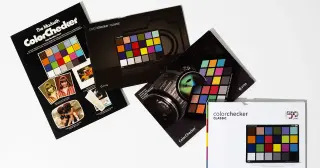
The ColorChecker, a 24-patch color reference tool, has celebrated its 50th anniversary in 2026. Originally developed in 1976 by scientists at Macbeth, the device remains a critical tool for photographers to ensure accurate color reproduction under varying lighting conditions. Despite the evolution of digital photography and RAW processing, the need for a physical baseline for color management persists. The tool has expanded into multiple sizes, from the Nano for macro work to the Mega for large-scale applications, and has even been used in space missions to correct color casts in orbit. Its enduring relevance is attributed to its consistent scientific foundation and ease of use, which helps photographers eliminate technical anxiety and focus on creative output.

OKLCH Coordinates Aid Design but Do Not Guarantee Accessibility
technology-and-design3 months ago

OKLCH Coordinates Aid Design but Do Not Guarantee Accessibility

A new monograph argues that while the OKLCH color space improves palette design through perceptual coordinates, it does not automatically ensure accessibility. The author contends that designers must explicitly evaluate foreground and background pairs for contrast, as mathematical coordinates alone cannot account for display gamut limitations or WCAG compliance.

Chasing the Perfect Red: The Hidden Challenge of Durable Pigments
technology9 months ago

Chasing the Perfect Red: The Hidden Challenge of Durable Pigments

Color arises from how light interacts with a pigment's electrons; achieving a bright, durable red is exceptionally hard because the necessary electronic transitions depend on molecular structure, not just the element. Mas Subramanian’s YInMn Blue shows how targeted structure can yield lasting color, while researchers have only achieved reddish-magenta so far and a true perfect red remains elusive despite NSF funding and ongoing work.

"How Wearing Red or Green Can Enhance Your 2024 Solar Eclipse Experience"
astronomy2 years ago

"How Wearing Red or Green Can Enhance Your 2024 Solar Eclipse Experience"

Experts suggest that wearing red or green during the upcoming total solar eclipse on April 8 can enhance the experience due to the way our eyes perceive colors in low light. As the eclipse darkens the surroundings, warm colors like red and orange may appear less vibrant, while green will pop and look brighter. This phenomenon, known as the Purkinje effect, can turn the eclipse experience into a real-life science demonstration on clothing. Therefore, wearing red or green instead of neutrals like black, white, gray, or brown can not only enhance the eclipse experience but also make eclipse photos more vivid against the dark backdrop.

"The Surprising Science Behind Blueberries' Blue Hue and Potential Health Benefits"
science-and-nature2 years ago

"The Surprising Science Behind Blueberries' Blue Hue and Potential Health Benefits"

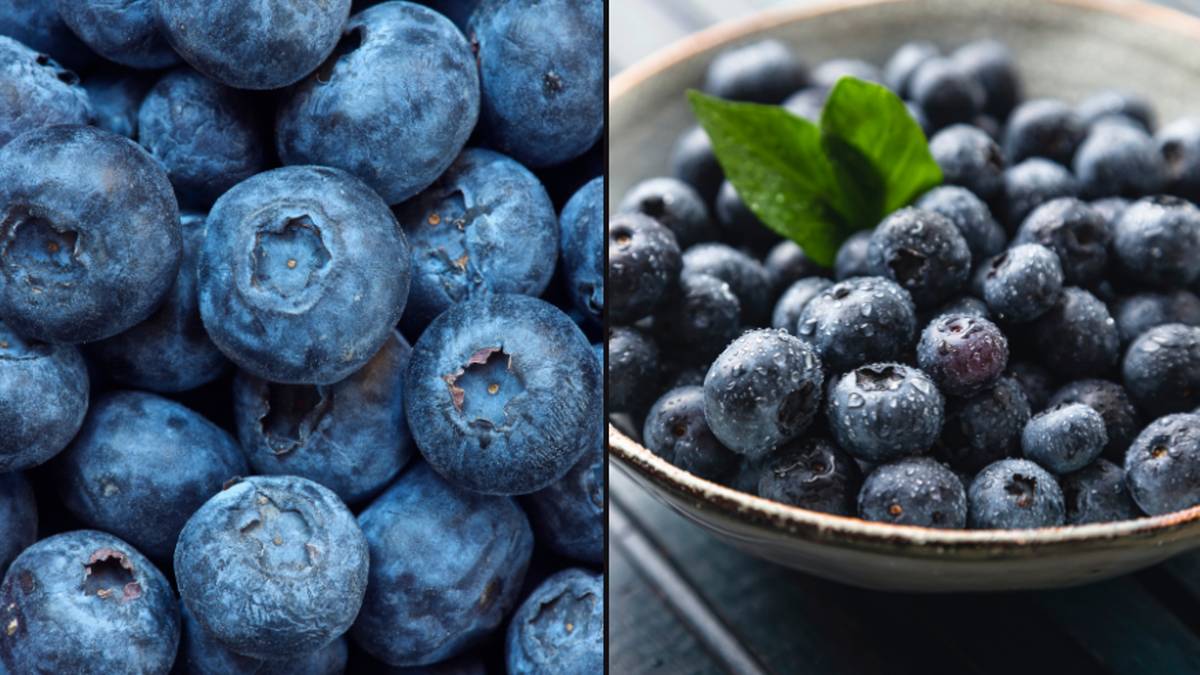
Blueberries are not actually blue in the true sense of the word; their color comes from a unique structural mechanism involving nanostructures in their waxy coating that scatter blue and ultraviolet light while absorbing other wavelengths. This "structural color" is also responsible for the blue and indigo hues in other fruits and natural elements. The discovery could lead to new types of blue paints and dyes in the future. The scarcity of true blue pigments in nature is due to the high-energy nature of the color, which plants typically absorb rather than reflect. Fruits and flowers that appear blue use various mechanisms, such as mixing non-blue pigments or relying on special colorants in their coatings.

"Surprising Truths: Blueberries, Lightning Strikes, and Gut Health"
food-and-science2 years ago

"Surprising Truths: Blueberries, Lightning Strikes, and Gut Health"

Research from the University of Bristol has revealed that blueberries aren't actually blue, but appear so due to a trick of the light caused by a colorless, two micron-thick wax layer covering the fruit, which has an intricate microscopic structure that interferes with light and makes it seem blue to the naked eye. The skin of the fruit is black and the berry juice is red, with no trace of any blue pigment in either the flesh or skin. This discovery has left many people surprised and intrigued, as the beloved superfood's true color is unveiled.