Tag

New Species

All articles tagged with #new species

Social media photo leads to discovery of Victoria colombiana, a critically endangered giant waterlily
science3 days ago

Social media photo leads to discovery of Victoria colombiana, a critically endangered giant waterlily

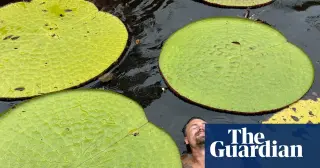
A chance Instagram photo of a plant in Colombia’s Inírida River led to the formal identification of Victoria colombiana, a new species of giant waterlily. Discovered by a team from the Royal Botanic Gardens, Kew, the plant is critically endangered with only 30 to 50 individuals known in the wild. The discovery highlights the value of combining social media, satellite imagery, and indigenous knowledge in modern botanical research.
Instagram Selfie Leads to Discovery of Critically Endangered Giant Waterlily in Colombia
science3 days ago

Instagram Selfie Leads to Discovery of Critically Endangered Giant Waterlily in Colombia

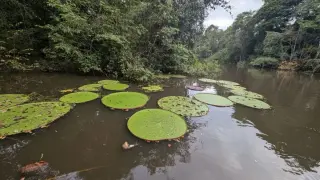
A casual Instagram photo posted by Jeremiah Harris in 2021 led scientists to discover a new species of giant waterlily, Victoria colombiana, in Colombia. The plant, which can grow up to three meters wide, was found in the Inírida region and is now considered critically endangered, with only 30 to 50 individuals remaining in the wild. The discovery highlights the importance of social media and indigenous knowledge in modern botanical research.
UBC Researchers Identify Two New Sea Spider Species in Salish Sea, Including a Parasite Host
science18 days ago

UBC Researchers Identify Two New Sea Spider Species in Salish Sea, Including a Parasite Host

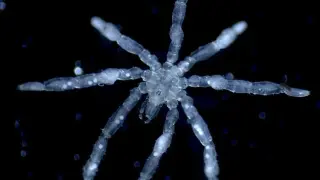
University of British Columbia researchers have described two new species of sea spiders in the Salish Sea, the first such discoveries in the region in nearly a century. The study, published in Organisms Diversity & Evolution, details Callipallene pilosuspedes, a species with red eyes and hairy legs, and Tanystylum kiixin, a parasitic species that hosts its own smaller parasites. The findings highlight the need for better biodiversity data to assess climate change impacts on marine invertebrates.

New Congo Colobus Species Identified, Called Likweli
science28 days ago

New Congo Colobus Species Identified, Called Likweli

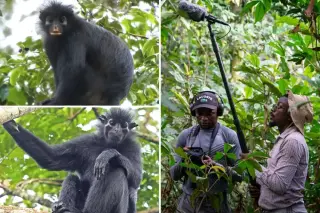
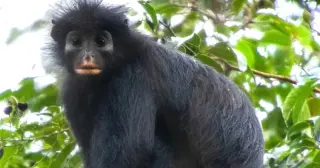
Scientists formally describe Colobus congoensis (Likweli), a distinct orange-mouthed, crested black colobus in Lomami National Park, DRC. The species was confirmed through morphology, DNA, and unique calls and is limited to about 656 square miles with small groups (~6 individuals). Weighing ~6.8 kg, it is most closely related to the black colobus, diverging 4–5 million years ago. First photographed in 2008 and later confirmed via evidence collected through 2018–2021, the finding was published in PLOS One in July 2026. With hunting and habitat loss threatening its tiny range, researchers propose Endangered status to protect the species and its forest home.

Tasmanian spider named after curious 10-year-old Murphy amid new species discovery
science1 month ago

Tasmanian spider named after curious 10-year-old Murphy amid new species discovery

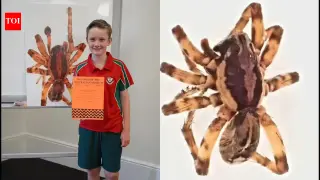
A 2020 find by 10-year-old Murphy Widdowson on Deal Island, Tasmania, could not be identified by experts at first. After microscopic examination by arachnologists, it was described as a new wolf spider species, Artoriopsis murphyi, named in Murphy’s honor. The discovery underscores the value of curiosity and citizen science in documenting biodiversity, with the spider measuring about 5 mm and not believed to be dangerous to humans.

Japan’s 30-Year Rock Yields Clues to Possible New Mosasaur
science2 months ago

Japan’s 30-Year Rock Yields Clues to Possible New Mosasaur

Researchers reexamining a rock specimen from Osaka collected in 1990–1992 uncovered four fossil bones that may belong to an undiscovered mosasaur. The find includes a confirmed premaxilla—the first mosasaur premaxilla identified in Japan—and unusual basisphenoid features that could indicate a new species, though confirmation requires further study. The case highlights how museum collections can reveal new insights with advancing techniques.

Congo’s orange-lipped monkey roars onto the scene: a new primate species
science2 months ago

Congo’s orange-lipped monkey roars onto the scene: a new primate species

Scientists in the Democratic Republic of the Congo have identified a new orange-lipped monkey, Colobus congoensis (Likweli), in Lomami National Park. DNA analysis confirmed it as a distinct species within the Colobus genus; the monkey weighs about 15 pounds, roams in groups up to 20, and is distinguished by an orange facial patch and unique roars. Found in a limited range of about 650 miles, the species is likely endangered due to hunting and deforestation, marking the fifth African monkey discovery in 75 years.

Bright-lipped monkey in DRC confirmed as a new species
science-and-environment2 months ago

Bright-lipped monkey in DRC confirmed as a new species

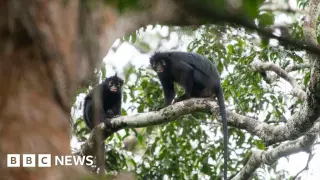
Scientists have officially recognized a new Colobus monkey species in the DRC's Lomami National Park, nicknamed 'Likweli' by locals, notable for its pinkish-orange lips and black face; discovered after decade-long fieldwork following initial sightings in 2008, the species Colobus congoensis is rare, canopy-dwelling, and may require protection as researchers plan population surveys and further behavioral study.

31 New Deep-Sea Species Documented with Cutting-Edge Imaging
science4 months ago

31 New Deep-Sea Species Documented with Cutting-Edge Imaging

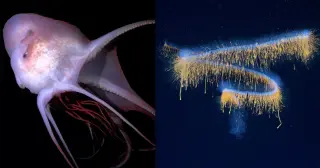
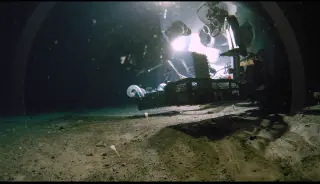
Researchers aboard Schmidt Ocean Institute’s Falkor used three advanced imaging systems on the ROV SuBastian to observe midwater life off Brazil’s coast, documenting 31 previously unknown species—ranging from amphipods and jellyfish to siphonophores and comb jellies—without disturbing them. By employing DeepPIV, EyeRIS, and a shadowgraph camera, the team confirmed these new species in days, revealing far greater midwater diversity than expected and showcasing non-invasive methods for documenting fragile deep-sea life.

New Hairy Ghost Pipefish Named for Sesame Street's Mr. Snuffleupagus
science4 months ago

New Hairy Ghost Pipefish Named for Sesame Street's Mr. Snuffleupagus

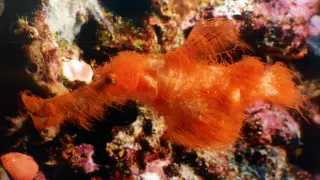
Marine biologists have described a new species of hairy ghost pipefish, Solenostomus snuffleupagus, from the Southwest Pacific. Measuring about 1–1.5 inches, it’s the seventh known ghost pipefish and is distinguished by extra vertebrae and distinctive hair-like filaments that aid camouflage, suggesting a divergence from its relatives around 18 million years ago. The species’ shaggy, red-algae–like appearance led to comparisons with Sesame Street’s Mr. Snuffleupagus in media coverage.

Sesame Street-inspired ghost pipefish Solenostomus snuffleupagus described
science4 months ago

Sesame Street-inspired ghost pipefish Solenostomus snuffleupagus described

Scientists have described Solenostomus snuffleupagus, a tiny orange ghost pipefish named after Sesame Street's Mr. Snuffleupagus for its uncanny resemblance. The 4–5 cm predator, found on coral reefs in the southwestern Pacific, was first spotted in 2003 near Papua New Guinea and re-found in 2021 on the Great Barrier Reef; CT scans and iNaturalist sightings from Tonga, PNG and New Caledonia support its status, with the new species described in Fish Biology.

Ocean Census Unveils 1,121 New Marine Species in a Year
science4 months ago

Ocean Census Unveils 1,121 New Marine Species in a Year

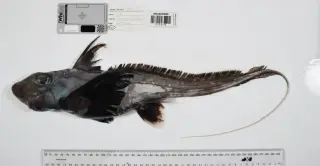
Ocean Census reports 1,121 previously unknown marine species identified in a single year, accelerated by NOVA—a digital platform that enables rapid imaging, DNA sequencing, and data sharing to fast-track naming. Highlights include the ghost shark, the carnivorous death-ball sponge, a worm living in a glass sponge, a sea pen, and a ribbon worm, underscoring the urgency of documenting ocean biodiversity before it vanishes and hinting at potential medical breakthroughs.

Ocean Census Discovers 1,121 New Ocean Species, From Glass-Walled Worms to Ghost Sharks
science4 months ago

Ocean Census Discovers 1,121 New Ocean Species, From Glass-Walled Worms to Ghost Sharks

The Ocean Census reports 1,121 previously unknown ocean species discovered since last April, highlighting deep-sea biodiversity through findings such as a glass-shelled worm living in a glass sponge off Japan, ghost sharks, unknown rays and catsharks, ping-pong ball sponges, and sea pens. However, many of these discoveries have not yet been formally described as new species, a process that can take years, underscoring how much we still don't know about Earth's biodiversity.

Deep-Sea Night-Vision Dive Reveals First Live Indonesian Houndshark and More
science5 months ago

Deep-Sea Night-Vision Dive Reveals First Live Indonesian Houndshark and More

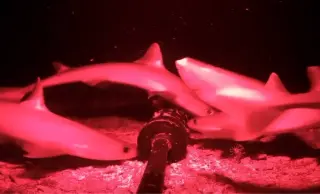
A YouTuber dropped night-vision cameras 500–800 ft into the Indonesian Ocean, capturing unusual marine behavior and the first live footage of an Indonesian houndshark along with other notable deep-sea sightings, underscoring how little we know about deep oceans and raising questions about how infrared light affects marine life.