Tag

Exomoon

All articles tagged with #exomoon

Astronomers Detect Likely Exomoon Orbiting Brown Dwarf, Blurring Boundaries
science24 days ago

Astronomers Detect Likely Exomoon Orbiting Brown Dwarf, Blurring Boundaries

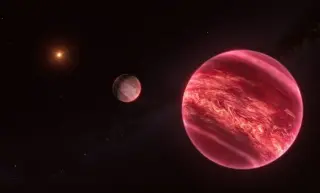
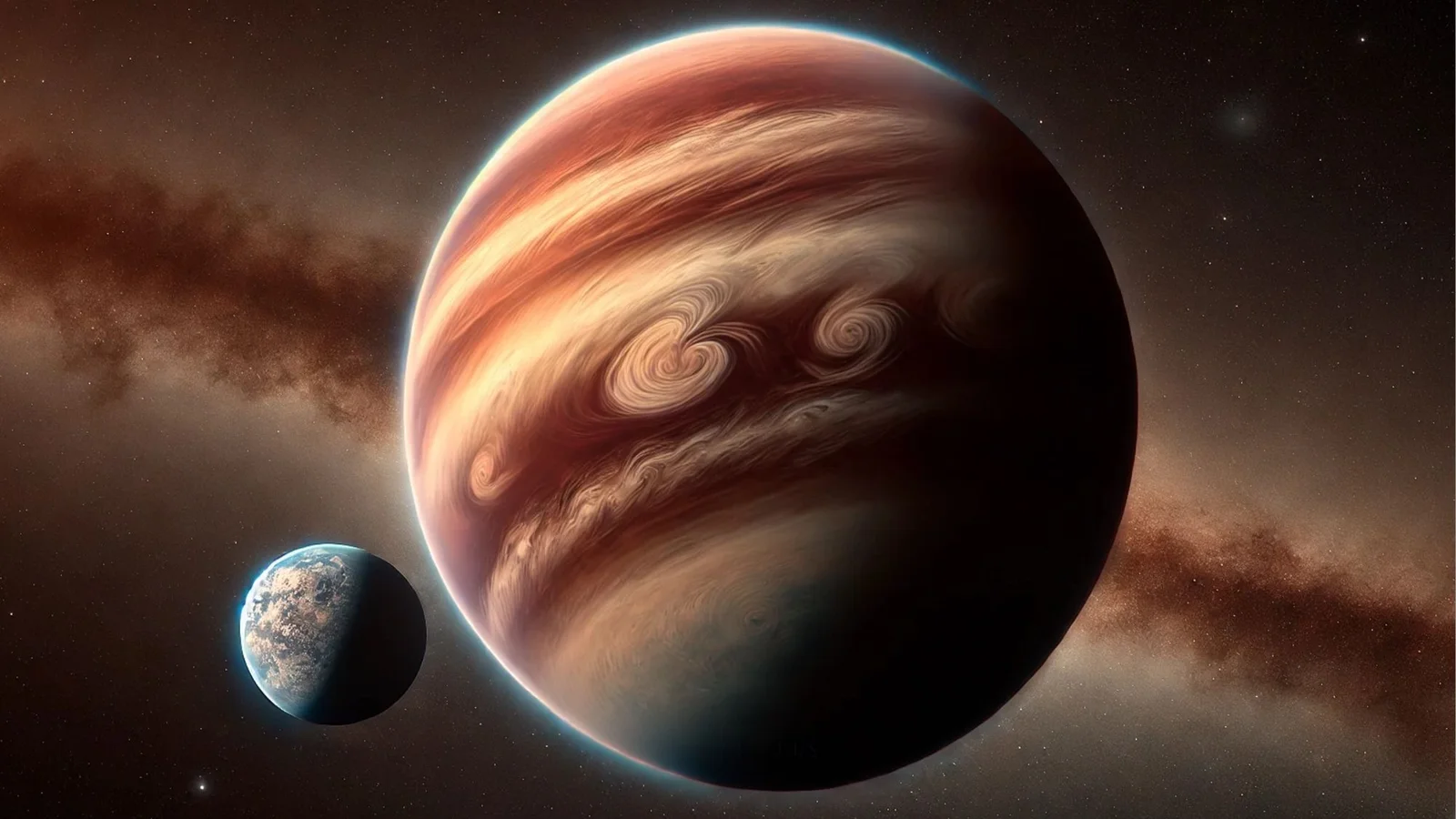
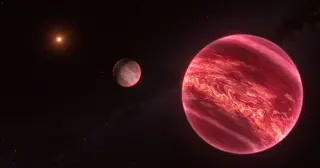
An international team using the ESO Very Large Telescope detected a moonlike body orbiting the brown dwarf CD-35 2722 B about 73 light-years away, with a roughly 170-day orbit and a mass of at least 0.9 Jupiter—about 2.5% of the brown dwarf’s mass. Described as an exosatellite rather than a moon, this is the first satellite evidence around a brown dwarf found via the Doppler method, though its exact classification remains under discussion. The discovery challenges traditional moon definitions and could influence theories of planet formation and tidal heating, with future telescopes potentially revealing smaller exomoons.
Astronomers Signal First Plausible Exomoon, Blurring Moon-Planet Boundaries
science28 days ago

Astronomers Signal First Plausible Exomoon, Blurring Moon-Planet Boundaries

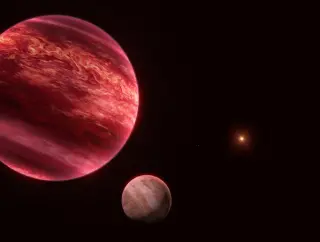
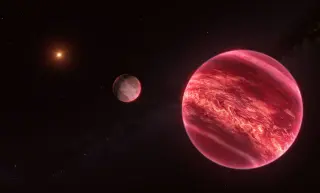
Using ESO's VLT CRIRES+ radial-velocity measurements, scientists report strong evidence for an exosatellite (a Jupiter-sized body) orbiting a brown dwarf in the CD-35 2722 system—a three-body setup that challenges Solar System definitions of moon and planet. If confirmed, it would be the first plausible exomoon detection and could accelerate future exomoon searches, though the terminology remains debated.

Possible exomoon spotted around a brown dwarf, sparking naming debate
science1 month ago

Possible exomoon spotted around a brown dwarf, sparking naming debate

Astronomers using the Very Large Telescope report evidence for a moon-sized object orbiting a brown dwarf in the CD-35 2722 system, an exosatellite that defies simple labeling as either moon or planet; detected via radial-velocity wobble rather than transit, this may mark the first exomoon, with confirmation likely from future observations with the ELT.

Doppler-detected exosatellite around a brown-dwarf companion
science1 month ago

Doppler-detected exosatellite around a brown-dwarf companion

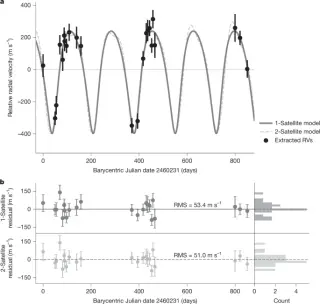
Astronomers using high-resolution infrared radial-velocity measurements from VLT/CRIRES+ detected a periodic signal indicating a planetary-mass exosatellite orbiting CD-35 2722 B, a directly imaged brown-dwarf companion to a star. The best-fit model suggests the satellite has a minimum mass of about 0.9 Jupiter masses with an orbital period of roughly 170 days, marking the first evidence of a satellite around a companion brown dwarf and the first time this RV approach has been used to probe exosatellites. It remains uncertain whether this object meets the formal criteria for an exomoon, but the result demonstrates a promising path toward unambiguous exomoon detections as instrumentation advances; data and code are publicly available.

Weird exomoon candidate sparks debate on what counts as a moon
space1 month ago

Weird exomoon candidate sparks debate on what counts as a moon

Astronomers analyzing the CD-35 2722 system, about 73 light-years away, report a moon‑like object orbiting a brown dwarf—an finding that could be the first exomoon or a case that forces a redefinition of what counts as a moon versus a planet. While the object is clearly moon‑like, the team stresses a definitive exomoon claim would require redefining established terms, since it orbits a body that itself orbits a star. The discovery, published in Nature, underscores the diversity of planetary systems and may be clarified further with observations from the upcoming Extremely Large Telescope (ELT).

Rogue-Planet Moons Could Harbor Oceans for Billions Without Sunlight
space1 month ago

Rogue-Planet Moons Could Harbor Oceans for Billions Without Sunlight

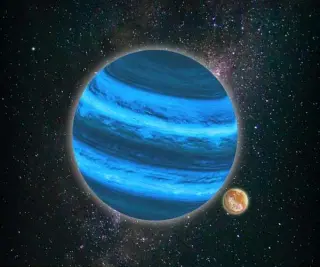
A 2026 modelling study from LMU Munich and collaborators suggests an Earth‑sized moon orbiting a Jupiter‑like rogue planet could maintain surface liquid water for up to about 4.3 billion years without any starlight, if enveloped in a thick (≈100 bar) hydrogen atmosphere and driven by tidal heating—though this relies on favorable assumptions, omits many real‑world complexities, and no such exomoons have been observed yet.

Dark-world oceans: moons around sunless rogue planets could harbor life for billions of years
space-exploration5 months ago

Dark-world oceans: moons around sunless rogue planets could harbor life for billions of years

New simulations suggest Earth-sized moons orbiting free-floating, starless rogue planets could remain warm enough to keep liquid water on their surfaces for up to 4.3 billion years, thanks to tidal heating and insulating hydrogen atmospheres, potentially expanding habitable environments beyond traditional stellar zones.

Cosmic planet smash around Gaia20ehk hints at exomoon birth
astronomy5 months ago

Cosmic planet smash around Gaia20ehk hints at exomoon birth

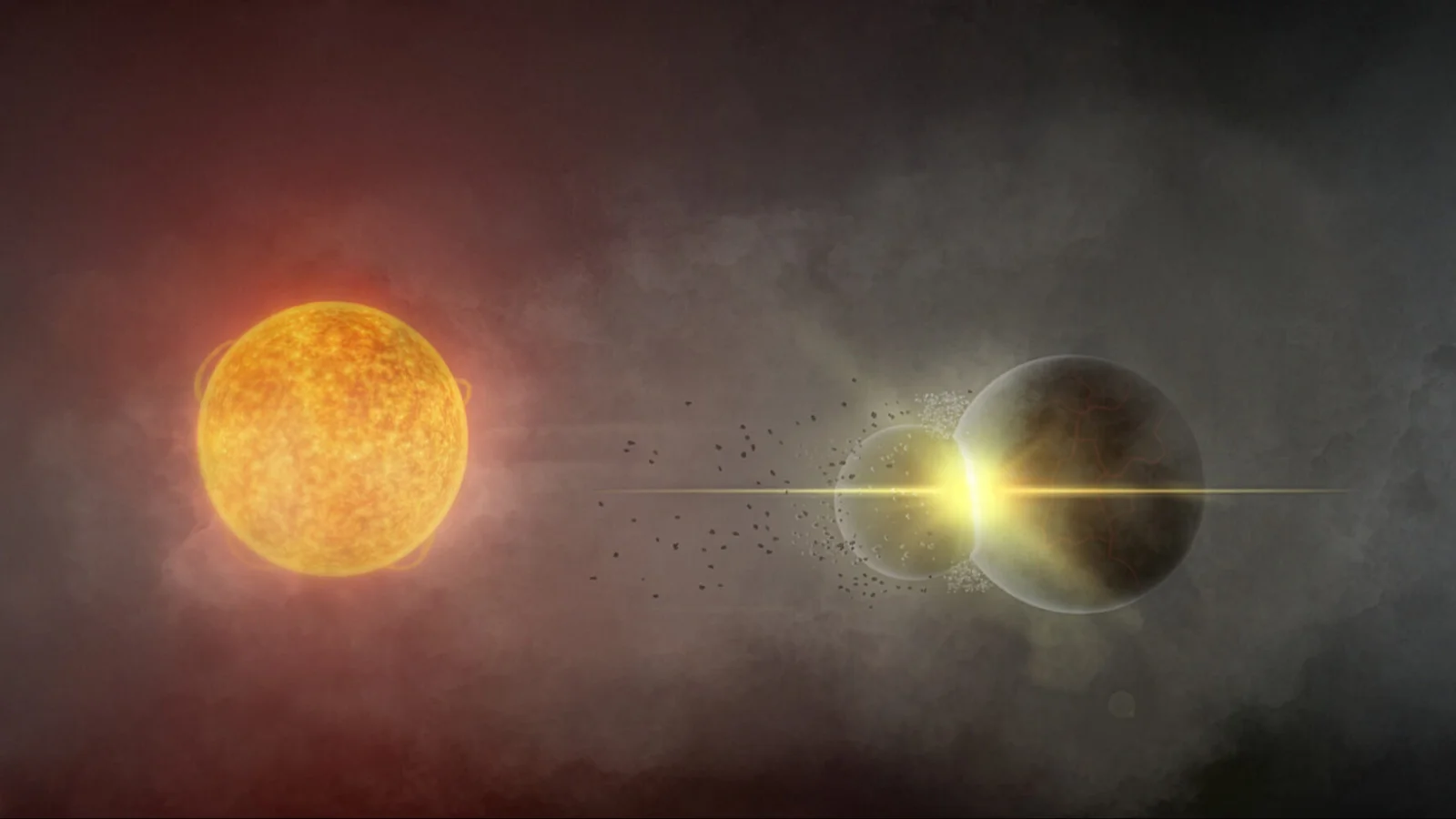
Astronomers found evidence that two planets orbiting Gaia20ehk collided, creating a debris cloud that caused unusual dips in the star’s light since 2016. Infrared observations show heat in the debris, consistent with a violent planetary smash. The event, likened to Earth’s Moon-forming impact, could eventually lead to an exomoon and offers new insights into planet formation; findings were published in The Astrophysical Journal Letters.

"James Webb Space Telescope Uncovers Alien Auroras and Exomoons Around Failed Stars"
astronomy2 years ago

"James Webb Space Telescope Uncovers Alien Auroras and Exomoons Around Failed Stars"

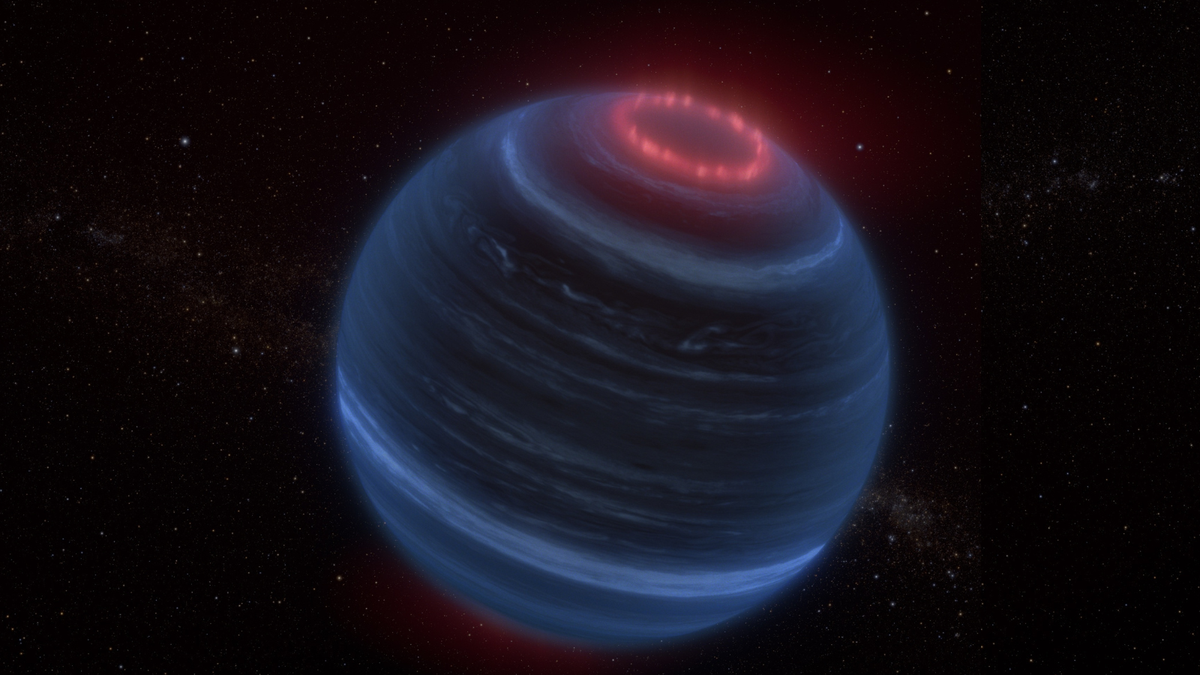
The James Webb Space Telescope has made a surprising discovery of methane emissions from a brown dwarf, suggesting the presence of aurorae and a potential hidden exomoon. This finding challenges previous assumptions about these "failed stars" and raises questions about the source of the emissions. The discovery highlights the significant impact of the JWST in uncovering new phenomena in the universe.

CHEOPS mission extended to continue exoplanet-hunting in Europe.
science-and-astronomy3 years ago

CHEOPS mission extended to continue exoplanet-hunting in Europe.

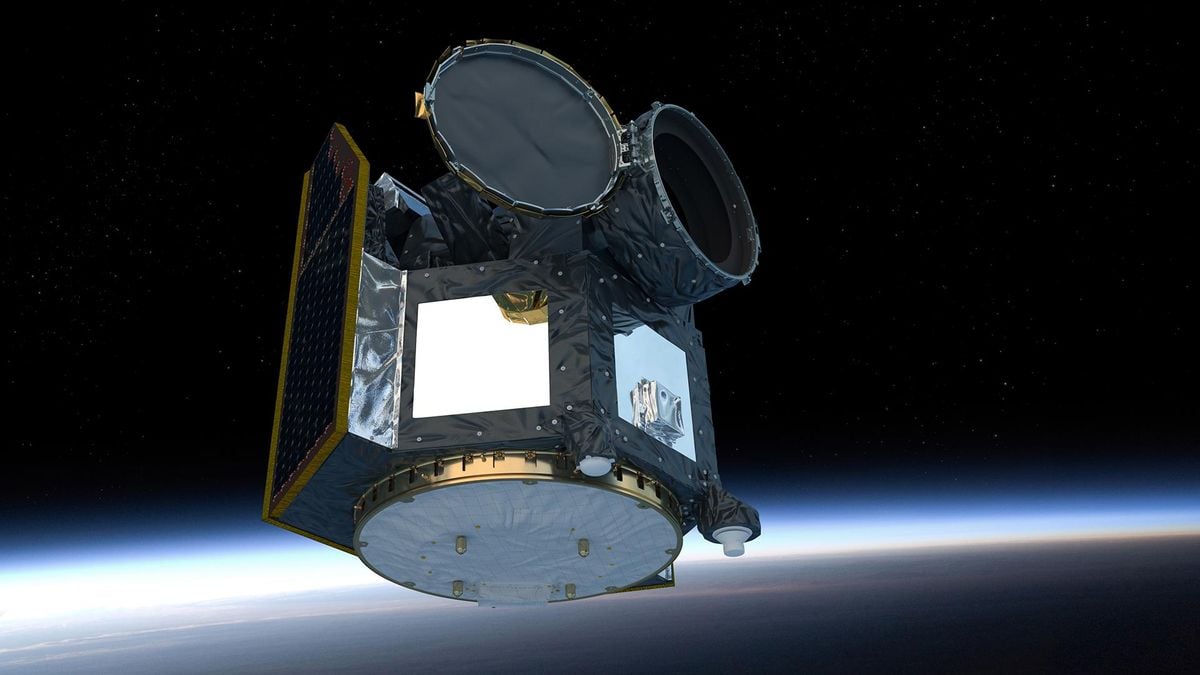
Europe's CHEOPS spacecraft, designed to study planets outside our solar system, will continue its mission until at least 2026, with the potential to extend until 2029. CHEOPS has exceeded expectations in determining properties of several exoplanets, including the discovery of the distended, flattened shape of the gas giant WASP-103 b. The spacecraft has coped well with the rigors of space and has exciting observing opportunities left, such as discovering the first exomoon. CHEOPS plays a key role in our hunt for planets that could potentially support life.