Tag

Exoplanet Atmosphere

All articles tagged with #exoplanet atmosphere

Webb uncovers icy clouds on a nearby Jupiter-like world, nudging exoplanet atmosphere models
space7 days ago

Webb uncovers icy clouds on a nearby Jupiter-like world, nudging exoplanet atmosphere models

The James Webb Space Telescope detected evidence for thick water-ice clouds high in Epsilon Indi Ab’s upper atmosphere. The ammonia signature expected for such a cold giant was weaker than predicted, suggesting that the clouds were muting it. This finding shows that many atmospheric models for giant exoplanets have omitted cloud physics, reminding scientists that clouds shape what we can see and interpret in a planet’s chemistry and temperature. The next steps are to confirm the clouds with more Webb observations, map their distribution, incorporate cloud physics into models, and check whether other cold giants show a similar ammonia shortfall.
Methane, aerosols and a warm nightside on a planet circling a white dwarf
astronomy11 days ago

Methane, aerosols and a warm nightside on a planet circling a white dwarf

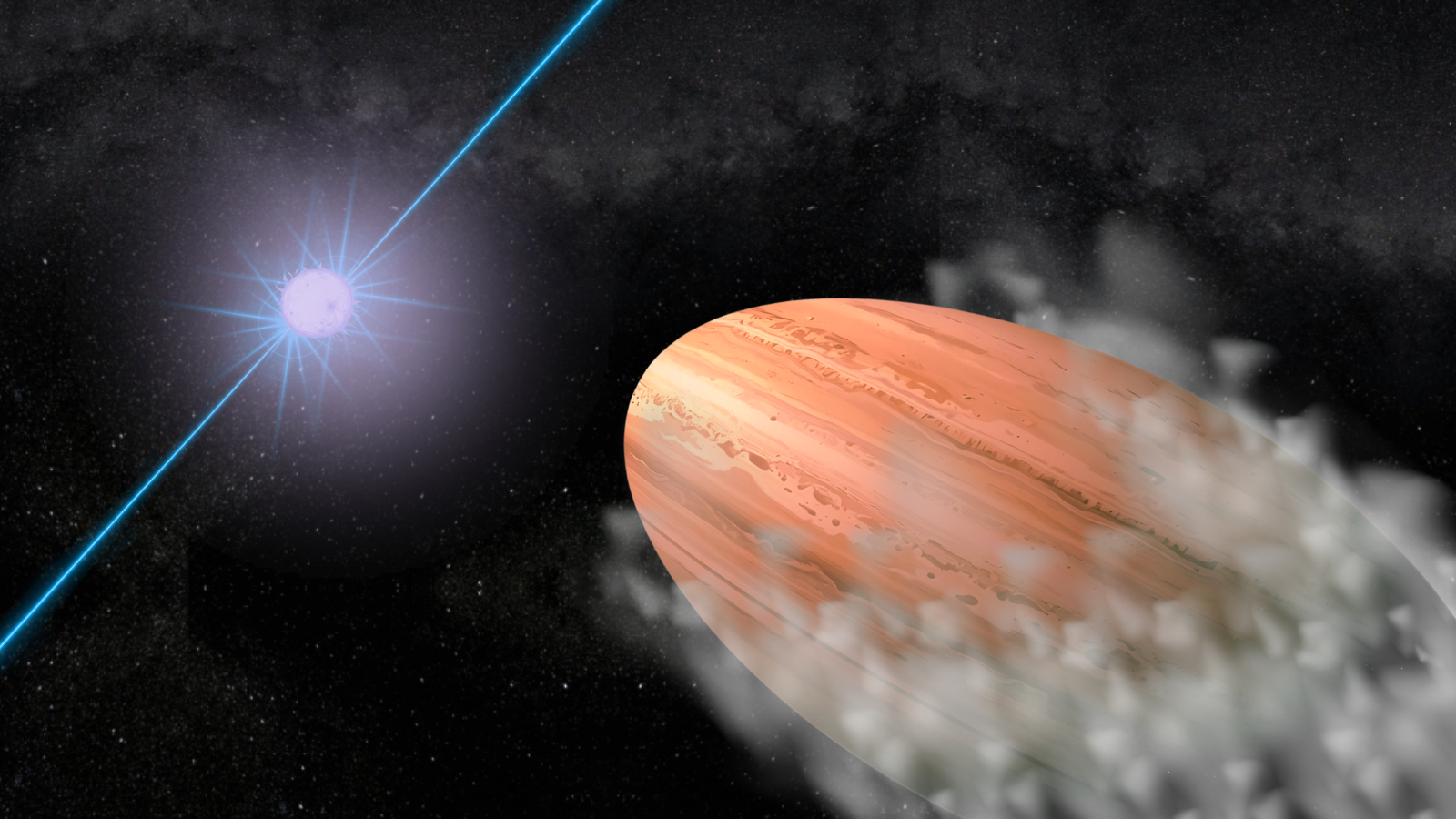
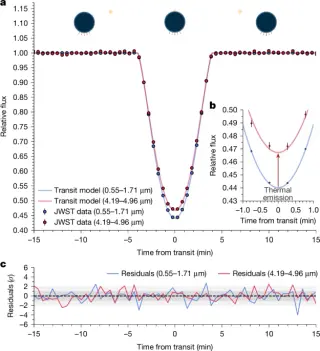
JWST/NIRSpec PRISM transmission spectra of WD 1856 b, a Jupiter-sized planet transiting a nearby white dwarf, reveal methane and other hydrocarbons, a scattering aerosol haze, and a nightside thermal emission. The atmosphere is metal-rich (CH4 at a few percent to ~7–20% in retrievals) with an opaque cloud deck near 100 mbar, and the planet’s nightside temperature is about 390–412 K, much warmer than the 160 K equilibrium expected for this system. Mass is constrained to ~4.3–10.9 Jupiter masses. The data imply a reheating event during migration into the white dwarf phase, most consistent with high-eccentricity migration and tidal circularization rather than common-envelope evolution, offering a rare window into the fate of giant planets around Sun-like stars after stellar death.

JWST spots salt-cloud haze in the Pink Planet's cold atmosphere
space20 days ago

JWST spots salt-cloud haze in the Pink Planet's cold atmosphere

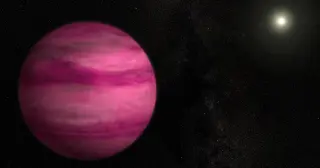
The James Webb Space Telescope has for the first time obtained a spectrum of GJ 504 b, the so-called Pink Planet, showing its light is best explained by a hazy atmosphere with salt clouds. The analysis detects water vapor, CO, methane, CO2, ammonia and hydrogen sulfide, plus signs of metal enrichment and disequilibrium chemistry, suggesting a dynamic, cloud-forming atmosphere. The planet is extremely cold for a directly imaged world (about 564 K) and sits near the planetary-mass/brown-dwarf boundary; the salt-cloud model is the key to fitting the spectrum, though the object's exact nature remains unsettled. The result demonstrates JWST’s ability to study faint, cold exoplanets and tests cloud-formation theories long discussed in theoretical work.

JWST finds ruby-and-sapphire rain on ultrahot exoplanet WASP-121b
space26 days ago

JWST finds ruby-and-sapphire rain on ultrahot exoplanet WASP-121b

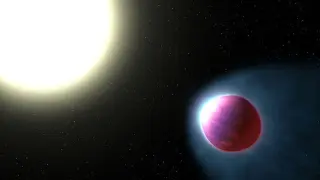
NASA’s James Webb Space Telescope tracked WASP-121b’s atmosphere as it orbits extremely close to its star, revealing a strong day–night contrast: the evening limb is hotter and shows different spectral features than the morning limb, consistent with powerful winds moving heat from the blistering dayside to the cooler nightside. Changes in water vapor and carbon monoxide signals across the planet’s atmosphere indicate temperature differences, with the evening side hot enough to dissociate water and the morning side possibly clouded by silicates. The extreme climate—where molten metals and even condensates that could resemble rubies and sapphires might “rain” on the nightside—follows prior hints of magnesium and iron escaping from the atmosphere. The team notes JWST-style spectroscopy could be applied to other ultra-hot exoplanets, and the study appeared in Nature Astronomy on June 10.

Ultra-Short-Period Exoplanet Defies Atmosphere Expectations, JWST Finds
space3 months ago

Ultra-Short-Period Exoplanet Defies Atmosphere Expectations, JWST Finds

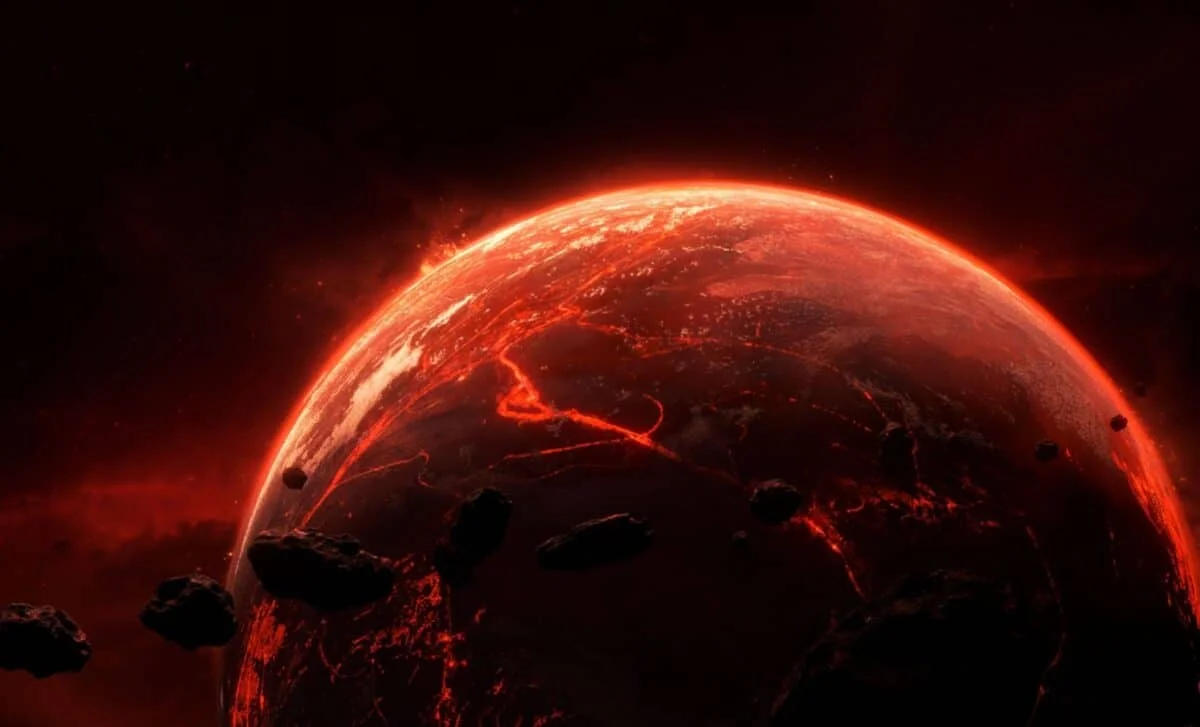
JWST observations of TOI-561 b, a rocky world with a ~10-hour orbit close to its star, reveal a volatile-rich atmosphere and heat redistribution consistent with a magma-ocean–atmosphere cycle. This challenges the long-held view that such irradiated planets shed their atmospheres and revises the idea of the cosmic shoreline separating atmospheric from airless worlds.

Webb Telescope Limits Atmosphere Options for TRAPPIST-1 d
science11 months ago

Webb Telescope Limits Atmosphere Options for TRAPPIST-1 d

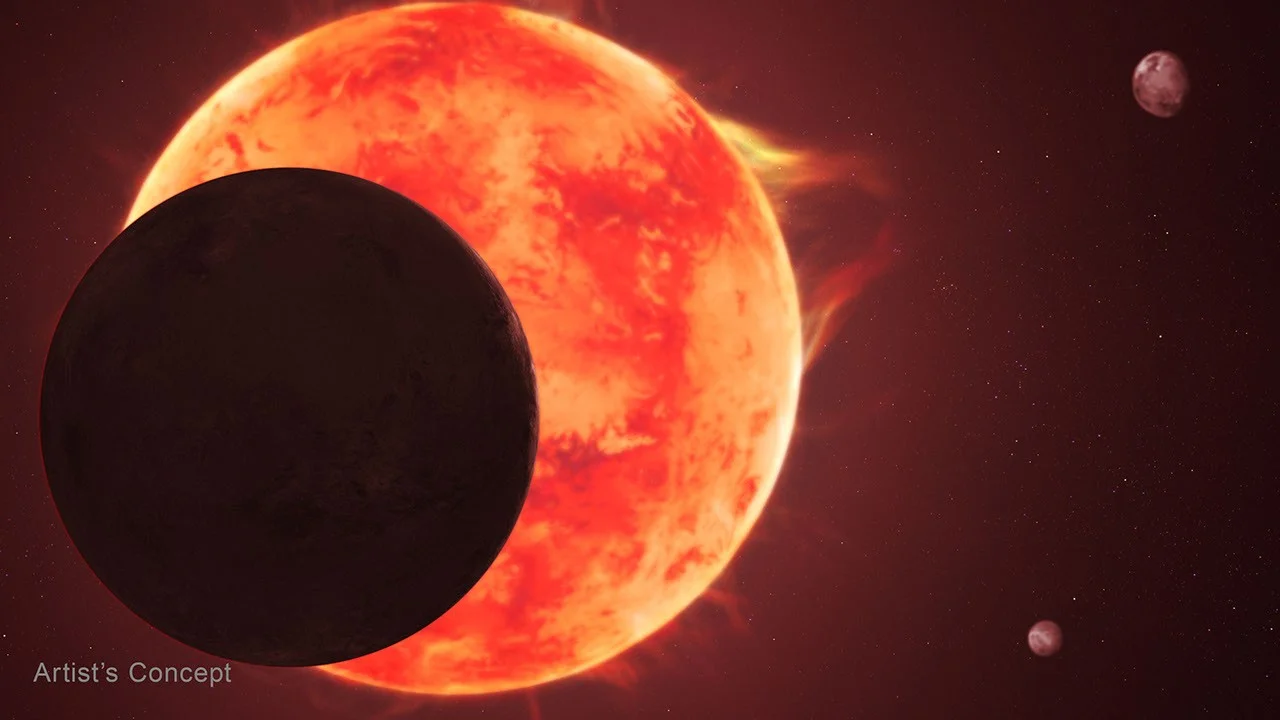
A study using NASA's James Webb Space Telescope found no detectable Earth-like atmosphere on the exoplanet TRAPPIST-1 d, which is similar in size to Earth and located in its star's habitable zone. The absence of atmospheric molecules like water, methane, or carbon dioxide suggests the planet may have a thin atmosphere, thick clouds, or none at all, highlighting the challenges of studying planets around volatile red dwarf stars. Ongoing observations of other TRAPPIST-1 planets may reveal more about their potential habitability.