Tag

Juno

All articles tagged with #juno

Juno captures close-up of Jupiter's inner moon Thebe
space18 days ago

Juno captures close-up of Jupiter's inner moon Thebe

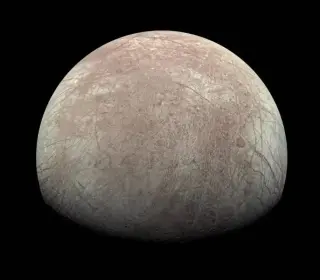
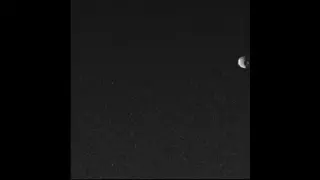
NASA's Juno spacecraft captured a rare close-up view of Jupiter's inner moon Thebe during a May 1, 2026 flyby, about 3,100 miles away, using its Stellar Reference Unit camera, which wasn't designed for close-up moon imaging; Thebe—discovered by Voyager 1 in 1980—is Jupiter's second-largest inner moon and remains a focus during Juno's extended mission.

Jupiter’s Stealth Storms Reveal Lightning Up to 100× Earth Power
space1 month ago

Jupiter’s Stealth Storms Reveal Lightning Up to 100× Earth Power

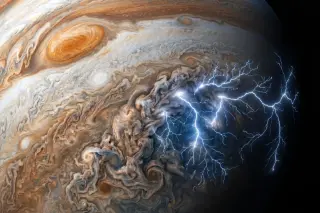
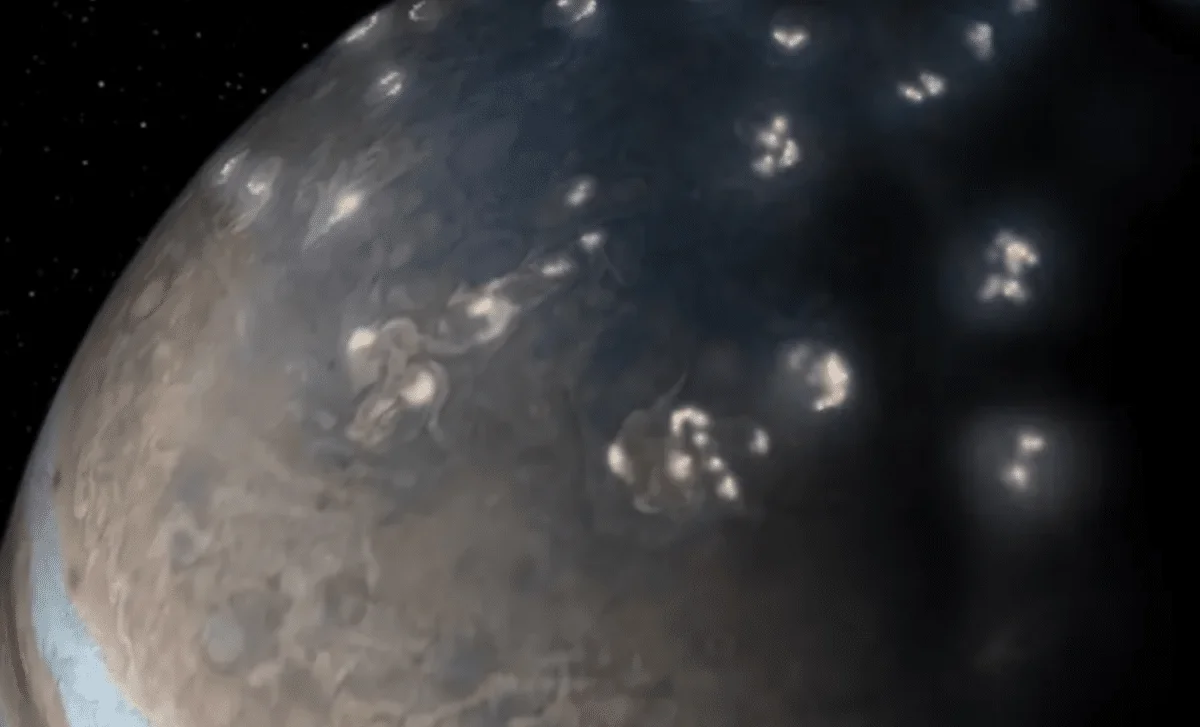
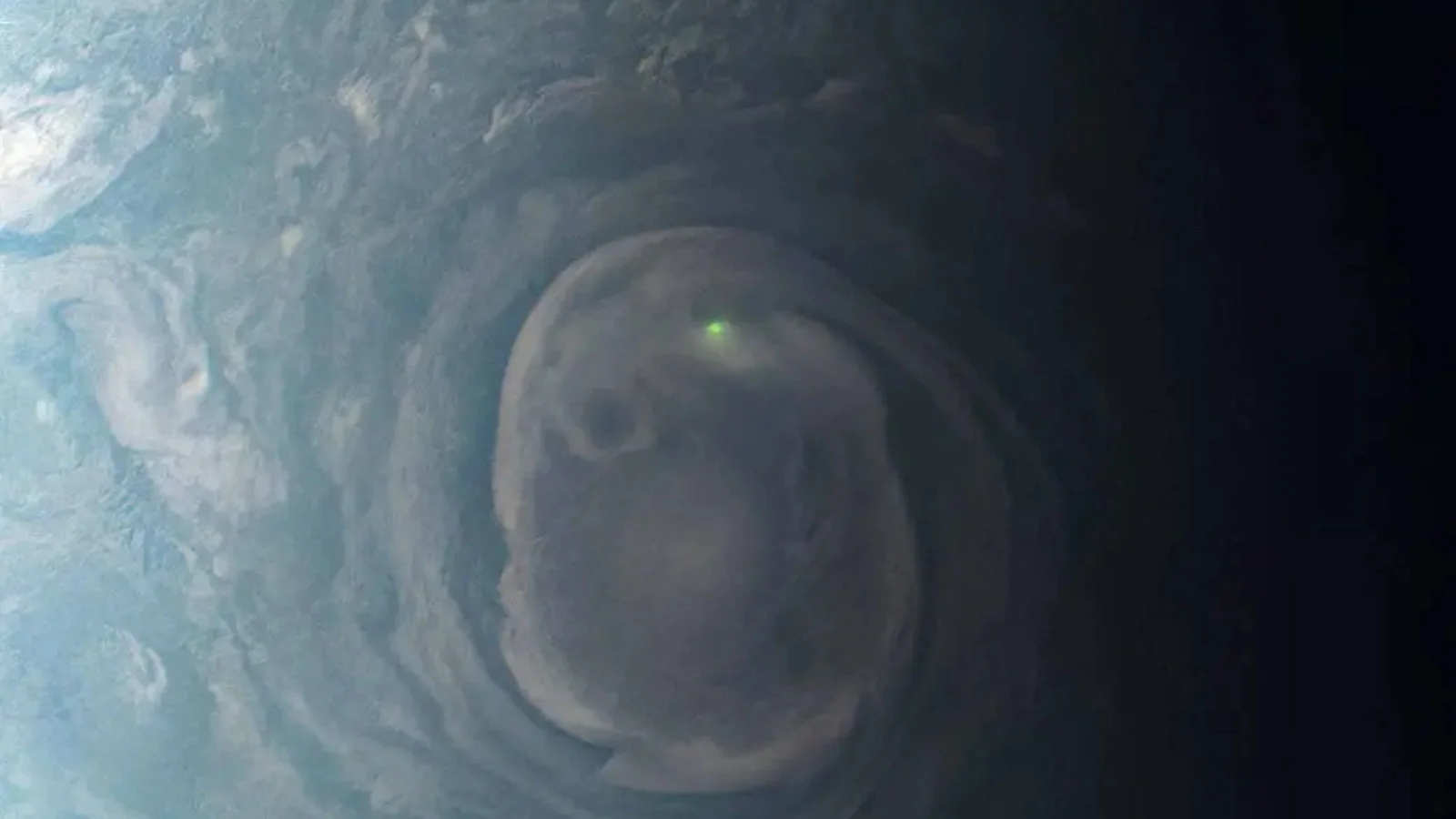
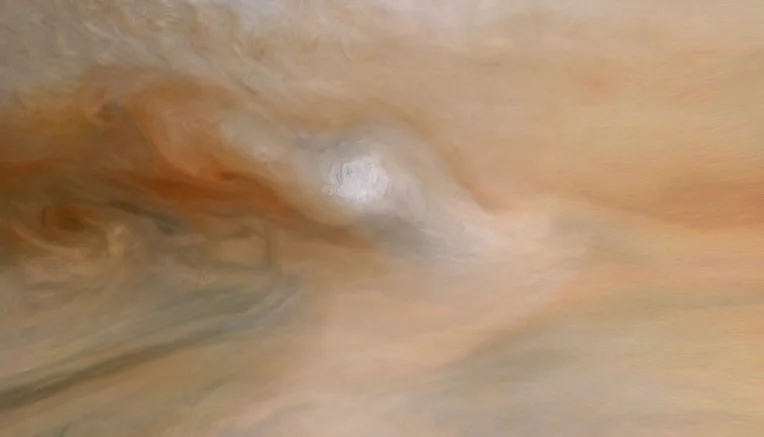
Using NASA’s Juno data and Hubble imagery, scientists find Jupiter’s storms unleash lightning far stronger than Earth’s—some flashes may reach 100× Earth’s power, with total energy hundreds to thousands of times greater. By tracking isolated 2021–22 “stealth” storms, researchers correlated microwave signals with specific events in 100+ km‑tall clouds, though exact energies depend on wavelength and storm dynamics. The study, published in AGU Advances (2026), highlights differences in Jupiter’s hydrogen‑rich atmosphere and ammonia‑water ice (potential “mushball” hail) physics, while leaving many details of the mechanism unresolved.

Jupiter’s Lightning Outmatches Earth, Fueled by Deep Hydrogen Storms
science1 month ago

Jupiter’s Lightning Outmatches Earth, Fueled by Deep Hydrogen Storms

New AGU Advances research using Juno data directly estimates the power of Jupiter’s lightning and finds its storms unleash far more energetic discharges than on Earth, likely due to Jupiter’s tall, hydrogen-rich atmosphere and deep moist convection that store energy before release, revealing different lightning physics and making Jupiter a natural laboratory for extreme weather.

Jupiter’s Lightning: Up to a Million Times More Powerful Than Earth’s
astronomy2 months ago

Jupiter’s Lightning: Up to a Million Times More Powerful Than Earth’s

New NASA Juno data suggest Jupiter’s lightning could be up to a million times more powerful than Earth’s, inferred from radio-emission measurements. The study highlights how Jupiter’s hydrogen-rich atmosphere and towering, long-lasting storms—including months-long 'stealth' storms—may amplify lightning energy, offering new insights into the gas giant’s weather and atmospheric dynamics.

Jupiter’s lightning could be up to a million times stronger than Earth’s bolts
space2 months ago

Jupiter’s lightning could be up to a million times stronger than Earth’s bolts

A study using NASA’s Juno data suggests Jupiter’s lightning may be enormously more powerful than Earth’s—potentially up to a million times stronger. By analyzing the planet’s radio emissions rather than optical flashes and focusing on long-lived “stealth” storms in Jupiter’s belts, researchers estimated lightning pulses with power ranging from Earth-like bolts to far more powerful discharges. The findings, which consider Jupiter’s hydrogen-dominated atmosphere and towering storm clouds (up to ~62 miles tall), aim to explain why Jovian lightning is so energetic and were published in AGU Advances.

Overwatch faces backlash as Anran’s look echoes Kiriko and Juno
technology3 months ago

Overwatch faces backlash as Anran’s look echoes Kiriko and Juno

Overwatch’s new character Anran is sparking controversy online, with fans arguing her facial design closely resembles existing heroes Kiriko and Juno, fueling a broader “same-face syndrome” critique of the game’s character art. The debate covers whether Anran is a new character or simply a cosmetic skin, highlights ongoing discussions about uniform aesthetics in the franchise, and notes potential cultural and stylistic pressures influencing female character designs.

New Juno measurements shrink Jupiter and refine its shape
space3 months ago

New Juno measurements shrink Jupiter and refine its shape

NASA’s Juno mission refines Jupiter’s size and shape, finding a polar radius of about 66,842 km (roughly 12 km smaller) and an equatorial radius of about 71,488 km (roughly 4 km smaller) than older measurements. By tracking how Juno’s radio signals bend through the atmosphere and accounting for winds, scientists produced more accurate dimensions, improving models of Jupiter’s interior and gas giants overall; as co-author Yohai Kaspi notes, “Textbooks will need to be updated.”

Jupiter's Hidden Oxygen Revealed by New Atmospheric Model
science3 months ago

Jupiter's Hidden Oxygen Revealed by New Atmospheric Model

Using a high-detail computational model that combines chemistry and hydrodynamics with data from NASA's Juno and Galileo missions, researchers estimate Jupiter contains about 1.5 times the Sun's oxygen, supporting icy-material formation theories; the model also finds gas diffusion is far slower than previously thought, highlighting how much remains unknown about the giant planet's interior.

Jupiter Found to Be 1.5x Oxygen-Rich Compared to the Sun
space3 months ago

Jupiter Found to Be 1.5x Oxygen-Rich Compared to the Sun

Using data from NASA's Juno and Galileo missions, researchers built a combined chemistry–hydrodynamics model of Jupiter's atmosphere. They find Jupiter may contain about 1.5 times the Sun's oxygen—far more than earlier estimates of roughly one-third—much of which is in water. The study also shows gas diffusion in Jupiter's atmosphere could be 35–40 times slower than previously thought, a result that informs theories about how the planet formed from icy material near the frost line.

Juno Spots Io's Most Powerful Volcanic Eruption Yet
space3 months ago

Juno Spots Io's Most Powerful Volcanic Eruption Yet

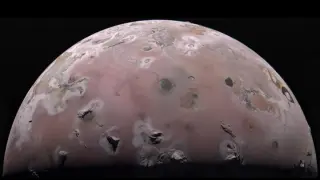
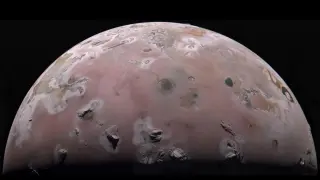
NASA's Juno spacecraft captured what scientists describe as the solar system's most energetic eruption observed on Io, with multiple volcanoes lighting up simultaneously from a vast subterranean magma network. The Dec. 27, 2024 event, spotted by JIRAM during a flyby about 74,400 km above Io, released an estimated 140–260 terawatts of power and covered about 40,400 square miles (65,000 sq km). Io harbors around 400 active volcanoes driven by Jupiter's tidal forces. The synchronized eruption suggests interconnected magma reservoirs beneath Io's lava-encrusted surface, and future Io flybys will map new lava flows and ash deposits.

Oxygen Clues Rewrite Jupiter’s Formation Story
space3 months ago

Oxygen Clues Rewrite Jupiter’s Formation Story

New 1D chemistry and 2D hydrodynamic models suggest Jupiter contains about 1.5 times more oxygen than the Sun and that its atmospheric circulation is slower than previously thought, refining theories of gas-giant formation; the work builds on NASA’s Juno data revealing complex weather and a possible fuzzy core, as the mission continues through 2025 with a planned end that preserves the moons from Earth microbes.