Tag

Jet Stream

All articles tagged with #jet stream

Super El Niño to Shape a Stormier, Warmer Winter Across the U.S.
weather5 days ago

Super El Niño to Shape a Stormier, Warmer Winter Across the U.S.

CNN reports that a Super El Niño is strengthening rapidly and could become the strongest on record by year‑end, likely making this winter stormier for the southern U.S. and drier in parts of the Northeast, with forecasts from NOAA’s Climate Prediction Center showing above‑normal temperatures across much of the northern tier and wetter conditions across much of the country, plus a higher risk of severe thunderstorms in Florida. The exact impacts depend on how cold winter gets and ongoing global warming, so these are probability-based expectations rather than certainties.

Supercharged El Niño Could Rewire US Winter Weather via Polar Vortex Interaction
science10 days ago

Supercharged El Niño Could Rewire US Winter Weather via Polar Vortex Interaction

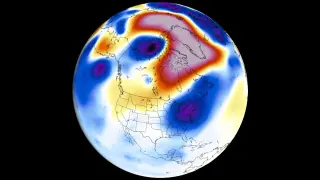
A forecast of a very strong El Niño suggests it could interact with the Arctic polar vortex to alter U.S. winter patterns, potentially bringing wetter conditions to the South, less snow for the Great Lakes and Northeast, and increasing the chance of stratospheric warming events; however, regional impacts remain uncertain as scientists study the exact teleconnections.

Super El Niño Surges Toward Record Strength, Forecast Signals Fall-Winter Shifts
scienceweather26 days ago

Super El Niño Surges Toward Record Strength, Forecast Signals Fall-Winter Shifts

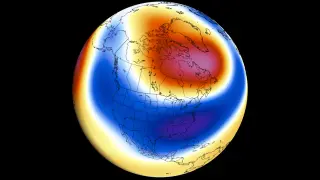
A Super El Niño is rapidly strengthening toward a near-record peak for 2026–27, with August–early fall signals showing a locked atmospheric standing wave that will reshape fall and winter patterns. In North America, expect warmer conditions across the central U.S. and Canada, wetter conditions in the eastern U.S. and parts of Canada, and a stronger Pacific jet that boosts rainfall and storm potential in the south; winter could feature a split-flow pattern with storms concentrated from the Central/Southern Plains to the Mid-Atlantic and cooler air intruding into the South, reducing northern snowfall. Europe may see warmer central/western regions with more autumn rainfall. Forecasters will provide weekly updates as the event evolves.

Saturn’s North Pole Hexagon: A Persistent Polygon in Its Global Jet
space1 month ago

Saturn’s North Pole Hexagon: A Persistent Polygon in Its Global Jet

Saturn’s north-pole hexagon is a persistent, six-sided wave in a fast eastward jet surrounding a central cyclone—visible for decades and spanning about 30,000 km. Not a solid boundary, it’s a pattern in the atmosphere that survives Saturn’s seasons, likely a vertically trapped Rossby-wave in a deep jet; Cassini and Voyager data confirm its longevity and vertical reach into the stratosphere. Scientists still debate why the sixfold pattern persists, how deep the wave runs, and why the south pole lacks a similar hexagon, with laboratory rotating-fluid experiments offering a partial explanation but not a complete theory.

Eastern U.S. bracing for a sprawling heat dome next week
weather2 months ago

Eastern U.S. bracing for a sprawling heat dome next week

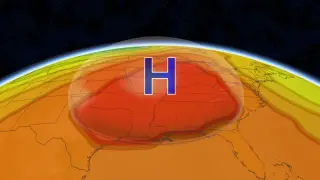
Forecasters expect a heat dome to lock over the eastern half of the United States next week, driving heat indices to 100–110°F (with some spots up to 115°F) and producing oppressive humidity with little overnight relief. Major cities including Chicago, Detroit, St. Louis, Dallas and Nashville could see their hottest days of the year as millions face Level 3–4 extreme heat risk while the jet stream shifts and traps hot air; the West cools somewhat in contrast. Utah faces extreme fire weather with rare “particularly dangerous” red-flag warnings and gusts up to 50 mph as ongoing fires burn nearby. The heat is projected to spread into the Northeast by midweek, and a potential westward shift toward the Plains could arrive around the Fourth of July weekend.

Cold Atlantic blob may fuel Europe’s heatwave, scientists say
science2 months ago

Cold Atlantic blob may fuel Europe’s heatwave, scientists say

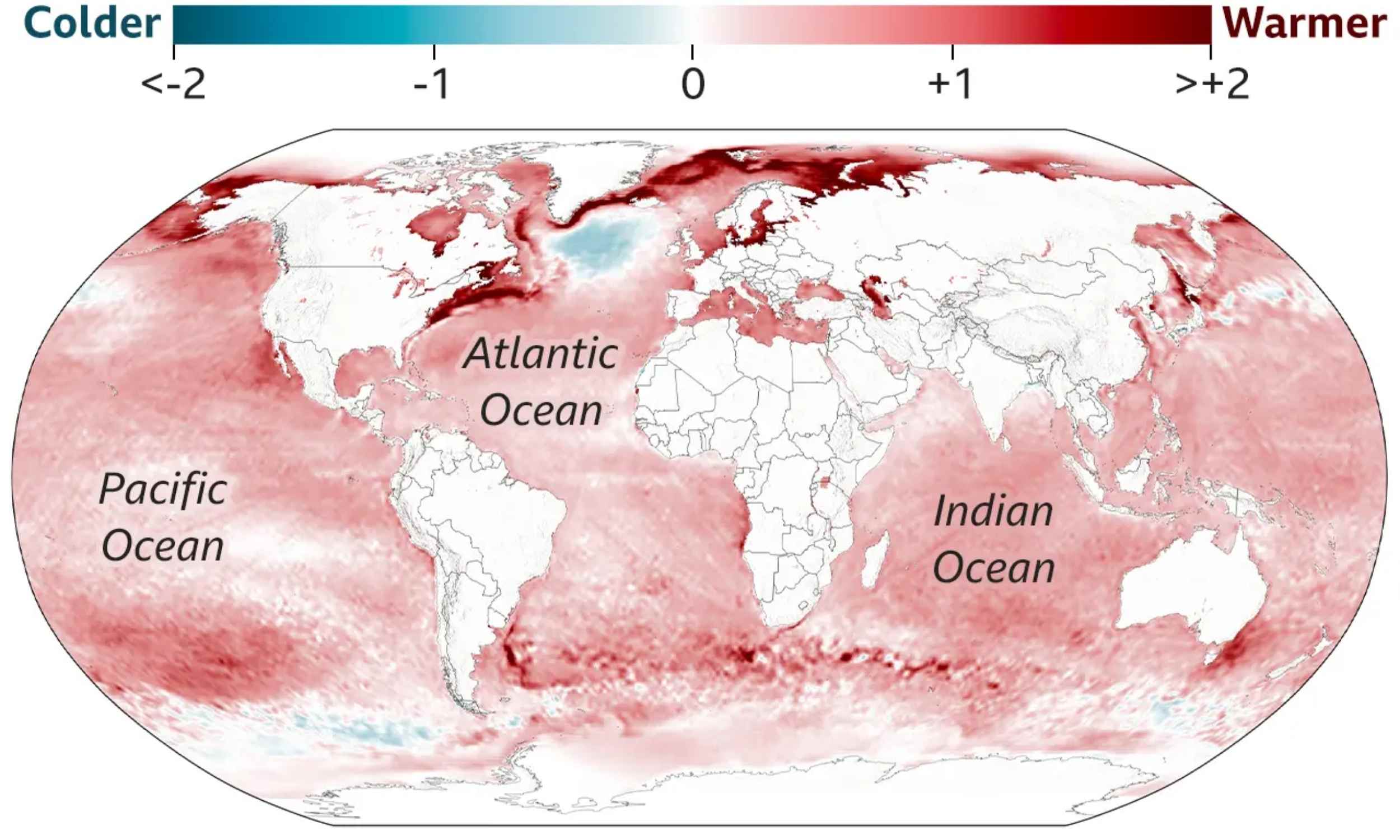
A patch of unusually cold water in the subpolar North Atlantic, nicknamed the cold blob, has been linked to Europe’s heatwaves by influencing atmospheric circulation and the jet stream. While global temperatures rise, this region remains cooler due to ocean currents delivering less heat and Greenland meltwater adding freshwater, which may weaken the Atlantic Meridional Overturning Circulation (AMOC). Scientists warn that a further slowdown or collapse of the AMOC could bring harsher European winters, droughts elsewhere, and higher sea levels, though a cold Atlantic patch does not erase warming and extreme heat can persist under certain jet-stream patterns.

Europe's Heatwave: Not El Niño, but Climate Change Amplification
environment2 months ago

Europe's Heatwave: Not El Niño, but Climate Change Amplification

Western Europe is in the throes of a third heatwave, with France under red alerts and the UK and Germany facing near-40°C highs. While El Niño is being cited as a driver, experts say its direct impact on Europe is weak; the heat is primarily due to a persistent jet-stream blocking pattern on a warming background, with climate change amplifying extremes and increasing drought and wildfire risks.

Ocean Conveyor Slowing Could Spark Global Weather Shifts
science2 months ago

Ocean Conveyor Slowing Could Spark Global Weather Shifts

Evidence cited by New Scientist shows the Atlantic Meridional Overturning Circulation is weakening, allowing cold Greenland waters to pool in the North Atlantic and form a 'cold blob' that can disrupt the jet stream and drive extreme weather; some models warn of a potential climate tipping point by around 2040, though scientists debate whether the slowdown is driven more by oceanic processes or atmospheric forces.

Giant Heat Dome Pushes U.S. Toward Historic March Heat Wave
science5 months ago

Giant Heat Dome Pushes U.S. Toward Historic March Heat Wave

A massive high-pressure heat dome is trapping hot air over the U.S., expanding into the East and producing a sweeping, potentially historic March heat wave with many states recording or nearing new March highs; temperatures in the 90s are expected across the southern and central Plains, and several locations hit 112°F in the Southwest. The heat is expected to persist into mid-next week as the dome shifts east, while scientists say climate-change warming has made such extreme heat far more likely.

Weather Pattern Shift Promises Warmer Temperatures Before Christmas
weather8 months ago

Weather Pattern Shift Promises Warmer Temperatures Before Christmas

A shift in the jet stream pattern in December's second half is likely to reduce the chances of a white Christmas across much of the US, with milder temperatures causing snow to melt in many areas, though northern regions may still see snow on Christmas morning. The odds of a white Christmas vary by location, with northern states having higher chances than southern states, and the possibility of additional snowfall next week remains uncertain.

Scientists Discover Two Ocean Bands Heating at Record Speeds
science1 year ago

Scientists Discover Two Ocean Bands Heating at Record Speeds

Scientists have identified two major ocean bands near 40 degrees latitude in both hemispheres that are heating at unprecedented rates, influenced by shifts in wind patterns and ocean currents, with significant implications for climate, weather, and marine life. The study highlights the uneven distribution of ocean heat and the importance of long-term data to understand climate change impacts.

"Unprecedented Heatwave Sweeps Across the US"
weather2 years ago

"Unprecedented Heatwave Sweeps Across the US"

A powerful winter storm is bringing deep snow to the West, while much of the central US experiences unseasonably warm weather due to the jet stream's northward position, global warming's impact on temperatures, and the El Niño weather pattern. January 2024 broke the record for the warmest first month of the year, and the East Coast is expected to see warmer weather by mid-week. Southern regions could experience temperatures in the ‘80s and ’90s, with Dallas-Fort Worth likely to break a daily record.

"Record-breaking Winds Propel Passenger Planes to Supersonic Speeds Over the Atlantic"
travel2 years ago

"Record-breaking Winds Propel Passenger Planes to Supersonic Speeds Over the Atlantic"

Freak winds in the Atlantic jet stream propelled five commercial flights to speeds exceeding 800mph, faster than the speed of sound, cutting their travel times significantly. While this allowed for earlier arrivals, it also led to more severe turbulence due to faster jet stream speeds, a consequence of global warming. Scientists suggest that redirecting flights to take better advantage of favorable winds could save fuel and reduce carbon emissions, but the trade-off is an increase in turbulence.