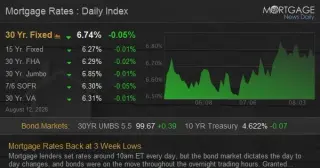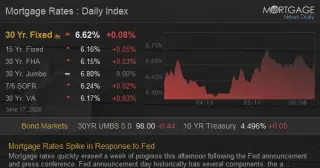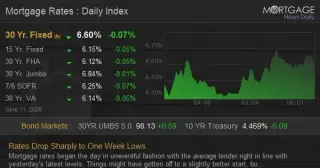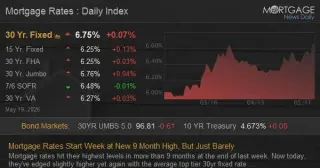
Mortgage rates started the week near a nine-month high, with the top-tier 30-year fixed around 6.68% (vs. 6.65% Friday), after an initially unchanged session gave way to higher quotes as Iran-war headlines influenced bond markets and later headlines about possible negotiations provided some late-day balance.
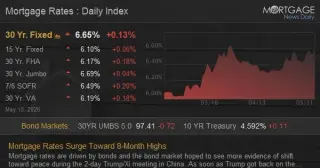
Mortgage rates rose toward eight-month highs after a bond-market selloff tied to the Trump-Xi talks, with the top-tier 30-year fixed around 6.62% (6.65% on some rate displays). The move followed higher Treasury yields, though increased purchases of mortgage-backed securities by Fannie Mae and Freddie Mac provided some support to rates.
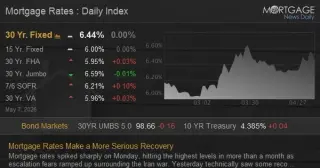
Mortgage rates spiked Monday on fears of escalating Iran tensions, but have since rebounded to last Friday’s levels as progress toward a peace agreement and falling oil prices pulled yields lower; the move mirrors broader declines in oil and bond markets, with the 30-year fixed rate hovering around 6.44% today.
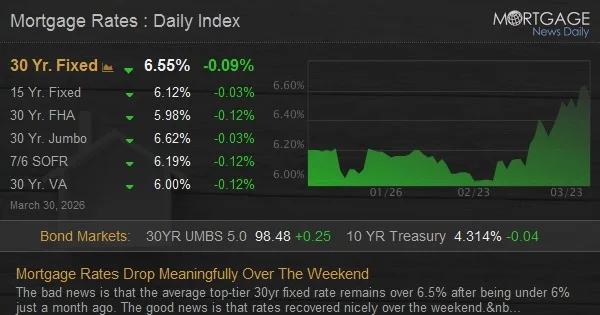
Mortgage rates bounced lower over the weekend but remain elevated, with the 30-year fixed around 6.55% ( peaking near 6.64% intraday ), the highest since August 2025. The relief is short‑term and no clear long‑term turning point has emerged as the bond market stays influenced by inflation dynamics and geopolitical factors, including oil volatility from the Iran situation.
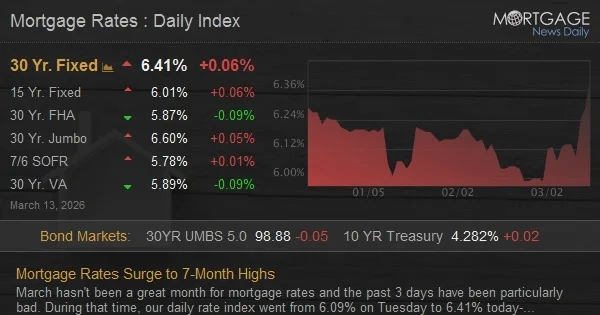
Mortgage rates jumped to a seven-month high, with the 30-year fixed at about 6.41% after a three-day rise driven by weakness in the bond market tied to inflation fears sparked by the Iran conflict, marking the sharpest 3-day move since early April 2025.
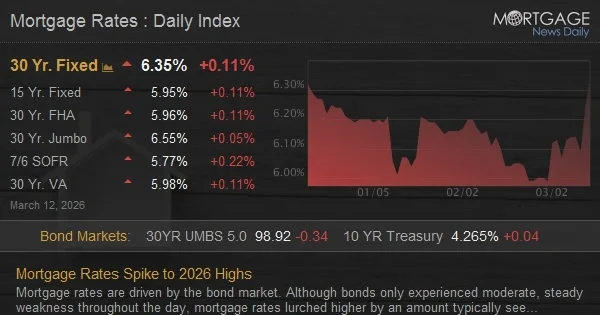
Mortgage rates rose to 6.35% today, the highest level since December 2025, as weakness in the bond market and renewed volatility around the 6.25% threshold propelled bigger moves; analysts note 6.25% acts as a volatile dead zone, with the move driven by broader geopolitical and macro concerns rather than a single news event.
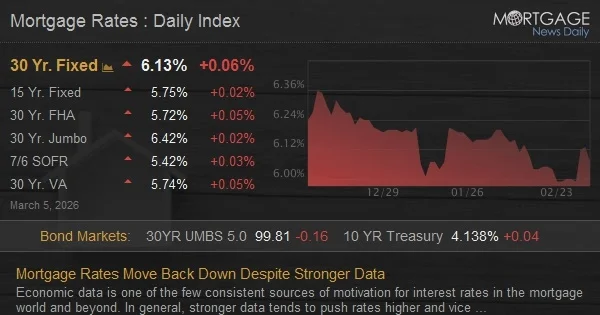
Mortgage rates pulled back roughly halfway from two-week highs after stronger ADP payrolls and a robust ISM Services report, with the 30-year fixed around 6.13% as inflation signals cooled and traders waited for further clarity.
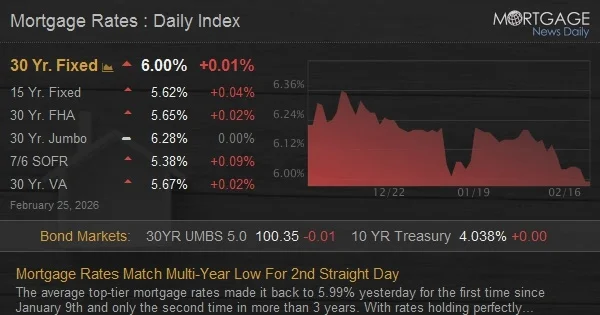
Mortgage rates hovered near multi-year lows, with the 30‑year fixed around 6.00% (5.99% the previous day) and the 15-year at 5.62% as rates held steady for a third straight day; MBS prices and Treasury yields showed little movement, signaling a cautious stance in a data-light session.
Mortgage rates dipped back into the 5s, with the 30-year fixed at 5.99% today (down 0.05) as the broader bond market and MBS benefited from Fannie/Freddie bond-buying plans; no new news sparked the move and today’s improvement is modest compared with January’s brief visit to similar levels. Lenders’ quotes vary based on upfront costs and borrower specifics, so 5.99% is a top-tier average rather than a universal rate, and rates remain vulnerable to intraday reversals if the bond market moves against them.
Mortgage rates remain near three-year lows after early-January MBS purchases by Freddie Mac and Fannie Mae spurred a drop; a softer-than-expected January CPI helped push yields a bit lower, keeping rates in a tight range around those long-term lows.
Mortgage rates held steady around 6.17% for the 30-year fixed, staying in a tight 6.15%–6.20% range after a two-week high; traders weighed two economic reports and a Treasury borrowing outlook that hinted at higher issuance (which could push yields up), but a tame services-sector release helped bonds stabilize and keep rates from moving much today.
Mortgage rates held steady this week, with the 30-year fixed around 6.16% and the 15-year at 5.75%, as bonds consolidate after early-week volatility while markets await upcoming economic data.
Mortgage rates climbed to 6.21% for the 30-year fixed, tying the highest level in about a month, as weakness in global markets and geopolitical events pressured Treasuries and mortgage-backed securities. After briefly touching 5.99% earlier in January, rates rose in the wake of the administration’s announced $200 billion mortgage-bond buying plan, with the market awaiting how this program will unfold and how upcoming economic data and geopolitics will influence rate direction.
The US and Saudi Arabia are finalizing a broad set of agreements, including a non-binding security guarantee and a weapons deal, ahead of Crown Prince Mohammed bin Salman's visit to the US, which aims to bolster strategic cooperation and possibly advance Middle East peace efforts.
Five years after the murder of journalist Jamal Khashoggi, Saudi Arabia has successfully rehabilitated its image and regained favor in Washington. Both the Trump and Biden administrations have embraced Saudi Arabia, with Biden's initial pledge to hold Crown Prince Mohammed bin Salman accountable for Khashoggi's killing evaporating within a year. Saudi Arabia's economic influence has led to the rehabilitation of MBS's image in Silicon Valley, Wall Street, nonprofits, media organizations, and think tanks. The kingdom is now reportedly being considered for a security pact and a nuclear program in exchange for signing a diplomatic agreement with Israel. Despite MBS's claims of being a reformist, political rights in Saudi Arabia remain elusive, and human rights abuses continue. The lack of accountability for Khashoggi's murder has set a dangerous precedent, with other countries feeling emboldened to target dissidents abroad.