Tag

Micromoon

All articles tagged with #micromoon

This Weekend’s Blue Moon Won’t Look Blue, But It Will Be May’s Second Full Moon
space17 hours ago

This Weekend’s Blue Moon Won’t Look Blue, But It Will Be May’s Second Full Moon

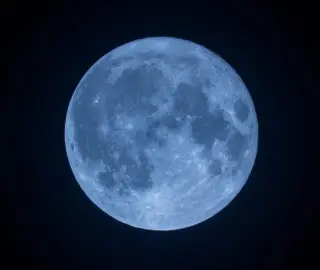
A true blue moon—the second full moon in May—will light the sky this weekend, peaking around 4:45 a.m. ET Sunday; it won’t look blue to the naked eye. The moon will be near apogee, creating a micromoon and sitting about 252,334 miles from Earth, so it may appear slightly smaller, though the change is hardly noticeable. In the Americas, the full Moon is most prominent late May 30 (into May 31 elsewhere). A calendrical blue moon occurs roughly every two to three years, and the term comes from historic almanacs; a true blue tint is rare (as after Krakatoa in 1883). The next calendrical blue moon isn’t until 2037.

Weekend blue micromoon: a distant, dimmer full moon won't return until 2028
space1 day ago

Weekend blue micromoon: a distant, dimmer full moon won't return until 2028

A rare blue micromoon will appear this weekend as the second full moon of May (a blue moon) and the most distant, smallest-looking full moon of the year. It will be about 6% smaller and 10% dimmer than a typical full moon due to its distance of roughly 252,360 miles, so the effect may be subtle. The next blue moon won’t occur until December 31, 2028. In the Northern Hemisphere it will appear near Antares in the Scorpius constellation, with the Southern Hemisphere potentially seeing Antares briefly disappear behind the Moon. The Virtual Telescope Project will stream live images of the event.

May's Flower Moon Appears Micromoon-Sized, Blue Moon Follows
space28 days ago

May's Flower Moon Appears Micromoon-Sized, Blue Moon Follows

May’s Flower Moon will be a micromoon—nearly 250,000 miles away—so it’ll look smaller and dimmer than average, with 100% illumination at 1:24 p.m. ET on May 1 and visible after sunset around the world; it may appear orange near the horizon due to Rayleigh scattering. The month’s second full Moon, on May 31, is a Blue Moon and will also be a micromoon, making May 2026 a rare two-full-moon month; Blue Moons occur in about 6% of full Moons; binoculars or a telescope can help spot craters and landmarks.

Flower Moon on May 1: a micromoon glow with a Blue Moon finale
space28 days ago

Flower Moon on May 1: a micromoon glow with a Blue Moon finale

May’s Flower Moon will be fully illuminated at 1:23 p.m. EDT on May 1 as it sits near apogee, appearing smaller as a micromoon about 29.72 arcminutes across; a rare Blue Moon follows later in May on the 31st, meaning two full moons in one calendar month. As night falls, look for Venus at sunset with Jupiter above it, and Spica and Arcturus higher in the sky, while Rayleigh scattering may give the Moon a yellow-orange hue as it climbs and sets.

"Get Ready for the Spectacular Micromoon Tonight"
astronomy2 years ago

"Get Ready for the Spectacular Micromoon Tonight"

The "Snow Moon," a Micromoon, will light up the sky on the night of February 23-24, 2024, offering a captivating celestial spectacle. This full moon, named for February's snowy conditions, is also known by various alternative names in different cultures. Micromoons occur when the moon is at its farthest point from Earth, appearing slightly smaller and dimmer. Despite its reduced size, the event promises to be a captivating sight for moon gazers. The article also delves into the myths and legends surrounding full moons across different cultures, highlighting the universal appeal and powerful place of the moon in human imagination and spirituality.

"2024 Full Moon Calendar: When and Where to See the Micromoon and Full Snow Moon"
astronomy2 years ago

"2024 Full Moon Calendar: When and Where to See the Micromoon and Full Snow Moon"

Tonight's full moon in Michigan marks a "micromoon," the smallest appearance of the moon this year, as it aligns with apogee, the furthest point in its orbit from Earth. Named the "snow" moon, it's associated with heavy snowfall during winter, although this February has seen near-record highs and little snow in Michigan. The full moon began at 7:30 a.m. Saturday, marking day 15 of the lunar cycle, and it's the last full moon of winter before the next one on March 19.

"2024's Smallest Full Moon: When and Where to See February's Snow Moon"
astronomy2 years ago

"2024's Smallest Full Moon: When and Where to See February's Snow Moon"

February's Full Snow Moon, the smallest full moon of 2024, will appear up to 10% smaller in the night sky as it coincides with the moon's farthest point from Earth in its orbit, known as apogee. This month's full moon will rise around 6:30 p.m. local time in the east, reaching its highest point around midnight. The moon's elliptical orbit causes its distance from Earth to fluctuate, resulting in variations in its apparent size. While not officially recognized terms, full moons at perigee are called "supermoons," appearing up to 14% larger and brighter, while those at apogee are referred to as "micromoons." The Full Snow Moon gets its name from its occurrence in the midst of winter for the Northern Hemisphere, and it holds cultural significance in various traditions and celebrations around the world.

"Get Ready for the Micromoon: This Weekend's Small but Spectacular Full Moon"
astronomy2 years ago

"Get Ready for the Micromoon: This Weekend's Small but Spectacular Full Moon"

February's full moon, known as the snow moon, will peak on Saturday and appear slightly smaller than usual as a micromoon, due to its farther distance from Earth. This year's lunar events include a total solar eclipse in April and an annular solar eclipse in October, along with multiple meteor showers. Lunar exploration is also seeing renewed international activity, with the recent successful soft-landing of the Odysseus lunar lander near the moon's south pole.

"Get Ready for February's Micromoon: What You Need to Know"
astronomy2 years ago

"Get Ready for February's Micromoon: What You Need to Know"

February's full moon, known as the snow moon, will peak on Saturday and will be a "micromoon," appearing slightly smaller than usual due to its distance from Earth. The moon will be dimmer than usual, allowing for better visibility of nearby celestial objects. Lunar exploration is experiencing renewed international activity, with the recent successful soft-landing of the Odysseus lunar lander. Additionally, 2024 will feature multiple eclipses and meteor showers, including a total solar eclipse in April and various meteor events throughout the year.

"February's Micromoon: How and When to See the Snow Moon"
astronomy2 years ago

"February's Micromoon: How and When to See the Snow Moon"

February's full moon, known as the snow moon, will peak on Saturday and will be a "micromoon," appearing slightly smaller than usual due to its farther distance from Earth. This year's snow moon will be seen shining next to constellation Leo's brightest star, Regulus, and will be dimmer than usual, allowing for better visibility of nearby celestial objects. Additionally, 2024 will feature multiple eclipses and meteor showers, including a total solar eclipse on April 8 and a multitude of meteor events throughout the year.

"Where and When to Catch February's Snow Moon Across the US"
astronomy2 years ago

"Where and When to Catch February's Snow Moon Across the US"

February's full moon, known as the Snow Moon, will be visible from Thursday evening through Sunday morning, reaching peak illumination at 7:30 a.m. ET on Saturday. This micromoon will be the smallest of the year, occurring when the moon is at its farthest point from Earth. The name "Snow Moon" comes from the heavy snowfall typically seen in February, and it marks the last full moon of winter before spring begins on March 19.