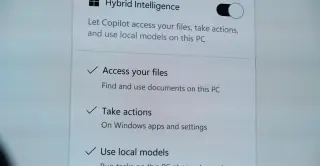
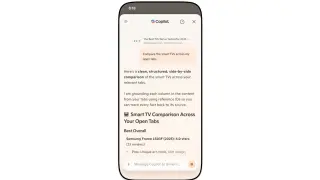
Microsoft announced 'Hybrid Intelligence' and a rebuilt Windows 11 Search at its October 7 event, enabling Copilot to access local files and execute system actions via local and cloud AI models.
Investigative reporting reveals that hundreds of human contractors are reviewing user-uploaded images and prompts for Microsoft’s Copilot AI. These workers evaluate the quality of AI-generated edits, often involving sexually explicit, nonconsensual, or disturbing content, without the ability to flag safety issues. While Microsoft states it uses data to improve products, it has not confirmed if users can opt out of these specific human reviews, raising significant privacy and labor welfare concerns.
404 Media reports that human contractors hired by Microsoft to evaluate Copilot’s image editing features are exposed to disturbing, sexually explicit, and harmful user requests. These workers review uploaded photos and generated edits to ensure quality, often encountering non-consensual sexual imagery, child exploitation content, and pro-anorexia prompts. The practice reveals that users assume their AI interactions are private, while human reviewers assess the output based on 'intuition' rather than safety filters. Microsoft confirmed it uses customer data to improve products, while the contractor agency Prolific did not respond to inquiries. This follows earlier reports of similar practices at OpenAI, highlighting a systemic issue in AI training where human labor is used to refine models without adequate protection for workers or transparency for users.
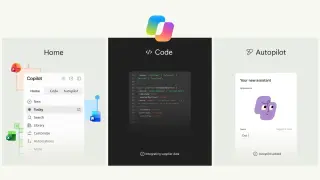
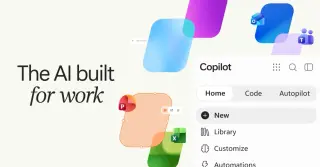
Microsoft has unveiled a major overhaul of its Copilot application, positioning it as a 'new operating system for work' rather than a simple chatbot. The updated app integrates Home, Code, and Autopilot features alongside full versions of Word, Excel, and PowerPoint. This move aims to compete with OpenAI and Anthropic by offering a unified platform for chat, coding, and autonomous agents, backed by a new hybrid pricing model that combines per-user subscriptions with usage-based billing for advanced AI tasks.
Microsoft has officially launched its redesigned Copilot 'super app,' consolidating AI chat, coding, and autonomous agents into a single interface for enterprise users. The new app features three primary tabs: Home, which merges chat and delegated tasks; Code, which allows non-technical users to build applications using natural language; and Autopilot, a persistent agent that handles recurring workflows. This move follows months of consolidation efforts and aims to compete with rivals like Anthropic by offering a unified, usage-based pricing model.
Varonis researchers demonstrated a vulnerability in Microsoft 365 Copilot Enterprise: an undocumented URL parameter (?autorun=1) could auto‑execute prompts without user consent when a user clicked a crafted link, allowing exfiltration of passwords and other sensitive data. Microsoft mitigated the issue by disabling the ?q= prompt injection and later rolled out broader fixes, illustrating how guardrails for LLMs can fail and that prompt injections (including memory‑poisoning attacks) remain a risk. Users should be cautious with untrusted links and limit AI app access.
Microsoft is retiring Copilot Mode in Edge because most Copilot features are now built directly into the browser across desktop and mobile. New capabilities include Journeys for saving and revisiting projects, Vision and Voice for hands‑free browsing, long‑term memory to recall previous chats, Study and Learn mode with guided quizzes, a Writing Assistant for drafts and tone adjustments, and a tab‑to‑podcast feature (English markets only); users can customize which features are enabled in Edge settings.
Microsoft is developing Copilot features modeled on the OpenClaw open-source AI agent, including always-on agents that could operate 24/7 inside Microsoft 365 apps, as it races to bolster its enterprise AI offerings amid competition.
Microsoft introduced two Copilot Researcher modes—Critique and Council—that pair OpenAI’s GPT and Anthropic’s Claude to tackle complex research tasks. In Critique, GPT plans, sources, and drafts, while Claude reviews for factual accuracy and citation quality before the final report. In Council, GPT and Claude generate parallel reports that a third judge summarizes to show agreements and gaps. On the DRACO benchmark, the GPT+Claude combo scored 57.4, beating Claude Opus 4.6 (42.7) and the next-best by nearly 14%, with notable gains in breadth, presentation, and factual accuracy. Access is limited to Frontier early-access alongside a Copilot license.
Microsoft launches Copilot Cowork, an autonomous AI agent built with Anthropic that can read and act on your files, email, and calendar to complete tasks like creating spreadsheets, running reports, and researching without direct supervision. Rolling out as a limited research preview, Copilot Cowork pairs with Agent 365, which will be generally available May 1, and will incorporate AI models from Anthropic and OpenAI. The move underscores the rise of agentic AI in the workplace, even as it stirs concerns about job impact.
Microsoft announced Copilot Tasks, a new AI feature that turns natural-language prompts into fully formed, auto‑generated to‑do lists and then acts across your calendar, emails, files, and other apps. It supports recurring, scheduled, and one‑off tasks, and can generate study plans from syllabi, convert emails into slide decks, plan events, book services, unsubscribe from mail, and more. Importantly, it requires user consent before taking meaningful actions (e.g., sending messages or spending money) and can pause or cancel tasks at any time. Currently in limited research preview with a waitlist for broader access, Copilot Tasks aims to move Copilot from a chat tool to a hands‑free “do” tool, potentially versus Copilot Actions which operate in front of you.
Craig Guildford, chief constable of West Midlands Police, has retired amid criticism of the decision to ban Maccabi Tel Aviv fans from a Villa Park match, with Downing Street and the Home Secretary losing confidence in his leadership. An MPs' evidence report contained inaccuracies later attributed to Microsoft Copilot, an AI tool. The policing watchdog found confirmation bias and overstated risks in the force's evidence; the ICO will continue to review the actions. Acting chief Scott Green will lead as the force works to rebuild trust, with ongoing calls for accountability and potential resignations.
Dell executives at CES 2026 expressed disappointment with the consumer demand for AI PCs, noting that AI features are confusing rather than compelling. Microsoft’s CEO is actively involved in improving Copilot, but the product still lags behind competitors and faces skepticism from consumers. Despite the hype, the market is not yet ready to embrace AI PCs, and traditional sales methods remain necessary until AI tools like Copilot are more mature.
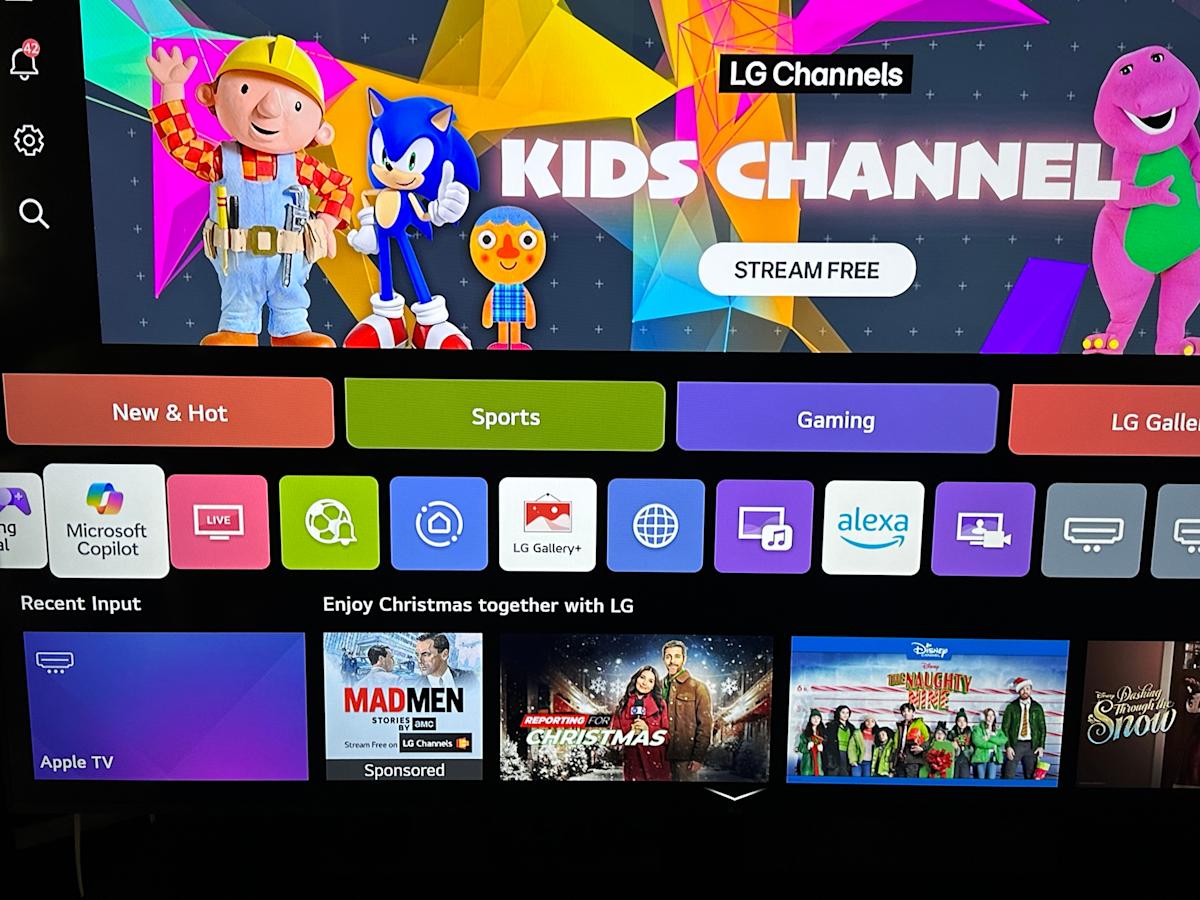
LG will enable users to delete the Microsoft Copilot shortcut on its smart TVs after customers were surprised to find it pre-installed; the shortcut is for launching an AI chatbot via the web browser, not an embedded app, amid concerns over privacy and unsolicited features.
LG will allow TV owners to delete Microsoft Copilot from their televisions following a consumer backlash over privacy concerns and unwanted AI prompts, with a software update to webOS enabling users to remove the shortcut and control microphone access with explicit consent.