Tag

Mrna Vaccines

All articles tagged with #mrna vaccines

Seven-Year Pancreatic Cancer Survivor Highlights mRNA Vaccine Promise Amid Broader Regulatory Optimism
health-and-science24 days ago

Seven-Year Pancreatic Cancer Survivor Highlights mRNA Vaccine Promise Amid Broader Regulatory Optimism

Donna Gustafson, the first recipient of a personalized mRNA vaccine for pancreatic cancer, remains cancer-free seven years after treatment, illustrating the technology's potential. While recent melanoma trials confirm efficacy, regulatory bodies like the EMA highlight broader applications for cancer and heart disease, though challenges in vaccine hesitancy and funding persist.

Melanoma Vaccine Success Sparks Debate on Cost, Scale, and Future Applications
health-and-science1 month ago

Melanoma Vaccine Success Sparks Debate on Cost, Scale, and Future Applications

A landmark Phase 3 trial confirms that a personalized mRNA cancer vaccine, intismeran, significantly reduces recurrence and death risks in melanoma patients when paired with Keytruda. While the clinical success marks a historic breakthrough after decades of failed attempts, market reactions were mixed due to unmet expectations and concerns regarding manufacturing costs and scalability.

Personalized mRNA Vaccine Cuts Melanoma Recurrence Risk by 42% in Phase 3 Trial
health1 month ago

Personalized mRNA Vaccine Cuts Melanoma Recurrence Risk by 42% in Phase 3 Trial

Merck and Moderna reported that their personalized mRNA vaccine, intismeran autogene, reduced the risk of melanoma recurrence or death by 42% when combined with the immunotherapy drug Keytruda. The Phase 3 trial, which involved 1,137 patients, showed that 82.2% of those receiving the combination remained recurrence-free after 24.6 months, compared to 70% for those receiving Keytruda alone. While the results are considered a breakthrough in personalized cancer treatment, the therapy is not yet approved by the FDA and faces challenges regarding manufacturing scalability and cost.

Beyond Melanoma: mRNA Cancer Vaccines Target Pancreatic and Lung Tumors
health2 months ago

Beyond Melanoma: mRNA Cancer Vaccines Target Pancreatic and Lung Tumors

Following the Phase 3 success of intismeran autogene for melanoma, researchers are expanding mRNA-based personalized vaccines to treat pancreatic, lung, and kidney cancers. While early trials show durable immune responses in difficult-to-treat tumors, experts caution that full efficacy data remains pending and political funding cuts could threaten future development.

BioNTech halts colorectal cancer vaccine trial after safety concerns
biotech2 months ago

BioNTech halts colorectal cancer vaccine trial after safety concerns

BioNTech and Genentech have terminated a Phase 2 trial of their personalized mRNA cancer vaccine, autogene cevumeran, for colorectal cancer. The decision followed a safety review that found more deaths in the vaccine group than in the control group. While this marks a setback for the drug as a standalone treatment, the companies plan to continue testing it in combination with immunotherapy. The failure contrasts sharply with recent successes by competitors in melanoma, highlighting the difficulty of using mRNA vaccines in 'cold' tumors that lack active immune responses.

FDA approves Moderna's mFlusiva, the first mRNA flu shot for adults 50+
health3 months ago

FDA approves Moderna's mFlusiva, the first mRNA flu shot for adults 50+

The FDA has approved mFlusiva, the first mRNA-based flu vaccine, for adults aged 50 and older. Developed by Moderna, the shot demonstrated 27% higher efficacy than standard vaccines in trials involving 40,000 participants. While fully approved for ages 50-64, it received accelerated approval for those 65 and older pending further trials. Experts highlight its potential for faster production and strain matching, though insurance coverage remains uncertain due to a lack of CDC advisory committee recommendations.

Australian founder turns AI dog cancer story into Y Combinator-backed startup Gamgee
technology-and-health3 months ago

Australian founder turns AI dog cancer story into Y Combinator-backed startup Gamgee

Paul Conyngham has launched Gamgee, a startup offering personalized mRNA cancer vaccines for dogs, following his viral claim that AI tools helped treat his dog Rosie's cancer. Backed by Y Combinator, the company aims to scale this approach to humans, despite scientific skepticism about the efficacy of the initial case.

Lancet Review Confirms mRNA Vaccines: Safe, Effective, and Broadly Beneficial
health4 months ago

Lancet Review Confirms mRNA Vaccines: Safe, Effective, and Broadly Beneficial

A Lancet review of billions of doses finds mRNA vaccines are safe, highly effective at preventing disease spread, and promising for future uses like cancer treatment; they do not alter human DNA, are safe for children and pregnant people, and boosters extend protection, though rare side effects can occur—emphasizing transparent safety communication to counter misinformation.

FDA panel backs first mRNA flu shot for older adults
health5 months ago

FDA panel backs first mRNA flu shot for older adults

An FDA advisory panel unanimously recommended approving Moderna’s mFlusiva, the first influenza vaccine made with mRNA technology, for adults ages 50–64 and 65+ pending final FDA clearance by early August. The shot could enable faster manufacturing and better matching to circulating strains. In trials, it reduced flu cases by about 27% in people 50+ versus a standard vaccine and produced a strong immune response in 65+ compared with a high-dose vaccine, with mostly mild, temporary reactions. If approved, Moderna will run a large follow-up study (about 400,000 people 65+) over two seasons to gather more safety and efficacy data, including in frail or immunocompromised individuals.

FDA panel endorses Moderna’s next-gen mRNA flu shot for older adults
health5 months ago

FDA panel endorses Moderna’s next-gen mRNA flu shot for older adults

An FDA advisory panel unanimously recommended Moderna’s mRNA flu vaccine (mFlusiva) for adults 50 and older, approving it for two age groups (50–64 and 65+), with a requirement for an additional post‑market trial in the older cohort. In trials, the shot was about 27% more effective than standard flu vaccines. If FDA and then CDC sign off, it could become the first mRNA influenza vaccine, and its flexible, quickly updated design could help match circulating strains, though final timelines and access this fall remain uncertain amid regulatory and political considerations.

Personalized mRNA Cancer Vaccines Show Promise Amid Turbulence
health7 months ago

Personalized mRNA Cancer Vaccines Show Promise Amid Turbulence

A small Memorial Sloan Kettering study finds a patient-specific mRNA vaccine for pancreatic cancer can provoke strong immune responses and deliver long-term survivors, despite a turbulent year of funding and public skepticism around mRNA. Eight of 16 patients had a meaningful immune response and seven are alive six years after the trial; larger multisite trials and industry backing are advancing the approach, which also includes non-personalized, off-the-shelf vaccines aiming to trigger broader anti-tumor immunity.

mRNA vaccines prime CD8+ T cells through two dendritic routes and cross-dressed MHC-I
science7 months ago

mRNA vaccines prime CD8+ T cells through two dendritic routes and cross-dressed MHC-I

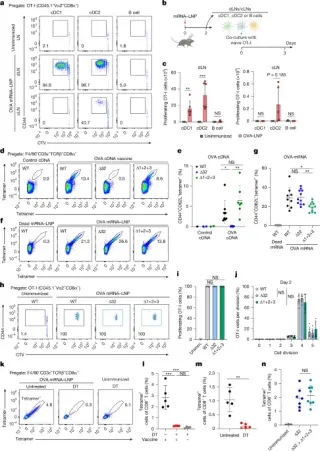
Nature reports that mRNA–LNP vaccines prime CD8+ T cells not through the classic cDC1 cross-presentation, but via redundant input from both cDC1 and cDC2 dendritic cells; a substantial portion of priming comes from cross-dressing—peptide–MHC-I complexes transferred from non-hematopoietic cells in a type I interferon–dependent process—broadening T-cell activation to antigens not encoded by the vaccine and supporting anti-tumor immunity and memory.

Misinformation could slow the next wave of cancer vaccines
health8 months ago

Misinformation could slow the next wave of cancer vaccines

Researchers are advancing personalized mRNA cancer vaccines that may transform cancer care, but the spread of misinformation—notably the turbo cancer myth tying COVID-19 vaccines to aggressive cancers—could erode public trust and hinder adoption; proactive, transparent science communication and clinician conversations are essential to realizing these vaccines’ potential.