Tag

Sanctions Relief

All articles tagged with #sanctions relief

Diplomatic standoff and Hormuz plan test US-Iran talks
world27 days ago

Diplomatic standoff and Hormuz plan test US-Iran talks

The United States and Iran are at odds over whether Tehran agreed to UN nuclear inspections as negotiators pursue a broader deal to end the war, with Iran denying inspection visits to bombed sites and the IAEA not yet commenting. Separately, a 60-day window was outlined to secure sanctions relief and other agreements, while a plan to move thousands of seafarers stranded in the Strait of Hormuz proceeds with regional cooperation amid ongoing Middle East tensions.

Hormuz Strait Reopens to Busy Trade After US-Iran Deal
world27 days ago

Hormuz Strait Reopens to Busy Trade After US-Iran Deal

Since the US-Iran deal aimed at ending the conflict, the Strait of Hormuz has seen renewed shipping, with 172 vessels crossing and 42 on Saturday; more than 200 tankers remain waiting inside the strait as sanctions relief allows Iranian crude sales for 60 days. Traffic includes both resumed normal trade and some previously sanctioned tankers and LNG shipments, but overall crossings are still well below the pre-war daily average. The transit regime is being enforced by Iran’s PGSA with permit requirements, and mine concerns plus conflicting statements about the strait’s status continue to influence route choices and caution.

Pakistan Welcomes Iran’s President After US-Iran Deal Breakthrough
world28 days ago

Pakistan Welcomes Iran’s President After US-Iran Deal Breakthrough

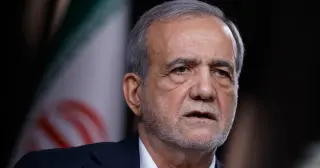
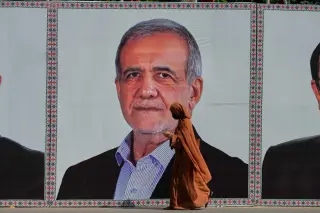
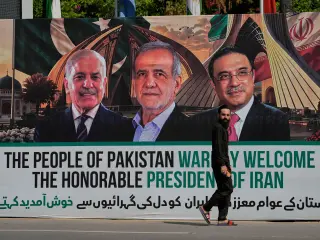
Iranian President Masoud Pezeshkian arrives in Pakistan for a state visit, the first overseas trip since US-Israeli strikes on Iran, amid a US-Iran deal mediated by Pakistan and Qatar in Switzerland that includes $12 billion in unfrozen funds and temporary sanctions relief; he will meet Pakistani leaders to discuss expanding trade, energy cooperation, border security, and regional connectivity, highlighting Islamabad’s mediator role after the Islamabad Memorandum of Understanding.

Vance's Transformative Talk on US-Iran Ties Meets Tehran's Defiant Stance
world-news1 month ago

Vance's Transformative Talk on US-Iran Ties Meets Tehran's Defiant Stance

Vice President JD Vance floated the idea that U.S.-Iran relations could be transformed through Switzerland-talk negotiations, but Iranian officials made clear they’re not there to be friends and aim to extract billions in relief while insisting they will not relinquish the right to enriched uranium for civilian power; Iran’s leadership argues safeguards and assurances could accompany enrichment, even as it signals that a deal could boost its economy, and the U.S. maintains that Tehran must curb any weapons-related ambitions as talks continue.

Trump's Iran MOU sets a wait-and-see path beyond JCPOA
world1 month ago

Trump's Iran MOU sets a wait-and-see path beyond JCPOA

Trump touts a 14-point memorandum of understanding with Iran aimed at extending a ceasefire, lifting sanctions, and funding reconstruction, plus reopening the Strait of Hormuz, but analysts say it is only a preliminary framework with a 60-day negotiation window, lacking detailed nuclear-enrichment limits or a robust verification regime, and its difference from the Obama-era JCPOA remains uncertain.

Ceasefire pact signed as US-Iran talks enter 60-day negotiating window
world1 month ago

Ceasefire pact signed as US-Iran talks enter 60-day negotiating window

The United States and Iran signed a 14-point memorandum of understanding to end the war and restart negotiations, establishing a 60-day window to reach a final deal and outlining sanctions relief plus a potential $300 billion reconstruction fund for Iran; mediation by Pakistan and Qatar will host initial talks, while Iran, regional actors, and observers weigh in. Oil markets moved modestly as the signing occurred and questions remain about verification and the nuclear program as details are filled in.

US-Iran MOU: An Off-Ramp That Shifts Power to Tehran
politics1 month ago

US-Iran MOU: An Off-Ramp That Shifts Power to Tehran

Robert Farley analyzes the publicly released terms of the U.S.–Iran Memorandum of Understanding as offering a negotiated end to the conflict, but warns the deal serves as an admission that the war wasn’t worth its costs. Key elements include a 60-day window for negotiations, a $300 billion reconstruction fund, and substantial sanctions relief with access to frozen assets (reported around $100 billion). The agreement envisions easing maritime restrictions and allowing Iran to resume oil sales, giving Tehran unprecedented leverage over any nuclear deal while leaving Iran’s ballistic missile, drone, and militia programs largely untouched. Farley argues the MOU could place the U.S. in a weaker strategic position relative to JCPOA-era benchmarks, and its success hinges on the next two months of negotiations, which are unlikely to yield a comprehensive accord given political dynamics in Washington and Tehran.

Ambiguity Lurks in Key Passages of US-Iran Peace Framework
world1 month ago

Ambiguity Lurks in Key Passages of US-Iran Peace Framework

Five vague passages in the 14-point US-Iran memorandum of understanding, signed to guide 60 days of negotiations on ending Iran’s nuclear program and reopening the Strait of Hormuz, worry critics. They cover Lebanon and sovereignty, non-interference, possible fees for maritime services in the Strait, and the use of frozen Iranian assets with an unclear funding source (reported as up to $300 billion for reconstruction). The lack of enforcement mechanisms, timing for fund release, and how future protests or opposition movements would be treated all raise questions about how the deal would be implemented and who would enforce it.

Hormuz governance to be shaped with Oman and Gulf states after war-ending agreement
world1 month ago

Hormuz governance to be shaped with Oman and Gulf states after war-ending agreement

U.S. officials say Iran will allow toll-free passage for commercial ships through the Strait of Hormuz for 60 days after signing a war-ending memorandum of understanding, after which Tehran, Oman and other Gulf states will discuss the future administration and maritime services in Hormuz. The United States will lift its naval blockade within 30 days of signing. The MOU outlines a 60-day window to negotiate a final deal, including sanctions relief, potential reconstruction funding for Iran, and nuclear-related terms, with discussions to proceed in line with international law and the sovereignty of coastal states.

Trump unveils Iran framework: oil waivers, a $300B development plan, and a 60-day window
world1 month ago

Trump unveils Iran framework: oil waivers, a $300B development plan, and a 60-day window

The Trump administration publicly outlined a memorandum of understanding with Iran that would grant immediate waivers for Iranian oil exports, a framework for at least $300 billion in reconstruction and development if a final nuclear deal is reached, and a 60-day negotiation period with no new sanctions, while deferring key nuclear details and tying sanctions relief to Tehran's compliance; the plan also envisions continued Hormuz transit rights and robust verification mechanisms, with a signing ceremony planned for Friday.

US Peace Deal Promises Iran Oil Sales and a $300B Financing Windfall
world1 month ago

US Peace Deal Promises Iran Oil Sales and a $300B Financing Windfall

A draft U.S.–Iran memorandum details immediate waivers for Iranian oil exports, tentative sanctions relief, and access to a proposed $300 billion development fund, along with the eventual release of frozen assets in exchange for Iran ending its nuclear program and allowing free navigation in the Strait of Hormuz; signing is planned in Switzerland with about 60 days of talks to finalize a broader peace deal and end hostilities, though critics warn the package could reward Iran too much without clear guarantees.

Draft Memo Maps Quick Path to End US-Iran War and Sanctions Relief
world1 month ago

Draft Memo Maps Quick Path to End US-Iran War and Sanctions Relief

Bloomberg publishes a 14-point draft memorandum proposing an immediate end to the US-Iran war, with the US lifting naval blockades and sanctions, Iran restoring Gulf traffic, and a 60-day window to negotiate a final agreement, including a plan for at least $300 billion in development financing and UN Security Council backing for the final deal; Iran pledges not to pursue nuclear weapons and both sides set up an implementation mechanism to oversee the agreement.

US downplays Iran deal text, cites back-channel commitments
world1 month ago

US downplays Iran deal text, cites back-channel commitments

US officials describe the circulated text of the Iran agreement as vague and mainly a political framework meant to set the stage for highly technical talks, noting it does not reflect critical back-channel commitments Iran has offered (such as sanctions relief and unfreezing funds). They argue substantive details will come through ongoing negotiations, while critics push for full disclosure of the framework. The document outlines some financial relief and oil sales but lacks specifics on uranium destruction. A 60-day window of in-person talks is planned, with a signing ceremony in Switzerland as negotiators push toward a final deal.

Iran-US Deal Sparks Divergent Interpretations on Hormuz and Lebanon
world1 month ago

Iran-US Deal Sparks Divergent Interpretations on Hormuz and Lebanon

ISW-CTP say diverging interpretations of the US-Iran deal abound, with the full text unreleased, making it hard to confirm whether Hormuz provisions allow Iran to claim sovereignty or impose fees; Tehran signals joint management with Oman and aims to reframe the strait as under Iranian control, while Western shipping moves cautiously as mine threats linger. Hezbollah pledges adherence to a Lebanon ceasefire and hints the deal could pave an IDF pullback, but Israel vows continued operations; US officials say pullback is not a condition. Within Iran, supporters back the agreement though hardliners criticize it. The 60-day window for follow-on negotiations—including nuclear issues—will determine sanctions relief and the practical reopening of Hormuz, with mine-clearing potentially taking weeks and shipping risk deterring voyages in the near term.