Tag

Oil Price

All articles tagged with #oil price

Treasury yields ease as 10-year nears 2025 highs amid oil-driven inflation fears
business1 month ago

Treasury yields ease as 10-year nears 2025 highs amid oil-driven inflation fears

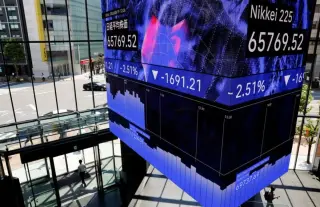
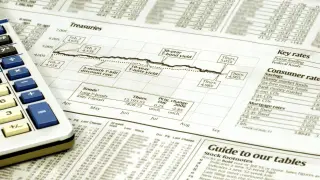
U.S. Treasury yields pulled back after the 10-year briefly hit its highest since January 2025 as Brent crude topped $100 a barrel, reviving inflation fears; the 10-year hovered around 4.67%, the 2-year near 4.33%, and the 30-year about 5.15%. A softer July PMI and a healthier labor market — with weekly jobless claims at 187,000, below forecasts — helped support the market, even as President Trump discussed potential large-scale strikes on Iran amid escalating Middle East tensions.

Oil hits $100 as yields jump to multi-year highs, fanning inflation fears
finance1 month ago

Oil hits $100 as yields jump to multi-year highs, fanning inflation fears

The 10-year Treasury yield rose to about 4.7% (its highest since January 2025) and the 30-year climbed to around 5.19% as Brent crude neared $100 amid Middle East tensions, fueling concerns about higher debt costs and sticky inflation while investors weigh possible Fed action later this year; despite higher yields, equities have held up on earnings growth and optimism about the economy.

US oil reserve slides to 40-year low amid Iran-driven supply shake
energy2 months ago

US oil reserve slides to 40-year low amid Iran-driven supply shake

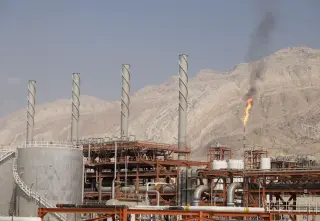
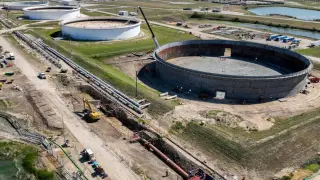
The U.S. Strategic Petroleum Reserve has fallen to 340.3 million barrels (the lowest since 1983) as emergency releases cushion an Iran-related supply disruption. Inventories are at historic lows and are expected to keep declining even after a U.S.–Iran deal to reopen the Strait of Hormuz, with normalization of flows likely taking weeks to months; analysts warn that prices could stay under pressure while the global supply tightens. The SPR’s role as a last-resort supplier remains front and center amid a tight oil market and coordinated IEA releases earlier this year.

Oil Could Jump to $150–160 as Inventories Tighten in Coming Weeks
business2 months ago

Oil Could Jump to $150–160 as Inventories Tighten in Coming Weeks

Global oil inventories are nearing critically low levels, making a spike to $150–160 per barrel plausible in the coming weeks, according to Exxon Mobil’s Neil Chapman, who says we could be approaching “unheard of inventory levels” with a two-to-four week window to see really tight stocks. While prices have been hovering in the $90s, disruptions around the Strait of Hormuz and ongoing supply concerns could drive crude higher, though OPEC+ decisions and demand shifts could temper the move. The piece also suggests hedging risk by owning energy names such as Occidental Petroleum or Exxon Mobil amid potential volatility and inflationary pressure from higher oil prices.

UK petrol spikes to wartime high as Iran conflict pushes oil costs
business3 months ago

UK petrol spikes to wartime high as Iran conflict pushes oil costs

UK unleaded petrol jumped to 158.52p per litre — the highest since the start of the Iran war — as Brent crude climbed to around $111 a barrel from about $73 pre-conflict, lifting pump prices; diesel rose to 185.92p. The RAC says petrol could push past 160p unless oil prices ease, while diesel looks relatively more positive. The chancellor’s plans to raise fuel duty are under review, but the Treasury did not comment.

Oil Futures Underestimate Hormuz Shock, Oil Prices May Soar
energy3 months ago

Oil Futures Underestimate Hormuz Shock, Oil Prices May Soar

Oil futures have not fully priced in the ongoing Hormuz-related supply shock; while futures are up about $30 vs February, they remain $20-30 below some physical cargoes trading around $130-$150 per barrel, indicating the physical market is tighter than the futures curve suggests. If the Strait of Hormuz remains closed, prices could surge toward $150-$200 per barrel into the summer, and it could take months to restore flows (and years to repair damaged upstream/downstream infrastructure). Analysts warn the optimism around a quick reopening may blind markets to the scale of the disruption.

Oil climbs to four-year high as Iran conflict deepens and US-Germany tensions rise
world3 months ago

Oil climbs to four-year high as Iran conflict deepens and US-Germany tensions rise

Oil prices jumped to a four-year high as the Iran war risks disrupting flows through the Strait of Hormuz, with reports of possible renewed strikes and ongoing regional tensions. In Washington, Trump criticized Germany’s leadership over Iran policy as Hegseth faced questions about war costs and duration, while Iran and its allies pushed back against Western pressure. Across the region, fighting between Israel and Hezbollah in Lebanon caused mass displacement and casualties, a Gaza flotilla was intercepted, and Iran vowed to defend its nuclear and missile capabilities as the U.S. weighs new options and Germany mulls troop reductions.

Oil hits 2022 highs as Hormuz closure and US-Iran deadlock stoke fears
business3 months ago

Oil hits 2022 highs as Hormuz closure and US-Iran deadlock stoke fears

Brent crude surged to over $122 a barrel—the highest since 2022—as stalled US-Iran talks and Iran's near-closure of the Strait of Hormuz keep supply tight; the one-day gain near 10% and fears of a prolonged blockade raise the possibility of much higher prices (analysts warn up to $190 if the impasse lasts months) with inflation and recession risks mounting globally.

UAE quits OPEC, signaling a reshape of oil pricing power
business3 months ago

UAE quits OPEC, signaling a reshape of oil pricing power

The UAE’s plan to quit OPEC is seen as a potential blow to the cartel’s ability to influence prices as non-OPEC output—especially US shale—grows and OPEC’s share of global crude shrinks. The UAE, a top exporter and fourth-largest producer, could add about 1 million bpd after leaving, amid ongoing supply risks like the Hormuz closure that keep markets volatile. While OPEC’s influence has waned since the 1970s, observers say the exit could mark a shift toward a less centralized pricing regime, with some calling it the end of OPEC as we know it, though the group would likely persist in a reduced form.