New research indicates that ovaries remain biologically active decades after menopause, undergoing significant molecular changes that may influence systemic health and cancer susceptibility.
A new study reveals that ovaries do not become inert after menopause but continue to remodel, showing increased inflammation and structural changes that may influence systemic aging and cancer susceptibility.
A new study in Aging Cell reveals that ovaries do not become inert after menopause but undergo significant protein shifts, influencing systemic aging and potentially increasing cancer risk.
A new 'reproductive resilience hypothesis' published in Cell suggests that female reproductive tissues actively drive systemic body maintenance, challenging the view that reproduction accelerates aging. Researchers argue that natural selection favors longevity in females to ensure offspring survival, with the ovary acting as a central regulator of health across all tissues. Clinical trials are now testing whether drugs like rapamycin can slow ovarian aging to extend health span.
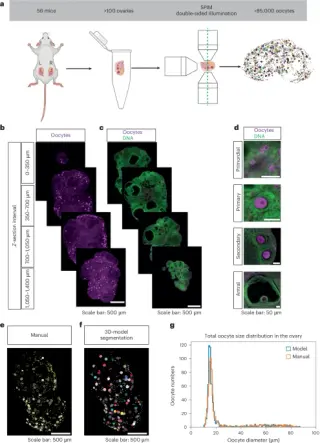
Researchers have created the first complete three-dimensional map of the mouse ovary across its reproductive lifespan, revealing that the organ actively regulates egg activation rather than passively depleting its supply. By combining light-sheet microscopy with AI-driven segmentation, the team quantified over 85,000 oocytes in more than 100 intact ovaries. The study found that while total egg numbers decline by tenfold with age, the proportion of eggs transitioning from dormancy to growth remains stable at approximately 14%. This suggests a homeostatic mechanism where the ovary monitors its reserve and activates a fixed fraction of cells, challenging previous models of passive storage. Additionally, the research uncovered significant variability in egg counts among genetically identical mice and identified a developmental bottleneck at 60 micrometers, offering new insights into reproductive aging and potential targets for extending fertility.