Tag

Photocatalysis

All articles tagged with #photocatalysis

Oregon State Researchers Develop Sulfur-Based Material for Cheaper Green Hydrogen
science-and-technology1 month ago

Oregon State Researchers Develop Sulfur-Based Material for Cheaper Green Hydrogen

A new light-activated material from Oregon State University can produce hydrogen from water without expensive metal catalysts. The material, BVR-19, uses a unique sulfur bond to drive the reaction efficiently. This approach could lower the cost of green hydrogen, which currently costs about $5 per kilogram compared to $1.50 for fossil-fuel-derived hydrogen. The findings, published in the Journal of the American Chemical Society, offer new design rules for solar fuel production.

Copper Single-Atom Catalyst Enables Recyclable, Selective N-Demethylation Under Visible Light
science-and-technology3 months ago

Copper Single-Atom Catalyst Enables Recyclable, Selective N-Demethylation Under Visible Light

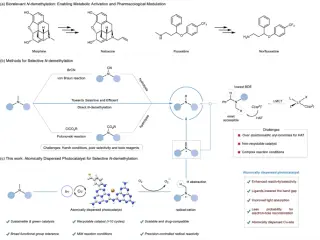
Researchers have developed a noble-metal-free, recyclable photocatalyst consisting of atomically dispersed copper sites on functionalized graphitic carbon nitride (Cu@f-gC3N4). This system enables the selective N-demethylation and N-dealkylation of tertiary amines under 390 nm light and an oxygen atmosphere. The catalyst achieves high yields for pharmaceutically relevant substrates, is scalable to 10 mmol, and retains activity over more than ten reuse cycles. Mechanistic studies confirm a photoredox pathway involving amine oxidation, superoxide formation, and hydrolysis, offering a sustainable alternative to traditional methods that rely on toxic reagents or precious metals.

Copper Catalysts Enable Controlled Cycloadditions for Benzene Bioisosteres
science3 months ago

Copper Catalysts Enable Controlled Cycloadditions for Benzene Bioisosteres

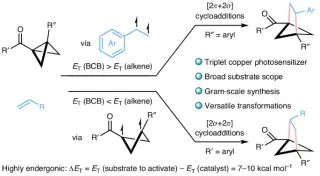
Researchers at Nature Chemistry report a new method for synthesizing bicyclo[2.1.1]hexanes, which serve as saturated bioisosteres for benzene rings. By using heteroleptic copper(I)-BINAP complexes with pyrazolylpyridine ligands, the team achieved controlled triplet photosensitization. This approach moderates radical generation, preventing polymerization side reactions and expanding the range of compatible substrates to include electron-deficient alkenes, enynes, and dienes. The method allows for the synthesis of complex polycyclic alkanes with aryl substituents at specific positions, offering a more versatile alternative to traditional noble-metal catalysts.

Theory-guided design accelerates solar-fuel catalysts from polyheptazine imides
technology8 months ago

Theory-guided design accelerates solar-fuel catalysts from polyheptazine imides

Researchers developed and validated a reproducible theory based on many-body perturbation theory to predict how different metal ions affect the structure, band gaps, and light absorption of polyheptazine imides, testing 53 ions and eight synthesized materials; the results, confirmed by measurements of hydrogen peroxide production, enable faster, targeted design of solar-to-chemical catalysts for water splitting and CO2 reduction.

Revolutionary Solar Tech Converts Water to Hydrogen Fuel
science-and-technology1 year ago

Revolutionary Solar Tech Converts Water to Hydrogen Fuel

Scientists in Japan have developed a prototype reactor that uses photocatalytic sheets to split water molecules, producing hydrogen fuel from sunlight and water. This proof-of-concept technology, while still inefficient for commercial use, shows promise for creating sustainable hydrogen fuel if more efficient photocatalysts can be developed. The reactor's efficiency is currently low, but researchers are hopeful that advancements in photocatalyst materials and larger reactors could lead to practical applications, potentially transforming solar energy conversion and infrastructure.

Revolutionary Solar Tech Converts Water to Green Hydrogen Fuel
science-and-technology2 years ago

Revolutionary Solar Tech Converts Water to Green Hydrogen Fuel

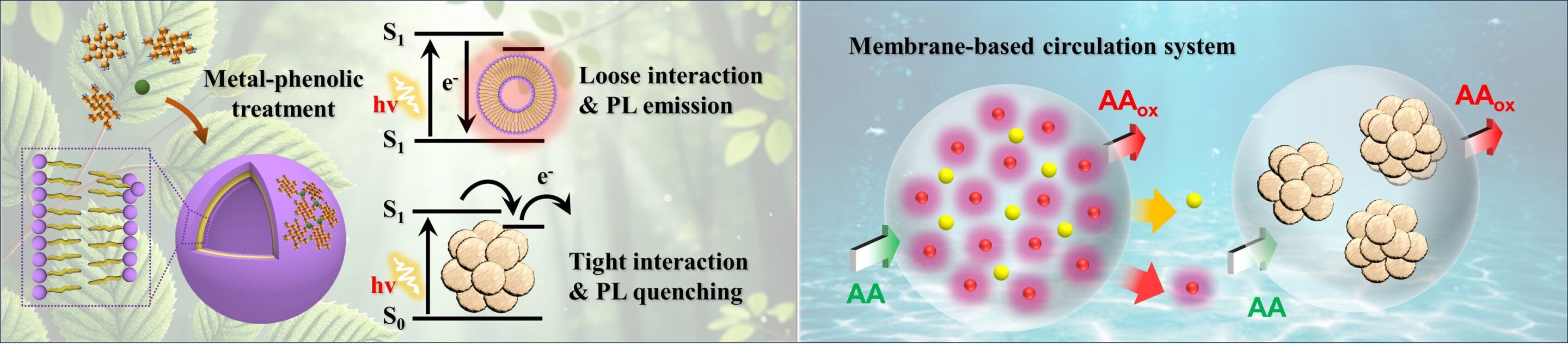
Researchers have developed a new solar hydrogen production technology by creating a supramolecular fluorophore nanocomposite that mimics natural photosynthesis. This system uses tannic acid-based metal-polyphenol polymers to enhance the stability and efficiency of photocatalytic reactions, achieving a hydrogen production rate 5.6 times higher than previous methods. The technology combines modified rhodamine dyes with bacteria to convert sunlight and ascorbic acid into hydrogen, offering a sustainable energy solution.

"Revolutionary Research Unlocks CO₂ Conversion into Sustainable Fuel"
science-and-technology2 years ago

"Revolutionary Research Unlocks CO₂ Conversion into Sustainable Fuel"

Researchers have developed a material consisting of copper anchored on nanocrystalline carbon nitride, which, when exposed to sunlight, can efficiently convert CO2 into methanol, a green fuel. This breakthrough paves the way for creating sustainable fuels and reducing the impact of carbon dioxide, the primary contributor to global warming. The new catalyst, made of abundant elements like carbon, nitrogen, and copper, demonstrates high efficiency and selectivity, offering a promising pathway for the development of highly tunable catalysts at the nanoscale for CO2 conversion.

Revolutionary Recycling Method Eliminates Polyethylene Waste
environment-science2 years ago

Revolutionary Recycling Method Eliminates Polyethylene Waste

Researchers at the University of Adelaide have developed a method to convert polyethylene waste into valuable chemicals using light-driven photocatalysis and solar energy, offering a sustainable solution to plastic pollution and contributing to a circular economy. The process upcycles polyethylene plastic waste into ethylene and propionic acid with high selectivity using atomically dispersed metal catalysts, harnessing renewable solar energy and addressing contemporary environmental and energy challenges. This innovative approach could revolutionize waste management and chemical manufacturing while reducing plastic pollution.

"Titanium Dioxide: Pioneering Green Chemical Synthesis"
science-and-technology2 years ago

"Titanium Dioxide: Pioneering Green Chemical Synthesis"

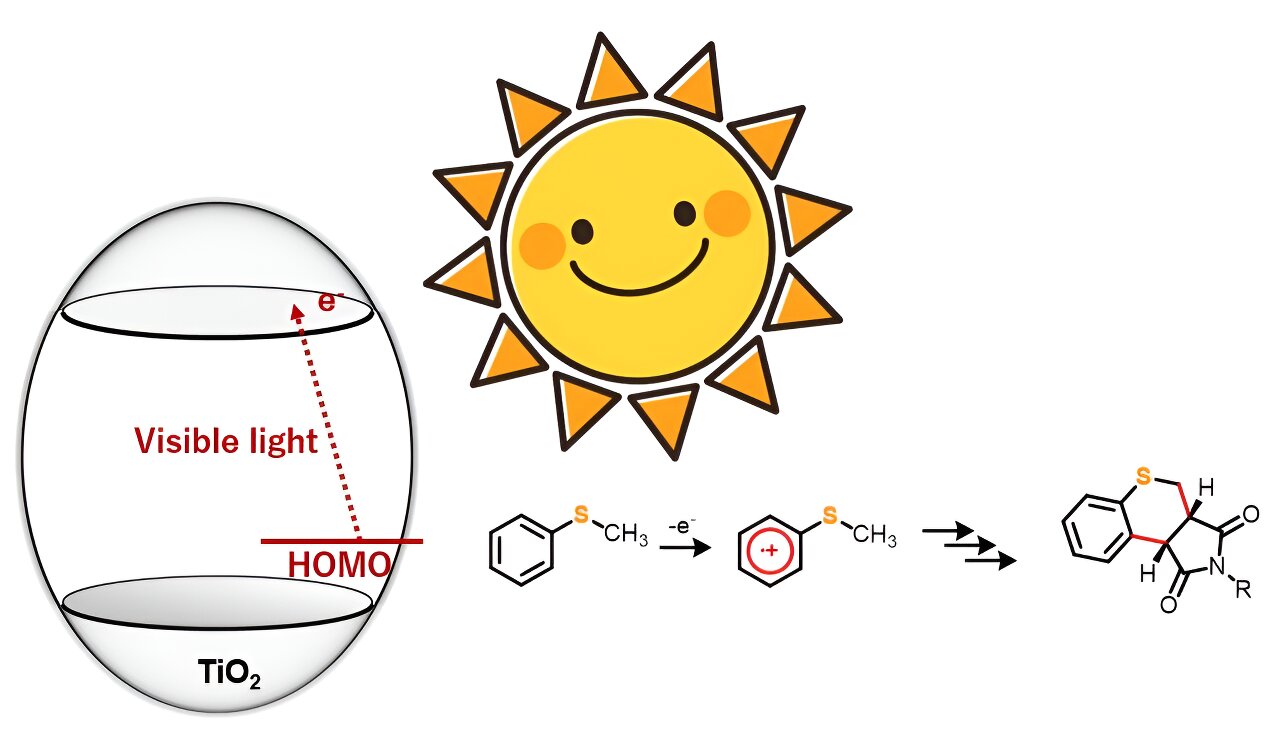
Researchers have developed an eco-friendly method for synthesizing heterocyclic thiochromenopyrroledione derivatives using titanium dioxide as a photocatalyst under blue light. This innovative approach, led by Professor Yutaka Hitomi, offers a more sustainable and less resource-intensive alternative to traditional high-temperature, high-pressure synthesis methods, potentially revolutionizing the chemical and pharmaceutical industries by enabling accessible and affordable production of important organic compounds.

"Maximizing Solar Energy Output with 2D Supercrystals"
science-and-technology3 years ago

"Maximizing Solar Energy Output with 2D Supercrystals"

Researchers at LMU's Nano-Institute have developed a two-dimensional supercrystal that generates hydrogen from formic acid using sunlight. The supercrystal, made of gold and platinum nanoparticles, concentrates solar energy and enhances light absorption, resulting in highly localized and strong electric fields. By placing platinum nanoparticles in the hotspots between the gold particles, the researchers achieved a hydrogen production rate of 139 millimoles per hour and per gram of catalyst, setting a world record for H2 production with sunlight. This material solution offers potential for other reactions and could contribute to greener hydrogen production and the conversion of CO2 into usable substances.

Revolutionary Breakthrough: Acetone Extraction Made Affordable, Safer, and Easier
science-and-technology3 years ago

Revolutionary Breakthrough: Acetone Extraction Made Affordable, Safer, and Easier

Scientists from Brazil and Germany have developed a safer and more economical method for producing acetone, a key component in the chemical industry. The new process uses light and a photoactive iron chloride catalyst, eliminating the need for high-temperature and high-pressure steps. This innovation simplifies acetone production, enhances safety, and reduces costs. The researchers plan to scale up the process for industrial use and are seeking partnerships with companies. The method also has the potential to be used with other substances and can be further optimized for sustainable production.