Tag

Green Chemistry

All articles tagged with #green chemistry

Thianthrenium Salts Enable Safe, Versatile Cyclopropanation via Iron Catalysis
chemistry8 days ago

Thianthrenium Salts Enable Safe, Versatile Cyclopropanation via Iron Catalysis

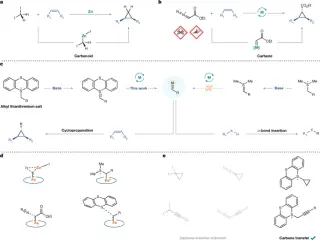
Researchers have developed a new method for synthesizing cyclopropanes using alkylthianthrenium salts as carbene precursors. Unlike traditional diazo compounds or diiodomethane, which pose significant safety risks, thianthrenium salts offer a safer profile with no detectable exotherm. The reaction, catalyzed by iron phthalocyanine, allows for diverse olefin and carbene partners, overcoming limitations of previous methods that restricted substrate scope. The approach also enables scale-up via mechanochemistry (ball milling) and extends to other carbene-transfer reactions like sigma-bond insertion.
Patent data reveals hazardous solvents dominate chemistry despite green initiatives
science-and-technology13 days ago

Patent data reveals hazardous solvents dominate chemistry despite green initiatives

A comprehensive analysis of 1.3 million chemical reactions in patents from 1976 to 2016 reveals that the use of hazardous solvents has increased rather than decreased over the past four decades. Despite nearly 30 years of efforts to promote greener alternatives, dangerous liquids like dichloromethane remain the preferred choice for over 70% of reactions in recent years. The study highlights a persistent reliance on petrochemical-derived solvents, even when regulations restrict specific toxic substances, often leading chemists to switch to other hazardous options rather than safer ones.

New electrochemical method converts CO2 and nitrite into high-value arylglycines
science13 days ago

New electrochemical method converts CO2 and nitrite into high-value arylglycines

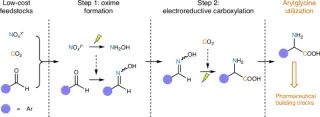
Researchers have developed a two-step electrochemical process to synthesize arylglycines, a class of valuable unnatural amino acids, using carbon dioxide, nitrite, and aromatic aldehydes as feedstocks. The method replaces traditional toxic reagents and harsh conditions with a Lewis acid-assisted electrocatalytic approach. Using benzaldehyde as a model substrate, the process achieved 84% conversion and 81% Faradaic efficiency for phenylglycine. The technique involves the electrochemical reduction of nitrite to hydroxylamine, which condenses with aldehydes to form oximes, followed by electroreductive carboxylation with CO2. This approach offers a sustainable alternative for producing compounds essential in medicinal chemistry and peptide natural products.

"Low-Powered Lasers Offer Innovative Solution to Plastic Waste Crisis"
environment2 years ago

"Low-Powered Lasers Offer Innovative Solution to Plastic Waste Crisis"

A global research team led by Texas Engineers has developed a laser-based method to break down tough plastics into valuable components, offering a sustainable approach to plastic pollution. This technique uses low-power light to decompose plastics into luminescent carbon dots, which have potential applications in various industries. The discovery, published in Nature Communications, represents a significant step towards efficient plastic recycling and advancing green chemistry. Further research is needed to optimize and scale up the process for industrial use.

Eco-friendly adhesives: Harnessing nature for sustainable bonding
science-and-technology3 years ago

Eco-friendly adhesives: Harnessing nature for sustainable bonding

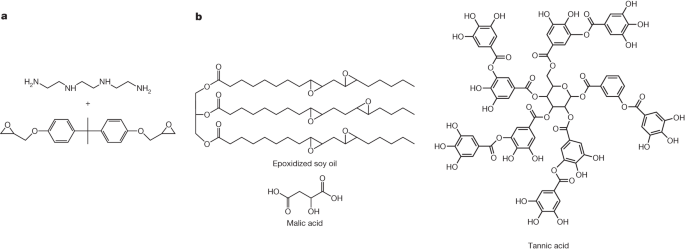
Researchers are exploring the use of sustainably sourced components, such as lignin and epoxidized soybean oil, to develop high-strength adhesives. These bio-based materials offer advantages beyond renewability, including improved mechanical properties and reduced environmental impact compared to traditional epoxy resins. Inspired by natural adhesives found in mussels and other organisms, scientists are incorporating catechol-based compounds and weak bonds into biomimetic adhesives to enhance toughness and performance. The development of eco-friendly antifungal coatings and recyclable non-isocyanate polyurethanes further demonstrates the potential of sustainable materials in the adhesives industry.

Microbes Powered by Electricity Confirmed in First Experiment
science-and-technology3 years ago

Microbes Powered by Electricity Confirmed in First Experiment

Researchers at the Leibniz Institute for Natural Product Research and Infection Biology have experimentally confirmed that bacteria use electrons from hydrogen in microbial electrosynthesis to produce more chemical substances than previously known. Microbial electrosynthesis is a promising technology that can bind carbon dioxide, produce ethanol and other organic compounds that can be used as fuel, and thus store excess electricity. The researchers optimized the process for the highest possible yields and found that amino compounds were formed that the bacteria do not normally produce, which could be used in the chemical industry.

"Revolutionary Catalyst Converts Methane into Valuable Chemicals Using Sunlight"
science-and-technology3 years ago

"Revolutionary Catalyst Converts Methane into Valuable Chemicals Using Sunlight"

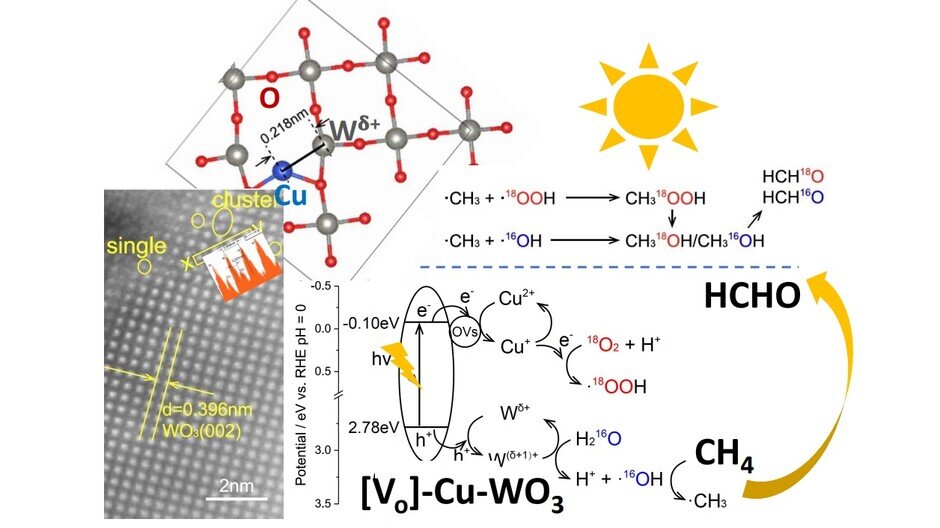
Researchers from the University of Hong Kong and Tsinghua University have developed a tungsten trioxide (WO3) catalyst that can convert methane into formaldehyde with nearly 100% selectivity under visible light. The catalyst features a dual active site comprising copper and tungsten atomic species that work in tandem to ensure an effective and selective conversion process. Formaldehyde is a high-volume commodity chemical with a market value of USD 8 billion, expanding at a compound annual growth rate (CAGR) of 5.7%.