Tag

Magma

All articles tagged with #magma

Dormant Volcanoes May Be Breathing Magma, Study Finds
science26 days ago

Dormant Volcanoes May Be Breathing Magma, Study Finds

ETH Zurich researchers mapped Methana volcano over 700,000 years and found a surge of zircon crystals during a long dormancy, indicating massive magma buildup beneath the surface even when eruptions cease. This challenges the idea that long inactivity means extinction and suggests subduction-zone volcanism can quietly reawaken. The team notes that monitoring gas, ground deformation, earthquakes, and gravity changes is crucial to detect reawakening in dormant volcanoes; the findings, published in Science Advances, have broader implications for volcanic hazard assessment.

Etna’s Hidden Magma Route: A Petit-Spot Mechanism Rewrites Europe’s Most Active Volcano
science1 month ago

Etna’s Hidden Magma Route: A Petit-Spot Mechanism Rewrites Europe’s Most Active Volcano

A new study suggests Mount Etna is fed by a rare petit-spot–style magma source from deep upper-mantle pockets, delivering a slow, steady supply that produces persistent alkaline eruptions and unusual chemistry for a subduction-zone volcano—potentially making Etna a unique case with important implications for hazard assessment near Catania and Messina.

Yellowstone Magma Flows as a Broad, Slow River Beneath North America
science1 month ago

Yellowstone Magma Flows as a Broad, Slow River Beneath North America

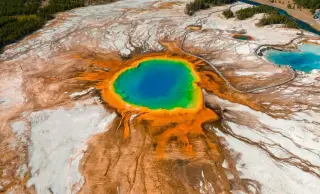
A new Science study argues Yellowstone’s volcanism is driven by a broad, slow-moving flow of hot rock beneath North America, forming a connected magma system rather than a single deep chamber, with eastward mantle motion tied to Farallon Plate remnants—reshaping how scientists understand eruptions, which remain unpredictable and not overdue.

Dormant Giant Under Tuscany: Seismic Mapping Reveals Massive Underground Magma
science1 month ago

Dormant Giant Under Tuscany: Seismic Mapping Reveals Massive Underground Magma

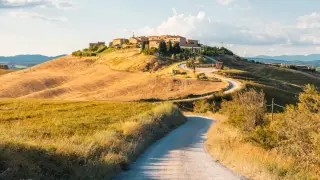
Scientists using seismometers mapped a vast underground magma reservoir beneath Tuscany, Italy—comparable in size to Yellowstone’s magmatic system—yet with no eruptions. The dormant chamber, detected to a depth of 15 kilometers, could inform geothermal development and mineral exploration while raising questions about why it has remained inactive.

Yellowstone's Heat Source Traced to Shallow Mantle, New Study Finds
earth-science1 month ago

Yellowstone's Heat Source Traced to Shallow Mantle, New Study Finds

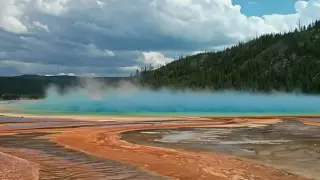
A new 3D model of Yellowstone and the Eastern Snake River Plain suggests tectonic forces within the lithosphere drive magma generation and migration from the shallow mantle (upper asthenosphere) into a complex plumbing system, rather than a deep mantle plume powering a single giant chamber. This tectonically controlled magma movement could improve eruption forecasting and hazard assessment for the park’s massive caldera, whose last major eruption occurred about 630,000 years ago and is not expected imminently.

Yellowstone caldera uplift: inch-scale ground rise linked to deep magma movement
science3 months ago

Yellowstone caldera uplift: inch-scale ground rise linked to deep magma movement

Ground around Yellowstone’s northern caldera has risen about an inch over a 20-mile area since July, a deformation linked to deep magma movement. Scientists say this is normal activity for the hotspot and not a sign of an imminent eruption, noting Yellowstone hasn’t erupted in about 70,000 years. Public reporting and USGS footage emphasize there’s no eruption threat at this time.

Juno Spots Io's Most Powerful Volcanic Eruption Yet
space3 months ago

Juno Spots Io's Most Powerful Volcanic Eruption Yet

NASA's Juno spacecraft captured what scientists describe as the solar system's most energetic eruption observed on Io, with multiple volcanoes lighting up simultaneously from a vast subterranean magma network. The Dec. 27, 2024 event, spotted by JIRAM during a flyby about 74,400 km above Io, released an estimated 140–260 terawatts of power and covered about 40,400 square miles (65,000 sq km). Io harbors around 400 active volcanoes driven by Jupiter's tidal forces. The synchronized eruption suggests interconnected magma reservoirs beneath Io's lava-encrusted surface, and future Io flybys will map new lava flows and ash deposits.

How a Yellowstone Supervolcano Eruption Would Unfold
science10 months ago

How a Yellowstone Supervolcano Eruption Would Unfold

Recent research shows Yellowstone's magma is concentrated mainly under the northeast of the caldera, with a significant volume that could potentially lead to a super-eruption, but such an event is not imminent, occurring roughly every 735,000 years on average. The eruption would cause widespread ash fall, pyroclastic flows, and global climate cooling, but warning signs might be minimal, making prediction difficult. The last super-eruption was 630,000 years ago, and while the impact would be catastrophic, the likelihood of an immediate eruption remains low.

Scientists Investigate the Revival Potential of Extinct Volcanoes
science10 months ago

Scientists Investigate the Revival Potential of Extinct Volcanoes

Scientists have studied Bolivia's Uturuncu volcano, which shows signs of activity despite being classified as extinct, revealing that such volcanoes can 'breathe' and potentially reawaken due to underground fluid movements. Using seismic tomography and satellite data, researchers found no imminent eruption threat but emphasized the importance of monitoring these restless volcanoes, especially as climate change may influence their activity. The study highlights how advanced imaging techniques can better predict volcanic behavior and improve safety measures.

science1 year ago

Supervolcano Threat Looms: Potential for Global Disruption

The Phlegraean Fields supervolcano near Naples, Italy, is showing signs of reawakening, with increased gas emissions and ground deformation raising concerns among scientists. The Solfatara crater is releasing 4,000 to 5,000 tons of carbon dioxide daily, primarily from magma beneath the surface. This activity has prompted heightened monitoring and a raised volcanic alert level, as experts work to determine if these signs indicate an impending eruption or are part of natural geological processes. The situation underscores the potential global impact of a supervolcano eruption.

"Unprecedented: 2000 Earthquakes in 1 Day Off Canada Coast Signal Ocean Floor Ripping Apart"
science2 years ago

"Unprecedented: 2000 Earthquakes in 1 Day Off Canada Coast Signal Ocean Floor Ripping Apart"

Nearly 2,000 earthquakes were recorded in a single day off the coast of Canada, indicating a potential deep sea magmatic rupture and the birth of new oceanic crust. The quakes, centered on the Endeavour site near Vancouver Island, are not a threat to people and are part of the ocean floor spreading apart. Scientists are closely monitoring the area to understand how the ocean floor pulls apart and new crust forms, as well as the impact on the hydrothermal vent system.