Tag

Geochemistry

All articles tagged with #geochemistry

Extinct Red Sea Brine Pool Reveals Oxygen-Free Energy Pathway for Early Life
science14 days ago

Extinct Red Sea Brine Pool Reveals Oxygen-Free Energy Pathway for Early Life

Researchers identified an extinct deep-sea brine pool in the Red Sea that hosted extremophile microbes 2,000 to 16,000 years ago. These organisms likely generated energy by oxidizing manganese and iron without oxygen, offering a potential model for life before Earth's Great Oxidation Event. Sediments from the site contain metal concentrations up to 100 times higher than surrounding areas, suggesting these microbes may also accumulate critical minerals for clean energy technologies.
Lakes Outshine Vents as Likely Cradle for Earth's First Life
science1 month ago

Lakes Outshine Vents as Likely Cradle for Earth's First Life

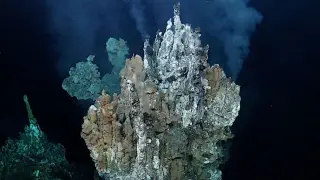
A new PNAS paper by geochemist Benjamin Tutolo argues that life on Earth is unlikely to have originated in hydrothermal vents given ancient ocean chemistry and vent fluid conditions; vent systems would have been too alkaline, sulfur-poor, and lacked the necessary proton gradients, whereas evaporative lakes or ponds present a more plausible setting for assembling RNA, proteins, and lipids. The work challenges long-standing vent-based origins and implies we should rethink where to look for life elsewhere, though questions remain about lake-based scenarios.

Hawaii rocks reveal a faint signal from Earth’s core crossing into the mantle
science2 months ago

Hawaii rocks reveal a faint signal from Earth’s core crossing into the mantle

A 2025 ruthenium-isotope study of Hawaiian basalts finds a small core-derived signal in the mantle, suggesting material from Earth’s core can cross the core–mantle boundary and reach surface plume systems. This supports long-standing ideas of core–mantle exchange but does not show direct transport of gold or imply a large, exploitable flux. The finding adds nuance to the notion that the core is sealed, and while it aligns with estimates that the core holds most of Earth’s gold (enough, in old calculations, to coat continents in a 0.5 m layer), the signal is tiny and more measurements from Hawaii and other hotspots are needed to gauge its extent.

Antarctica's Erebus Spews Pure Gold Crystals from Its Plume
science3 months ago

Antarctica's Erebus Spews Pure Gold Crystals from Its Plume

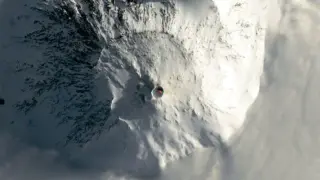
Researchers studying Mount Erebus in Antarctica found micron-scale, faceted gold crystals in snow around the crater, in the volcanic plume, and in distant Antarctic air up to 1,000 km away, with an estimated 80 grams of gold emitted daily. Erebus appears unique in producing crystalline gold particles, unlike other volcanoes, and how the gold separates from volcanic gases remains unclear. Theories include gold riding in chlorine- or sulfur-bearing gases that crystallize as they cool, or gradual formation on the lava lake surface before being carried aloft. The exact mechanism remains unresolved since a 1991 Geophysical Research Letters paper.

Sterile Dirt Hints at Life’s Metabolic Beginnings
science4 months ago

Sterile Dirt Hints at Life’s Metabolic Beginnings

A six-year study of irradiated, life-free soil shows ongoing CO2 release and oxygen consumption, plus measurable electron flow and Krebs-cycle intermediates, suggesting metal- and mineral-catalyzed, metabolism-like chemistry can occur outside living cells and may predate life; while these findings support a geology-driven view of metabolism, the possibility that residual enzymes could contribute cannot be completely ruled out.

Geochemical Clues Hint Africa May Be Forming a New Tectonic Boundary
earth-science5 months ago

Geochemical Clues Hint Africa May Be Forming a New Tectonic Boundary

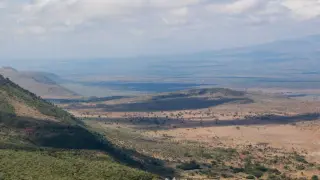
An international Frontiers in Earth Science study found elevated helium isotope ratios and mantle-like CO2 in samples from the Kafue Rift in Central Africa, suggesting mantle fluids are reaching the crust and potentially signaling the early stages of a new plate boundary that could eventually split sub‑Saharan Africa. The result is preliminary, but if confirmed it could open geothermal and other resource opportunities, with follow-up research planned across the Southwest African Rift System.

2.64-Billion-Year-Old Water Found in Canadian Mine Hints at Ancient Microbial Life
science6 months ago

2.64-Billion-Year-Old Water Found in Canadian Mine Hints at Ancient Microbial Life

Geologists in the Kidd Creek Mine uncovered water dating to about 2.64 billion years ago—the oldest known on Earth—with chemical clues pointing to ancient microbial life. The sulfate present appears to be produced in place by rock–water reactions, and a scientist even tasted the water, finding it very salty and bitter, underscoring its long isolation and potential implications for life in extreme environments and on other worlds.