Tag

Plumes

All articles tagged with #plumes

Europa Plume Reanalysis Dashes Confidence in Geyser Claim
science1 month ago

Europa Plume Reanalysis Dashes Confidence in Geyser Claim

A 2026 reanalysis of 14 years of Hubble data finds no localized water-vapour emission from Europa, lowering the original plume-detection confidence from 99.9% to under 90%. The study shows the prior signal could be explained by Europa’s diffuse hydrogen exosphere and small shifts in where the moon’s disk sits on the detector, rather than a true plume. It does not rule out small or intermittent vents, but it does not confirm a geyser or link it to the subsurface ocean. Future missions like NASA’s Europa Clipper and ESA’s JUICE will search more directly at closer range to settle the question.
Io: The Solar System's Relentless Volcano World
space2 months ago

Io: The Solar System's Relentless Volcano World

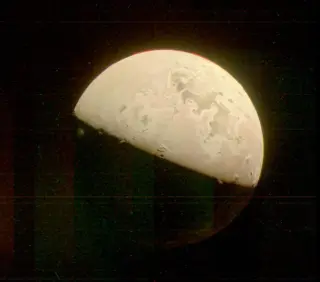
Io, Jupiter’s volcanically active moon with roughly 400 volcanoes and plumes hundreds of kilometres high, was first revealed by Voyager 1 in 1979 and is now understood to be powered by tidal heating that fuels local magma sources, continually resurfacing Io and feeding material into Jupiter’s magnetosphere.

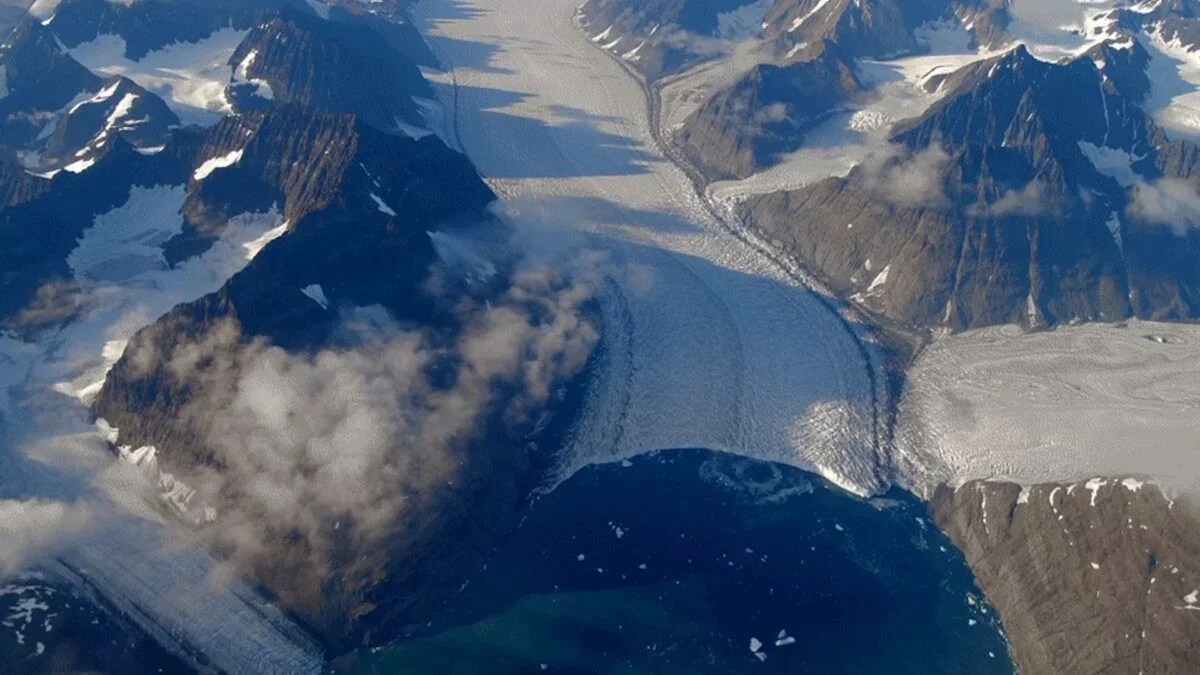
Greenland’s Hidden Ice Boils with Pasta-Style Convection
earth-science7 months ago

Greenland’s Hidden Ice Boils with Pasta-Style Convection

New computer modeling of Greenland’s ice sheet suggests deep plume-like structures arise from thermal convection—a heat-driven, slow churning process that may make some ice softer than previously thought. While this explains the plumes, researchers caution softer ice alone doesn’t automatically mean faster melt or higher sea-level rise, and further studies are needed to understand the full implications for the ice sheet’s mass balance and coastal impacts.

Enceladus' Water Plumes Spark Possibility of Life in Our Solar System
space3 years ago

Enceladus' Water Plumes Spark Possibility of Life in Our Solar System

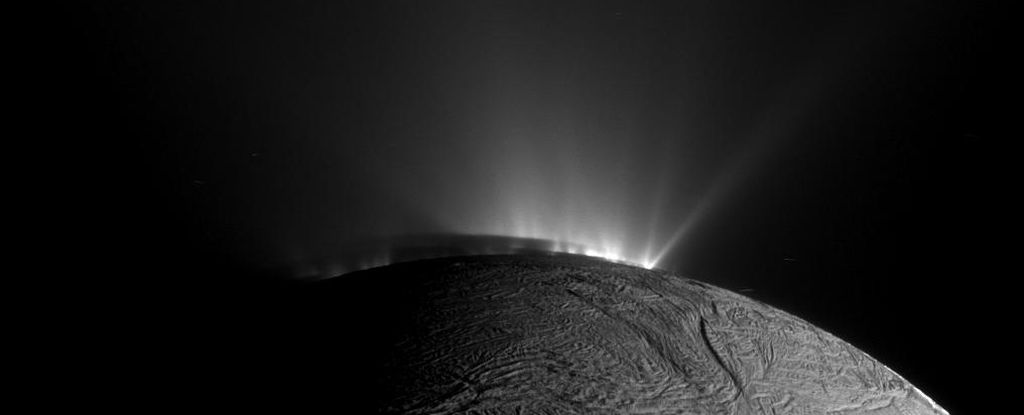
Saturn's moon Enceladus has the potential for extraterrestrial life due to the salty ocean located under the thick icy crust. The James Webb Space Telescope recently recorded a 10,000-kilometer-long plume of water vapor spraying from the surface, the largest spray recorded from Enceladus. Organic molecules such as methane, formaldehyde, and hydrogen have been observed in these plumes, which are molecules that could provide energy for microbes. The Enceladus OrbiLander, a proposed NASA space mission, would orbit Enceladus and land on the moon to collect data.

Enceladus' Water Plumes Shock Scientists and Offer Possibility of Life
science3 years ago

Enceladus' Water Plumes Shock Scientists and Offer Possibility of Life

Saturn's moon Enceladus has the potential for extraterrestrial life due to the salty ocean located under the thick icy crust. The James Webb Space Telescope recently recorded a 10,000-kilometer-long plume of water vapor spraying from the surface, the largest spray recorded from Enceladus. Organic molecules such as methane, formaldehyde, and hydrogen have been observed in these plumes, which are molecules that could provide energy for microbes. The Enceladus OrbiLander, a proposed NASA space mission, could provide more data on this icy Saturn moon.

"Webb Telescope Spots Massive Water Plume Erupting from Saturn's Moon"
space3 years ago

"Webb Telescope Spots Massive Water Plume Erupting from Saturn's Moon"

The James Webb Space Telescope has captured an image of the largest plume of water vapor erupting from geysers on Enceladus, Saturn's ice-covered ocean moon. The eruption measured at least 10,000 kilometers (over 6,000 miles) out into space, around 20 times the size of Enceladus itself. The plumes supply material to Saturn's icy rings, and the team detected something that could be cyanide compounds on the surface of Enceladus. The research has been accepted into Nature Astronomy, and a preprint is available via the NASA website.