Tag

Roscosmos

All articles tagged with #roscosmos

Progress 94 antenna glitch forces manual docking with ISS
space17 days ago

Progress 94 antenna glitch forces manual docking with ISS

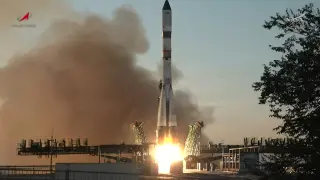
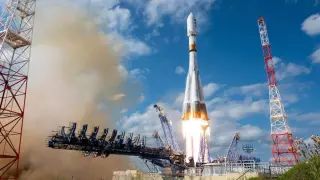
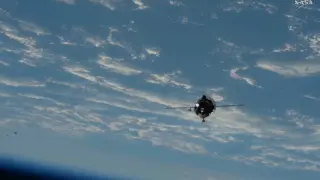
Russia’s Progress 94 cargo freighter failed to deploy an antenna after liftoff, making autonomous docking with the International Space Station impossible. If the antenna cannot be deployed, cosmonaut Sergey Kud-Sverchkov will manually pilot the spacecraft using a backup system for rendezvous and docking. The freighter carries about 2,500 kilograms of cargo and launched from Baikonur on March 22; docking was originally planned for March 24, with NASA/Roscosmos monitoring and a livestream of the docking.

Antenna Glitch Triggers Manual Docking Plan for Russian ISS Cargo Ship
space19 days ago

Antenna Glitch Triggers Manual Docking Plan for Russian ISS Cargo Ship

A newly launched Russian Progress 94 cargo spacecraft developed an antenna deployment failure, jeopardizing automated rendezvous with the ISS. Ground teams are evaluating contingency procedures, including a backup manual docking by cosmonaut Sergey Kud-Sverchkov if the antenna cannot deploy. All other systems remain nominal, and docking was planned, with the cargo expected to stay attached to the station for about six months.

Progress 94 Faces Antenna Glitch Ahead of ISS Docking
space-and-spaceflight19 days ago

Progress 94 Faces Antenna Glitch Ahead of ISS Docking

The Progress 94 cargo spacecraft failed to deploy two automated rendezvous antennas on its way to the ISS, jeopardizing its planned autonomous docking. Roscosmos is troubleshooting, and if unresolved a cosmonaut aboard the ISS (Sergey Kud-Sverchkov) could manually dock the spacecraft using TORU. The uncrewed ship carries about 3 tons of supplies and is scheduled to dock on Tuesday, with NASA providing a live stream of the rendezvous.

Russia eyes 2036 Venus mission to revive Soviet space legacy
space-exploration28 days ago

Russia eyes 2036 Venus mission to revive Soviet space legacy

Russia plans a 2036 Venus mission named Venera-D, a multi-vehicle project including a lander, balloon and orbiter to study Venus’ atmosphere and clouds for signs of microbial life, aiming to revive the Soviet-era space prestige. The program, in development since 2003, is part of Roscosmos’ broader lunar/planetary ambitions, with officials citing historic Venera landings as a foundation, while other nations pursue their own Venus missions as Moscow presses ahead.

Isaacman rails for Roscosmos talks, eyes Soyuz launch attendance
policy-and-politics1 month ago

Isaacman rails for Roscosmos talks, eyes Soyuz launch attendance

NASA Administrator Jared Isaacman said he plans to meet Roscosmos Director General Dmitry Bakanov and attend the next crewed Soyuz launch to the ISS this summer from Baikonur, a move that could make him the first NASA administrator at a Soyuz launch since 2018. He framed the talks as focused on ISS cooperation but left room for broader NASA–Roscosmos collaboration despite sanctions, following a recent meeting with ESA Director General Josef Aschbacher.

ISS Crew 12 to Join Station Ahead of Schedule, Replacing Crew 11
space2 months ago

ISS Crew 12 to Join Station Ahead of Schedule, Replacing Crew 11

Crew 12—NASA’s Jessica Meir, Jack Hathaway, ESA’s Sophie Adenot, and Roscosmos’ Andrey Fedyaev—are set to launch on a SpaceX Falcon 9 from Cape Canaveral and dock with the ISS on Thursday, replacing Crew 11 who returned early due to a medical issue. The addition will bring the station to seven crew members and restore two-person NASA spacewalk capability. The flight was moved up after Artemis II was delayed, with the crew in quarantine at the Kennedy Space Center during preflight preparations.

Russian Segment of ISS Continues to Leak Air Despite Repairs
science8 months ago

Russian Segment of ISS Continues to Leak Air Despite Repairs

The International Space Station's Russian segment continues to leak air despite multiple repair attempts since 2019, with recent efforts slightly reducing the leak but not eliminating it. The issue poses a safety concern, but the crew remains safe, and ongoing international efforts aim to resolve the problem before it worsens. The leak's persistence has delayed some missions, but operations like NASA's Crew-11 are unaffected for now.

Russian Segment of ISS Continues to Leak Air, Raising Safety Concerns
science8 months ago

Russian Segment of ISS Continues to Leak Air, Raising Safety Concerns

The Russian segment of the International Space Station continues to leak air despite multiple repair attempts, with the leak rate doubling over six years. Roscosmos and NASA are still working to find a permanent fix, and if unsuccessful, they may consider sealing off the Russian module entirely, which would reduce docking options but allow the station to operate normally.

Putin's Oreshnik Missile Escalates Tensions with Ukraine and NATO
military1 year ago

Putin's Oreshnik Missile Escalates Tensions with Ukraine and NATO

Russia's Oreshnik missile, recently used in a strike on Ukraine's Dnipro, is revealed to be a hybrid system developed by Roscosmos, traditionally known for space exploration. The missile, initially designed as a carrier rocket for small satellites, has been adapted for military use, highlighting the integration of space and military technologies in Russia. The Oreshnik's development reflects Russia's strategic focus on cost-effective, versatile launch vehicles, with potential applications in both civilian and military sectors.

ISS Crew Tackles Mysterious Odor from Russian Spacecraft
space1 year ago

ISS Crew Tackles Mysterious Odor from Russian Spacecraft

Astronauts aboard the ISS have successfully unpacked cargo from the Russian Progress 90 spacecraft after initially sealing it off due to a foul odor. The smell, which dissipated quickly, was likely caused by outgassing from materials inside the spacecraft. NASA confirmed that air quality remained normal, and the cargo transfer proceeded without issue. The Progress 90 will remain docked for six months before burning up upon reentry, while its predecessor, Progress 89, recently performed an orbit-raising maneuver to avoid space debris.

ISS Executes Another Debris Evasion Maneuver
space1 year ago

ISS Executes Another Debris Evasion Maneuver

The International Space Station (ISS) successfully dodged a piece of space debris for the second time in six days, using the thrusters of Russia's Progress 89 freighter to adjust its orbit. The maneuver, which took place on November 25, raised the ISS's orbit by about 1,650 feet to avoid a satellite fragment. This follows a similar evasive action on November 19 to steer clear of debris from a defunct satellite. The increasing congestion in low Earth orbit, with over 40,500 objects larger than 4 inches, poses ongoing challenges for the ISS.

Russian Spacecraft's Mystery Odor Resolved, Cargo Unpacked at ISS
science-and-technology1 year ago

Russian Spacecraft's Mystery Odor Resolved, Cargo Unpacked at ISS

Cosmonauts aboard the International Space Station successfully unpacked a Russian Progress spacecraft after initially closing its hatch due to an unexpected odor and small droplets detected upon docking. The spacecraft, which launched from Kazakhstan, carried nearly three tons of supplies. NASA reported that the odor dissipated quickly after air scrubbing procedures, and cargo transfer operations are now on schedule. The Progress vehicle will remain docked for six months before being used to dispose of trash.

Mysterious Odor from Russian Spacecraft Baffles ISS Crew
space1 year ago

Mysterious Odor from Russian Spacecraft Baffles ISS Crew

A Russian Progress spacecraft's cargo delivery to the International Space Station was delayed due to a strange odor detected by astronauts. The smell, which NASA suggests was likely outgassing from materials inside the spacecraft, dissipated quickly, allowing cargo transfer operations to proceed as planned. The incident posed no danger to the ISS or its crew, and air quality remained normal. The Progress spacecraft will remain docked for several months before being filled with trash and burned up in Earth's atmosphere.