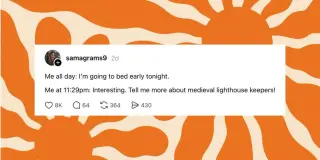
HuffPost Women collects this week’s funniest posts from women (Aug. 22–28), spotlighting witty, relatable quips about life, work, dating, and pop culture from Twitter threads, memes, and anecdotes.
HuffPost Life curates this week’s funniest tweets from women, featuring sharp one-liners about work, everyday moments, dating, and life’s quirks from Aug. 22–28.
A three-story roundup: updates on the Strategic Petroleum Reserve, a piece on the unseen AI tracing trail, and Verizon’s request being declined by regulators or a decision-maker.
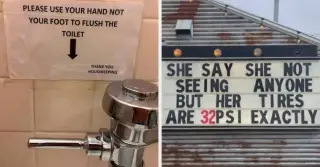
BuzzFeed curates 41 funny and quirky signs spotted by readers and Reddit over the past month, pairing each with captions and context to deliver a lighthearted tour of everyday humor and inviting readers to share their own finds for future roundups.
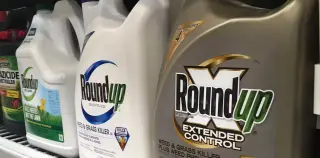
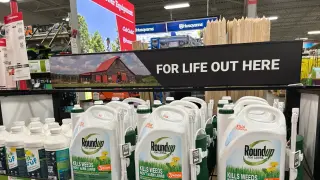
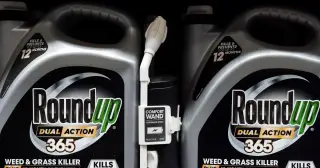
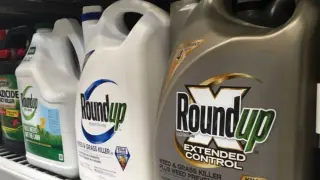
The Supreme Court ruled 7-2 that federal law preempts states from adding cancer warnings to pesticides that the EPA did not require, blocking state-level liability claims against Monsanto/Bayer for Roundup and potentially stalling thousands of lawsuits. The decision narrows state consumer-protection options, though lawmakers are moving to counter it with legislation or executive actions, and the ruling specifically concerns failure-to-warn claims rather than broader product-harm suits.
Supreme Court’s Monsanto v. Durnell ruling concerns federal pesticide labeling preemption, not whether glyphosate causes cancer. The piece argues that legal causation and scientific causation answer different questions, urging clearer categorization of causal questions in court and reporting, and highlighting Roundup, talc, asbestos, and social-media cases to show how legal outcomes can be misinterpreted as scientific proof.
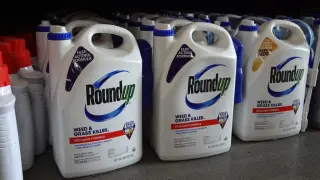
The Supreme Court, in a 7-2 ruling, limited thousands of state lawsuits alleging Roundup caused cancer by holding that only the EPA can require warning labels, effectively preempting state actions. The decision follows reporting on Monsanto ghostwriting studies used in regulatory assessments; plaintiffs can press the EPA to reevaluate, but thousands of cases remain and billions have already been paid in settlements as investigations into the ghostwriting continue.
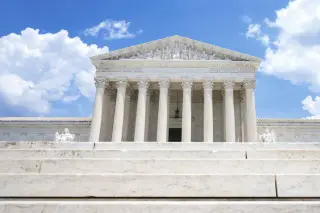
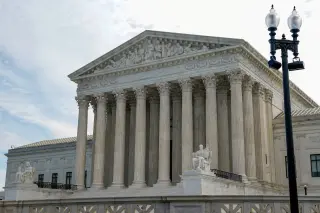
In a 7-2 decision, the Supreme Court held that federal pesticide law FIFRA preempts state tort claims against Monsanto (now Bayer) over Roundup’s cancer risks, effectively blocking thousands of lawsuits by individuals who say exposure caused non-Hodgkin lymphoma, because the EPA-approved label must be used and it does not carry a cancer warning. Justice Brett Kavanaugh wrote the majority, with Justices Jackson and Gorsuch dissenting. The ruling was welcomed by the company and the Trump administration, helped push Bayer shares up about 17%, and could extend preemption to other industries, according to critics who warn it weakens state consumer-protection laws. The case originated from a Missouri verdict; the EPA has not classified glyphosate as harmful.
The Supreme Court’s 7-2 ruling means Bayer cannot be sued in state courts over Roundup because federal regulators have found glyphosate unlikely to cause cancer and thus do not require a warning label, potentially ending thousands of state lawsuits. MAHA leaders say the decision betrays their movement and are pressing Congress to curb pesticide-liability protections, as scientists and regulators remain divided on glyphosate’s cancer risk (EPA vs. IARC).
The Supreme Court ruled 7-2 that federal pesticide labeling requirements under FIFRA preempt state-law failure-to-warn claims against Bayer's Roundup, potentially blocking thousands of lawsuits as the EPA has found glyphosate unlikely to cause cancer; Bayer stock rose on the decision.
The U.S. Supreme Court ruled in favor of the Roundup maker in a high-profile glyphosate lawsuit, potentially limiting certain product-liability claims and shaping the trajectory of thousands of related cases.
The U.S. Supreme Court limited a large wave of lawsuits alleging Monsanto’s Roundup caused cancer, narrowing duty-to-warn claims and sharply constraining one of the largest product-liability litigation waves in U.S. history.
Kris Holt curates a quick look at Steam Next Fest demos, highlighting standout picks like The Last Salvage Squad (Virtual Boy–inspired 2.5D shooter), Screenbound (a 5D platformer with a 2D Game Boy-style companion), and Truck-kun is Supporting Me from Another World?! for its energetic, anime-inspired vibe, then runs through additional demos and upcoming indies such as Copa City, Thank You For Your Application, The Quiet Things, Catto’s Post Office, Flesh Made Fear, and ReStory, noting their concepts, rough edges, and release windows. The piece also covers related Dead by Daylight updates and Holt’s personal favorite demo, Virtue and a Sledgehammer, framing Next Fest as a broad but selective snapshot of new indie games.
John Lee Hancock’s Netflix courtroom drama about the Monsanto Roundup litigation has added LaKeith Stanfield, Julia McDermott, David Duchovny, Melonie Diaz, Bilal Hasna, and Greg Kinnear to its cast, joining Jonathan Bailey and Laura Dern; the true‑story film follows Brent Wisner taking on Monsanto over Roundup exposure, with character details still under wraps.
April 2026 yielded a standout gadget lineup, highlighted here in a 12-device roundup that spans home entertainment, mobile, and travel: Samsung Frame Pro and LG OLED evo W6 wallpaper TVs push wireless, artful viewing; Asus Zenbook A16 delivers a 16-inch OLED display in a featherweight chassis with multi-hour battery life; Framework Laptop 13 Pro offers full modular upgrades; DJI Osmo Pocket 4 and Insta360 Snap bring pro-grade filming to the pocket; Anker Soundcore Space 2, Sony Inzone H6 Air, and Sennheiser HD 480 Pro cover high-fidelity audio; DJI Power 1000 Mini provides rugged, portable power; and Dyson Hushjet Mini plus Supersonic Travel hair dryer focus on quiet, portable comfort and speed.