Tag

Sarcopenia

All articles tagged with #sarcopenia

Gut Bacterium May Help Preserve Muscle Strength With Age
science5 days ago

Gut Bacterium May Help Preserve Muscle Strength With Age

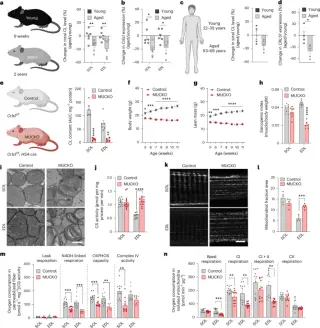
A gut bacterium, Roseburia inulinivorans, is linked to stronger muscles and better fitness, with levels declining as people age. In humans, older adults with detectable R. inulinivorans had about 29% higher grip strength; in mice, supplementation boosted forelimb grip strength by ~30% and increased the proportion of fast-twitch (type II) muscle fibers, suggesting a gut–muscle axis and probiotic potential for sarcopenia. The study also notes species-specific effects and limitations, including that colonization did not occur in the mouse model and long-term human trials are needed to confirm causality and benefit.

One weekly workout can build muscle after 70, says physical therapist
health12 days ago

One weekly workout can build muscle after 70, says physical therapist

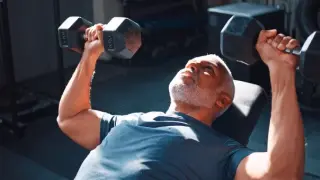
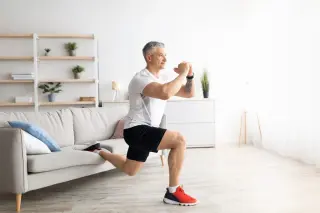
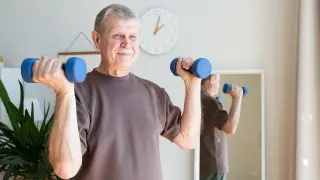
A physical therapist says you can build muscle and maintain independence after age 70 with as little as one high-effort training session per week. The key is to challenge the nervous system with high-rep, multi-joint movements using light weights, aiming for 20–25 reps per set and near-failure by the last reps. Exercises should focus on leg, push, and pull movements, and routines can be done at home, offering a simple path to preserve strength and daily function into advanced age.

Midlife Muscle Makeover: A Practical Starter Guide for Women 40+
health19 days ago

Midlife Muscle Makeover: A Practical Starter Guide for Women 40+

Muscle loss accelerates after 40 (sarcopenia) and perimenopause can make building strength tougher, but regular strength training remains essential for health. Start with simple, compound movements using body weight or affordable at‑home gear (dumbbells, resistance bands), progress slowly, and use proper form with pauses to increase tension. Modify movements as needed, emphasize recovery (sleep, box breathing), and remember that even late starters can significantly reduce disease risk and improve well‑being.

Grip Strength: A Health Barometer for Aging, Not a Longevity Shortcut
health1 month ago

Grip Strength: A Health Barometer for Aging, Not a Longevity Shortcut

Grip strength is a strong indicator of overall health and mortality risk, especially in older adults; large studies have linked weaker grip to higher risk of death and age-related diseases, making it a useful health proxy. However, it is not a causal driver of longer life. Improving grip alone won’t extend lifespan—lifestyle factors like staying active, eating well, sleep, social connections, and stress management are still key. Media hype can blur correlation with causation and push oversimplified fixes.

Five Easy At-Home Moves to Firm Up Arms After 55
mind-body2 months ago

Five Easy At-Home Moves to Firm Up Arms After 55

Age-related muscle loss (sarcopenia) and hormonal/metabolic changes can cause arm jiggle. This piece offers five at‑home moves—Pushups, Dumbbell Hammer Curls, Wall Angels, Plank Shoulder Taps, and Overhead Tricep Extensions—focused on building the triceps (the arm’s largest muscle group) while also engaging the biceps and shoulders, with cues to keep a straight line, engage the core, and modify for knee-supported planks if needed.

Four Morning Moves to Rebuild Leg Muscle After 55 (Without Squats)
mind-body2 months ago

Four Morning Moves to Rebuild Leg Muscle After 55 (Without Squats)

Aging can cause leg weakness (sarcopenia), increasing mobility challenges. A board-certified wellness coach recommends a four-move morning routine to rebuild leg strength faster than squats, focusing on sit-to-stand power, hip control, single-leg stability, and ankle strength: Sit-to-Stands, Supported Step-Backs, Standing Marches with a Band, and Calf Raises. Short, consistency-friendly sessions aim to improve walking, stairs, balance, and daily independence.

GLP-1 Weight-Loss Drugs: Is Muscle Loss Inevitable?
health2 months ago

GLP-1 Weight-Loss Drugs: Is Muscle Loss Inevitable?

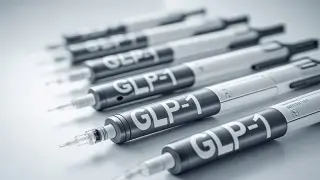
A Nature Reviews Endocrinology commentary reviews potential risks of GLP-1 receptor agonists used for obesity, noting concerns about accelerated muscle wasting and frailty in some patients; it explores mechanisms, aging-related vulnerability, and the need for biomarkers and careful monitoring, while acknowledging mixed evidence and the ongoing need for research to balance fat loss with muscle preservation.

Over-50 Muscle Gains Come From More Than Reps: Add Protein and a Plan
health3 months ago

Over-50 Muscle Gains Come From More Than Reps: Add Protein and a Plan

After 50, building muscle isn’t just about lifting; age-related muscle loss (sarcopenia) accelerates with hormonal changes, so combine regular three-day-a-week resistance training with a protein-rich diet (target about 25–30 g per meal). Focus on major muscle groups (legs, back, core), use proper form, include warmups and cooldowns, and progress gradually. A mindset that exercise is long-term health and independence can boost adherence, while nutrition—especially adequate daily protein—helps maintenance and growth as you age.

Strength After 50: A Practical Plan to Build Muscle and Stay Independent
health-and-fitness3 months ago

Strength After 50: A Practical Plan to Build Muscle and Stay Independent

To counter age-related muscle loss (sarcopenia), especially accelerated by menopause, women over 50 should lift weights three days a week, targeting legs, back, and core with 6–12 reps and 3–5 sets per exercise. Start with proper form, warm up 15–20 minutes and cool down 10–15, progress gradually from bodyweight to weights, and include mobility work and stretching. Also emphasize protein intake (about 25–30 g per meal) to support muscle repair and growth, and adopt a mindset that exercise preserves independence and quality of life.

Resistance Training: A Simple Path to Healthier, Longer-Lasting Independence
health4 months ago

Resistance Training: A Simple Path to Healthier, Longer-Lasting Independence

Regular strength training is the most effective way to preserve muscle, mobility and independence as we age, countering sarcopenia and reducing falls. Evidence shows older adults can gain meaningful strength with progressive resistance, and even one training session per week can help beginners, especially when paired with adequate protein. Programs can be adapted for those with joint pain or chronic conditions and older adults, including those in their 80s and 90s, can improve with supervision. To translate science into action, public health guidance should emphasize muscle-strengthening activities—targeting major muscle groups—several times weekly, with home-friendly options and community programs to boost participation.

Protein Needs Climb for Adults Over 50 to Preserve Muscle
health4 months ago

Protein Needs Climb for Adults Over 50 to Preserve Muscle

Muscle loss accelerates after age 50 (sarcopenia), and the traditional 0.8 g/kg/day protein RDA may be insufficient for many older adults. New Dietary Guidelines recommend 1.2–1.6 g/kg/day (higher for active individuals and postmenopausal women), with protein distributed across meals (about 15–30 g per meal) and sourced from whole foods. For a 150-pound adult, this could mean roughly 75–100 g of protein daily, potentially up to ~2 g/kg/day for healthier individuals, while those with chronic kidney disease should consult a clinician. Exercise remains essential, as protein plus resistance training yields the best muscle-maintaining results.

Grip strength linked to longer life in older women, study finds
health4 months ago

Grip strength linked to longer life in older women, study finds

A large US study of 5,472 women (mean age ~78.7) found that higher muscle strength—especially grip strength—is tied to a 33% lower mortality risk for the strongest vs weakest groups, and faster chair-stand performance is linked to a 37% lower risk. The association persisted even among women not meeting the 150 minutes/week of aerobic activity, suggesting grip strength as a practical aging marker. The study is observational and limited to females, so it cannot prove causality, and it estimates muscle mass rather than directly measuring it.

Resistance Training Becomes the Cornerstone of Mobility After 60
health5 months ago

Resistance Training Becomes the Cornerstone of Mobility After 60

Public health agencies in multiple countries are shifting from cardio-centric advice to recommending regular resistance-based strength training for adults over 60. Evidence shows that strength work preserves muscle mass, balance, and independence better than walking or swimming alone, reducing fall risk and delaying frailty. Accessible, home-friendly routines using bodyweight, bands, and simple props can be effective, prompting policy updates and wider access to programs for older adults.

Physical Prime Around 35, Yet Exercise Slows the Decline
science5 months ago

Physical Prime Around 35, Yet Exercise Slows the Decline

A Swedish population-based longitudinal study (SPAF) tracking participants from adolescence to age 63 finds that muscular endurance and aerobic capacity peak between ages 26–36, with muscle power peaking earlier (men ~27, women ~19). By 63, overall capacity can fall 30–48%. Regular physical activity slows the decline, and increasing activity in adulthood can boost capacity by about 10%, underscoring that while aging cannot be halted, its pace can be slowed. The study highlights youth activity and uses data from 1974 onward, published in the Journal of Cachexia, Sarcopenia and Muscle.

Midlife Muscle Reset: 4 Daily Moves to Rebuild Strength Without Machines
mind-body5 months ago

Midlife Muscle Reset: 4 Daily Moves to Rebuild Strength Without Machines

The article argues that after age 55, short, daily, multi-joint strength work—performed without machines—can more effectively rebuild lost muscle than gym-based routines. It recommends two exercises per day (alternating A/B), for 10–20 minutes total, with progressive, controllable reps and a target RPE of 7–8. Sample moves include sit-to-stand squats, Romanian deadlifts, pushups, and farmer’s carries, emphasizing consistency, recovery, and improved motor coordination rather than heroic workouts.