A hyperactive stretch of severe weather is set to hit the central U.S. this weekend, bringing damaging winds, hail and a few tornadoes across Kansas, Oklahoma and Texas over at least four days, with storms peaking Tuesday, according to Washington Post meteorologists Matthew Cappucci and Ben Noll.
Chicago and surrounding suburbs face multiple rounds of strong storms tonight through Tuesday, with large hail, damaging winds and a low tornado threat, plus possible flooding; after a record-warm day on Monday, temperatures drop later this week as more rain threats move in Thursday and Saturday.
A cluster of severe thunderstorms is expected across the Midwest, focusing on Illinois, Indiana and Ohio, with rotating supercells that could produce baseball-sized hail and a tornado risk; a cold front may boost hail while limiting tornadoes, and storms could merge into squall lines by evening, with isolated flooding possible.
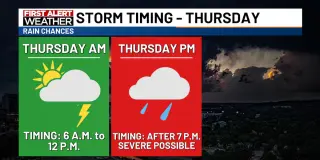
Forecasters warn that late Thursday storms moving across the Midwest just south of the Great Lakes could bring severe weather, including very large hail, damaging winds up to 80 mph and possible tornadoes, especially in Illinois, Indiana and Ohio. A marginal flash-flood risk is noted, and the system is expected to weaken overnight as it shifts southeast, with the rest of the week remaining comparatively quiet before another round of storms midweek+
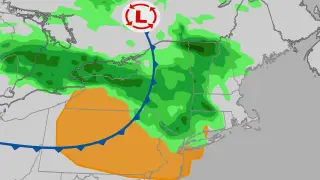
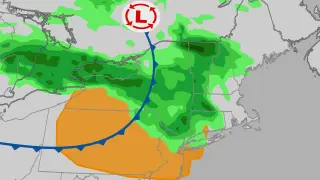
A cold front crossing western Pennsylvania is triggering widespread severe storms, with multiple Severe Thunderstorm Warnings in effect for parts of Allegheny, Westmoreland, Beaver, Washington and Butler counties and a Severe Thunderstorm Watch in place for Beaver, Butler, Armstrong, Indiana, Allegheny, Westmoreland, Washington, Fayette and Greene counties until 10 p.m. Sunday. The system could bring large hail, damaging winds, and, in some areas, isolated tornadoes, with heavy rain continuing into the evening and early overnight. Cooler air arrives Monday (highs in the 40s, lows in the 20s Tuesday). A return to sunshine and 50s is expected midweek, with another rain chance late Wednesday night into Thursday. Track storms with radar and local alerts.
Arlington dodged the worst of the first storm wave, but a second line of storms was expected later today; federal workers were told to leave by 2 p.m., and the county closed community centers at 5 p.m. as a precaution. While gusts up to 60 mph were possible and warnings remained, officials indicated the most damaging tornado scenario appeared unlikely for now.
Severe storms sweeping the eastern United States have prompted tornado watches in multiple states and caused thousands of flight cancellations and delays, with major hubs like Reagan National, LaGuardia, JFK and Newark affected as authorities warn of damaging winds and widespread wind alerts impacting millions.
Severe storms sweep the DC region with a tornado watch in effect through 7 p.m., bringing damaging winds, heavy rainfall and possible tornadoes, prompting early closures for schools and federal offices, flight delays, and widespread power outages as a cold front approaches and temperatures drop afterward.
Thunderstorms swept the eastern U.S., triggering tornado advisories, mass flight cancellations and widespread power outages as forecasters warned of hurricane-force winds in the Mid-Atlantic. With 94 million people under alerts, the worst impacts were expected in the afternoon and evening, prompting North Carolina to activate its emergency team and Washington, D.C., officials to urge shelter and close landmarks. The storm system also brought travel disruptions from the Southeast to the Midwest, along with related risks of flash flooding, seasonal blizzards in the Great Lakes, and dramatic temperature swings.
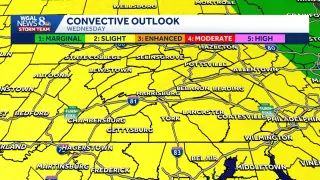
A Level 4 out of 5 severe-weather risk stretches from Maryland to South Carolina, with the Mid-Atlantic and Carolinas facing damaging winds, hail, and a few strong tornadoes—centered on the D.C. area—as forecasters warn of a significant outbreak on Monday.
Meteorologist Brad Panovich says there’s about a 99% likelihood a tornado touched down in northeast Charlotte during Monday’s severe weather, with damage consistent with an EF-0 to EF-1 tornado; the National Weather Service will survey the area to confirm, while other Charlotte neighborhoods reported downed trees, roof damage, and power outages.
Central New York faces an active weather pattern: strong winds tonight with wind advisories, a potential for damaging gusts up to 60 mph and isolated tornado risk Monday afternoon along a cold front, followed by wet snow Monday night and a dramatic drop in temperatures that could cause a flash freeze Tuesday morning; conditions are expected to calm by midweek as winter gives way to spring.
A historic March storm is delivering a Midwest blizzard along with East Coast severe weather, triggering tornado watches/warnings, widespread power outages, and massive travel disruption. Cancellations and delays at major airports pile up (thousands canceled, tens of thousands delayed) as ground stops and storm bands ripple from the Midwest to the Southeast and Mid-Atlantic. Forecasters warn of damaging winds, possible tornadoes, and dangerous travel conditions across a broad swath of the country as the system unfolds.
A weather system threatens the DC area with severe storms and possible tornadoes today, followed by a sharp cooldown as colder air moves in; monitor forecasts and heed warnings.
The SPC outlook shows eastern North and South Carolina under Level 4 Moderate Risk and Charlotte under Level 3 Enhanced Risk for severe thunderstorms today, with 60–70 mph damaging winds and a possible brief tornado. The main event is expected 10 a.m.–3 p.m., with Charlotte most likely around noon–1 p.m.; behind the line, winds remain strong and temperatures drop before rebounding later in the week.