Tag

Skyrmions

All articles tagged with #skyrmions

Data Goes Unscathed Through Turbulent Air Using Light Topology
innovation3 days ago

Data Goes Unscathed Through Turbulent Air Using Light Topology

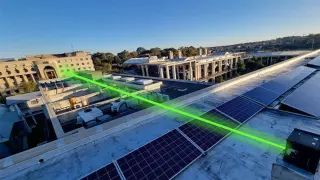
Researchers demonstrated a world-first method to transmit optical data through open air without distortion-correction hardware by encoding information in the light's topology using skyrmions. In real-world tests over hundreds of meters, the topologically encoded beams retained data with ~98% fidelity under normal conditions and about 86% under extreme turbulence, suggesting cheaper, more robust long-distance optical links and potential applications in space, satellite downlinks, and bridging the digital divide.

Antiferromagnetic skyrmion lattice reveals incoherent scattering and coherent flow with quantified interactions
spintronics19 days ago

Antiferromagnetic skyrmion lattice reveals incoherent scattering and coherent flow with quantified interactions

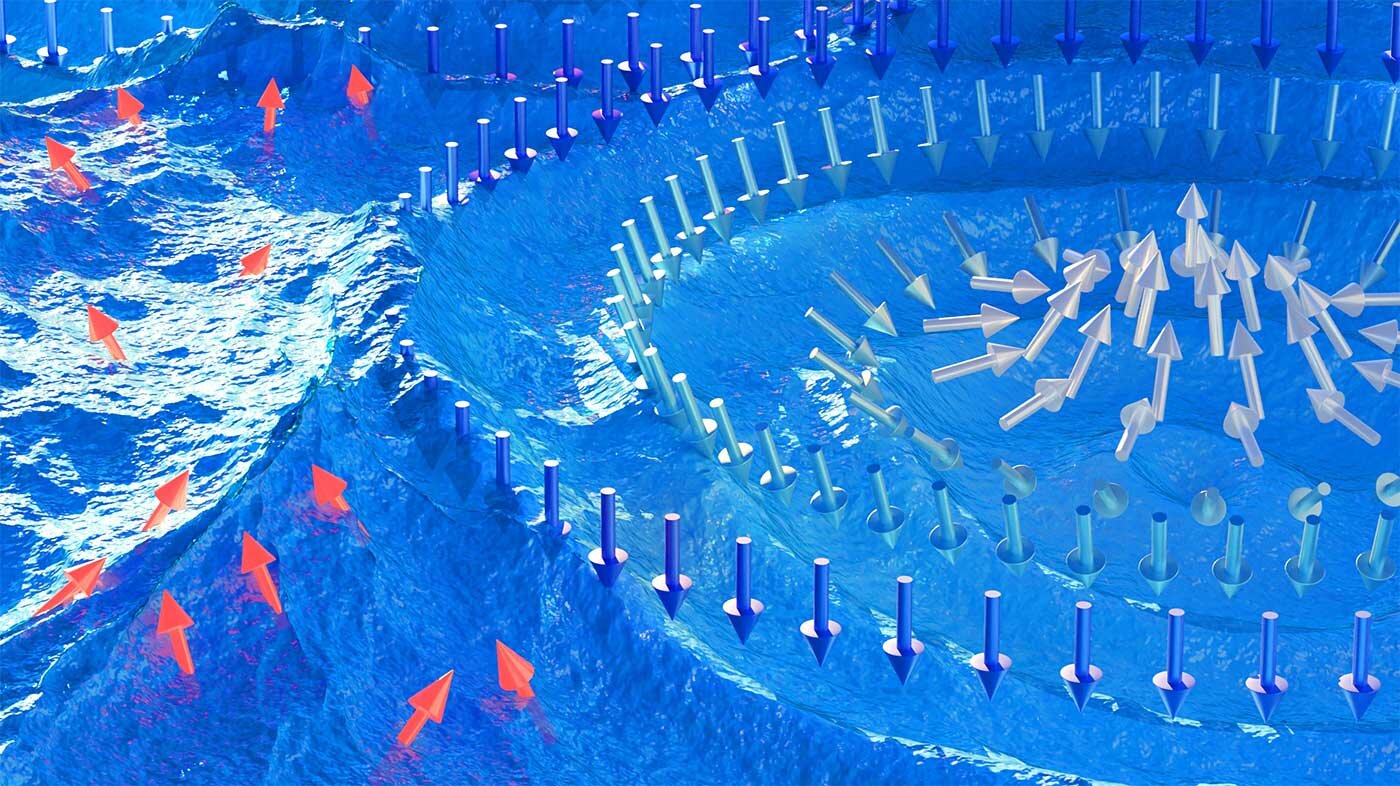
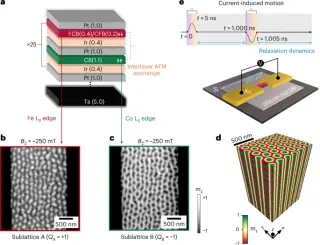
Time-resolved pump–probe X-ray microscopy tracks real-time, sublattice-resolved dynamics of a synthetic antiferromagnetic skyrmion lattice. The study reveals two regimes: a low-current incoherent regime where mobile skyrmions scatter off pinned ones and exhibit 3–20 ns recoil—used to extract a short-range exponential skyrmion–skyrmion repulsion with a*(≈44 nm), b*(≈247 nm)—and a high-current coherent viscous-flow regime with uniform lattice translation, negligible inertia, and suppressed skyrmion Hall effect. The results provide a quantitative framework for AFM skyrmion interactions and demonstrate gigahertz-speed, robust transport for dense spintronic devices.

Physicists Reveal Quantum 'Starry Night' of Instabilities and Exotic Vortices
science1 year ago

Physicists Reveal Quantum 'Starry Night' of Instabilities and Exotic Vortices

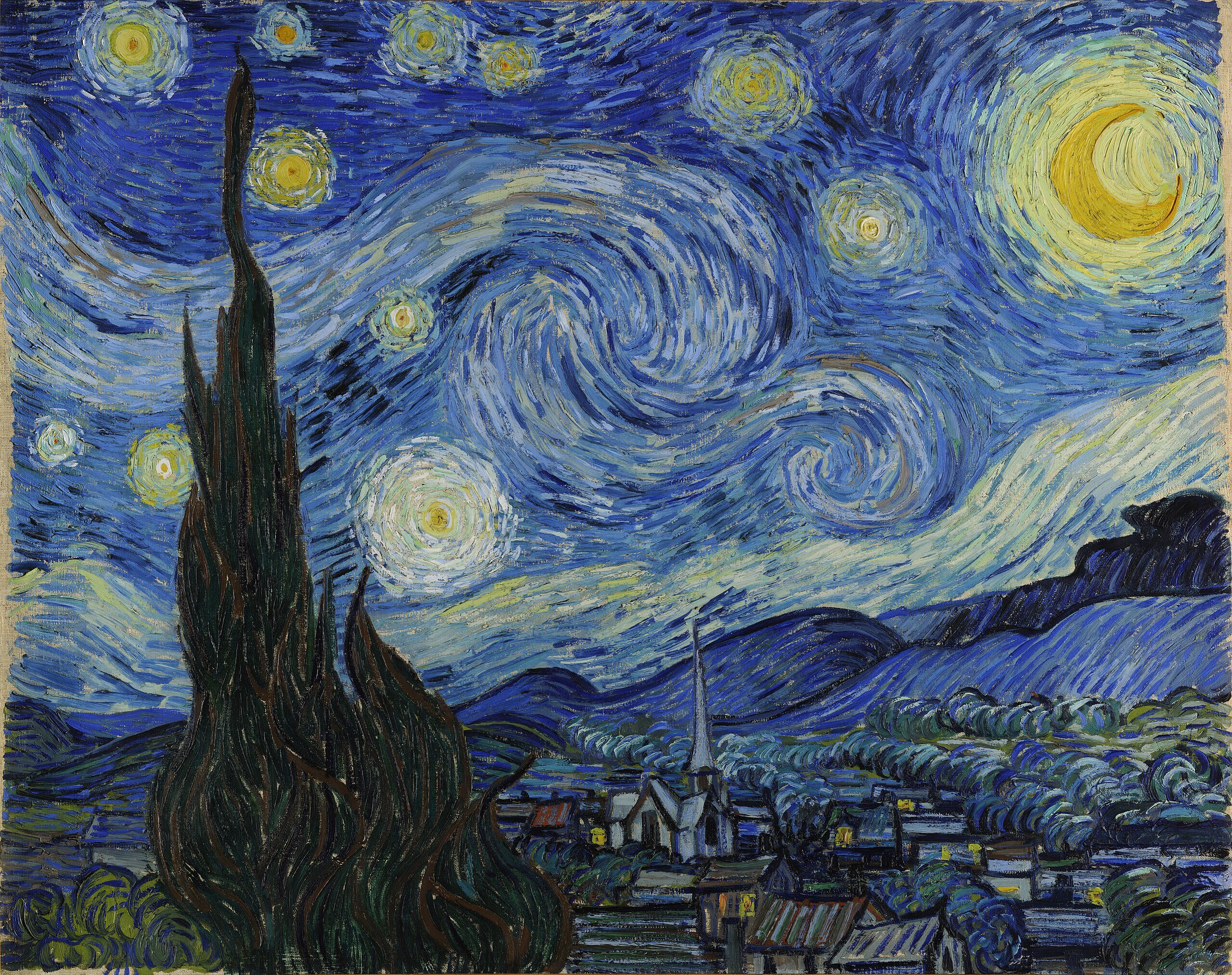
Physicists have observed the quantum Kelvin-Helmholtz instability in superfluid lithium gases, revealing exotic crescent-shaped vortices called eccentric fractional skyrmions, which resemble patterns in Van Gogh's 'Starry Night' and could impact future quantum technologies and our understanding of topological phenomena.

"Record-breaking Speed: Antiskyrmions Pave the Way for Advanced Computing"
science-and-technology2 years ago

"Record-breaking Speed: Antiskyrmions Pave the Way for Advanced Computing"

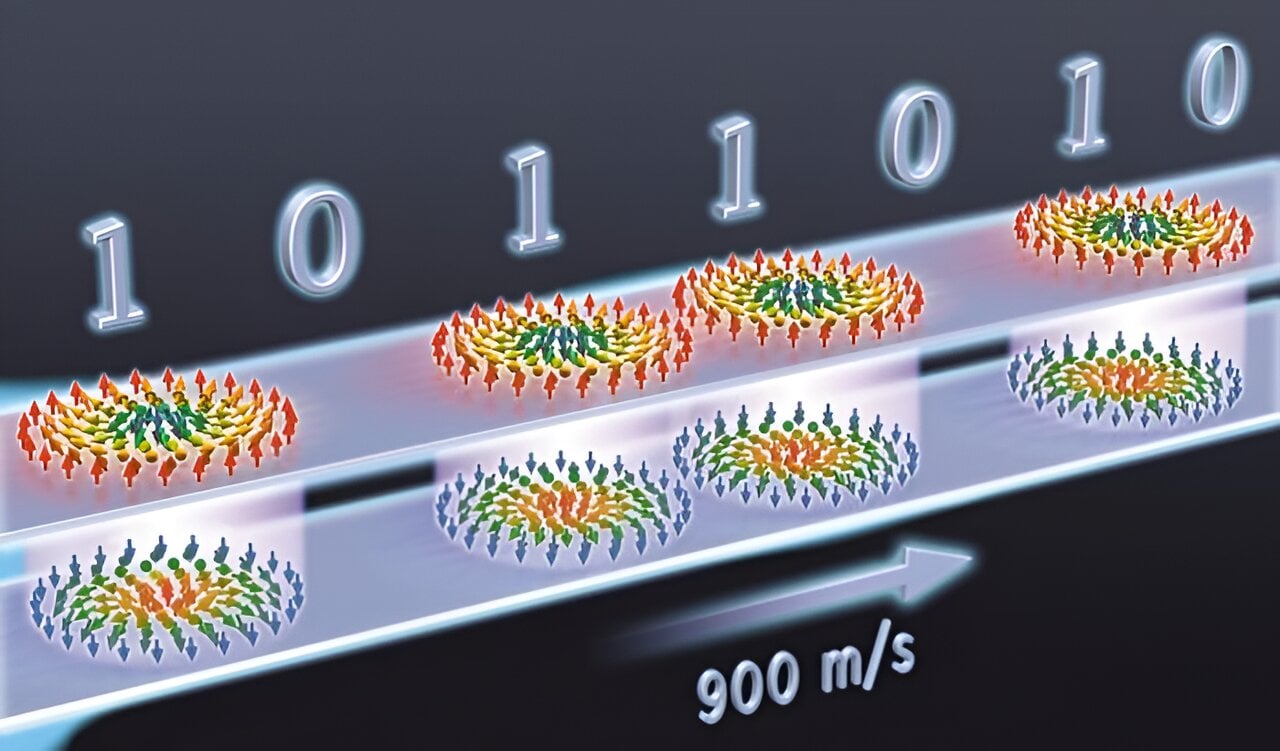
An international research team has found that magnetic nanobubbles called skyrmions can be moved by electrical currents at record speeds of up to 900 m/s, thanks to the use of an antiferromagnetic material as a medium. This discovery opens up new possibilities for developing higher-performance and less energy-intensive computing devices, as skyrmions are anticipated to be future bits in computer memory, offering enhanced avenues for information processing in electronic devices.

"Uncovering High-Order Skyrmions and Antiskyrmions"
physics2 years ago

"Uncovering High-Order Skyrmions and Antiskyrmions"

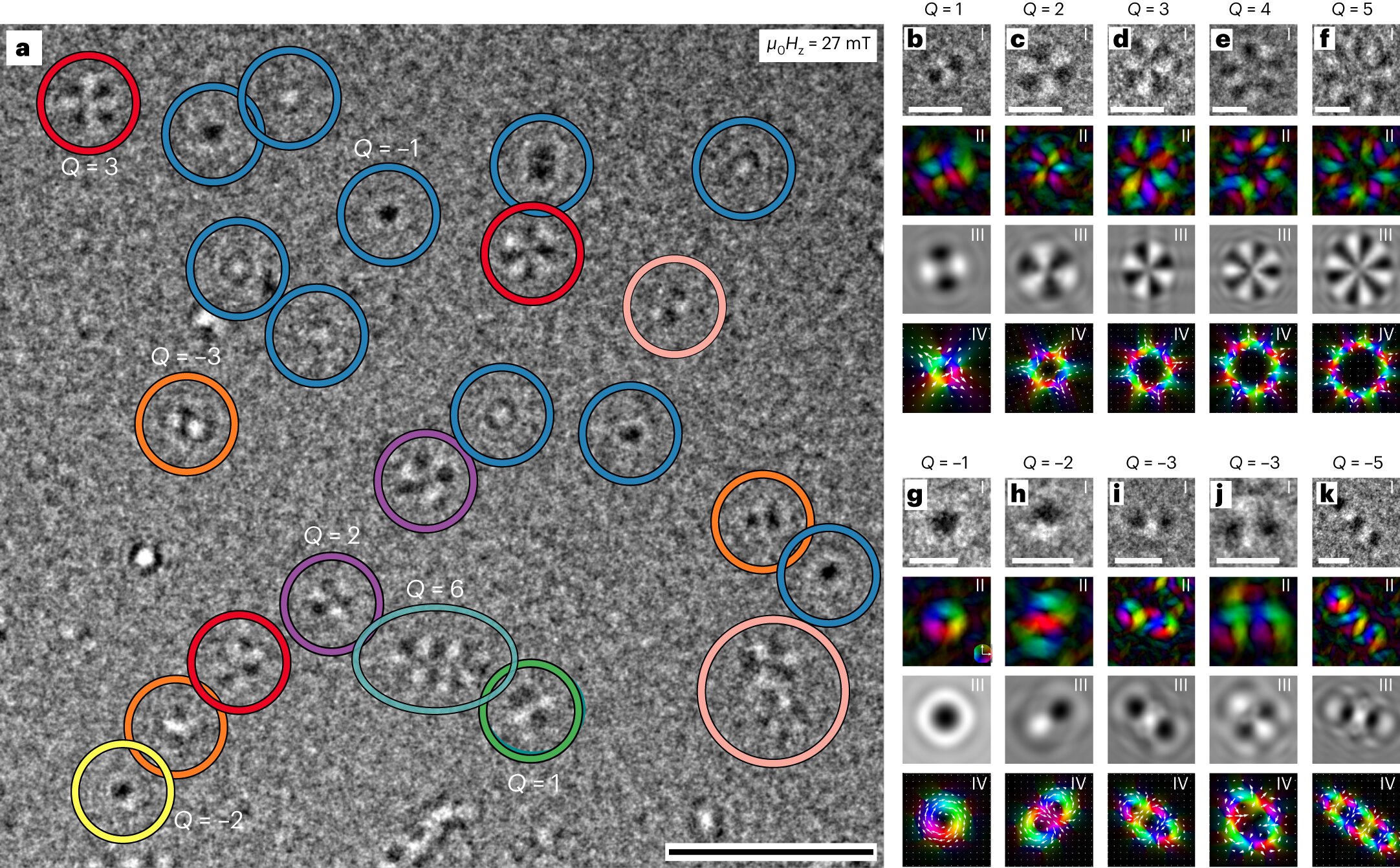
Researchers have discovered co-existing magnetic skyrmions and antiskyrmions of arbitrary topological charge at room temperature in magnetic Co/Ni multilayer thin films, opening up new possibilities for skyrmionics research. These spin objects, resembling tornado-like whirls in magnetic materials, offer potential applications in information storage devices and unconventional computing. The study, published in Nature Physics, also demonstrates the efficient control of the motion of these spin objects, providing insights for the development of skyrmionic devices.

Unveiling the Magnetic Secrets of Neuromorphic Computing through Spintronics and X-ray Microscopy
technology3 years ago

Unveiling the Magnetic Secrets of Neuromorphic Computing through Spintronics and X-ray Microscopy

Researchers have made a discovery in the behavior of dynamic magnetic fractal networks, known as skyrmions, which could advance neuromorphic computing capabilities. These skyrmions create magnetic spin waves with a narrow wavelength, forming an unexpected fractal structure. The researchers aim to use this discovery to develop a miniaturized, spin wave neuromorphic architecture. The findings were made through neutron scattering experiments and could have implications for future applications.