Tag

Kelvin Helmholtz Instability

All articles tagged with #kelvin helmholtz instability

Sun reveals 20-kilometer plasma whirlpools linked to corona heating mystery
space1 month ago

Sun reveals 20-kilometer plasma whirlpools linked to corona heating mystery

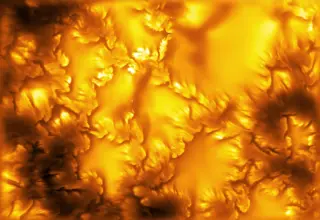
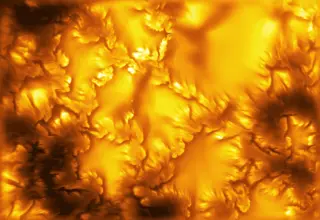
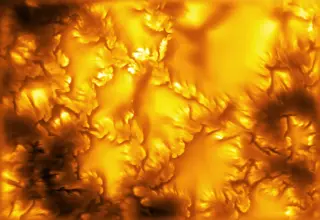
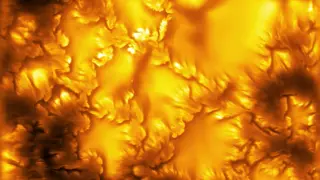
New high-resolution images from the NSF’s Inouye Solar Telescope show 20-km-wide plasma vortices at the edges of magnetic flux on the Sun’s surface, caused by Kelvin-Helmholtz instability. These swirling motions could braid magnetic fields and help channel energy from the surface into the corona, offering a potential piece of the coronal-heating puzzle, but the authors caution they have not quantified the energy contribution and call for independent confirmation with even more powerful instruments.
Maui’s Sun-Telescope: how a 3.6-ton mirror stays cool enough to image the Sun
science1 month ago

Maui’s Sun-Telescope: how a 3.6-ton mirror stays cool enough to image the Sun

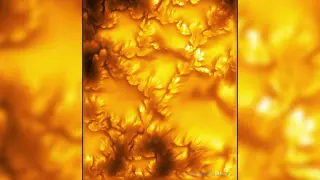
On Maui’s Haleakalā, the Daniel K. Inouye Solar Telescope uses a 3.6-ton Zerodur primary mirror and a seven-mile Dynalene coolant loop across 13 independent temperature zones; a heat-stop dumps about 95% of the incoming heat from a 12 kW beam, with nightly ice cooling to prevent overheating, enabling the sharpest solar images yet (roughly 20 km resolution) and revealing fine-scale solar features while funding questions loom over its operation.

Sun Reveals Magnetic Whirlpools in Ultra-Clear Solar Images
science2 months ago

Sun Reveals Magnetic Whirlpools in Ultra-Clear Solar Images

Ultra-detailed images from the Inouye Solar Telescope show Kelvin-Helmholtz swirl patterns in the Sun’s magnetic field, with vortices about 50–65 kilometers apart. These twisting motions transfer and concentrate magnetic energy, potentially fueling solar eruptions such as flares and coronal mass ejections, which can affect space weather and threaten power grids and satellites.

Tiny vortex storms revealed on the Sun by the world’s largest solar telescope
science2 months ago

Tiny vortex storms revealed on the Sun by the world’s largest solar telescope

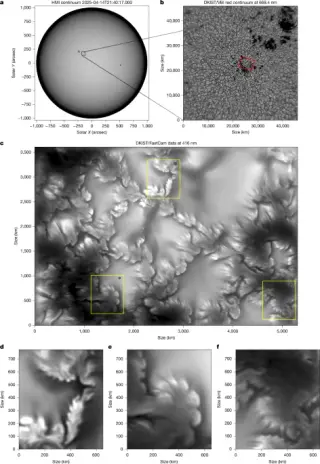
Researchers using the 4‑meter Daniel K. Inouye Solar Telescope imaged Kelvin‑Helmholtz vortexes at 416 nm on the Sun’s surface, showing 60–100 km spacing and 25–170 km-diameter structures that can grow quickly and travel 0.67–3 km/s. The observations, aided by high-speed imaging and advanced deconvolution, suggest a new mechanism for heat, mass, and magnetic-energy transport in the solar atmosphere and may affect convection and corona heating models. The study combines telescope data with simulations to confirm the effect, but is based on a short (about 3 minutes) observation window and calls for longer, magnetic-field–map measurements to fully quantify energy budgets.

Sun’s surface reveals Kelvin–Helmholtz whirlpools captured by the Inouye Solar Telescope
space2 months ago

Sun’s surface reveals Kelvin–Helmholtz whirlpools captured by the Inouye Solar Telescope

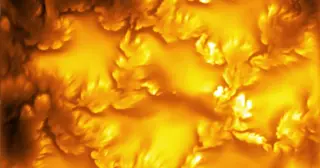
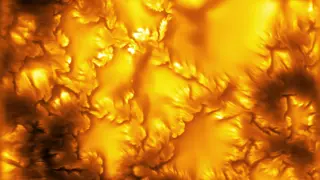
New ultra-high-resolution images from the Daniel K. Inouye Solar Telescope reveal thousands of tiny whirlpools on the Sun’s surface, providing the first direct observation of Kelvin–Helmholtz instabilities on the Sun. The observed vortices, matching computer simulations, may help mix magnetic fields and contribute to heating the corona and driving space-weather events like solar flares and CMEs.

Sun's Surface Reveals First Kelvin-Helmholtz Vortices in Record-Resolution Image
science2 months ago

Sun's Surface Reveals First Kelvin-Helmholtz Vortices in Record-Resolution Image

Researchers using the Daniel K. Inouye Solar Telescope in Hawaii produced the Sun’s highest-resolution image of its visible surface, revealing minute vortex-like plasma patterns at granule edges in a magnetically active area and linking them to Kelvin-Helmholtz instabilities, offering the first confirmed evidence of these processes on the Sun and potential clues to coronal heating and how magnetic energy moves across the surface.

Sun’s surface whirlpools revealed by ultra-high-resolution telescope
science-space2 months ago

Sun’s surface whirlpools revealed by ultra-high-resolution telescope

Using the Daniel K. Inouye Solar Telescope near Maui, scientists captured the Sun’s visible surface in unprecedented detail, revealing Kelvin-Helmholtz instabilities—tiny swirling vortices along magnetic boundaries—that could explain why the Sun’s outer atmosphere (the corona) is hotter than its surface and how magnetic energy is built, released and transported to drive solar flares and coronal mass ejections. The observations align with advanced simulations and may improve space-weather forecasting that affects satellites and power grids.

Sun's surface reveals tiny plasma vortices captured in unprecedented detail
science2 months ago

Sun's surface reveals tiny plasma vortices captured in unprecedented detail

Using the world’s largest solar telescope, astronomers captured the Sun’s visible surface at unprecedented resolution, revealing vortices as small as about 12 miles wide at the edges of solar granules and linking them to Kelvin-Helmholtz instabilities driven by convection and magnetic fields, shedding light on the dynamic processes shaping the Sun’s photosphere.

High-Resolution Solar Observations Uncover Ubiquitous Magnetic Vortex Instabilities at the Sun's Surface
science2 months ago

High-Resolution Solar Observations Uncover Ubiquitous Magnetic Vortex Instabilities at the Sun's Surface

New DKIST observations reveal ubiquitous magnetized Kelvin–Helmholtz instabilities at the edges of magnetic flux concentrations in the solar photosphere, confirming long-standing theory. The vortices and stripe-like features seen in 416 nm filtergrams closely match 3D radiation-MHD MURaM simulations, showing KHIs generate strong shear at magnetic boundaries, drive turbulence, and enable plasma and magnetic-field mixing across multiple vertical layers. The analysis yields KHI wavelengths of roughly 50–70 km (with a 25–170 km observed range), growth rates ~0.01–0.05 s−1, and apparent phase speeds of ~0.7–3 km s−1, implying KHIs contribute to flux transport and magnetic-field braiding in the Sun’s magnetized atmosphere.

Sun's surface revealed in ultra-high-resolution images
science2 months ago

Sun's surface revealed in ultra-high-resolution images

Scientists using Hawaii's Inouye Solar Telescope captured the Sun's surface in the highest-resolution images yet, showing swirling vortices that twist magnetic energy and drive space weather that can affect Earth’s power grids and satellites; the observations, published in Nature, help explain energy transport in the Sun and could improve weather forecasting.

Physicists Reveal Quantum 'Starry Night' of Instabilities and Exotic Vortices
science1 year ago

Physicists Reveal Quantum 'Starry Night' of Instabilities and Exotic Vortices

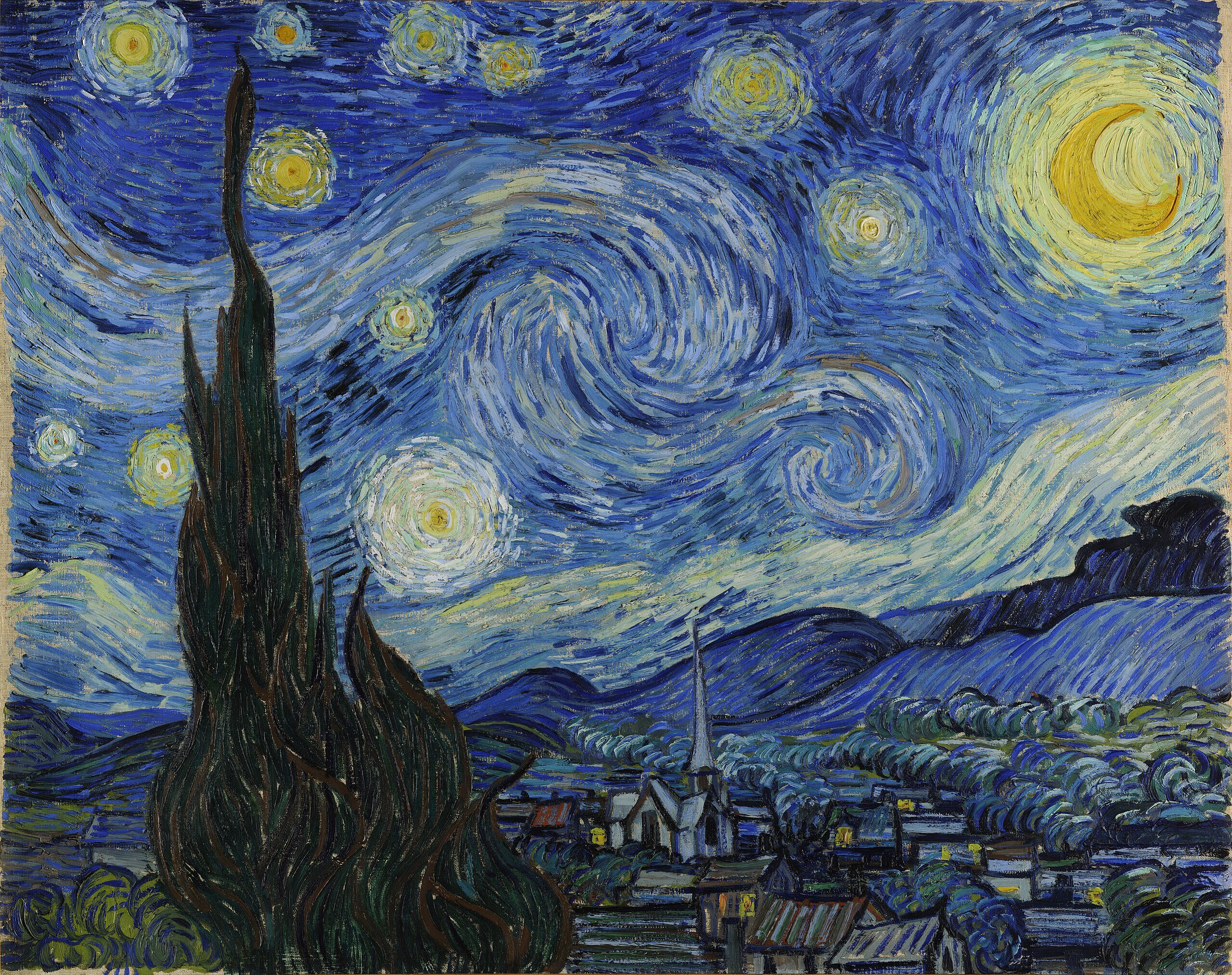
Physicists have observed the quantum Kelvin-Helmholtz instability in superfluid lithium gases, revealing exotic crescent-shaped vortices called eccentric fractional skyrmions, which resemble patterns in Van Gogh's 'Starry Night' and could impact future quantum technologies and our understanding of topological phenomena.

Sunday Night Forecast: Aurora and Severe Storms Possible
science3 years ago

Sunday Night Forecast: Aurora and Severe Storms Possible

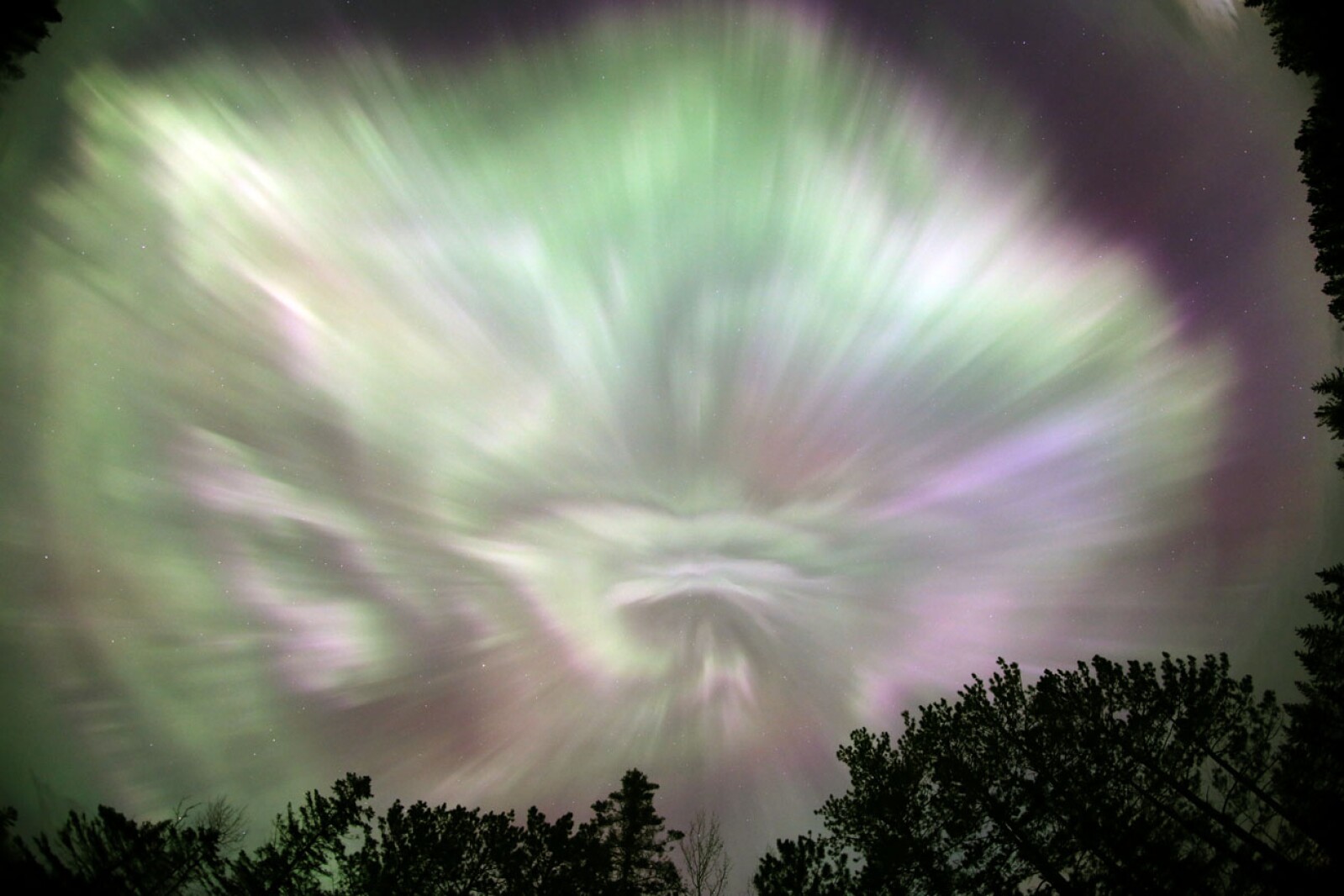
A moderate to strong geomagnetic storm is predicted for Sunday night, May 7, which could result in a great northern lights show visible as far south as northern Iowa. An app called Windy.com can help identify clear patches of sky for viewing. Spring and fall are the best times to see the northern lights due to the Kelvin-Helmholtz instability, which creates unique clouds that accelerate electrons to high speeds into the upper atmosphere where they spur auroras. The instability occurs when waves of charged particles from the sun crash into Earth's magnetic field around the time of the equinoxes.