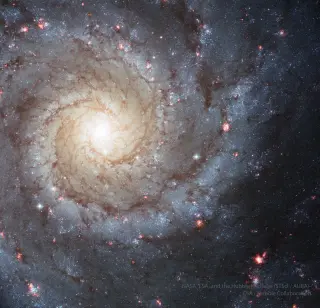
Using a sharp Hubble-based composite, M74 appears as a nearly face-on grand-design spiral galaxy about 32 million light-years away in Pisces, spanning ~30,000 light-years with bright blue star clusters and dark dust lanes tracing its arms and highlighting large star-forming regions.
Koji Suzuki, author of The Ring and Spiral whose work helped ignite the J-horror boom, has died at 68 in Tokyo; his novels won major awards and inspired iconic films, including the Ring and its U.S. remake.
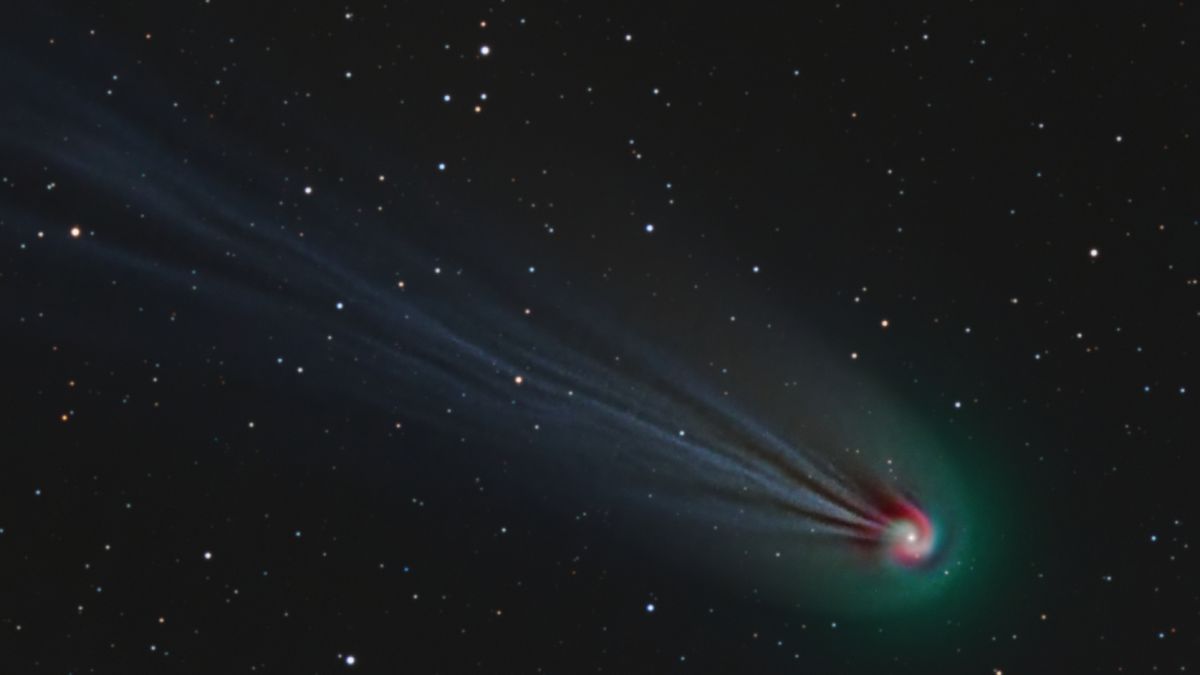
New images of Comet 12P reveal a hidden spiral of light surrounding its icy heart, likely caused by small geysers pumping out streams of cryomagma. The comet, known as the "devil comet," is cryovolcanic and frequently erupts, causing its coma to expand and appear brighter. As it approaches the sun, its green-hued coma and sizable tail have become more visible, making it a subject of interest for astrophotographers. The comet is expected to make its closest approach to Earth on June 2 and may be visible to the naked eye in the night sky.
New images of Comet 12P reveal a hidden spiral of light surrounding its icy nucleus, likely caused by small geysers pumping out streams of cryomagma. The comet, known as the "devil comet," is cryovolcanic and has been erupting frequently as it approaches the sun, making its green-hued coma and sizable tail more visible. Astrophotographers have captured stunning shots of the comet, and it is expected to make its closest approach to Earth on June 2, potentially being visible to the naked eye. There is hope that the comet may be visible during the total solar eclipse on April 8, but it will likely require another large cryomagma eruption for it to be seen during totality.
The spiral effect of a football when thrown is due to the torque applied by the quarterback's fingers, causing the ball to rotate about its long axis. This rotation, along with the laces and pebbled surface, creates a gyroscopic precession that minimizes air drag and allows the ball to travel farther. The direction and speed of the football are impacted by the quarterback's throw, air drag, and gravity. Understanding the physics behind the spiral is crucial for a successful pass, but practice is also essential for achieving the perfect spiral.
The nautilus, a cephalopod in a spiral shell, is a survivor of mass extinctions and has a unique shape that reflects galaxies. Its shell is a logarithmic spiral, growing wider with each turn, resembling the arms of galaxies like the Milky Way. Nautiluses have survived for hundreds of millions of years and can withstand extreme pressure changes in the ocean. They live in chambers within their shells, sealing off each chamber as they grow. The nautilus is a fascinating creature that continues to captivate scientists and defy easy description.
Scientists have used data from telescopes and other tools to map the shape of the Milky Way and have arrived at the theory that it is a two-armed spiral, as opposed to the earlier belief that it had four arms. The team measured the distances between about 200 stars in the Milky Way to create a map of the galaxy and combined that data with measurements from the European Space Agency’s Gaia telescope. The methods that brought the research team to the two-arm spiral model of the Milky Way could change the way scientists approach galaxy modeling across the board.
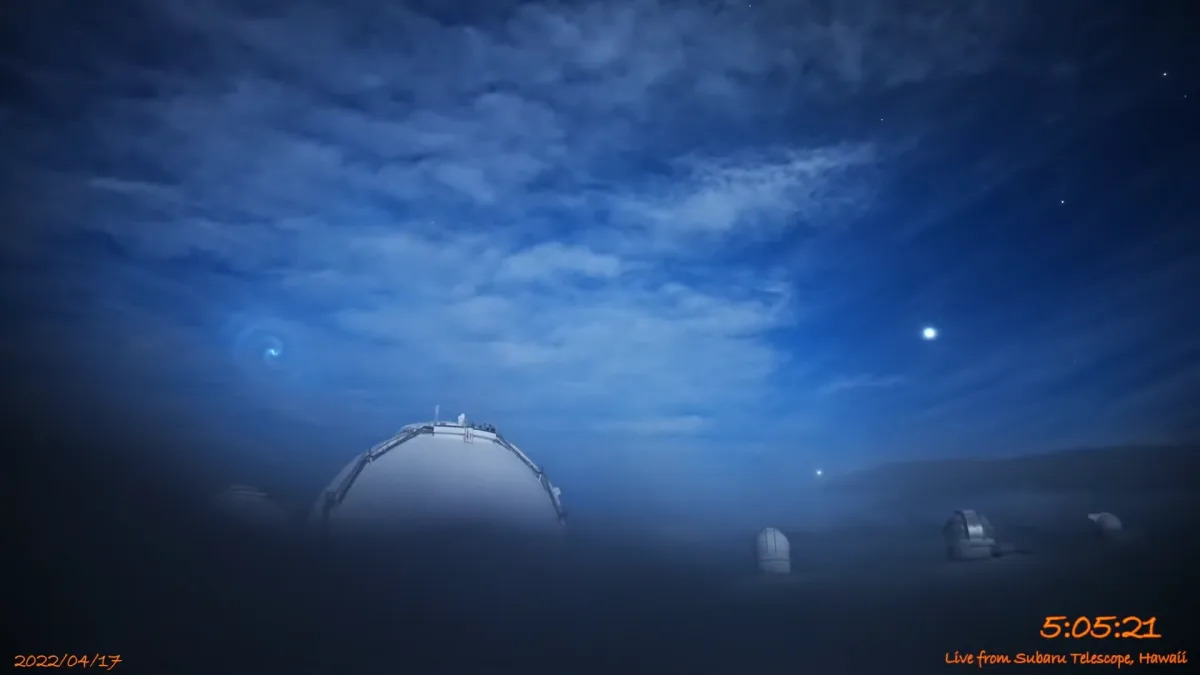
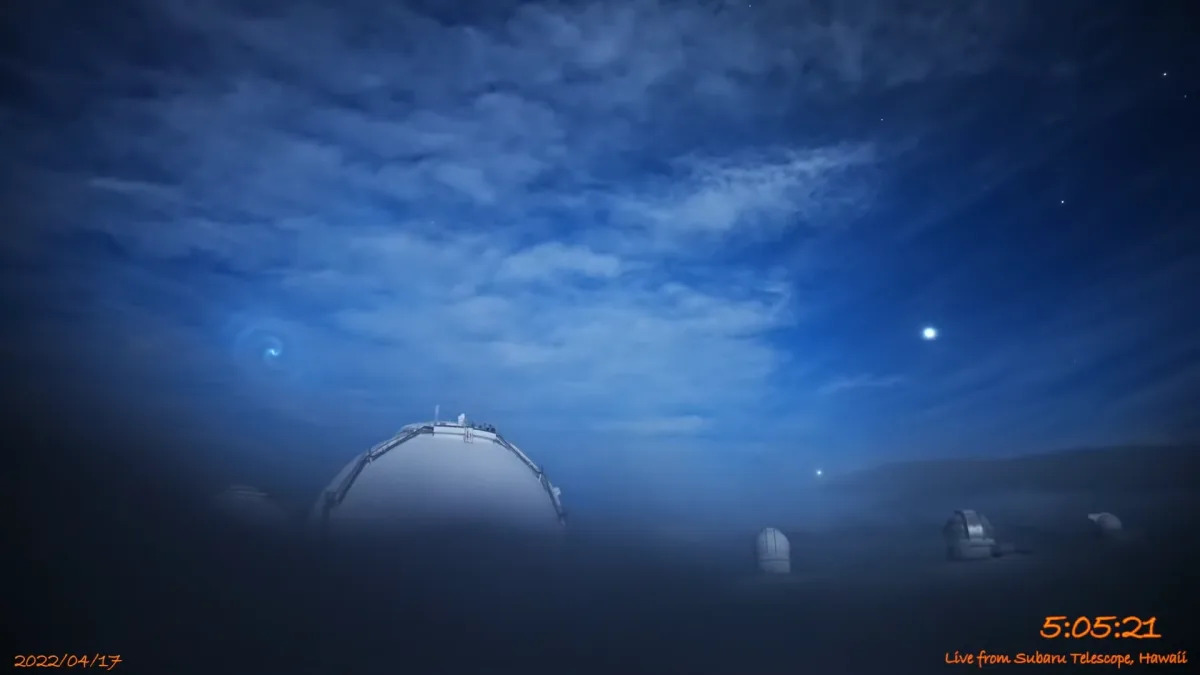
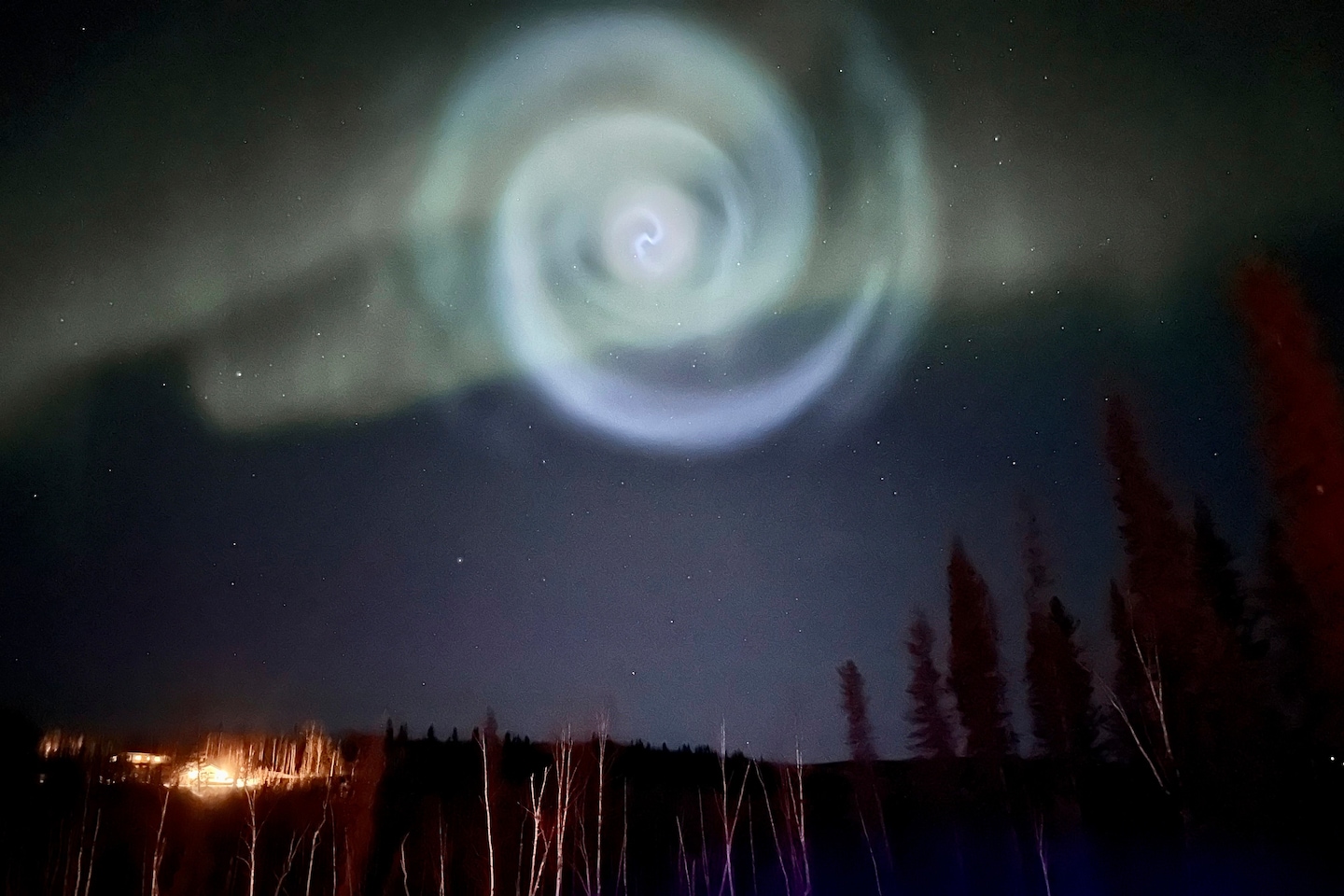
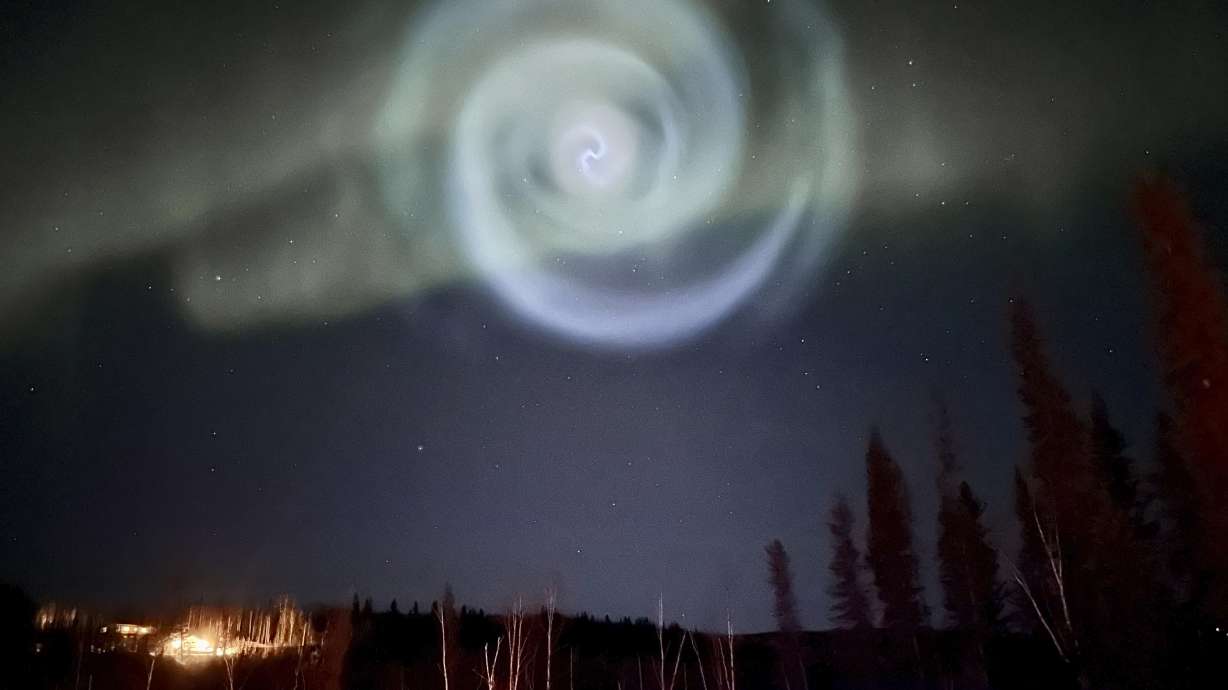
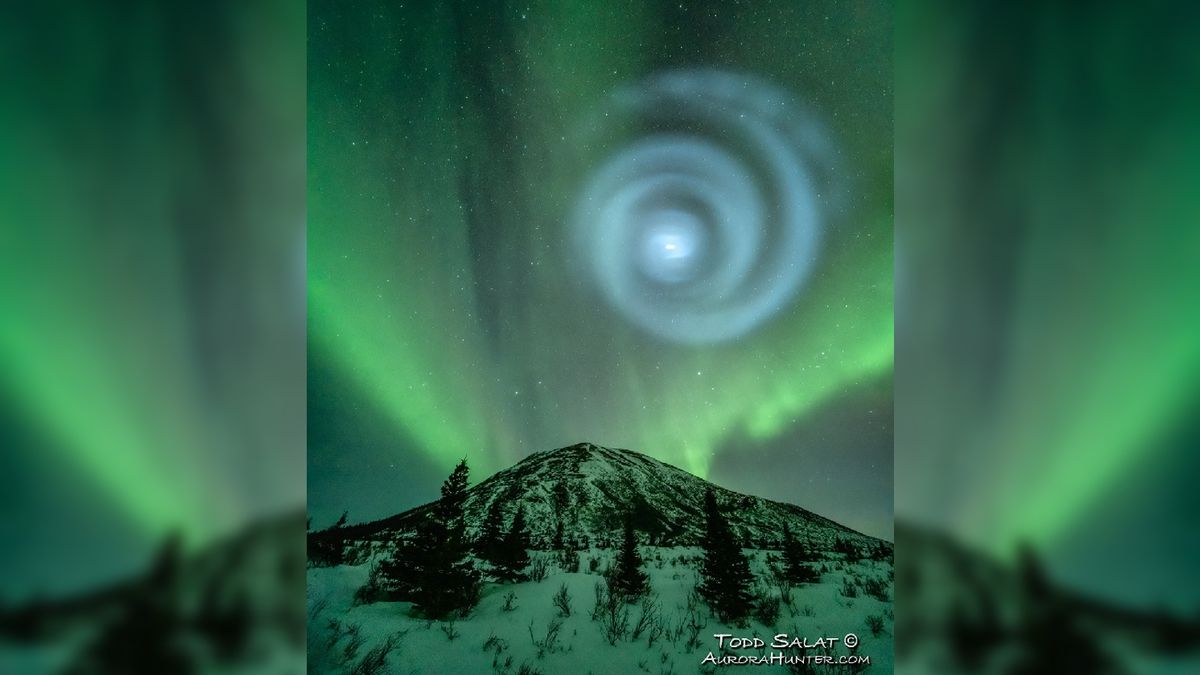
A photographer in Alaska captured a bright spiral in the sky while hunting for auroras. The spiral was caused by propellant released from a SpaceX rocket that carried more satellites into orbit as part of the Transporter-7 mission. Similar spirals have been spotted in the past, and while they may be a treat for those looking to capture such events, the explanation behind them takes away some of the mystery.
A photographer in Alaska captured a bright spiral in the sky while hunting for auroras. The spiral was caused by propellant released from a SpaceX rocket that carried more satellites into orbit as part of the Transporter-7 mission. Similar spirals have been spotted in the past, and while they may be a treat for those looking to capture such events, the explanation behind them takes away some of the mystery.
A mysterious spiral seen in the sky over Alaska was caused by the launch of a Falcon 9 vehicle by SpaceX. Researchers say such patterns have become increasingly common in recent years with more commercial satellite launches. The spiral shape formed because the rocket was spinning, and the fuel was probably released from Falcon 9's second stage as it was taking steps to de-orbit so it could safely lower in the atmosphere. The event was probably caused by excess fuel released during the launch, and it doesn't take much material to create such a bright-looking cloud.
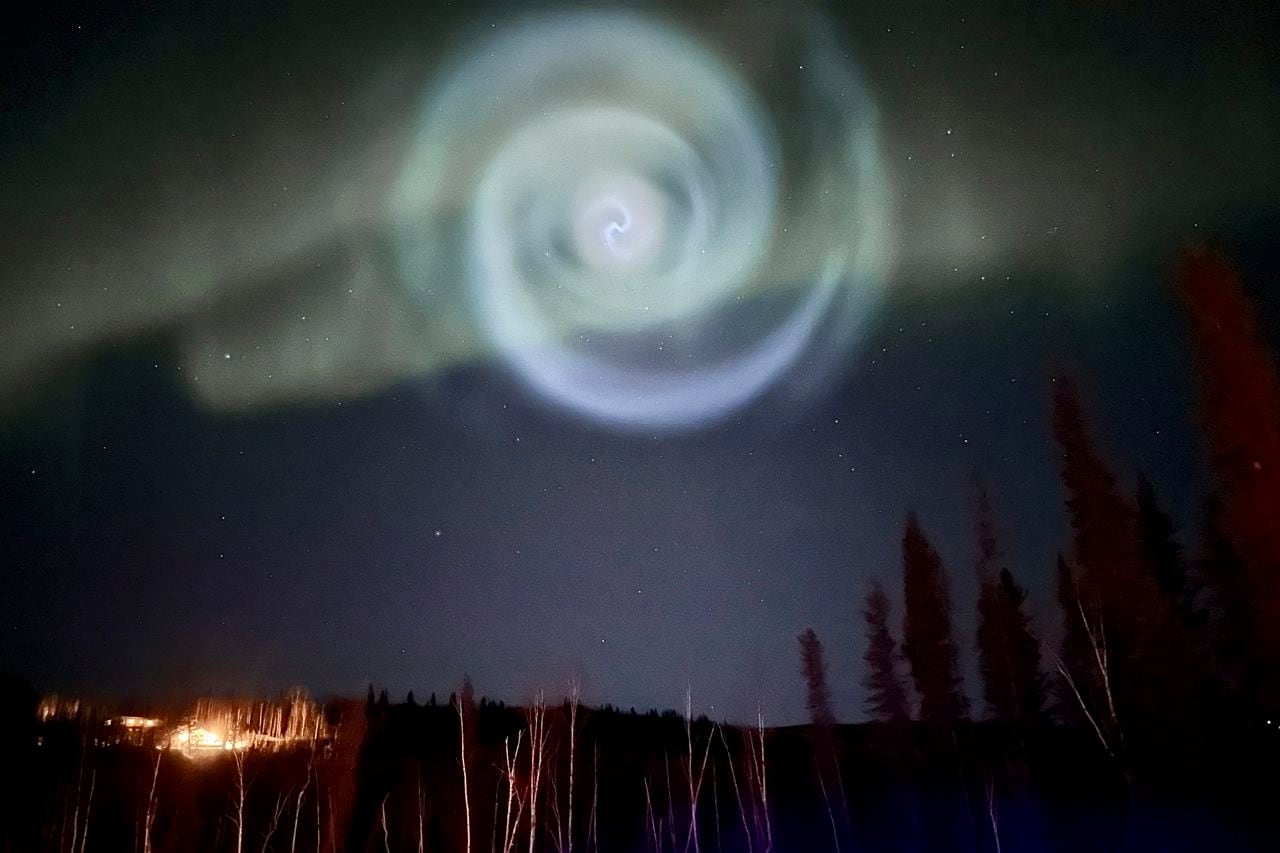
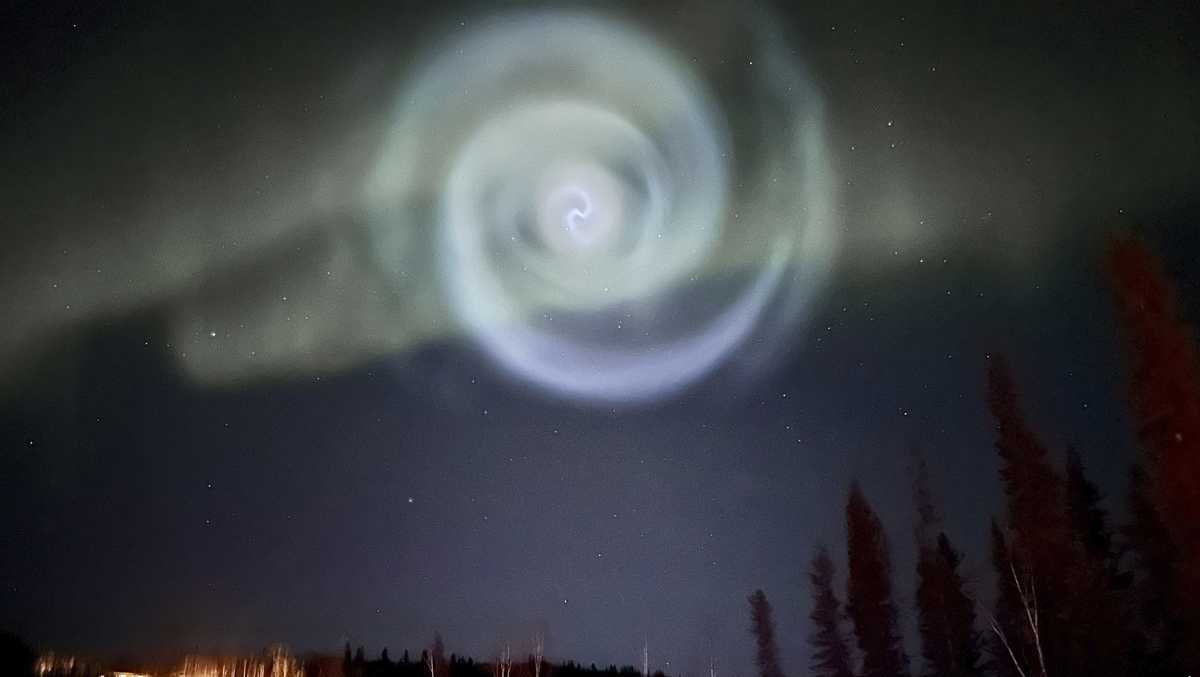
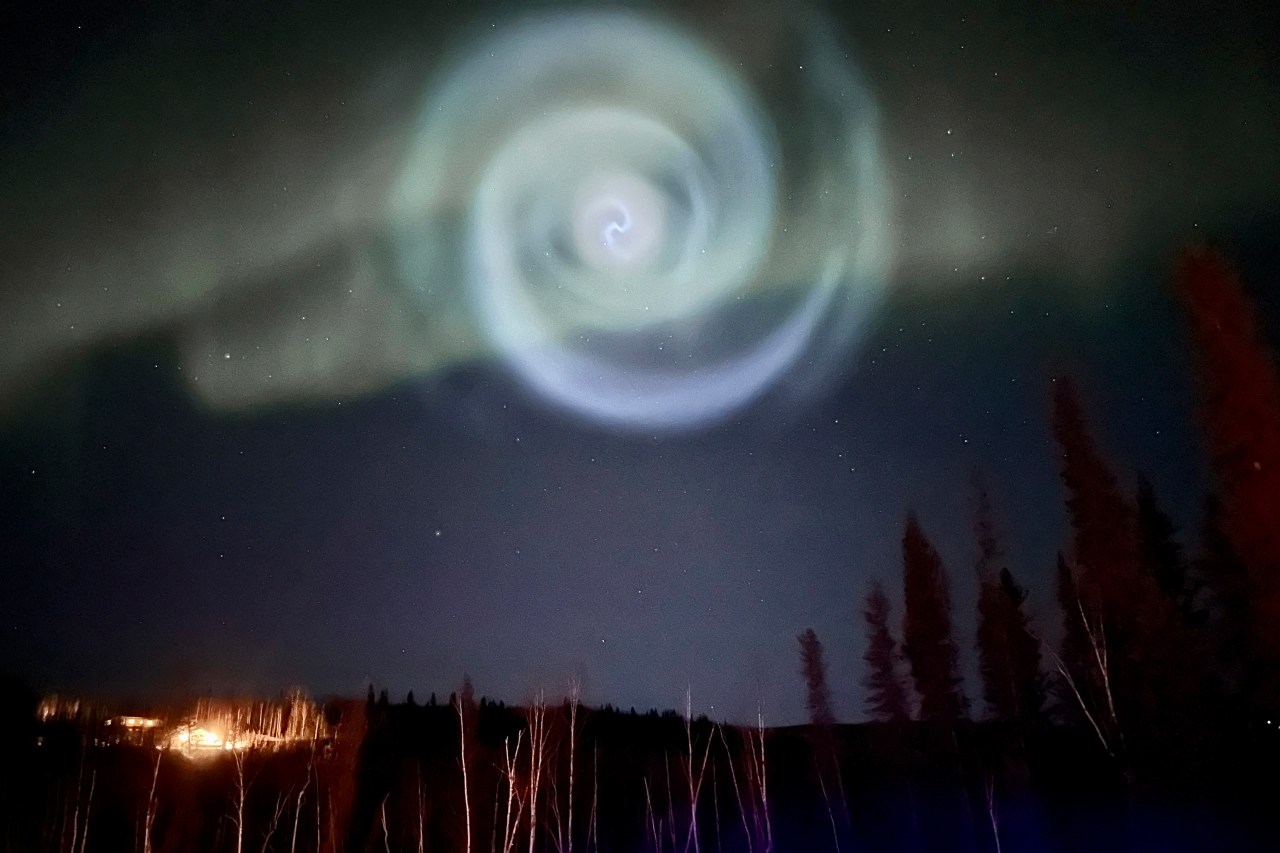
A light baby blue spiral resembling a galaxy appeared amid the aurora for a few minutes in the Alaska skies near Fairbanks, caused by excess fuel that had been released from a SpaceX rocket that launched from California about three hours earlier turned to ice, and then the water vapor reflected the sunlight in the upper atmosphere. While not a common sight, such occurrences have been seen about three times, according to space physicist Don Hampton.
An ethereal spiral-shaped object appeared in the night sky above Alaska on April 15, which was captured on camera by the University of Alaska's Poker Flat Research Range. Astronomers have nicknamed these spirals "SpaceX spirals," which form when rocket fuel ejected from the fast-spinning upper stages of Falcon 9 rockets gets frozen in space and reflects sunlight back towards Earth. The spiral was made up of fuel ejected by a Falcon 9 rocket that launched from California's Vandenberg Space Force Base around three hours before the whirlpool appeared. These spirals have become more common in recent years as the number of SpaceX launches has increased.
A light baby blue spiral resembling a galaxy appeared amid the aurora in the Alaska skies, caused by excess fuel that had been released from a SpaceX rocket that launched from California about three hours before. The fuel turned into ice and reflected sunlight in the upper atmosphere, creating a swirly cloud. The appearance of the swirl was caught in time-lapse on the Geophysical Institute’s all-sky camera and shared widely. While not a common sight, similar occurrences have been seen before.
A light baby blue spiral resembling a galaxy appeared amid the aurora in the Alaska skies for a few minutes. The cause was excess fuel that had been released from a SpaceX rocket that launched from California about three hours before the spiral appeared. The rocket took off with about 25 satellites as its payload. The appearance of the swirl was caught in time-lapse on the Geophysical Institute's all-sky camera and shared widely. It was just water vapor reflecting sunlight, not a galaxy.
A light baby blue spiral resembling a galaxy appeared amid the aurora in Alaska's night sky, which was caused by excess fuel released from a SpaceX rocket launched from California. The fuel turned into ice and reflected sunlight, creating a swirly cloud. The spiral was caught on camera and shared widely on social media. This is not a common sight, but space physicist Don Hampton has seen such occurrences about three times.