Tag

Stellar Feedback

All articles tagged with #stellar feedback

Massive star clusters break free from birth clouds in 5 million years, reshaping galaxy growth models
science6 days ago

Massive star clusters break free from birth clouds in 5 million years, reshaping galaxy growth models

NASA/ESA observations with Webb and Hubble identified ~9,000 young star clusters in four nearby galaxies, revealing that the most massive clusters clear their birth gas in about 5 million years, while smaller clusters take roughly 7–8 million years. This challenges the simple expectation that bigger clusters clear faster and provides a sharper clock for how stellar feedback heats and pushes gas, influencing galaxy evolution models and the potential role of early massive clusters in cosmic reionization. The result tightens constraints for simulations of star formation and feedback and has implications for planet-forming disks in dense cluster environments. Future work will expand the survey to more galaxies and distant systems to test if local trends scale to the early universe.
JWST reveals how giant star clusters sculpt galaxies through stellar feedback
science19 days ago

JWST reveals how giant star clusters sculpt galaxies through stellar feedback

Astronomers using the James Webb Space Telescope, with support from Hubble data, tracked about 9,000 young star clusters in four nearby galaxies and found that the most massive clusters clear their birth gas within ~5 million years (smaller clusters up to ~8 million), with intense ultraviolet radiation and stellar winds reshaping surrounding gas. This stellar feedback can regulate future star formation and potentially influence planet formation, offering new constraints on how star clusters drive galactic evolution, and the findings appear in Nature Astronomy.

Massive star clusters escape birth clouds first, sparking early UV glow in galaxies
science24 days ago

Massive star clusters escape birth clouds first, sparking early UV glow in galaxies

Webb and Hubble studied roughly 9,000 young star clusters in four nearby galaxies (M51, M83, NGC 4449, NGC 628) and found the most massive clusters clear their birth clouds and begin emitting ultraviolet light after about 5 million years, while less massive clusters emerge after 7–8 million years—offering new constraints on how stellar feedback drives galactic evolution and influences early planet formation.

Hubble spots newborn stars in the Large Magellanic Cloud
space4 months ago

Hubble spots newborn stars in the Large Magellanic Cloud

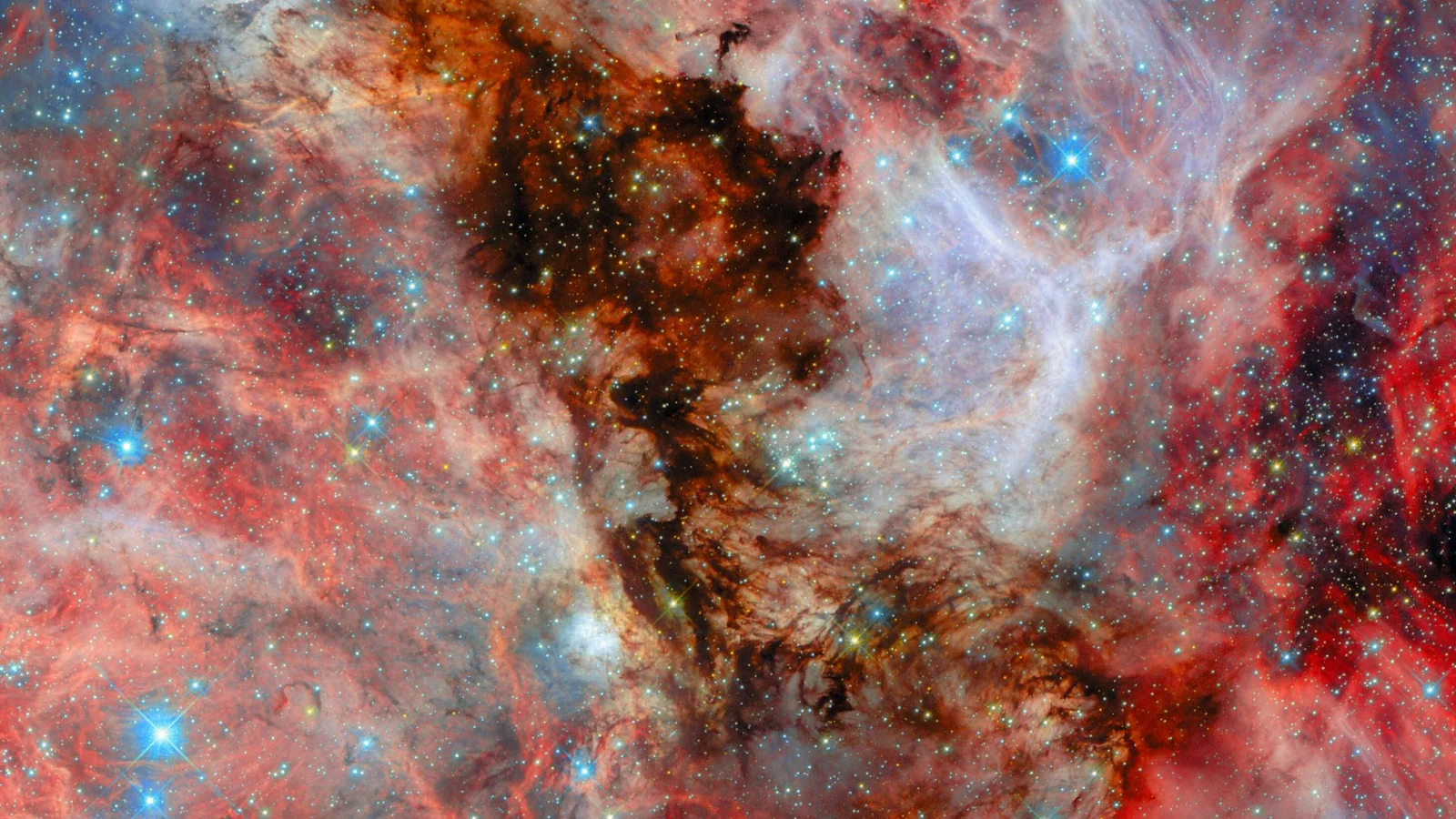
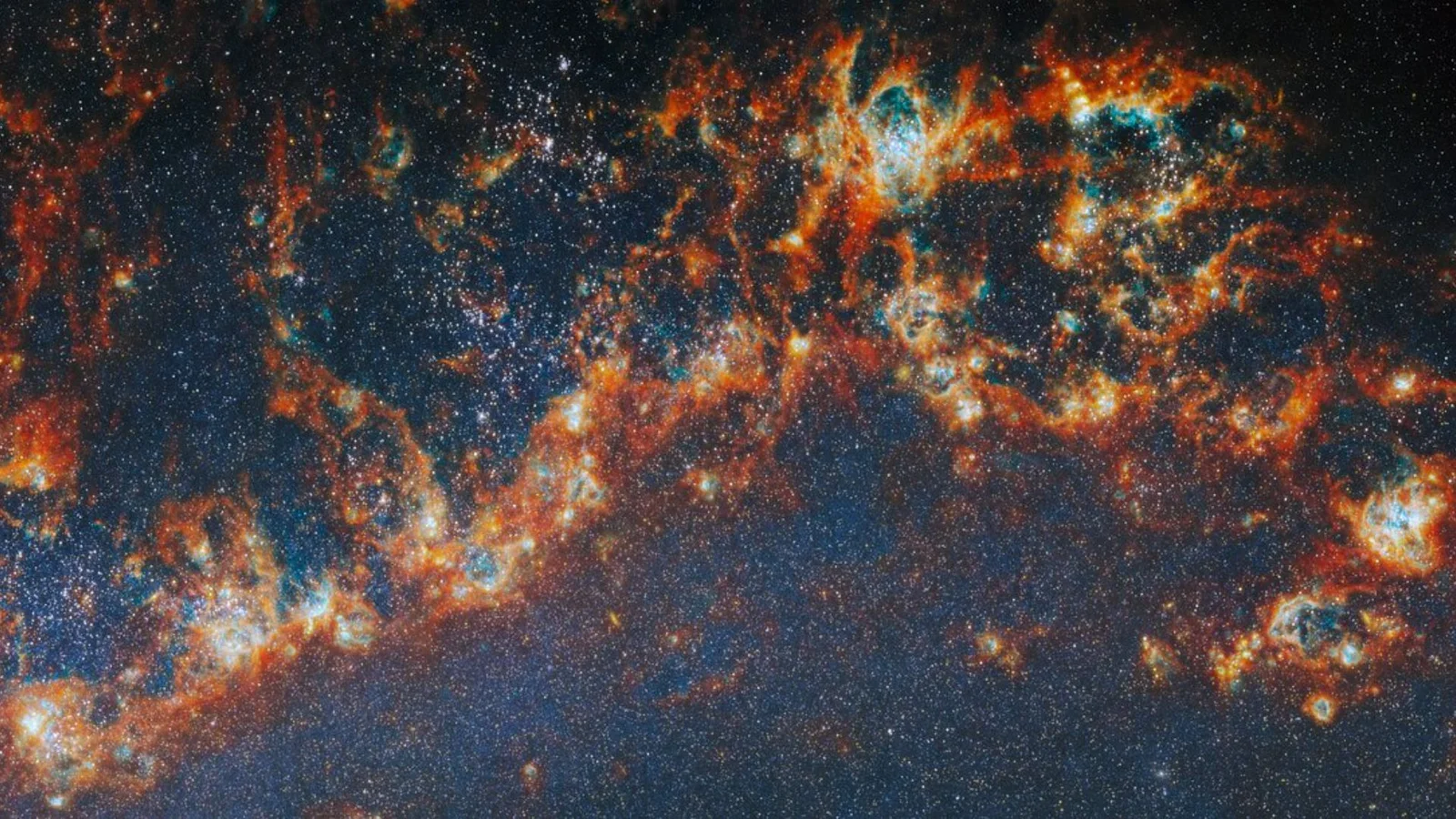
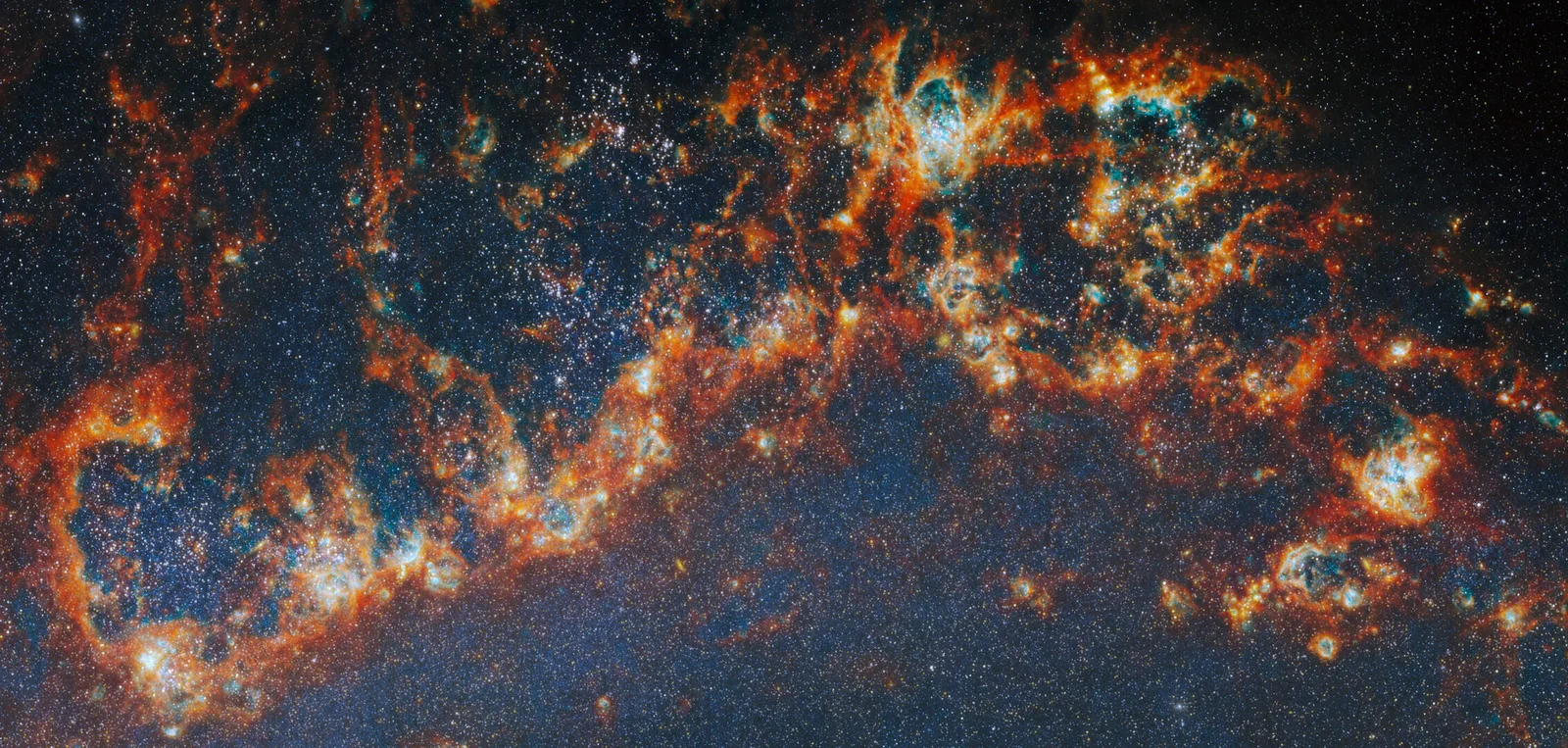
Space.com reports a new Hubble image of the N159 star-forming complex in the Large Magellanic Cloud, taken in a neighboring field to a recently released view. The image reveals thick hydrogen gas forming ridges and filaments, with bright red emission indicating regions where hot, young stars energize the surrounding gas. Studying this Milky Way–like environment, roughly 160,000 light-years away, helps astronomers understand how stellar radiation and winds shape clouds, drive feedback, and influence where new stars form.

"Captivating Spiral Spectacle: James Webb Telescope's Breathtaking Snapshot"
astronomy2 years ago

"Captivating Spiral Spectacle: James Webb Telescope's Breathtaking Snapshot"

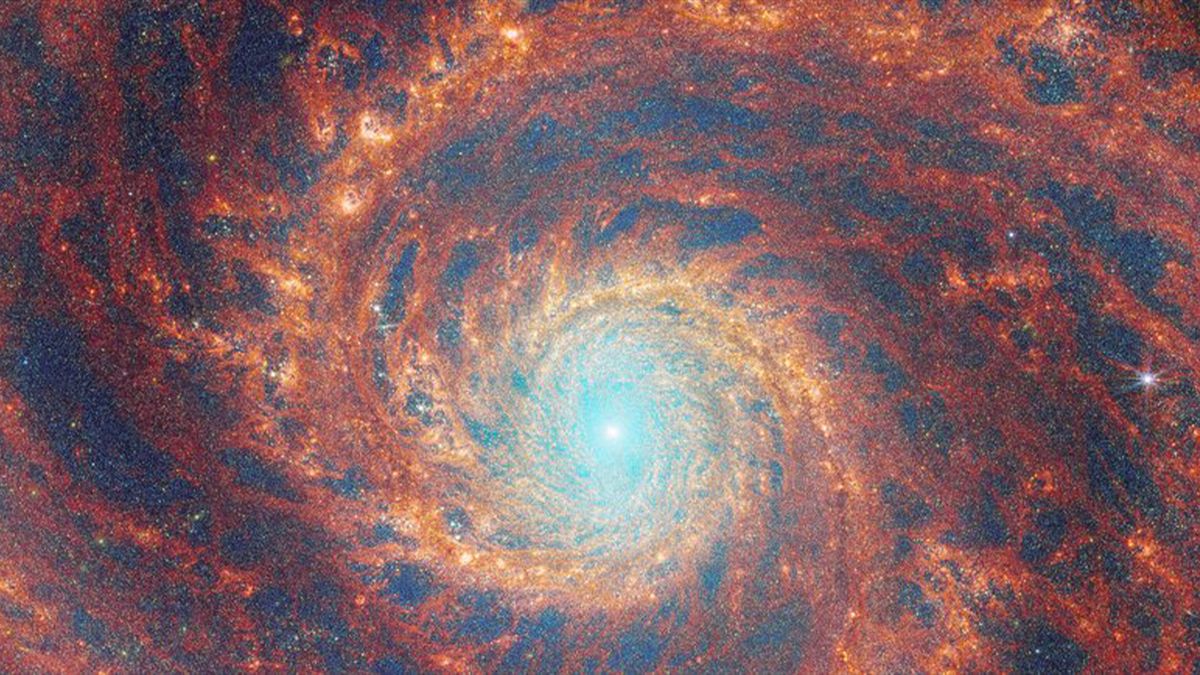
The James Webb Space Telescope captured a stunning image of the spiral galaxy M83 using its Mid-Infrared Instrument (MIRI). The image reveals areas with lots of stars, new star formation, and special carbon-based molecules. Scientists are studying M83 as part of the FEAST program to understand how stars are born and how they impact their surroundings through stellar feedback. By studying this relationship, scientists hope to improve their models and gain a better understanding of star formation.

"James Webb's Stunning View of the Whirlpool Galaxy Captured in Space Photo of the Week"
astronomy2 years ago

"James Webb's Stunning View of the Whirlpool Galaxy Captured in Space Photo of the Week"

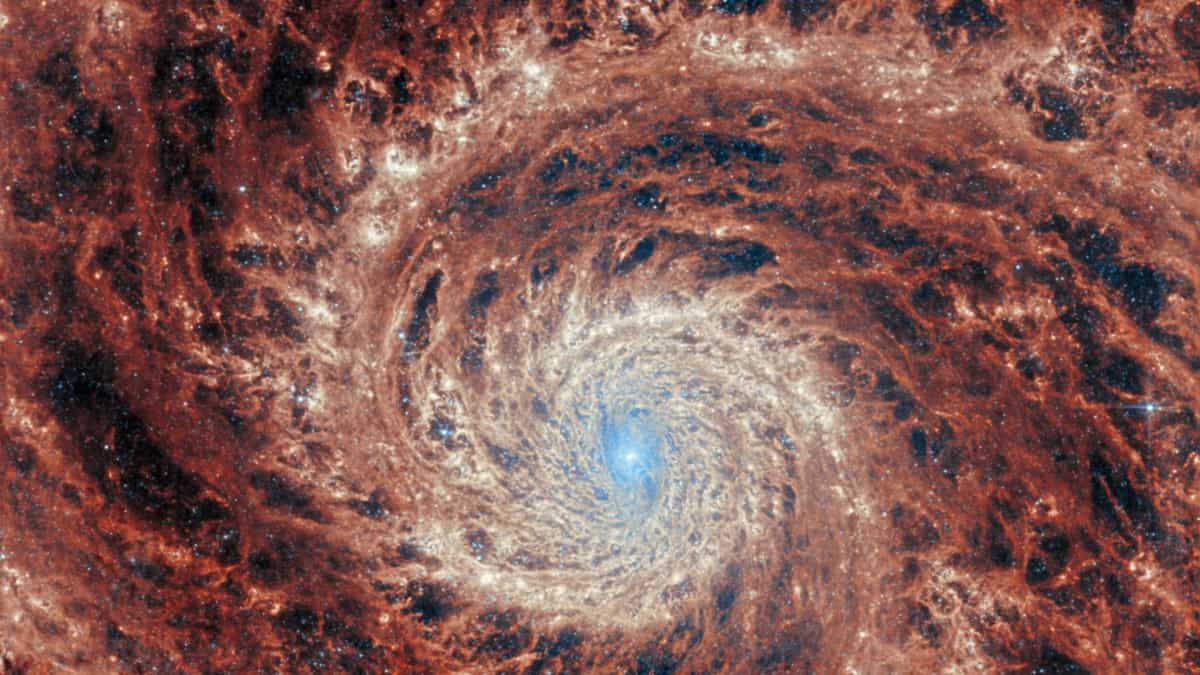
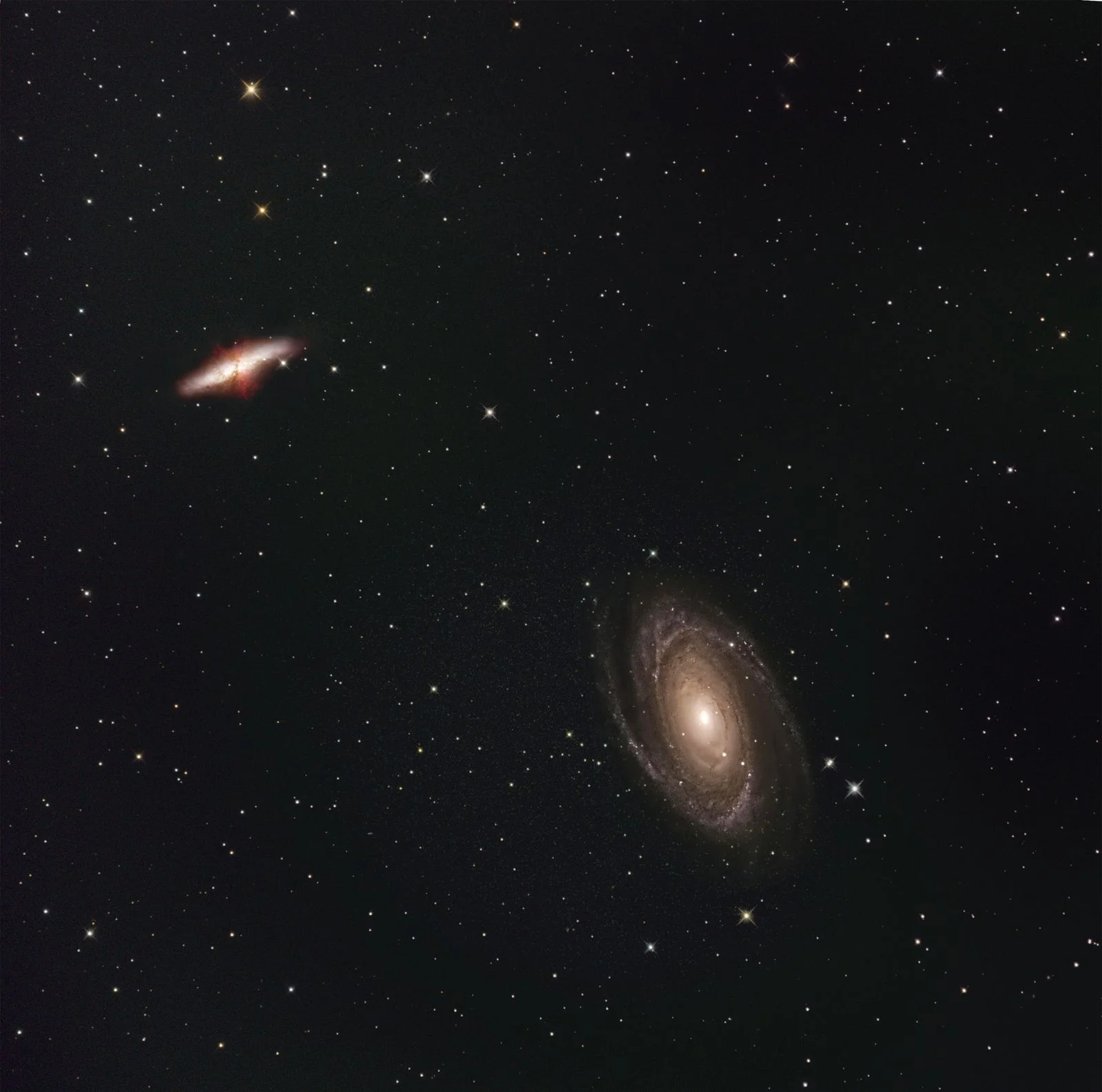
The James Webb Space Telescope has captured a stunning new infrared image of the Whirlpool Galaxy (M51), showcasing star clusters forming within the galaxy for the first time. The image reveals a bright, pale blue core surrounded by concentric circles of deep orange filaments of dust and yellow spirals of ionized gas. This unique view is made possible by the JWST's infrared capabilities. The Whirlpool Galaxy, located 27 million light-years away, is a spiral galaxy similar to our own Milky Way and has been extensively studied due to its striking appearance and interaction with the nearby dwarf galaxy NGC 5195.

"Stunning Image of Whirlpool Galaxy Captured by NASA's James Webb Telescope"
space2 years ago

"Stunning Image of Whirlpool Galaxy Captured by NASA's James Webb Telescope"

NASA's James Webb Space Telescope has captured a brilliant new infrared image of the Whirlpool Galaxy, also known as M51 or NGC 5194. The image reveals warm dust concentrated along the galaxy's spiral arms, bright areas where stars are forming, regions of ionized gas created by recently formed star clusters, and cavernous black "bubbles" through which stars behind the galaxy can be seen. The telescope is observing the galaxy as part of a series of observations called FEAST, which aims to shed light on the interplay between stellar feedback and star formation in environments outside of our own galaxy.

"ESA's Webb Telescope Captures Mesmerizing Cosmic Whirlpool"
astronomy2 years ago

"ESA's Webb Telescope Captures Mesmerizing Cosmic Whirlpool"

The James Webb Space Telescope has captured a stunning image of the grand-design spiral galaxy M51, also known as the Whirlpool Galaxy. The image showcases the galaxy's well-developed spiral arms, as well as the warm dust permeating its medium. The observation is part of a series of observations called FEAST, which aims to study stellar nurseries and understand the interplay between star formation and stellar feedback in galaxies beyond our own Milky Way. Webb's observations will provide insights into the early stages of star formation, energy reprocessing of gas and dust, and the regulation of the star formation cycle within galaxies.

"Unveiling Cosmic Nurseries and Tombs in Distant Galaxies"
astronomy2 years ago

"Unveiling Cosmic Nurseries and Tombs in Distant Galaxies"

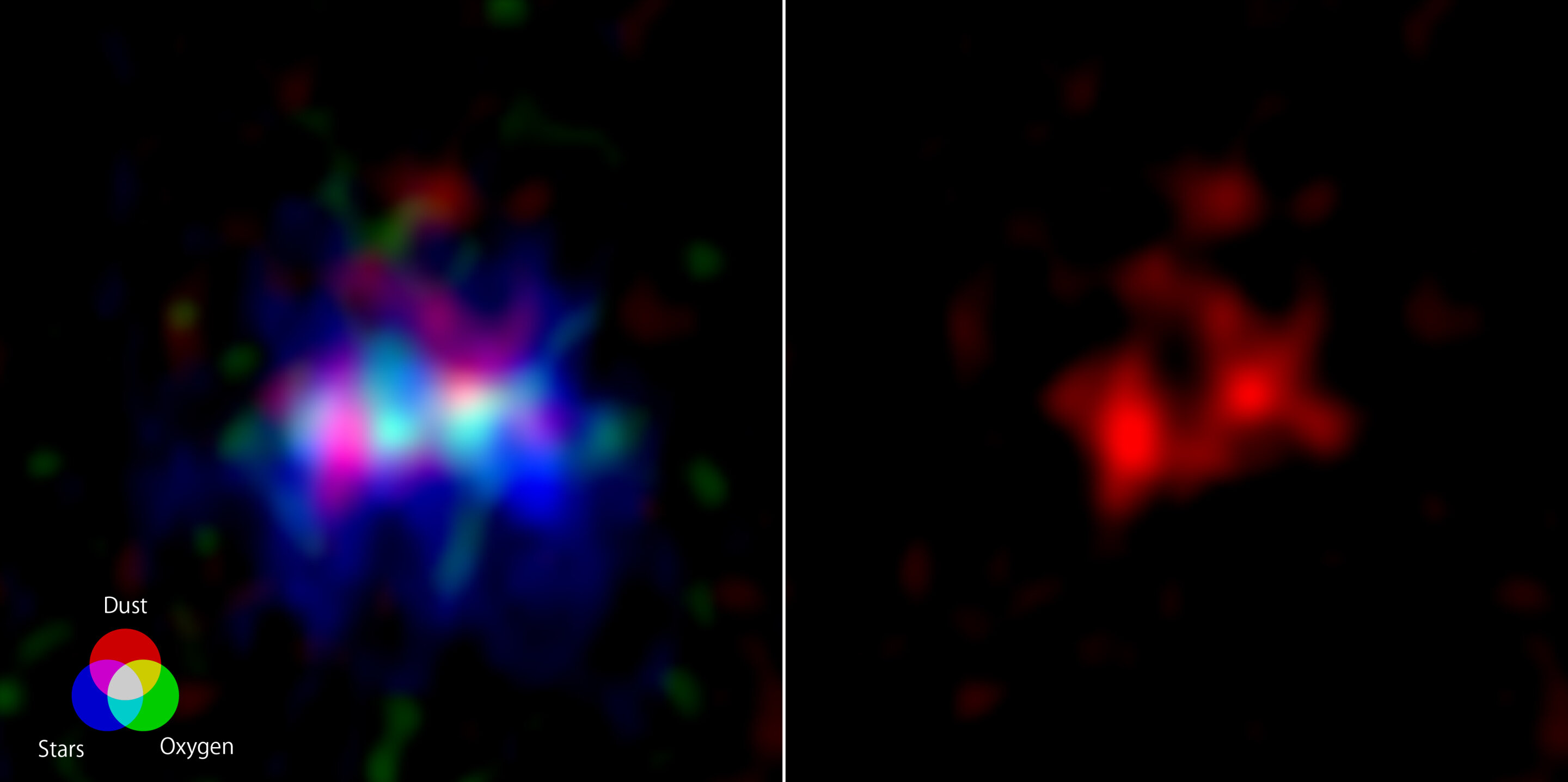
Observations using ALMA have identified the sites of star formation and a possible site of star death in a galaxy located 13.2 billion light-years away. The high-resolution observations of MACS0416_Y1 revealed the intricate relationship between dust and oxygen emissions within the nebulae, suggesting the ionization of surrounding gas by newly formed stars. Additionally, a massive cavity, potentially a superbubble created by successive supernova explosions, was discovered in the dust-dominated regions. These findings provide insights into the birth and death of stars within nebulae and may be further explored with future high-resolution observations using instruments like the James Webb Space Telescope.