Tag

Synchrotron

All articles tagged with #synchrotron

Hidden Hipparchus Night-Sky Map Recovered With X-ray Scanning
science1 month ago

Hidden Hipparchus Night-Sky Map Recovered With X-ray Scanning

Scientists at SLAC are using a synchrotron X-ray scanner to reveal a buried star catalog thought to be Hipparchus’ oldest map of the night sky, hidden beneath ink on a 6th‑century manuscript (Codex Climaci Rescriptus) from St Catherine’s Monastery. Initial scans confirm underlying Greek text linked to Earth’s precession; 11 of about 200 pages have been scanned so far, with researchers hoping to reconstruct the map and gain insights into the birth of science and naked-eye astronomy.

Giant accelerator reveals hidden teeth in 200-million-year-old dinosaur embryos
science1 month ago

Giant accelerator reveals hidden teeth in 200-million-year-old dinosaur embryos

Using the European Synchrotron Radiation Facility's powerful X‑rays, researchers scanned a six‑egg clutch of Massospondylus carinatus embryos from 200‑million‑year‑old eggs found in South Africa, revealing tiny skulls and two distinct tooth generations—one temporary and shed before hatching, the other adult‑like—along with skeletal development consistent with two‑legged hatchlings and reptile–bird similarities.

science2 months ago

Hipparchus Star Catalog Restored by Synchrotron X‑Ray Scan

Researchers at SLAC used synchrotron X-ray fluorescence to image a medieval manuscript and reveal erased coordinates from Hipparchus’s star catalog, recovering a highly accurate ancient sky map. The new data can be compared with Ptolemy’s preserved records to reassess attribution and potentially reshape debates about the origins of early astronomy.

240-Million-Year-Old Species Discovered with Particle Accelerator
science1 year ago

240-Million-Year-Old Species Discovered with Particle Accelerator

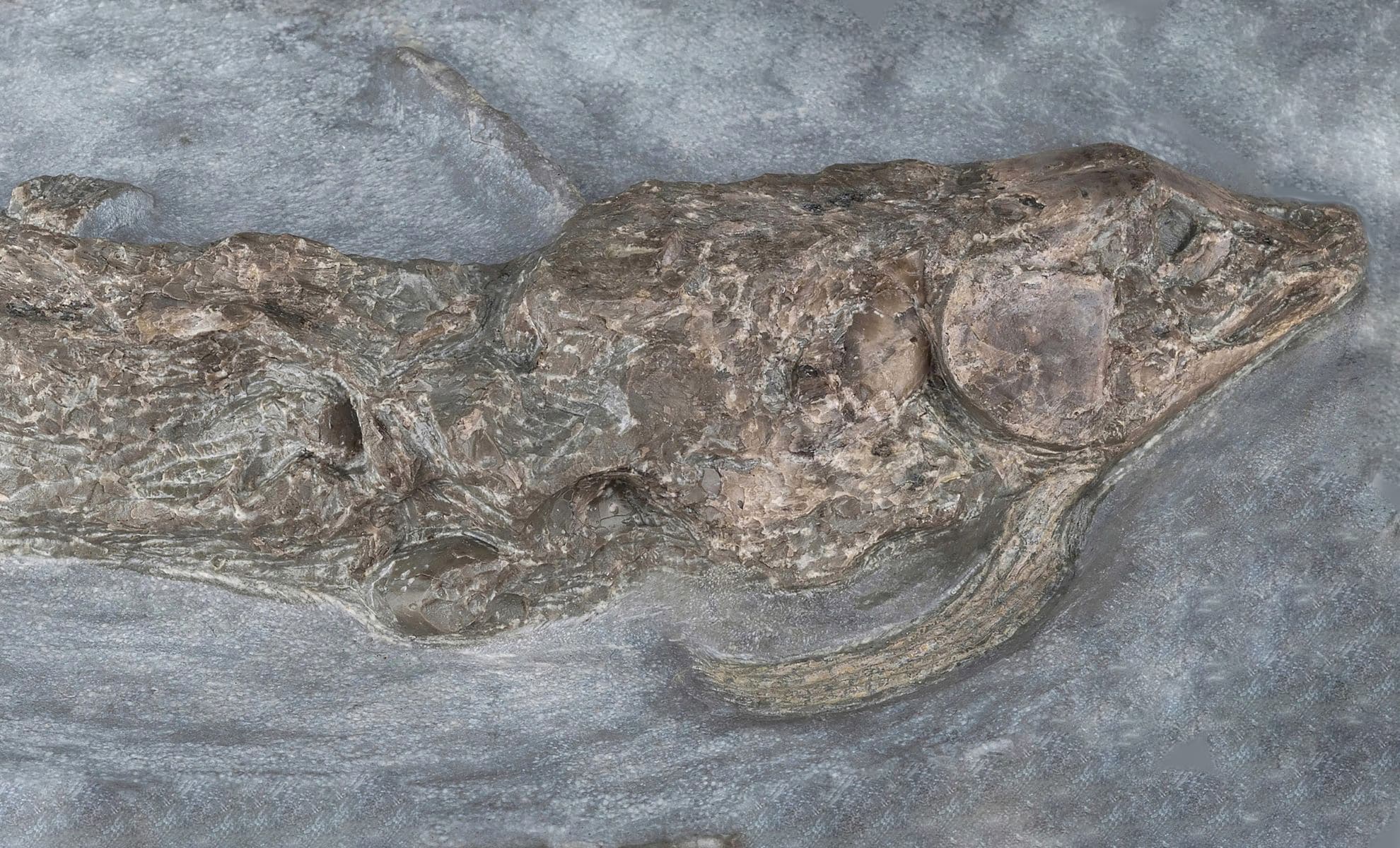
Scientists have discovered a new species of coelacanth, Graulia branchiodonta, using the European Synchrotron Radiation Facility in France. This extinct fish, dating back 240 million years, was found in exceptional condition, allowing researchers to create detailed 3D models of its skeleton. The study highlights the potential of synchrotron technology in paleontology, offering unprecedented insights into ancient species and their evolutionary history.

Electron Spin Measured in Kagome Quantum Materials.
science-and-technology2 years ago

Electron Spin Measured in Kagome Quantum Materials.

An international research team has successfully measured the electron spin in a new class of quantum materials called "kagome materials" for the first time, potentially transforming how quantum materials are studied. This advancement could pave the way for developments in fields like renewable energy, biomedicine, electronics, and quantum computing. The researchers used advanced experimental techniques, including a synchrotron source, and modern techniques for modeling the behavior of matter to measure electron spin related to the concept of topology. The results obtained could help us learn more about the special magnetic, topological, and superconducting properties of kagome materials.

Revolutionary X-ray Image Captures Single Atom for the First Time.
science2 years ago

Revolutionary X-ray Image Captures Single Atom for the First Time.

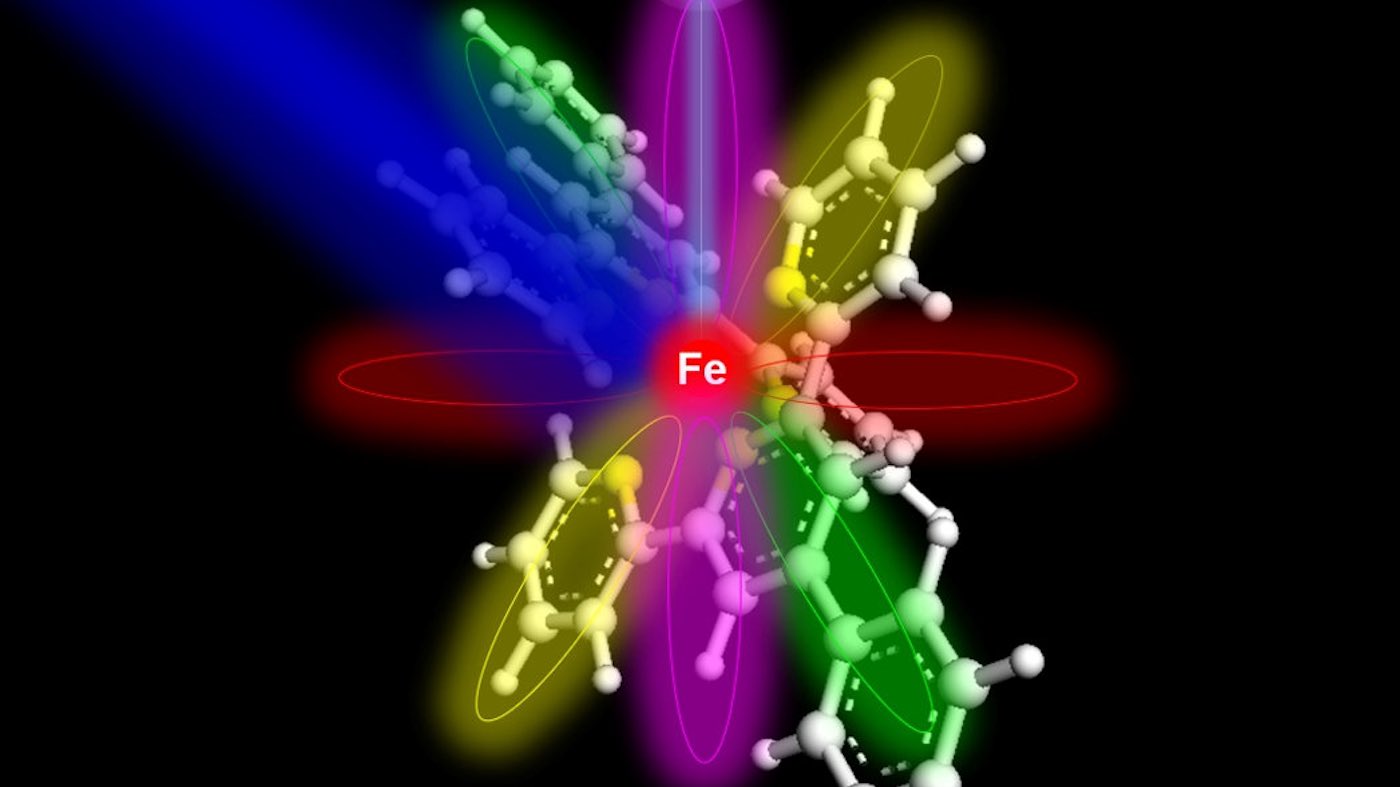
Scientists have successfully X-rayed a single atom for the first time using a purpose-built synchrotron instrument at Argonne National Laboratory in Illinois. The technique, known as SX-STM, enables the detection of the type and chemical state of individual atoms, paving the way for advancements in materials science, eco-science, and quantum computing. The breakthrough has been described as the "holy grail" of physics and could revolutionize research in various fields.

Scientists capture world's first nanoscale X-ray of a single atom.
science-and-technology2 years ago

Scientists capture world's first nanoscale X-ray of a single atom.

Scientists have captured the first X-ray image of a single atom using a microscope that combines scanning probes and synchrotron X-ray imaging. The technique, known as synchrotron X-ray scanning tunneling microscopy, allows for the individual atom to be identified and its chemical state to be measured. The team of scientists from Ohio University, Argonne National Laboratory, the University of Illinois-Chicago and other institutions used a supramolecule made of a single iron atom and several terbium atoms to capture the image. The discovery could revolutionise research and give birth to new technologies in areas such as quantum information and the detection of trace elements in environmental and medical research.

World's First X-Ray of a Single Atom Unveiled in Nature
science2 years ago

World's First X-Ray of a Single Atom Unveiled in Nature

Scientists from Ohio University, Argonne National Laboratory, and the University of Illinois-Chicago have taken the world's first X-ray signature of a single atom using synchrotron X-ray scanning tunneling microscopy. The team used a specialized detector made of a sharp metal tip positioned at extreme proximity to the sample to collect X-ray excited electrons. The technique could revolutionize research and give birth to new technologies in areas such as quantum information and the detection of trace elements in environmental and medical research.