Iran threatens to set US troops on fire as the conflict enters its fifth week, with Euronews' Europe Today outlining the top story alongside G7 energy/finance talks and related EU and global coverage.
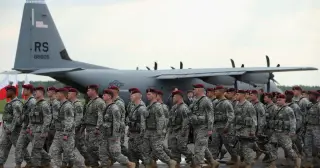
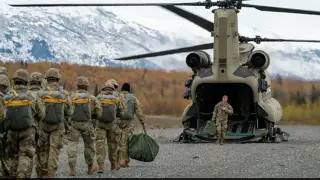
Hundreds of U.S. Special Operations Forces, including Navy SEALs and Army Rangers, along with thousands of Marines and Army paratroopers, have arrived in the Middle East, giving President Trump potential options against Iran such as actions targeting the Strait of Hormuz, Kharg Island, or Iran’s stockpiled enriched uranium. The deployment, reported by sources familiar with the arrangements and first referenced by The New York Times, includes more than 3,500 troops in the region with the USS Tripoli and about 2,500 Marines, a second Marine Expeditionary Unit en route, and elements of the 82nd Airborne expected to join (under 1,500 troops). CENTCOM declined to comment.
Amid a widening Middle East crisis, Trump suggests the U.S. could seize Iran's Kharg Island as troop buildup grows, while Israel conducts strikes on Iran and Iran retaliates, a UN peacekeeper is killed in Lebanon, the IAEA reports damage to Iran's heavy-water plant, and oil markets brace for the fallout.
Iran fired six ballistic missiles and 29 drones at Saudi Arabia’s Prince Sultan air base, injuring at least 15 U.S. troops as part of a weekly toll that has pushed the total wounded in the Iran war above 300; in response, the United States has boosted its presence in the Middle East with ships like the USS Tripoli carrying about 2,500 Marines and additional units en route, signaling a continued military buildup.
An Iranian missile and drone attack on Prince Sultan Air Base in Saudi Arabia wounded U.S. service members and damaged several U.S. refueling aircraft; the exact number of wounded was not immediately clear as regional tensions continue.
More than 3,500 U.S. troops, including about 2,500 Marines aboard the USS Tripoli, arrived in the U.S. Central Command area as Iran’s war strikes intensify, with additional ships and a second Marine unit ordered to the region. CENTCOM says over 11,000 targets have been struck since late February. The conflict threatens global shipping and oil routes through the Strait of Hormuz, and Iranian-backed Houthis say they are involved; Washington says no ground troops are required for now but remains prepared for contingencies.
Iran launched a missile and drone attack on Prince Sultan Air Base in Saudi Arabia, wounding several U.S. service members and damaging multiple aircraft including refueling planes, as fighting in the Middle East broadens with broader regional tensions and ongoing diplomatic maneuvering.
Brent crude climbed nearly 9% for the week to its highest settlement in almost four years as the U.S. sent three warships and thousands more Marines to the Middle East, while U.S. crude finished the week with a small loss; Iraq declared force majeure on some oilfields, highlighting how geopolitical tensions are lifting Brent relative to WTI.
Live updates show the United States deploying more forces even as President Trump hints at winding down Middle East operations, while Iran and Israel exchange broad attacks across the region. Iran says Natanz was hit with no radiation leakage; Israel vows intensified strikes, and attacks ripple through Iraq, the UAE and Lebanon. Casualties rise with more than 1,300 Iranians killed, over 1,000 Lebanese killed, and at least 13 U.S. service members killed, among others.
Iranian officials say an airstrike hit the Natanz nuclear facility as the Middle East conflict enters its fourth week and the United States increases troop deployments to the region.
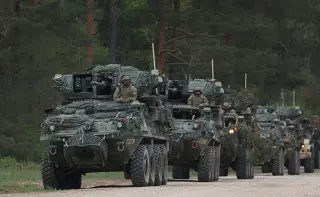
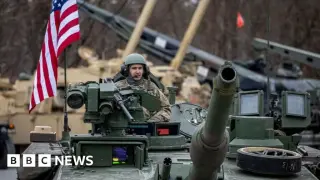
President Trump is weighing multiple options to deploy U.S. ground troops inside Iran—ranging from hundreds of special forces to thousands for weeks—with aims such as securing the Strait of Hormuz, seizing Iranian oil facilities, or retrieving highly enriched uranium, in a plan that officials say would be high risk but could accelerate an end to the war; any move would avoid large-scale invasions and comes amid energy concerns, political backlash at home, and strategic splits with regional allies.
A seventh American service member died from injuries sustained in Iran's counter-attacks, bringing U.S. deaths in the conflict to seven; six others were killed earlier in a drone attack in Kuwait and were honored at Dover Air Force Base, as Iran continued retaliatory strikes in the region after U.S.-Israeli actions. President Trump warned more casualties and a potentially prolonged war.
A seventh U.S. service member has died from injuries sustained in Iran-related attacks across the region, after being wounded March 1 during an attack on U.S. troops in Saudi Arabia. The service member’s name was withheld pending family notification. The death follows the dignified transfers for six soldiers killed last week in Kuwait, connected to the same broader conflict, and comes as President Trump warned that there will likely be more casualties in the Iran war.
President Trump warned that more U.S. troops are likely to die as the U.S. wages a protracted campaign against Iran, framing it as necessary to prevent a nuclear-armed Iran and touting the elimination of Iran’s supreme leader; his remarks followed reports of three American service members killed and five wounded, with vows of retaliation and immunity for Iranian officers who surrender.
The White House says the US will largely pull out its remaining roughly 1,000 troops from Syria over the coming months, transferring lead counterterrorism to the Syrian government while preserving the option to respond to threats; the move coincides with rising tensions with Iran and a broader shift in US regional posture, including enhanced naval activity near Iran.