Tag

Active Galactic Nucleus

All articles tagged with #active galactic nucleus

Webb Telescope Reveals Fiery Core and Hidden Bar in the Squid Galaxy
science9 days ago

Webb Telescope Reveals Fiery Core and Hidden Bar in the Squid Galaxy

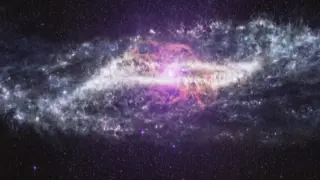
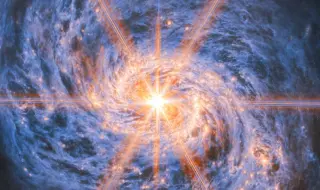
NASA’s James Webb Space Telescope captures Messier 77, the Squid Galaxy, in infrared to reveal its blazing central active galactic nucleus powered by an 8‑million‑solar‑mass black hole, plus a hidden straight central bar bisecting the spiral arms and a bright starburst ring fed by gas and dust. The edge-on–like, dust-veiled core shines through in MIRI imagery, while diffraction spikes are instrument effects. At about 45 million light-years away, this nearby galaxy offers rich detail and ongoing puzzles, including a surprisingly weak gamma‑ray signal but notable neutrino activity.

Webb Exposes Messier 77’s Energetic Core
space15 days ago

Webb Exposes Messier 77’s Energetic Core

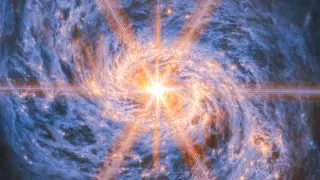
NASA’s James Webb Space Telescope has captured a striking new image of Messier 77, revealing a brilliantly bright galactic core powered by a supermassive black hole (about eight million solar masses) and a gas- and dust-rich disc fueling active star formation. Webb’s near-infrared view highlights a central bar and a luminous starburst ring, while the mid-infrared reveals cooler dust extending the view beyond visible light. The orange rays are diffraction spikes—optical artifacts from Webb’s hexagonal mirrors and support structure, not real features. Messier 77 also shows outer hydrogen filaments and a faint ring indicating extended star-forming activity, earning it the nickname Squid Galaxy. The image comes from observing program #3707, designed to study star formation in massive nearby galaxies and to build a rich dataset for future research.

Hubble captures a glowing barred spiral galaxy with a blazing nucleus
astronomy1 month ago

Hubble captures a glowing barred spiral galaxy with a blazing nucleus

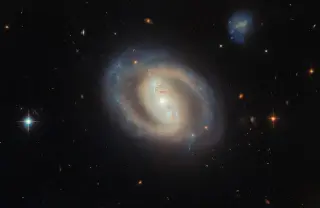
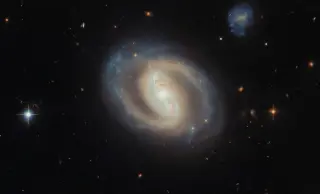
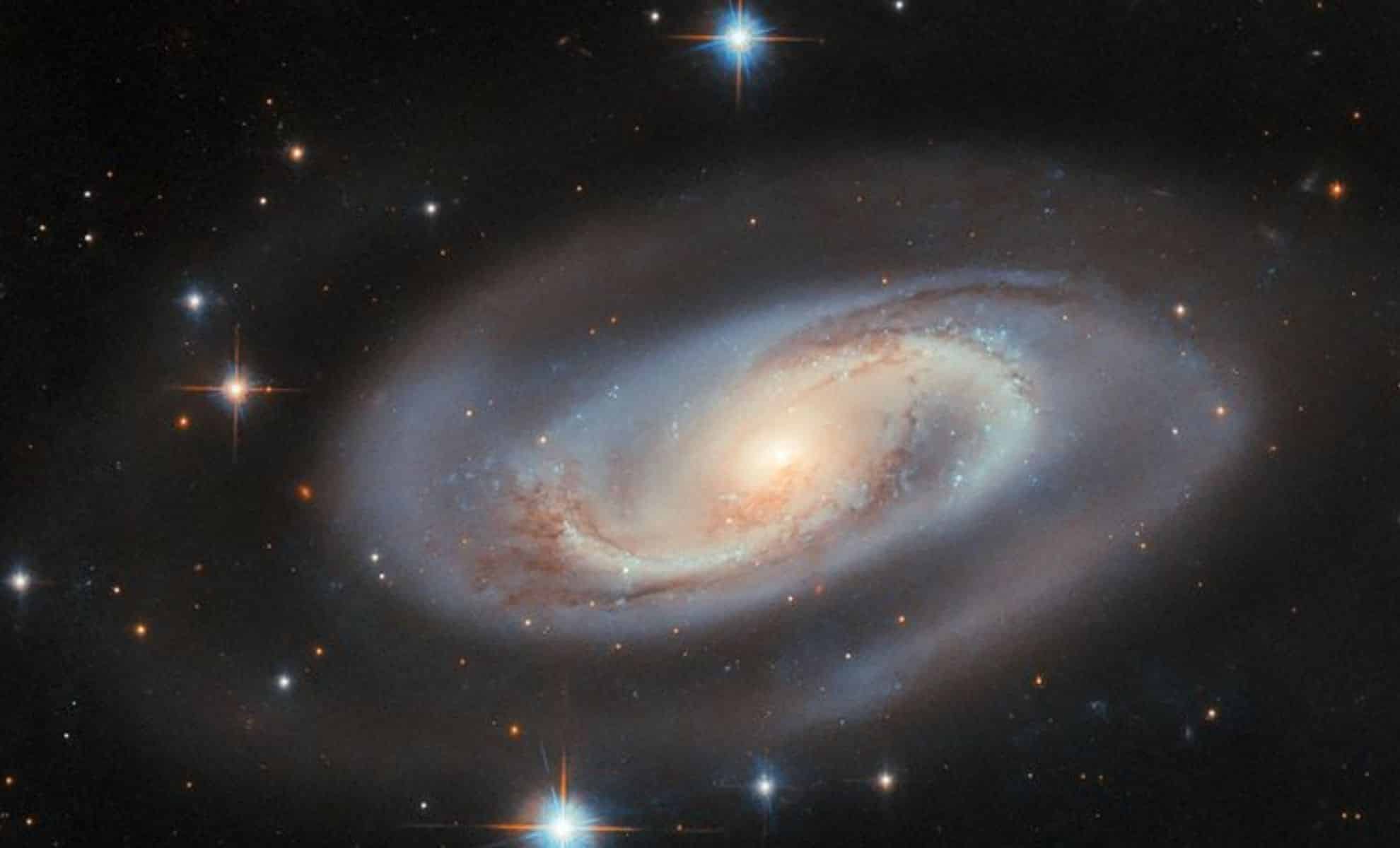
The Hubble Space Telescope images IC 486, a barred spiral galaxy about 380 million light-years from Earth, showcasing its soft glow, winding spiral arms, and a bright core powered by a supermassive black hole (an active galactic nucleus). The feature that defines IC 486—a central bar structure—appears in roughly two-thirds of spiral galaxies, and the image highlights both the galaxy’s structure and its energetic center.

Hubble Captures Active Core in Galaxy IC 486
science1 month ago

Hubble Captures Active Core in Galaxy IC 486

NASA's Hubble Space Telescope captured a striking image of the barred spiral galaxy IC 486, about 380 million light-years away, revealing an active galactic nucleus powered by a supermassive black hole over 100 million solar masses. The AGN outshines much of the galaxy and its accretion disk heats surrounding gas, offering a window into how galaxies grow and evolve and how bars funnel gas to fuel star formation and nuclear activity.

Black Hole Merger in Galactic Nucleus May Have Lit Up the Sky
science2 months ago

Black Hole Merger in Galactic Nucleus May Have Lit Up the Sky

Astronomers connecting the November 2024 gravitational-wave event S241125n with a brief gamma-ray and X-ray flash propose the merger happened inside the accretion disk of a supermassive black hole at the center of a galaxy. If true, the environment would feed rapid accretion and jets, producing light from an event usually expected to be dark, offering a new scenario for how black hole mergers in galactic nuclei might be observed. Further observations and modeling are needed to confirm this explanation.

"Newborn Black Hole Ignites Distant Galaxy with Stunning Brightness"
astronomy1 year ago

"Newborn Black Hole Ignites Distant Galaxy with Stunning Brightness"

The galaxy SDSS1335+0728 has been observed undergoing dramatic brightness changes due to the activation of its central supermassive black hole, providing a rare opportunity to study the transition to an active galactic nucleus. This event, first detected by the Zwicky Transient Facility, offers valuable insights into the behavior of black holes and their impact on host galaxies, enhancing our understanding of galactic evolution.

Astronomers Observe First-Ever Awakening of Supermassive Black Hole
science-and-technology1 year ago

Astronomers Observe First-Ever Awakening of Supermassive Black Hole

Astronomers have observed a supermassive black hole in the distant galaxy SDSS1335+0728 transition from an inactive to an active state, emitting various types of radiation over four years. This unprecedented event, possibly due to a tidal disruption event or a new phenomenon, provides new insights into the processes that fuel active galactic nuclei and the evolution of supermassive black holes.

"Uncovering a Galactic Fossil: Insights into Universe's Evolution"
astronomy2 years ago

"Uncovering a Galactic Fossil: Insights into Universe's Evolution"

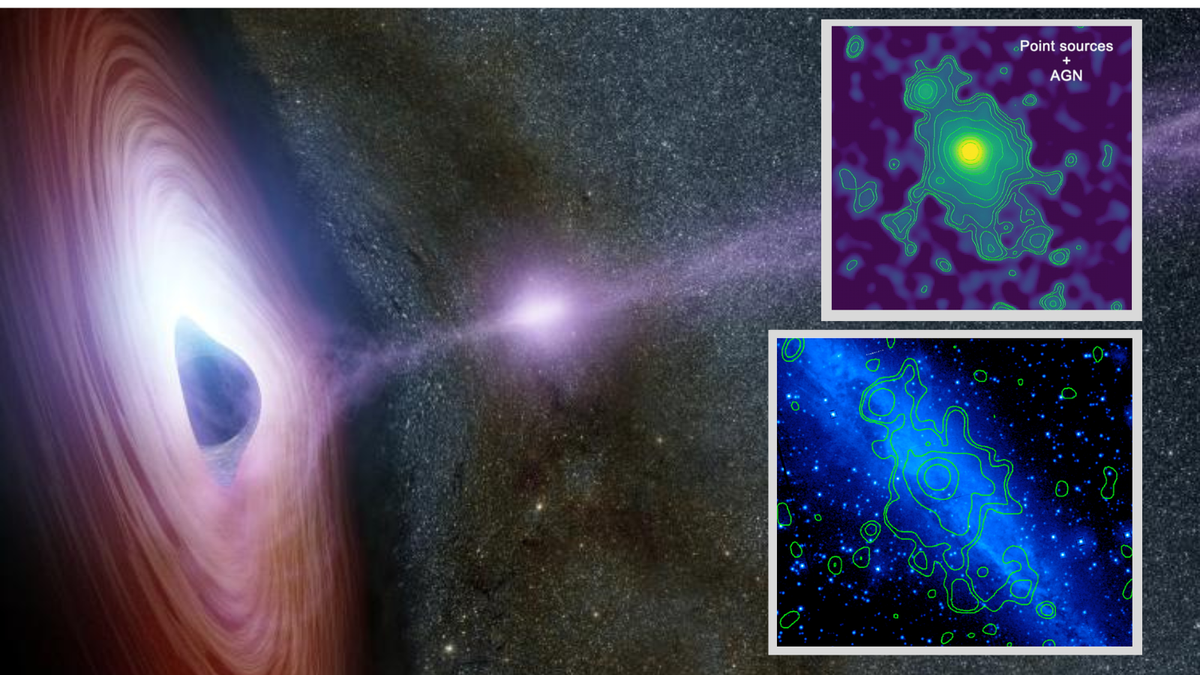
NASA scientists have discovered a cosmic fossil created by a supermassive black hole eruption over 5 million years ago in the spiral galaxy NGC 4945. Using the XMM-Newton space telescope, they observed X-rays outlining cold gas clouds, providing insight into how supermassive black holes influence their surroundings and guide galactic evolution. The galaxy, undergoing intense star formation, exhibits features of an active galactic nucleus, and the team theorizes that the black hole's eruption triggered this starburst period. Further observations will focus on understanding the black hole's influence on the galaxy's evolution and its potential role in quenching star formation.

Hubble Telescope's Stunning Capture of a Galaxy's 'Forbidden' Light
astronomy2 years ago

Hubble Telescope's Stunning Capture of a Galaxy's 'Forbidden' Light

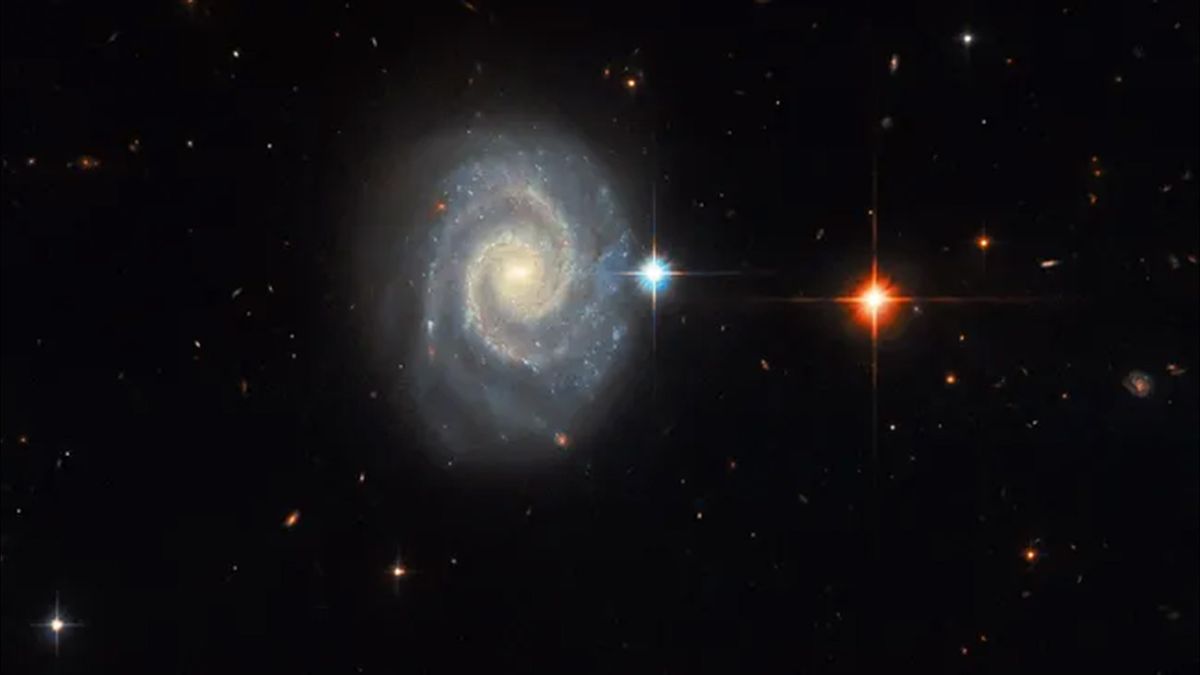
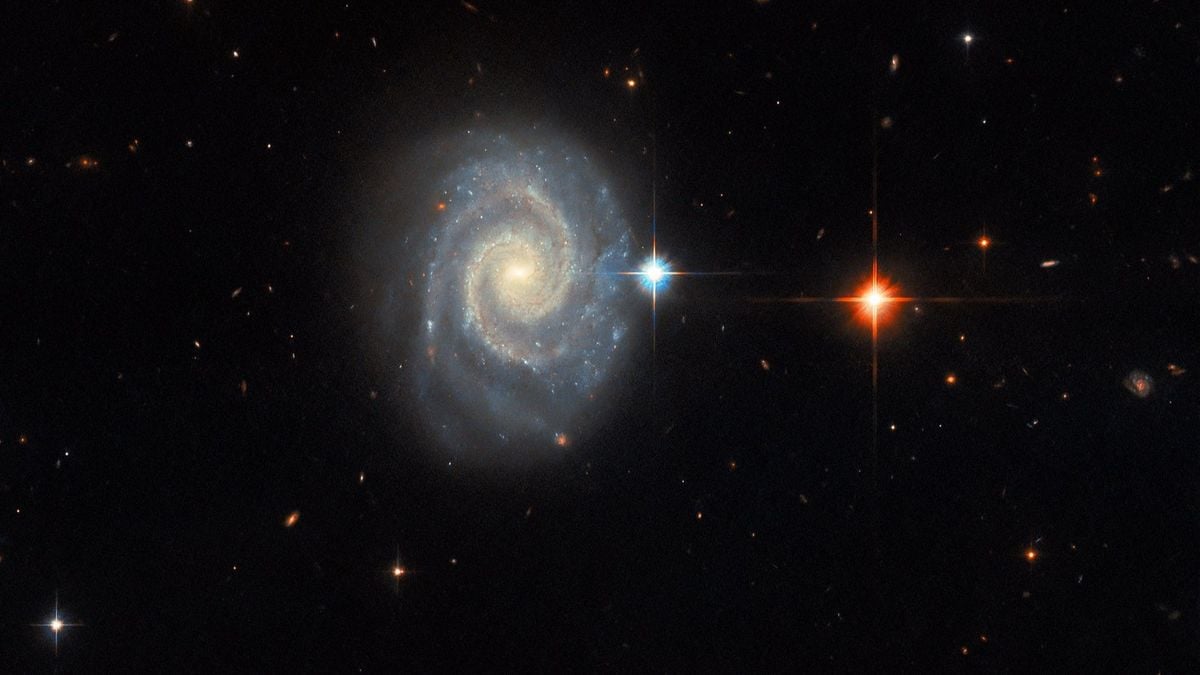
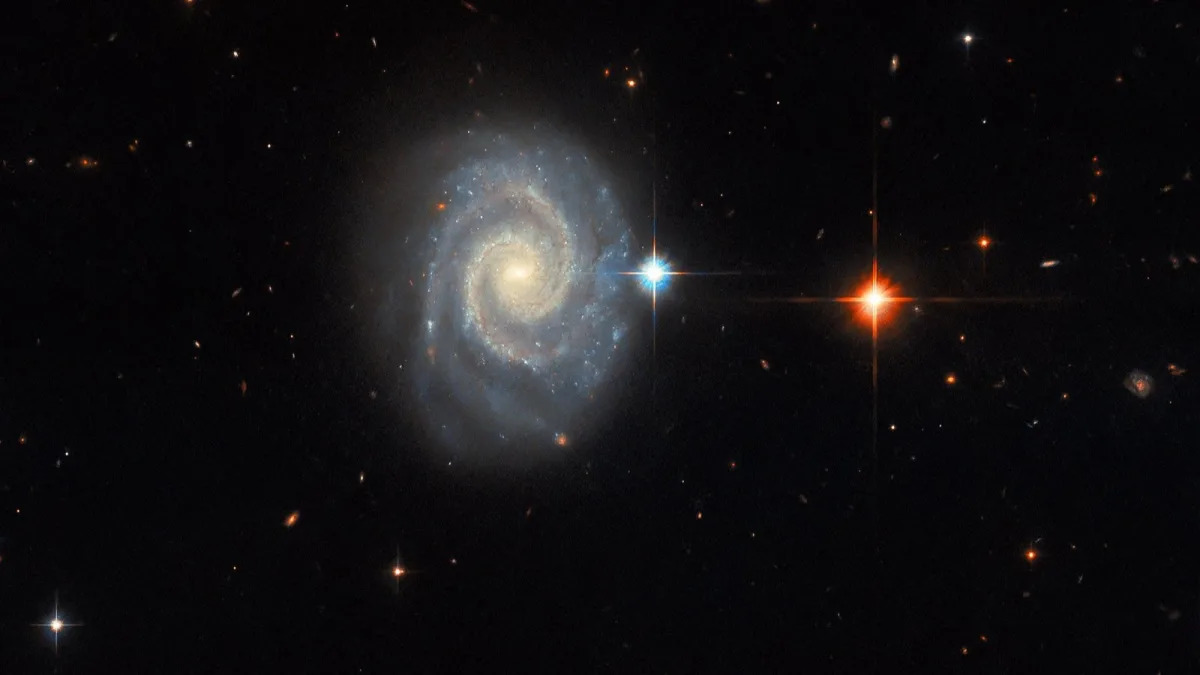
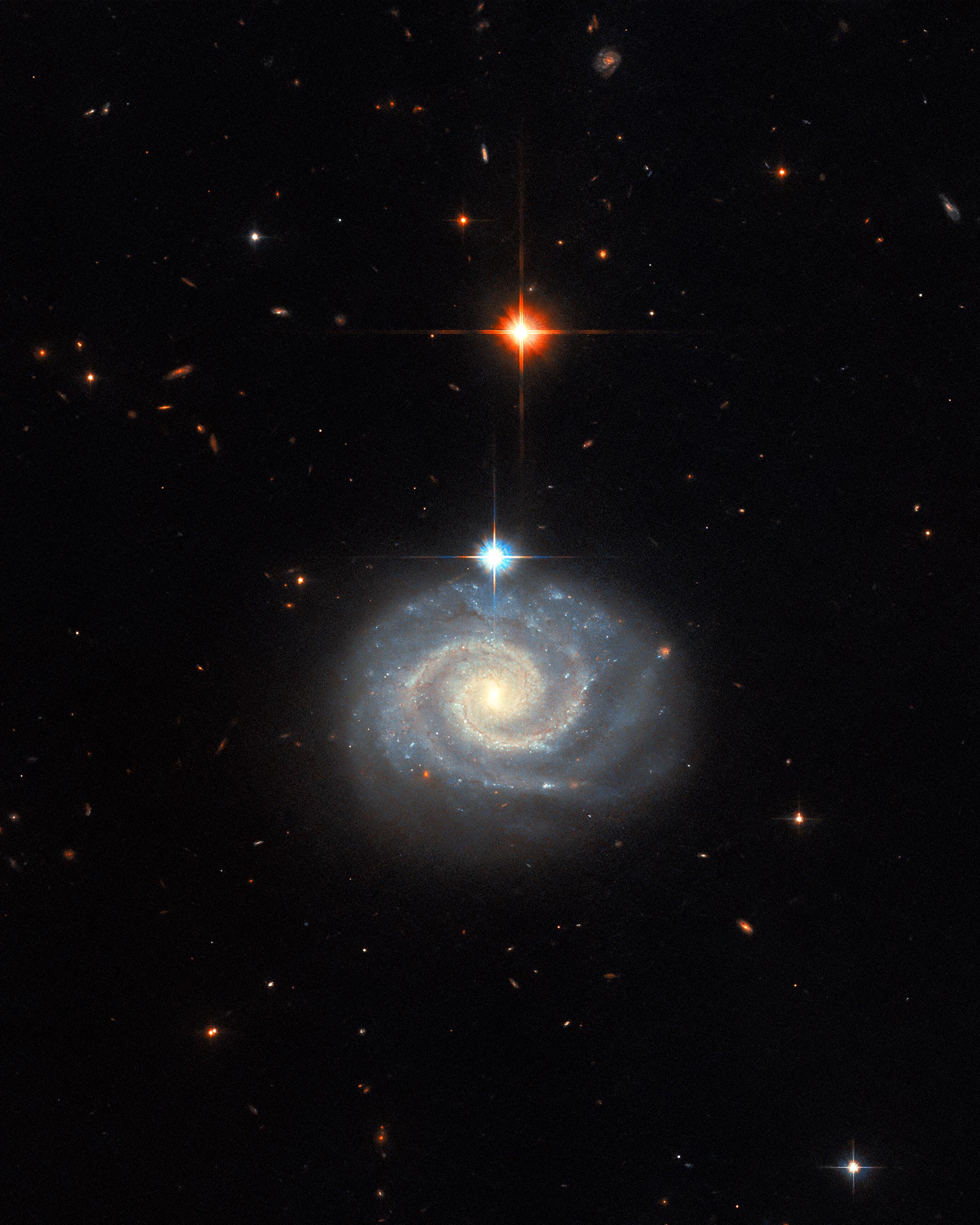
The Hubble Space Telescope has captured a stunning image of the spiral galaxy MCG-01-24-014, located 275 million light-years away from Earth. The galaxy, seen face-on, exhibits two well-defined spiral arms and an active galactic nucleus. MCG-01-24-014 is classified as a Type-2 Seyfert galaxy, emitting "forbidden" light that defies the rules of quantum physics. The image showcases the galaxy's bright light, with two large stars in the foreground and distant galaxies in the background.

Hubble Telescope's Stunning Image Reveals "Forbidden" Light from Spiral Galaxy
space2 years ago

Hubble Telescope's Stunning Image Reveals "Forbidden" Light from Spiral Galaxy

The Hubble Space Telescope has captured a stunning image of the spiral galaxy MCG-01-24-014, located 275 million light-years from Earth. The galaxy, seen face-on, exhibits two well-defined spiral arms and an active galactic nucleus. MCG-01-24-014 is classified as a Type-2 Seyfert galaxy, known for its bright core. The galaxy emits "forbidden" light, which is observed in space but does not occur under normal conditions on Earth due to the rules of quantum physics. The Hubble image showcases the galaxy's radiant light, with additional distant galaxies scattered across the backdrop of space.

Hubble Telescope Reveals Mesmerizing 'Forbidden' Light from a Galaxy
astronomy2 years ago

Hubble Telescope Reveals Mesmerizing 'Forbidden' Light from a Galaxy

The Hubble Space Telescope has captured a stunning image of a distant spiral galaxy, MCG-01-24-014, showcasing its "forbidden" light. This Type-2 Seyfert galaxy exhibits two well-defined spiral arms and an energetic glowing core known as an active galactic nucleus (AGN). Seyfert galaxies emit spectral lines associated with "forbidden" emissions, which defy certain rules of quantum physics. The Hubble image reveals the galaxy's bright light, with two large stars in the foreground and other distant galaxies in the background.

"Unveiling the Forbidden Emissions: A Spiral Galaxy Defies Physics"
astronomy2 years ago

"Unveiling the Forbidden Emissions: A Spiral Galaxy Defies Physics"

The Hubble Space Telescope has captured an image of MCG-01-24-014, a spiral galaxy located 275 million light-years away. This galaxy is classified as a Type-2 Seyfert galaxy, characterized by its unique spectra and "forbidden" emissions. These emissions, which defy the rules of quantum physics, occur in the energetic core of the galaxy known as the active galactic nucleus. The "forbidden" light emitted by the galaxy challenges our understanding of quantum physics and provides valuable insights into the nature of Seyfert galaxies.

"Record-breaking Discovery: Oldest Black Hole Holds Half the Mass of Early Galaxy"
astronomy2 years ago

"Record-breaking Discovery: Oldest Black Hole Holds Half the Mass of Early Galaxy"

Researchers have discovered a supermassive black hole in a galaxy that existed only half a billion years after the Big Bang. The black hole is estimated to account for about half of the galaxy's mass, a remarkably high fraction compared to modern galaxies. This finding challenges the traditional understanding of how supermassive black holes form, suggesting that they may have formed directly without an intermediate step involving a star. The discovery was made using the James Webb Space Telescope and confirmed with the Chandra X-ray Observatory, which detected X-ray emissions from the black hole.

Unveiling the Mysterious Feeding Habits of Supermassive Black Holes
astronomy2 years ago

Unveiling the Mysterious Feeding Habits of Supermassive Black Holes

Astronomers have made a groundbreaking observation of a nearby active galactic nucleus using the Atacama Large Millimeter/submillimeter Array (ALMA), capturing gas flows and structures in the immediate vicinity of a supermassive black hole on sub-parsec scales. The study reveals the accretion flow towards the black hole, driven by gravitational instability, and the expulsion of most of the gas as atomic or molecular outflows. These outflows eventually return to the gas disk, completing a gas recycling process. The findings provide crucial insights into the growth mechanisms of supermassive black holes.