Tag

Galactic Center

All articles tagged with #galactic center

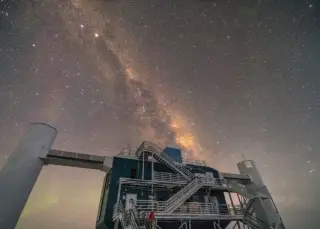
AI unveils the Milky Way in a first-ever neutrino image
space8 days ago

AI unveils the Milky Way in a first-ever neutrino image

IceCube mapped the Milky Way with high-energy neutrinos over a decade, using deep learning to extract a faint galactic signal concentrated along the plane and toward the Galactic Center; the findings strongly indicate the Milky Way itself emits high-energy neutrinos, though no individual sources were pinpointed, and they pave the way for future IceCube upgrades and multimessenger studies.

Euclid captures the Milky Way’s crowded heart to weigh exoplanets
space2 months ago

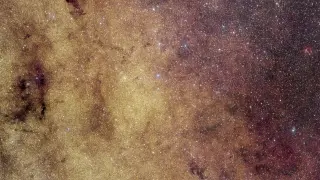
Euclid captures the Milky Way’s crowded heart to weigh exoplanets

ESA's Euclid produced the largest, most detailed visible-light image of the Milky Way's central bulge, cataloging over 60 million stars in a nine-pointing mosaic captured in ~26 hours. The view enables microlensing studies to detect and measure exoplanets in our galaxy and will serve as a past/future time reference for the Roman telescope; the data already include hosts of known cold exoplanets such as OGLE-2005-BLG-390Lb and OGLE-2013-BLG-341Lb.

Milky Way’s Quiet Core Reveals Hidden Wind From Its Central Black Hole
space2 months ago

Milky Way’s Quiet Core Reveals Hidden Wind From Its Central Black Hole

Astronomers using ALMA and Chandra detected a cone-shaped cavity around Sagittarius A*, signaling a hot wind from the Milky Way’s central black hole that has cleared nearby gas; the outflow is estimated to have been active for at least 20,000 years, offering new insight into how Sgr A* influences its environment even in a relatively quiet state and into black hole feedback in galaxies.

Milky Way gamma-ray glow still leaves dark matter in contention
science2 months ago

Milky Way gamma-ray glow still leaves dark matter in contention

Using machine learning on more than a million simulated gamma-ray observations, researchers test whether the Galactic Center Excess—the Milky Way’s central gamma-ray glow—could come from self-annihilating dark matter or from many faint pulsars. They find pulsars would have to be far more numerous and dim than previously thought, making them hard to distinguish from a dark-matter signal, so dark matter remains a plausible but unproven explanation; the bright, crowded galactic center makes definitive conclusions difficult.

Possible Supernova Remnant Detected Near Milky Way’s Core
science2 months ago

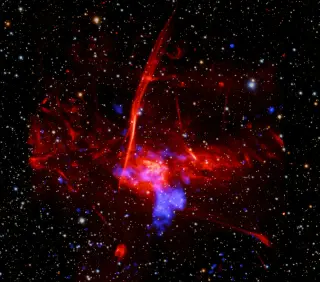
Possible Supernova Remnant Detected Near Milky Way’s Core

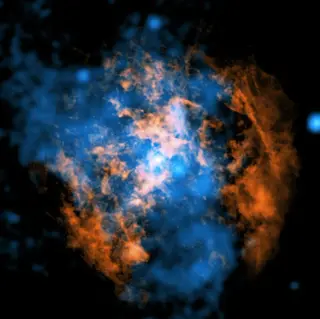
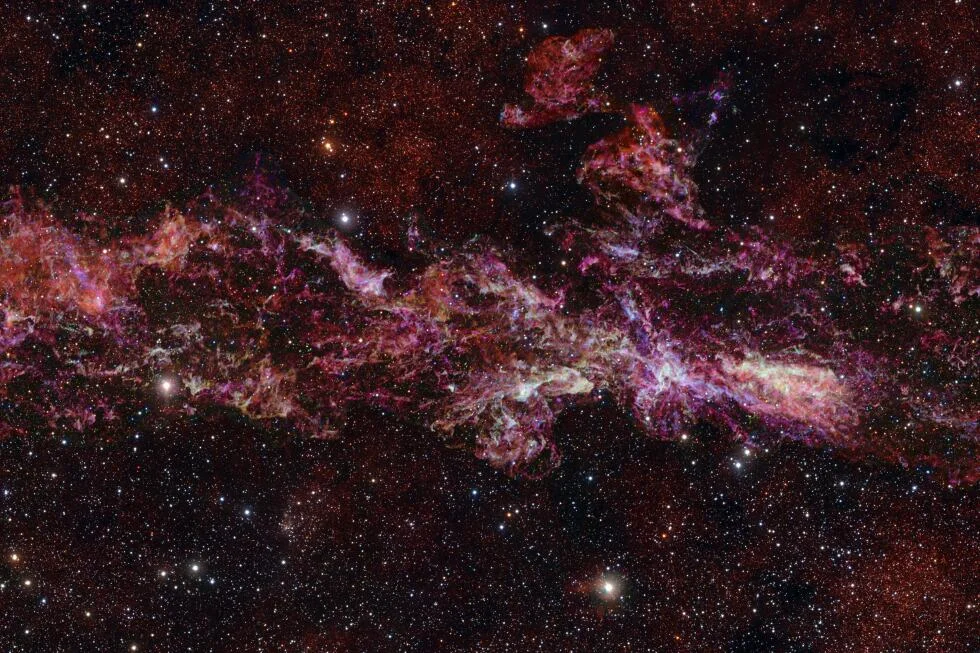
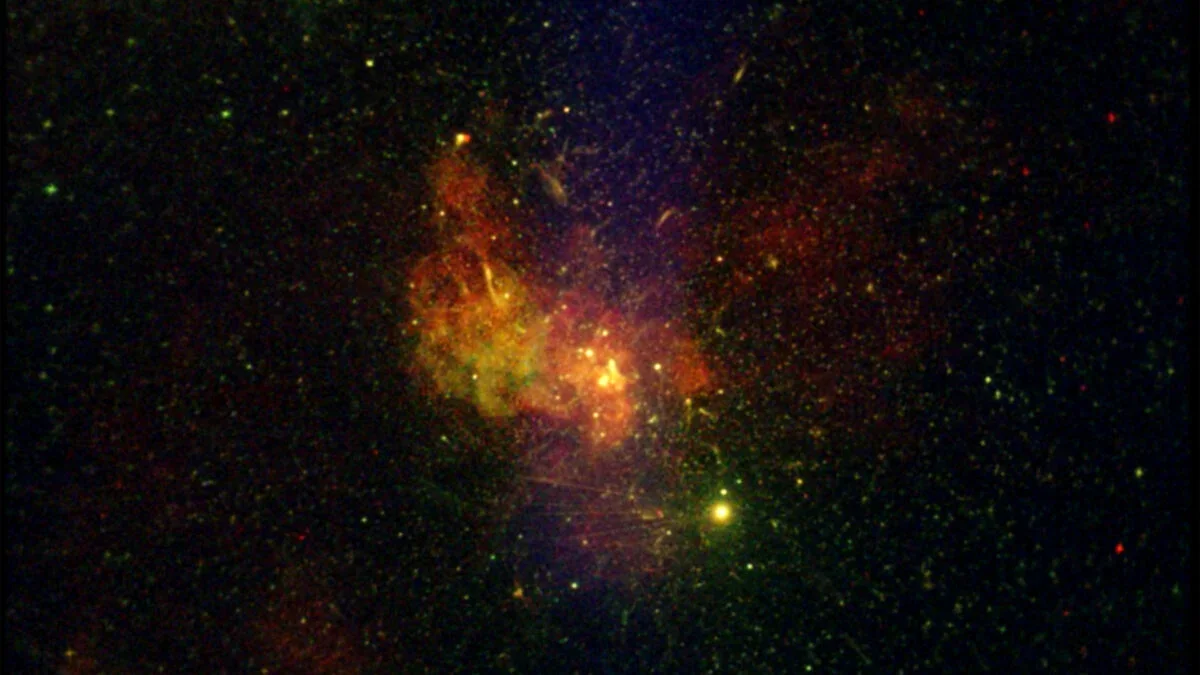
Astronomers using NASA’s Chandra and ESA’s XMM-Newton X-ray data, with radio and optical support from MeerKAT and Pan-STARRS, find a bright X-ray blob in the Sagittarius C region near the Galactic Center that could be a new supernova remnant. If confirmed, it would be one of the closest remnants to the Milky Way’s central black hole and is estimated to be about 1,700 years old, expanding at roughly two million miles per hour, though an alternative explanation involving a massive-star cluster remains possible and confirmation is pending.

Galaxy in Focus: 2026 Milky Way Photographer of the Year Winners Unveil Stunning Night Skies
astronomy2 months ago

Galaxy in Focus: 2026 Milky Way Photographer of the Year Winners Unveil Stunning Night Skies

The 2026 Milky Way Photographer of the Year winners showcase dramatic panoramas of the Milky Way’s center from around the world, including Geminid Symphony Over La Palma and Galactic Gandalf by Evan McKay, with entries from New Zealand, Chile, Argentina, and Yellowstone; the collection highlights astrophotographers’ craft—from long exposures and focus stacking to advanced gear—that reveal the Milky Way’s colors and structure across diverse landscapes.

Milky Way’s central black hole reveals a cosmic wind reshaping its surroundings
science2 months ago

Milky Way’s central black hole reveals a cosmic wind reshaping its surroundings

Astronomers using ALMA and Chandra observations have captured the first clear evidence of a wind blowing from the Milky Way’s central supermassive black hole, Sagittarius A*, carving a cone-shaped cavity in surrounding cold gas and indicating the black hole has been actively shaping its environment for at least 20,000 years while remaining relatively quiet compared with active galaxies.

Hubble survey hints Milky Way’s core formed later than previously believed
space3 months ago

Hubble survey hints Milky Way’s core formed later than previously believed

A new Hubble study of the Milky Way’s crowded galactic bulge suggests its stars may be younger than the traditional 10-billion-year figure, potentially revising the timeline of the galaxy’s growth. The survey will catalog 20–30 million objects in the bulge to map dust obscuration and star ages, complementing upcoming Roman Space Telescope observations that will monitor lensing events and stellar motions across millions of objects.

Milky Way Core Exposed: ALMA Reveals Complex Gas Web at Galactic Center
science5 months ago

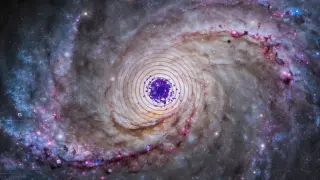
Milky Way Core Exposed: ALMA Reveals Complex Gas Web at Galactic Center

Astronomers using the ALMA array produced the largest mosaic of the Milky Way’s center to date, mapping the Central Molecular Zone across roughly 650 light-years and revealing a web of cold gas filaments and dense clouds that feed star formation. The ACES collaboration, involving about 160 scientists from over 70 institutions, aims to test how star formation and chemistry operate in this extreme galactic environment. The dataset will sharpen our understanding of the galaxy’s evolution and will be followed by upgrades to ALMA and future telescopes for even deeper studies.

ALMA maps the Milky Way’s chaotic center in unprecedented detail
space6 months ago

ALMA maps the Milky Way’s chaotic center in unprecedented detail

Scientists using the ALMA telescope have produced the largest, most detailed image of the Milky Way’s chaotic center—the Central Molecular Zone (CMZ)—covering about 650 light-years. The mosaic reveals massive streams of turbulent gas, fast-moving stars, and rare structures like the Millimeter Ultra-Broad Line Object (MUBLO), offering new insights into how extreme galactic centers form stars and resemble early-universe environments. The ACES survey, involving ~160 scientists across 70 institutions, aims to develop a 3D CMZ map to unravel how matter flows and shapes star birth near Sagittarius A*.

Milky Way’s Core May Hide an Ultra-Magnetized Pulsar
astronomy6 months ago

Milky Way’s Core May Hide an Ultra-Magnetized Pulsar

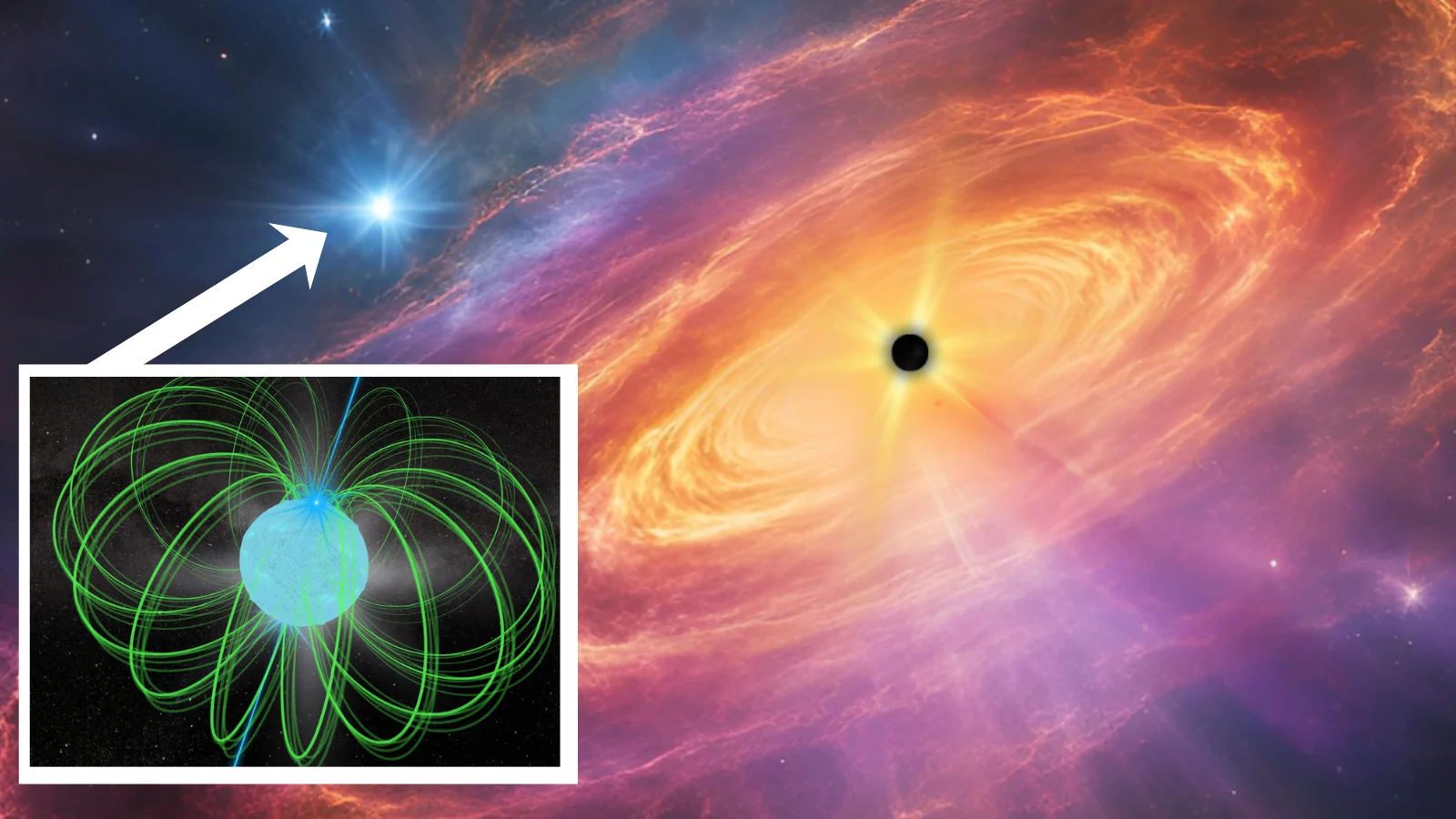
Scientists suspect a rapidly spinning, highly magnetic neutron star (a pulsar) sits near the Milky Way’s center. A Breakthrough Listen radio survey with the Green Bank Telescope (2021–2023) found a single pulsar candidate, BLPSR, around 122 rotations per second. If confirmed, such a pulsar orbiting Sagittarius A* could serve as a precise cosmic clock to test general relativity in the extreme gravity near the galaxy’s supermassive black hole, though the Galactic Center is notoriously hard to survey. Future facilities like ngVLA and SKA could help determine how many pulsars truly populate the core.

Could Dark Matter Rule the Milky Way's Core?
astronomy6 months ago

Could Dark Matter Rule the Milky Way's Core?

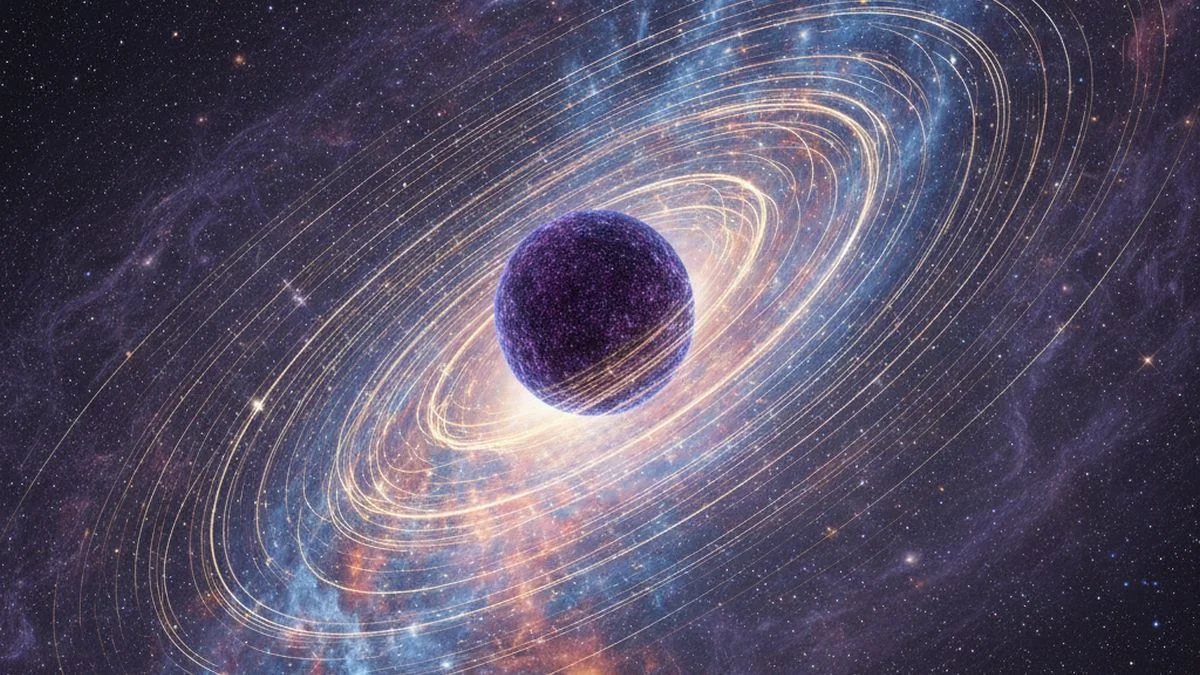
New research suggests the Milky Way’s central mass, traditionally attributed to the black hole Sagittarius A*, could instead be a dense fermionic dark matter core. The observed orbits of stars like S2 and Gaia rotation curves fit both a black hole and this dark-matter model, meaning current data cannot distinguish them. If the dark matter interpretation holds, it would imply a continuous dark-matter structure linking the galactic center to the halo, reshaping our view of the Milky Way’s mass distribution. Future observations, including higher-resolution EHT data and longer-term stellar monitoring, could resolve the true nature of Sgr A*.

Dark Matter Core Emerges as Challenger to the Galactic Center’s Black Hole
space-and-spaceflight6 months ago

Dark Matter Core Emerges as Challenger to the Galactic Center’s Black Hole

Simulations show a dense dark matter core at the Milky Way’s center could mimic Sagittarius A*’s gravity, matching observed orbital data as well as a black hole and aligning with Gaia DR3, but the model isn’t decisively better yet; next-gen instruments will test whether dark matter could truly dominate the Galactic Center.