Tag

Amber

All articles tagged with #amber

Spanish Amber Reveals 105-Million-Year-Old Ecosystems and Ancient Behaviors
science2 months ago

Spanish Amber Reveals 105-Million-Year-Old Ecosystems and Ancient Behaviors

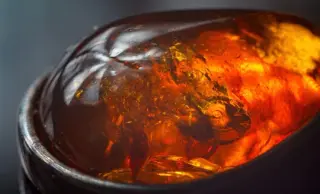
A new review highlights the El Soplao fossil site in northern Spain as a critical window into Early Cretaceous ecosystems. Dating to roughly 105 million years ago, the amber preserves over 1,500 arthropod specimens with exceptional detail, including the oldest known tick and lacewing larvae that used plant debris for camouflage. The site, discovered in 2005, offers unique insights into the transition from conifer-dominated forests to flowering plants, though questions remain about the absence of ants in these deposits.

Ancient Chinese Amber Pushes Resin Evolution Before Seed Plants
paleontology4 months ago

Ancient Chinese Amber Pushes Resin Evolution Before Seed Plants

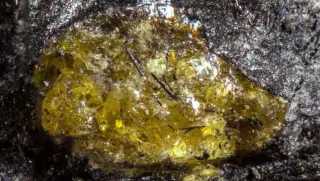
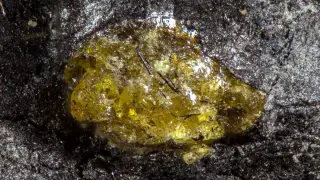
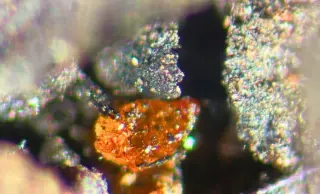
Paleontologists in Xinjiang, China report 385-million-year-old amber—the oldest confirmed amber to date—embedded in a coal seam and comprising 241 tiny pieces extracted from about 10 kg of coal. Chemical analyses show its resin resembles conifer resins, suggesting resin production evolved before seed plants and likely came from progymnosperms or lycopsids. The find implies early resin’s role was wound sealing and antifungal defense, possibly influenced by ancient wildfires, and was published online July 15, 2026 in Science Advances (Lu et al.).

Devonian Amber Pushes Resin Evolution Back 385 Million Years
science4 months ago

Devonian Amber Pushes Resin Evolution Back 385 Million Years

Paleontologists uncovered microscopic amber fragments in a 385-million-year-old coal seam in China, dating to the Middle Devonian and about 150 million years before dinosaurs. Chemical tests suggest these grains were conifer-type resin, indicating that sophisticated resin production evolved in early vascular plants before the rise of seed plants, shedding new light on plant defense and the evolution of resin chemistry. The find may hint at even older amber records waiting to be discovered.

Crab-Clawed Amber Insect from 100 Million Years Ago Redefines Insect Evolution
science6 months ago

Crab-Clawed Amber Insect from 100 Million Years Ago Redefines Insect Evolution

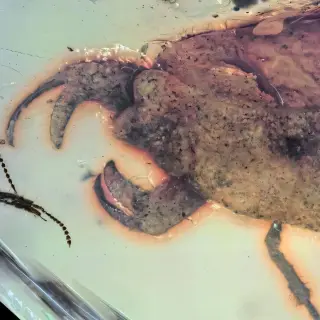
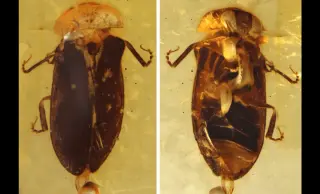
A 100-million-year-old true bug preserved in Myanmar amber reveals front legs ending in crab-like claws, a rare feature found in only a few insect groups. Using micro-CT, researchers assign a new genus and species, Carcinonepa libererrantes, and infer a predatory lifestyle in a Cretaceous forest; the claws illustrate convergent evolution across distant lineages, highlighting the diversity of ancient ecosystems.

Ultra-detailed ancient ant revealed in amber through 3D imaging
science10 months ago

Ultra-detailed ancient ant revealed in amber through 3D imaging

Researchers studied two amber pieces from the Goethe National Museum containing a fungus gnat, a black fly, and an extinct ant, †Ctenobethylus goepperti. Using advanced 3D imaging, they reconstructed the ant’s morphology and interior anatomy, revealing fine body hairs and enabling detailed comparisons with living Liometopum ants to infer possible canopy-nesting behavior. The findings, published in Scientific Reports, provide a clearer picture of how this ancient species lived.

Ancient Fossil Suggests Spiders Once Had Tails and May Still Do
science10 months ago

Ancient Fossil Suggests Spiders Once Had Tails and May Still Do

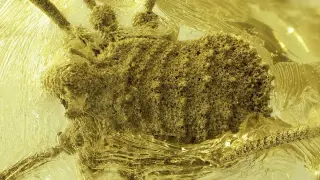
Scientists discovered a 100-million-year-old fossil of a spider in Myanmar amber that had a tail, revealing that ancient spider ancestors possessed tails, a trait previously only hypothesized. The fossil, named Chimerarachne yingi, shows a blend of ancient and modern features, including spinnerets and a tail similar to early arachnids, suggesting web-building evolved later. The discovery provides new insights into spider evolution and raises the possibility that similar species might still exist in unexplored rainforests.