Tag

Insects

All articles tagged with #insects

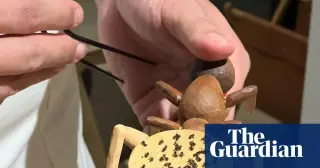
Crab-Clawed Amber Insect from 100 Million Years Ago Redefines Insect Evolution
science8 days ago

Crab-Clawed Amber Insect from 100 Million Years Ago Redefines Insect Evolution

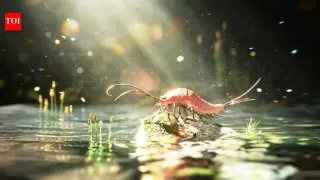
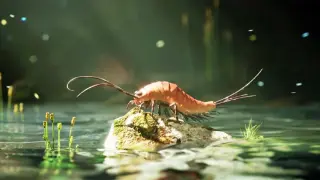
A 100-million-year-old true bug preserved in Myanmar amber reveals front legs ending in crab-like claws, a rare feature found in only a few insect groups. Using micro-CT, researchers assign a new genus and species, Carcinonepa libererrantes, and infer a predatory lifestyle in a Cretaceous forest; the claws illustrate convergent evolution across distant lineages, highlighting the diversity of ancient ecosystems.

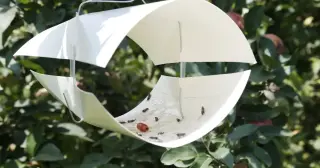
Garlic halts insect reproduction by taste, study finds
plants10 days ago

Garlic halts insect reproduction by taste, study finds

A Yale-led study shows garlic does more than repel pests: when fruit flies and two mosquito species taste the garlic compound diallyl disulfide, it activates the TrpA1 receptor and triggers bitter/ fullness signals that stop feeding and, crucially, reproduction. The effect is taste-based (not smell) and wasps lacking TrpA1 are unaffected. This points to garlic-derived compounds as targeted, safer pest-control tools, and the researchers also introduce phytoscreen as a simple method to screen plant substances for behavioral effects on insects.

Crickets may feel pain, prompting welfare questions for billions farmed annually
science-tech13 days ago

Crickets may feel pain, prompting welfare questions for billions farmed annually

A Royal Society B study tested 40 male and 40 female house crickets (Acheta domesticus) by applying a heat stimulus to an antenna and found they groomed the heated area significantly longer than controls, indicating pain-like responses beyond a reflex. With crickets being the world’s most farmed insect (about 370 billion annually), this suggests insects may have subjective experiences and underscores the need for welfare protections as giant-scale farming continues and concerns about animal suffering grow.

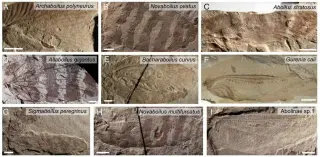
Giant Insects Challenge Oxygen-Size Link, New Study Finds
science15 days ago

Giant Insects Challenge Oxygen-Size Link, New Study Finds

A Nature study argues that atmospheric oxygen did not limit the size of giant prehistoric insects. By examining tracheole density in flight muscles across species, researchers found oxygen delivery was not the constraining factor, suggesting other causes—such as vertebrate predation or exoskeleton constraints—helped shape why giants once dominated ancient skies.

Oak Trees Delay Spring Buds to Fend Off Caterpillar Outbreaks, Study Finds
good-earth22 days ago

Oak Trees Delay Spring Buds to Fend Off Caterpillar Outbreaks, Study Finds

German researchers found oak trees delay leaf-out by about three days after heavy caterpillar outbreaks, tracked with Sentinel-1 radar data over five years across 60 forests (137,500 observations). The delay reduces caterpillar survival and tree damage by about 55%, is more energy-efficient than producing extra tannins, and is reversible—showing trees actively adapt to biotic threats in a warming world.

Oxygen wasn’t the bottleneck for giant Paleozoic insects, new study finds
science1 month ago

Oxygen wasn’t the bottleneck for giant Paleozoic insects, new study finds

A new study across 44 insect species shows that the tracheal system in insects wouldn’t need dramatic expansion as size increases, meaning the ancient giants like Meganeuropsis permiana could still deliver oxygen efficiently. The finding undermines the long-held oxygen-constrain hypothesis and suggests giant bugs weren’t blocked by atmospheric oxygen after all; other factors—predation by aerial vertebrates, heat buildup during flight, molting/structural constraints, and open circulation—likely helped limit insect size, with future research exploring the role of air sacs in ventilation.

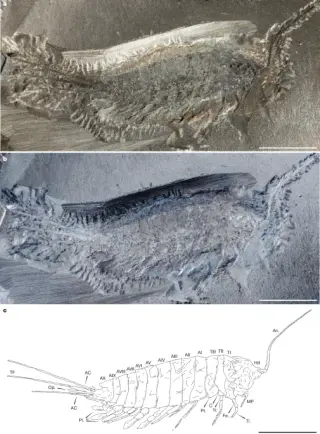
Giant Griffinflies May Not Have Needed Oxygen After All, New Study Says
science2 months ago

Giant Griffinflies May Not Have Needed Oxygen After All, New Study Says

A new study challenges the long-held view that high atmospheric oxygen powered giant prehistoric insects like griffinflies, showing that flying insects’ internal tracheal systems can supply oxygen to flight muscles, which could allow large sizes even today; if confirmed, this suggests oxygen levels were not the limiting factor, though researchers note other causes may explain why such giants disappeared.

Insect giants escape oxygen-diffusion limits in flight muscles
science2 months ago

Insect giants escape oxygen-diffusion limits in flight muscles

A cross-species analysis of 44 insect species across 10 orders (plus the 100 g Meganeuropsis permiana) shows the tracheolar space in flight muscles rises only about 1.8-fold over a 10,000‑fold range in body mass and is typically 1% or less. This argues that diffusion of oxygen through the tracheolar–muscle system does not constrain maximum insect size, including gigantism. The study highlights that even a threefold increase in tracheolar space would markedly affect oxygen delivery but have only modest effects on flight, challenging the long-held view that atmospheric oxygen limits insect gigantism and pointing to other factors shaping their evolution.

Victor Valley Crane Fly Surge Sparks Mosquito Confusion, But They're Harmless
environment2 months ago

Victor Valley Crane Fly Surge Sparks Mosquito Confusion, But They're Harmless

A surge of crane flies across the Victor Valley has residents mistaking the harmless insects for a mosquito infestation; crane flies do not bite and can be beneficial pollinators, with larvae helping decompose material. The spike is likely linked to recent moist, cooler weather, and experts say the situation is temporary. Residents are advised to reduce outdoor lighting and seal doors and windows to minimize entry.

Only-queen parasitic ant clones itself to hijack other nests
animals2 months ago

Only-queen parasitic ant clones itself to hijack other nests

Scientists report that Temnothorax kinomurai, a rare Japanese ant, has no workers or males and reproduces by parthenogenesis to produce only queens. These parasitic queens invade nests of the related species Temnothorax makora, enlist host workers to raise their offspring, and in lab trials seven of 43 unmated offspring succeeded in coup; all offspring were queens, showing a unique combination of asexual reproduction and social parasitism in ants.