Tag

Homo Sapiens

All articles tagged with #homo sapiens

Networks Over Time: Why Neanderthals Declined While Humans Spread Across Ice Age Europe
science1 month ago

Networks Over Time: Why Neanderthals Declined While Humans Spread Across Ice Age Europe

A Quaternary Science Reviews study uses ecological modeling and archaeological data from 60,000–35,000 years ago to show Neanderthals disappeared through fragmented populations and weaker connectivity, while Homo sapiens benefited from more interconnected networks that enabled mobility and resource sharing during environmental shifts. Extinction varied by region, framed as a mosaic outcome driven by social structure and climate variability rather than a single catastrophe.

Hahnöfersand Skull Reclassified as Modern Human, Debunking Hybrid Narrative
science1 month ago

Hahnöfersand Skull Reclassified as Modern Human, Debunking Hybrid Narrative

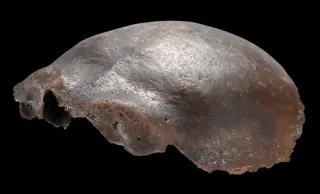
A 7,500-year-old skull from Hahnöfersand, once thought to be a Neanderthal–modern human hybrid, has been reclassified as fully consistent with Homo sapiens and dated to the Mesolithic. New morphometric analysis shows no intermediate traits, overturning decades of hybrid interpretation and reshaping understanding of post‑Ice Age human variation in Europe.

100,000-Year-Old Ethiopian Site Reveals Repeated Early-Human Visits
science1 month ago

100,000-Year-Old Ethiopian Site Reveals Repeated Early-Human Visits

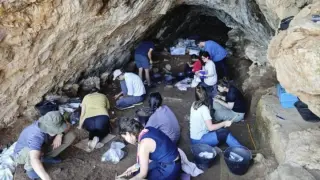
Archaeologists at Halibee in Ethiopia’s Afar Rift have uncovered 100,000-year-old human remains, thousands of basalt stone tools, and diverse animal bones, indicating repeated, non-permanent visits by early Homo sapiens to a resource-rich savannah-woodland landscape long before their expansion into Eurasia; the site preserves three human remains with different post-mortem histories and suggests a pattern of occupation rather than a single burial, with most animals not clearly butchered and some exchange inferred from a small fraction of non-local obsidian, all exposed by erosion and discussed in a PNAS study.

120,000-Year-Old Footprints in Saudi Arabia Rewrite Early Human Migration
sciencearchaeology2 months ago

120,000-Year-Old Footprints in Saudi Arabia Rewrite Early Human Migration

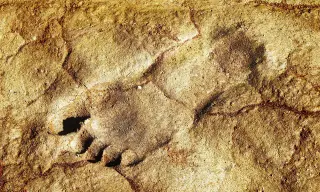
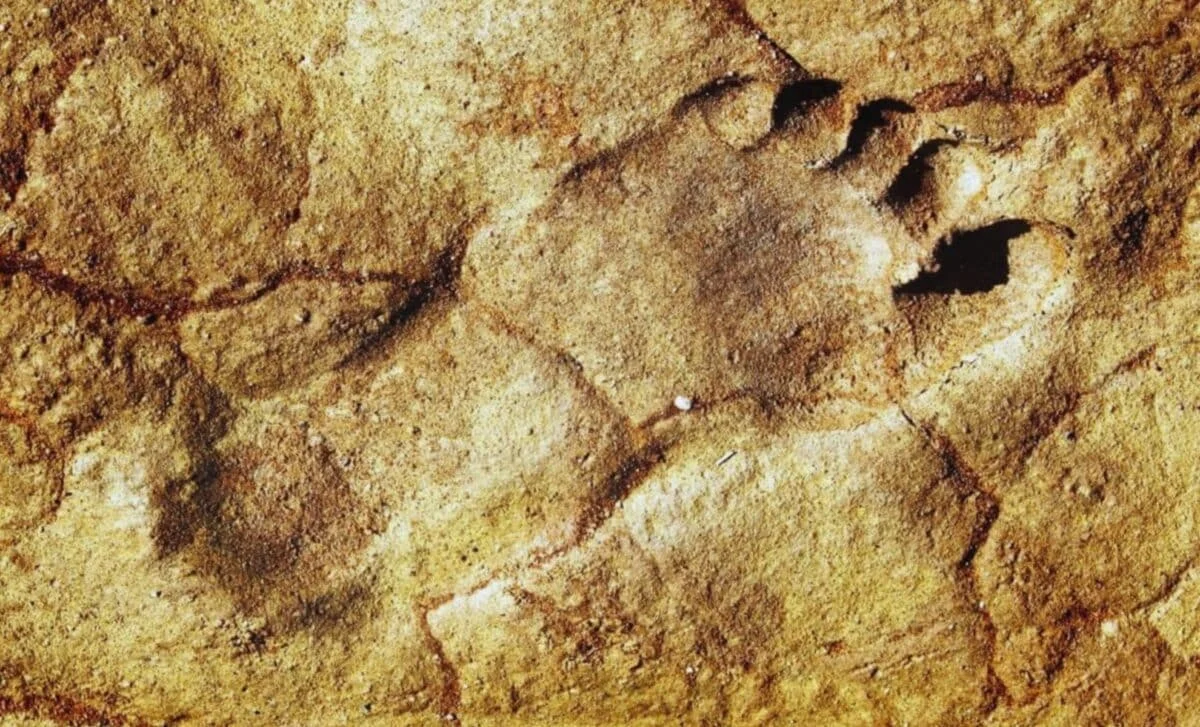
Archaeologists report 120,000-year-old Homo sapiens footprints preserved in an ancient lake bed in Saudi Arabia’s Nefud Desert, indicating early humans occupied a wetter, greener Arabian environment and moved across the peninsula sooner than previously thought, underscoring Arabia’s important role in early human dispersals.

Listening for Stone-Age Voices: How Humans Learned to Talk
science2 months ago

Listening for Stone-Age Voices: How Humans Learned to Talk

A BBC feature explains how scientists infer what early humans sounded like by examining fossil skulls, vocal‑tract anatomy and brain development, outlining two main theories of language origins (sudden symbolic thought vs gradual evolution) and tracing a timeline from primate vocal capacity 27 million years ago to Cro-Magnon speech ~30,000 years ago, suggesting Neanderthals could have spoken and that Homo sapiens eventually developed a full language-ready system, ending with a note on today’s thousands of languages and their fragility.

Kenya Cave Unearths Africa’s Earliest Known Burial, 78,000 Years Old
science2 months ago

Kenya Cave Unearths Africa’s Earliest Known Burial, 78,000 Years Old

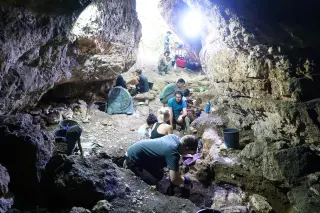
Archaeologists in Kenya’s Panga ya Saidi cave have uncovered a 78,000-year-old burial of a 2.5–3-year-old child—the oldest known in Africa—deliberately arranged and accompanied by Middle Stone Age tools, suggesting early mortuary practices and complex social behavior among Homo sapiens. Discovered in 2013 and clarified by 2017, the find highlights East Africa’s pivotal role in early human cultural and symbolic life and reshapes what we know about ancient burial traditions on the continent.

60k-year-old engravings reveal early humans’ geometric grammar
archaeology2 months ago

60k-year-old engravings reveal early humans’ geometric grammar

An analysis of 112 ostrich eggshell engravings from Howiesons Poort sites in Southern Africa finds consistent geometric patterns—parallel lines, right-angle crossings, grids and diamonds—indicating a planned geometric grammar used by early Homo sapiens around 60,000 years ago, a sign of abstract spatial thinking that predates writing or agriculture.

Desert Ghost Footprints Map 115,000-Year-Old Homo sapiens in Arabia
science2 months ago

Desert Ghost Footprints Map 115,000-Year-Old Homo sapiens in Arabia

Archaeologists report seven Homo sapiens footprints at the Alathar paleolake in Saudi Arabia dating to about 115,000 years ago, the earliest evidence of modern humans in the Arabian Peninsula. The prints, found among tracks of elephants and camels, were preserved in lake sediment from a brief humid interglacial and dated via luminescence; no tools or skeletal remains were found, suggesting transient movement rather than settlement. The team used 3D photogrammetry to document the impressions before erosion.

Ancient timber predates Homo sapiens by 200,000 years, rewrites prehistory
science3 months ago

Ancient timber predates Homo sapiens by 200,000 years, rewrites prehistory

A research team at Kalambo Falls in Zambia dated well-preserved wood to at least 476,000 years ago, including interlocking logs and tool marks, using luminescence dating. The findings show early hominins engineered wooden structures long before Homo sapiens, suggesting sophisticated planning and wood-working skills that challenge the notion of a purely Stone Age narrative.

Neanderthals fell to a mosaic of factors, not a single foe
archaeology3 months ago

Neanderthals fell to a mosaic of factors, not a single foe

Extinction of Neanderthals appears to be the result of a mix of regional pressures: small, isolated populations prone to inbreeding and mutational burden, competition with expanding modern humans, and varied demographic dynamics across Eurasia. Genetic evidence confirms interbreeding with Homo sapiens, meaning Neanderthals contributed to the modern human genome, but there is no single smoking gun or uniform fate—different Neanderthal groups disappeared for different reasons over time.

Ancient Moroccan Footprints Reveal a Multigenerational Homo sapiens Trek
science4 months ago

Ancient Moroccan Footprints Reveal a Multigenerational Homo sapiens Trek

Researchers report 85 fossilized footprints on a northern Moroccan beach dating to about 90,000 years ago, likely left by at least five individuals in a multigenerational group. Preserved by clay-rich sand and rapid tidal burial, the tracks represent North Africa’s oldest known human trackway, but the site faces erosion risk and urgent documentation before it degrades.