Recent studies indicate that traveling brain waves are complex, dynamic patterns that actively organize neural activity for real-time cognitive tasks, rather than being mere byproducts of firing neurons.
A new study from the University of Tsukuba indicates that a 10-minute slow jog can significantly improve mood and cognitive focus. Researchers found that even very light-intensity running activates the prefrontal cortex, enhancing executive function. While the benefits are immediate and temporary, they suggest that accessible, low-effort exercise may be a practical tool for mental well-being.
A study published in the Proceedings of the National Academy of Sciences found that 20 minutes of moderate-to-vigorous cycling helps preserve memory after 30 hours without sleep, performing similarly to a 90-minute nap. While napping reduces fatigue, exercise improves neural efficiency without relieving sleep pressure. These interventions are not substitutes for full sleep but may help specific groups like shift workers.
A new 12-week study published in the Journal of the International Society of Sports Nutrition found that 10 grams of daily creatine increased lean mass and strength in sedentary adults aged 45 to 65, even without resistance training. While the supplement showed potential benefits for cognitive function, experts emphasize that exercise remains essential for optimal results and that creatine cannot replace physical activity.
A 12-week study of 64 healthy, sedentary adults aged 45–65 found that creatine monohydrate (10 g/day) increased lean tissue mass, strength, and muscular endurance, and improved markers of cognitive function and memory. When combined with a supervised exercise and weight-loss diet, there was a greater reduction in body fat and additional gains in strength and cognition. Authors caution that cognitive/biomarker results are exploratory and that self-selection into the lifestyle program could have influenced outcomes.
A small, three-month, randomized crossover trial in healthy middle-aged adults found that daily consumption of tomato paste (35 g) raised lycopene levels and was associated with modest improvements in attention and associative memory; brain scans in a subset showed tentative changes in large-scale brain network connectivity. However, the imaging was underpowered and unblinded, so results are preliminary and require larger, more rigorous trials to determine if tomato-derived lycopene truly alters brain function.
In a randomized crossover study of 119 adults aged 30–74, those 40+ completed tests of executive function and mental flexibility about 12% faster after using a real HEPA purifier for one month compared with a sham unit, suggesting cleaner indoor air may modestly boost brain function and help shield cognition from traffic-related pollution.
A small observational study of 54 adults with MCI and sleep disturbances found that daily vitamin D intake, particularly 5,000+ IU, was associated with about a 13% higher MoCA cognitive score compared with non-supplement users, though causation cannot be established and safe dosing remains unclear; further research is needed.
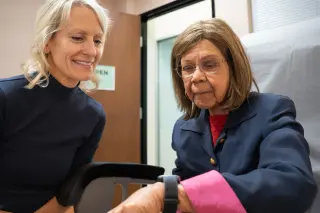
A UC Davis study with 62 older adults used smartwatch prompts to rate moment-to-moment cognitive sharpness; these self-ratings tracked with brief on-device tests, suggesting real-time perceptions could help identify cognitive changes earlier and outside the clinic, though longer-term predictive value for dementia remains to be established.
In a small Emory University–led study of 54 older adults with sleep problems and mild cognitive impairment, daily vitamin D intake of 5,000 IU or more was linked to more than a 13% rise in MoCA cognitive scores versus no vitamin D, suggesting high-dose vitamin D could be a modifiable factor to support brain health during early cognitive decline; results were similar for vitamin D2 and D3, but the research is preliminary and focused on an early-risk window.
A Monash University study of more than 10,800 adults over 70 found that listening to music almost every day is associated with a 39% lower risk of developing dementia compared with those who listen less; playing an instrument or singing links to about a 35% reduction, and doing both listening and playing corresponds to roughly a 33% lower dementia risk and a 22% lower risk of cognitive impairment. Researchers say music engages multiple brain areas, supporting processing speed, language, memory, and social interaction, making it a simple, low-effort way to support brain health as people age.
A small six-month trial with 47 overweight/obese women aged 50–79 found that those who ate within an 8–9 hour daily window (and cut calories by 500) showed greater improvements in spatial planning and problem-solving than peers who ate over ~12 hours, despite similar weight loss (~15 lb). Memory tasks tended to improve as well but not significantly; no differences in reaction time or multitasking. The results suggest meal timing could offer cognitive benefits beyond weight loss, but larger studies are needed to confirm and explain the mechanisms (circadian rhythm, inflammation, metabolism).
A 2024 Nature Communications twin study found that daily prebiotic supplements (inulin or FOS) added to a protein powder improved memory test scores in people over 60, prompting the PRECODE trial at Wageningen to test three fibers—chicory inulin, resistant dextrin, and seaweed polysaccharide—over 26 weeks. Early data from 36 twin pairs show modest cognitive gains and subtle gut microbiome changes (notably more Bifidobacterium), with results expected in 2027. Researchers view these inexpensive, over-the-counter fibers as a promising, safe approach to supporting brain health during aging.
A Yale-led study of more than 11,000 Americans aged 65+ followed for up to 12 years finds that 45% show improvements in at least one domain (cognition or physical function), with those harboring more positive beliefs about aging more likely to improve; findings challenge the inevitability of decline and suggest mindset-based interventions to bolster resilience in older adults.
A large UK Biobank analysis of over 18,000 middle-aged and older adults finds that fat distribution—arm, leg, trunk, and especially visceral fat around internal organs—independently shapes brain structure, connectivity, and cognitive performance beyond BMI. Arm and trunk fat are linked to sensorimotor cortex thinning and hippocampal volume loss; leg fat affects limbic networks; visceral fat shows the strongest association with white-matter deterioration and faster brain aging as estimated by a Brain Age model. These patterns persist after adjusting for BMI, but the cross-sectional design means causality cannot be established.