Tag

Executive Power

All articles tagged with #executive power

Democrats Draft Sweeping Reforms to Reverse Trump's Executive Power Expansion
politics5 days ago

Democrats Draft Sweeping Reforms to Reverse Trump's Executive Power Expansion

Democratic lawmakers are drafting legislation to restrict presidential emergency powers, insulate the Justice Department from political influence, and ban first-family self-dealing. These efforts aim to reverse structural changes from Trump's second term before the 2026 midterms. Critics argue such reforms are symbolic, while supporters view them as necessary to restore institutional norms.
Trump’s Second Term Blurs Lines Between Public Power and Private Wealth
politics12 days ago

Trump’s Second Term Blurs Lines Between Public Power and Private Wealth

Rolling Stone argues that Donald Trump’s second presidency represents a historic shift in American governance, merging public authority with private financial interests. The article details how Trump leveraged his control over tariffs, pardons, and regulatory agencies to benefit his family’s business ventures, including World Liberty Financial and various real estate projects. Key examples include a $500 million investment from the UAE in his crypto venture, which coincided with favorable U.S. chip export policies, and a $400 million White House ballroom funded by corporations seeking federal contracts. The piece asserts that this 'relational' corruption, rooted in Trump’s upbringing in New York’s political machine, has outpaced previous scandals by collapsing the distinction between the state and the president’s personal empire.

Gallup-Kettering Survey: Americans' Trust in Rule of Law and Democratic Institutions Hits New Lows

Gallup-Kettering Survey: Americans' Trust in Rule of Law and Democratic Institutions Hits New Lows

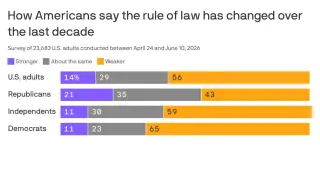
A massive Gallup-Kettering survey of over 23,000 U.S. adults reveals a sharp decline in confidence in democratic institutions, with 56% saying the rule of law is weaker than in 2016 and 53% doubting leaders will be held accountable to the Constitution. While 78% insist officials must always follow the law, only 28% trust that accountability exists. Concerns are driven largely by Republicans and independents, who increasingly view the executive branch as too powerful and express deep distrust of election officials. Despite this pessimism, 66% still call democracy the best form of government, and 68% prioritize speaking up against injustice over respecting authority. The findings highlight a public that remains committed to democratic ideals but is deeply frustrated with their practical application, especially at the national level.

Roberts’ ‘Democracy’ Rhetoric Masks a Power Grab, Slate Judges Say
politics3 months ago

Roberts’ ‘Democracy’ Rhetoric Masks a Power Grab, Slate Judges Say

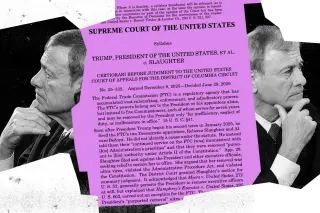
Slate’s Lithwick and Stern argue that Chief Justice Roberts’s Trump v. Slaughter decision dramatically expands presidential power over independent federal agencies while claiming to boost accountability; they say the history is distorted, the underlying political theory is false, and the ruling undermines democratic accountability and civil-service protections with broad implications for future administrations.

Two Roberts rulings, one term, two opposite visions of power
law3 months ago

Two Roberts rulings, one term, two opposite visions of power

Chief Justice John Roberts authored two major decisions this term that pull in opposite directions: Slaughter ends independent agency status by allowing presidential firing for any reason, while Cook carves out a Fed-specific exemption to preserve independence, a split critics say is cynical and incompatible, revealing a judiciary agenda that strengthens executive power for business interests and undermines civil-service independence.

Forever Immunity and the Fragile Line Between Law and Power
politics4 months ago

Forever Immunity and the Fragile Line Between Law and Power

Slate legal analyst Aziz Huq argues that acting AG Todd Blanche’s bid to grant Trump and his family “forever immunity” rests on a nonexistent constitutional power to bind future officials or to immunize future actions from the law. The piece stresses that no branch—Congress or the president—can unilaterally erase future accountability, and that presidential pardons are personal and limited. Blanche’s move would set a dangerous precedent, potentially allowing any administration to permanently shield statutes from enforcement and undermine the rule of law; the article urges rejecting this power grab and reinforcing constitutional limits on executive authority.

Restoring the Guardrails on U.S. War Power
policy7 months ago

Restoring the Guardrails on U.S. War Power

Stephen Pomper argues that decades of legal interpretations and political passivity have hollowed the War Powers framework, enabling Trump to launch strikes abroad without substantial congressional or public justification. The War Powers Resolution’s protections have become Swiss cheese; the 2001 AUMF has been stretched to cover groups beyond its original scope. He calls for concrete reforms—strengthen the War Powers Resolution, narrow or repeal the 2001 AUMF with sunset and oversight, shorten the authorization window, and condition funding on authorization—along with rescinding problematic Office of Legal Counsel opinions. Reform will be hard but is necessary to force deliberation, accountability, and a sharper check on presidential war-making.

Draft emergency order to seize U.S. elections draws sharp constitutional backlash
politics7 months ago

Draft emergency order to seize U.S. elections draws sharp constitutional backlash

A circulated draft emergency executive order, reportedly coordinated by MAGA activists with the White House, would let the president declare a national emergency and unilaterally take control of elections (including banning mail-in ballots and voting machines) based on debunked theories of foreign interference. Experts say the move would be unconstitutional and illegal because election authority rests with states, and courts would likely block such powers despite supporters arguing for emergency powers.

Supreme Court Pushes Back on Trump's Bid to Control the Fed
politics8 months ago

Supreme Court Pushes Back on Trump's Bid to Control the Fed

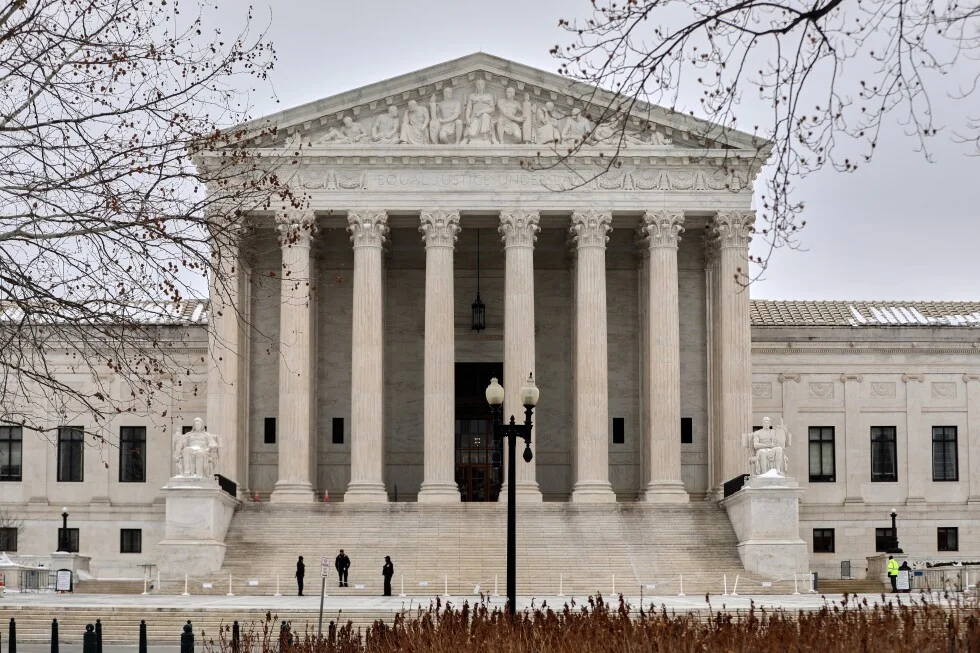
The Supreme Court signaled skepticism about President Trump's attempt to fire Federal Reserve governor Lisa Cook, underscoring the Fed's independence and raising questions about presidential power over independent agencies; legal scholars warn that, even if the court pushes back, it may carve out exceptions for the Fed, with potential economic implications and renewed scrutiny of the unitary executive theory, with a decision expected by June.