Tag

Galaxy Clusters

All articles tagged with #galaxy clusters

Webb Finds the Earliest Jellyfish Galaxy Drifting Through a Young Cosmos
space1 month ago

Webb Finds the Earliest Jellyfish Galaxy Drifting Through a Young Cosmos

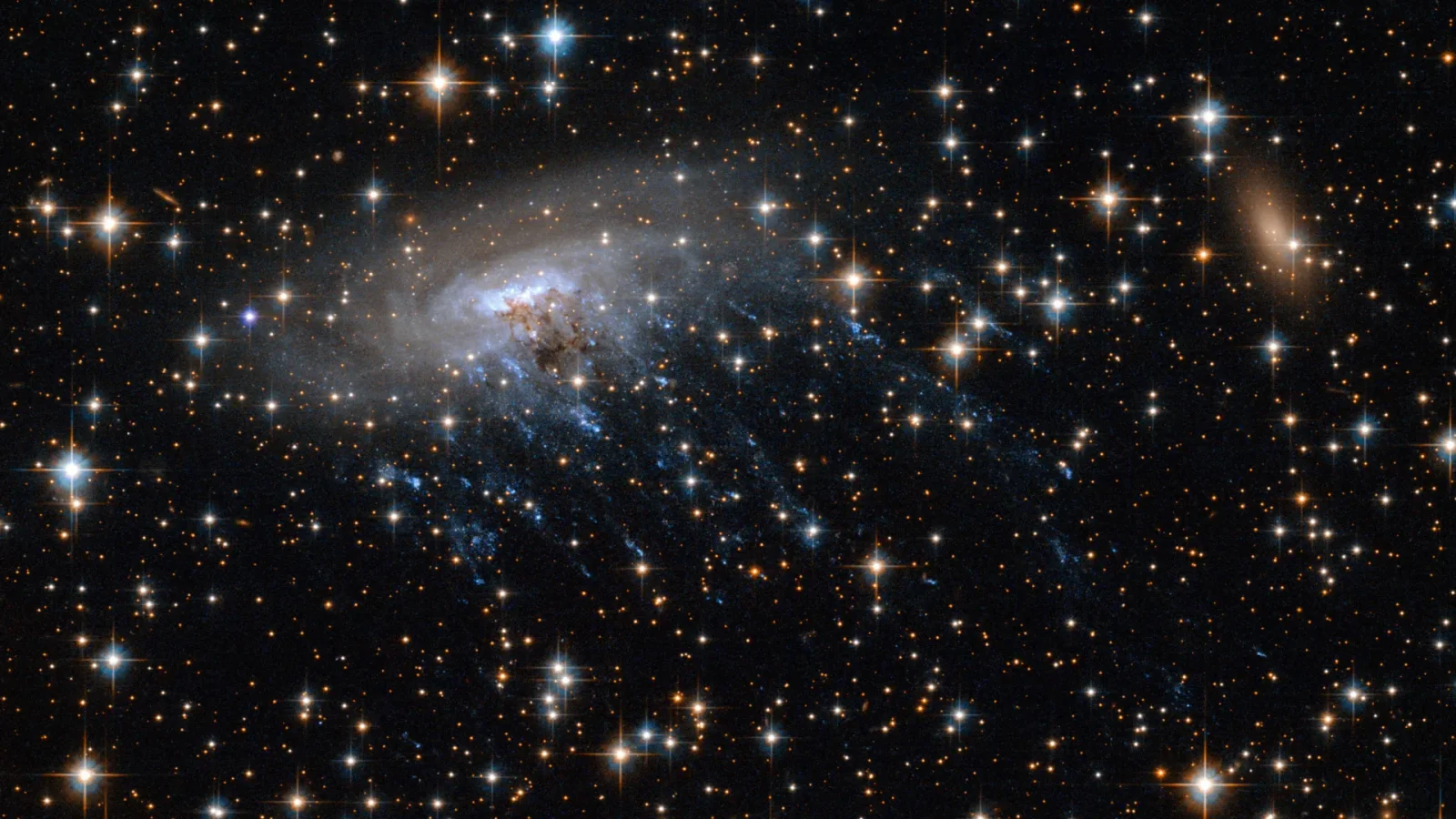
Astronomers using the James Webb Space Telescope have identified the farthest known jellyfish galaxy, at redshift z=1.156 (about 8.5 billion years old), in the COSMOS field. The galaxy shows blue, newly formed stars in long trailing gas streams created by ram-pressure stripping as it speeds through a dense cluster, implying harsh cluster environments existed earlier in the universe and potentially reshaping ideas about how galaxies evolved billions of years ago.

XRISM reveals the turbulent winds around supermassive black holes
astronomy1 month ago

XRISM reveals the turbulent winds around supermassive black holes

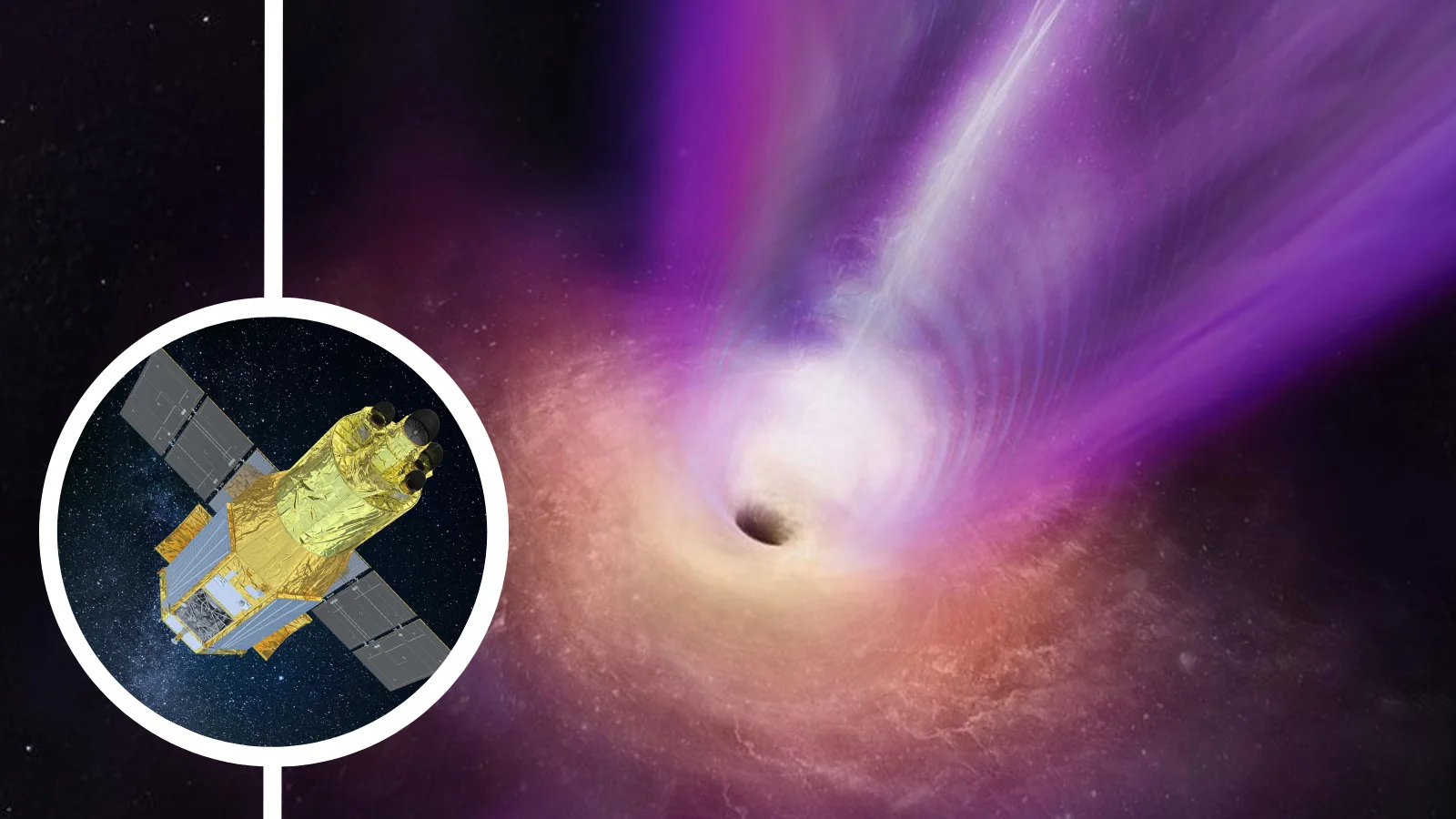
NASA/JAXA’s XRISM X‑ray mission uses high‑resolution spectroscopy to measure gas motions around supermassive black holes, notably M87* and the Perseus cluster, unveiling the strongest turbulence seen near a black hole and the kinetic energy of surrounding gas. This helps explain how black holes heat their environments and influence galactic evolution; findings published late Jan 2026 in Nature and built on XRISM’s 2023 launch in collaboration with ESA.

Baryons Take the Lead in Galaxy Clusters, MOND Gains Ground
astronomy1 month ago

Baryons Take the Lead in Galaxy Clusters, MOND Gains Ground

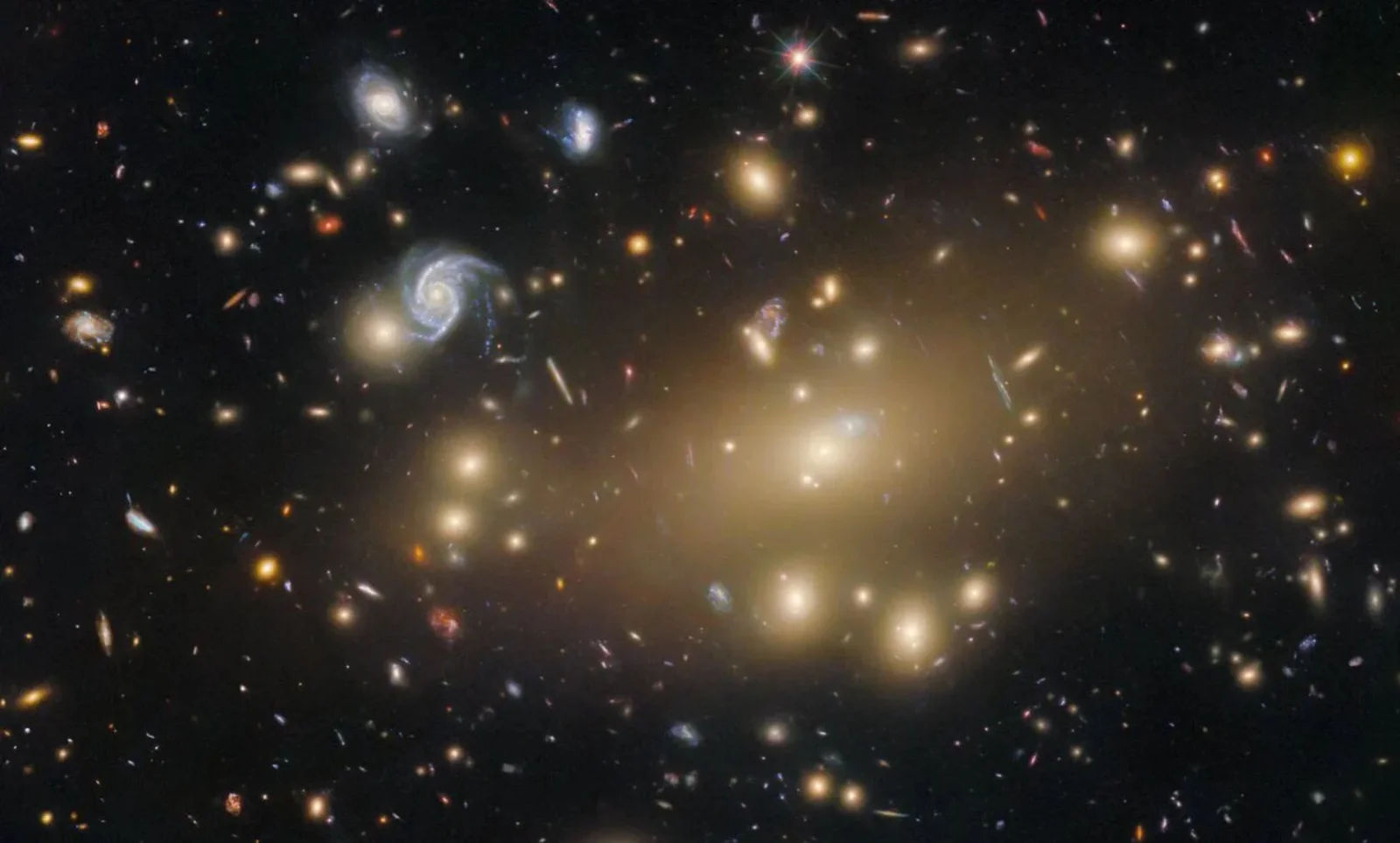
A Bonn-led study analyzing 46 nearby galaxy clusters finds their mass is about twice as heavy in baryonic matter as previously thought, due to components like stellar remnants and intracluster light. The revised accounting brings cluster masses closer to MOND predictions and challenges the need for exotic dark matter, with authors suggesting a reevaluation of dark-matter-focused research funding.

Earliest Protocluster Unveiled by JWST Signals Rapid Cosmic Growth
astronomy2 months ago

Earliest Protocluster Unveiled by JWST Signals Rapid Cosmic Growth

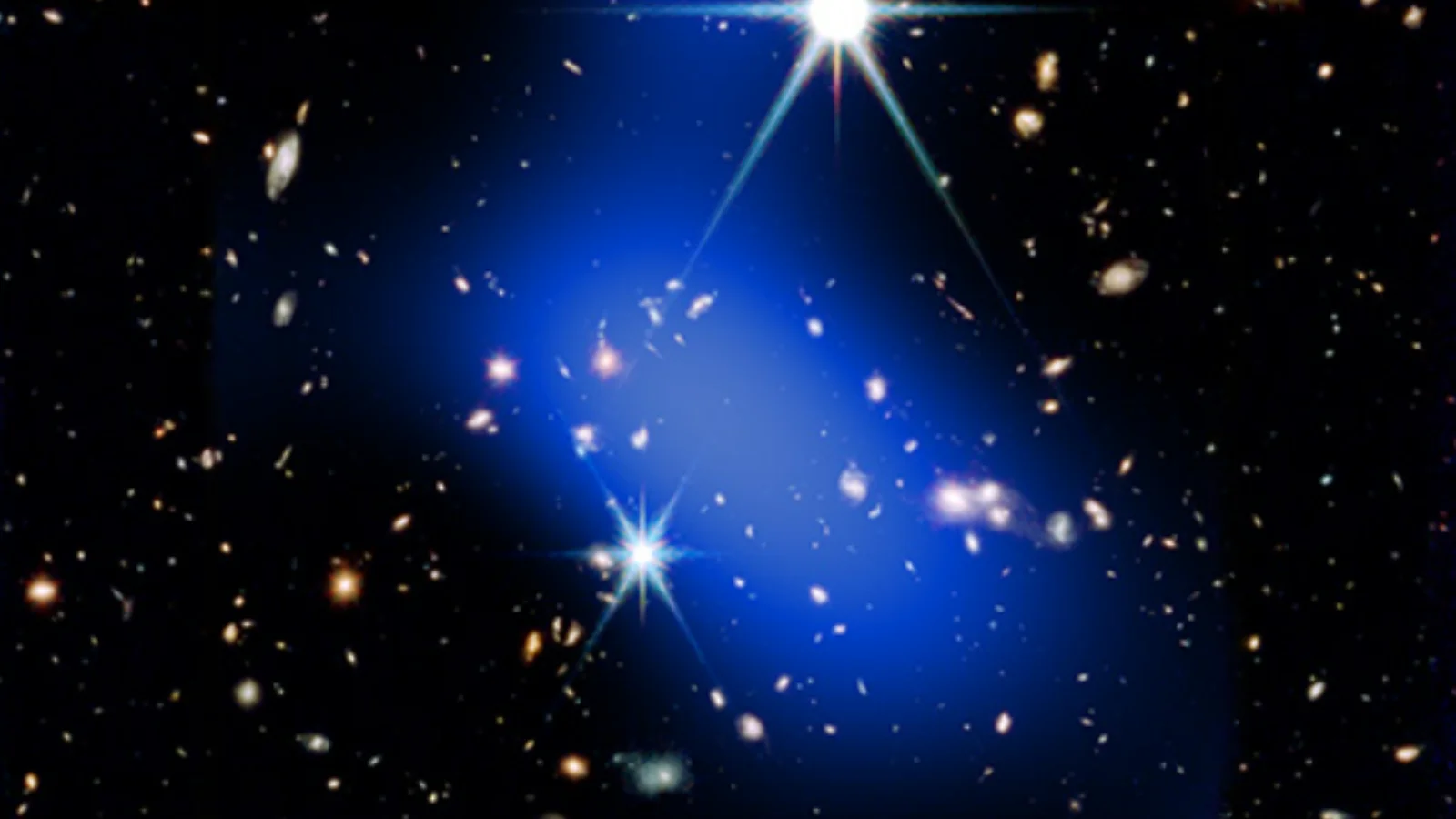
Using the James Webb Space Telescope and NASA’s Chandra X-ray Observatory, scientists observed the most distant protocluster yet seen, JADES-ID1, forming when the universe was about 1 billion years old. Light from this building cluster has travelled 12.7 billion years to reach Earth, revealing multiple galaxies bound by gravity within a surrounding cloud of hot gas and X‑ray emission. The finding—published in Nature—suggests galaxy clusters grew far more quickly in the early universe than current models had predicted, raising new questions about how these massive structures assembled.

Scientists Race to Uncover Dark Matter's Hidden Nature
science3 months ago

Scientists Race to Uncover Dark Matter's Hidden Nature

Scientists are exploring the nature of dark matter, which makes up about 85% of the universe's matter, by studying galaxy clusters with NASA's XRISM telescope. They are particularly interested in detecting signals from hypothetical particles called sterile neutrinos, which could decay and produce observable X-ray emissions, potentially revealing the particles that constitute dark matter.

Scientists Uncover Hot Anomaly in Early Universe
science3 months ago

Scientists Uncover Hot Anomaly in Early Universe

Scientists discovered an extremely hot and old galaxy cluster from just 1.4 billion years after the Big Bang, which challenges current cosmological theories. The cluster's unexpected heat is likely due to energy from supermassive black holes at its core, suggesting galaxy clusters evolve more explosively than previously thought, potentially reshaping our understanding of the early universe.