Tag

Lofar

All articles tagged with #lofar

Radio dipole hints Solar System may be moving through space far faster than thought
space9 days ago

Radio dipole hints Solar System may be moving through space far faster than thought

A new analysis of three radio-sky surveys finds a stronger radio dipole than predicted by the cosmic microwave background, implying the solar system’s motion could be about 828,000 km/h (515,000 mph)—roughly four times faster than standard estimates. The discrepancy could reflect either a true velocity anomaly or large-scale asymmetry in matter distribution; upcoming Square Kilometre Array observations (starting 2027) should help distinguish between these possibilities.

LOFAR maps the magnetic backbone of a galaxy cluster for the first time
astronomy1 month ago

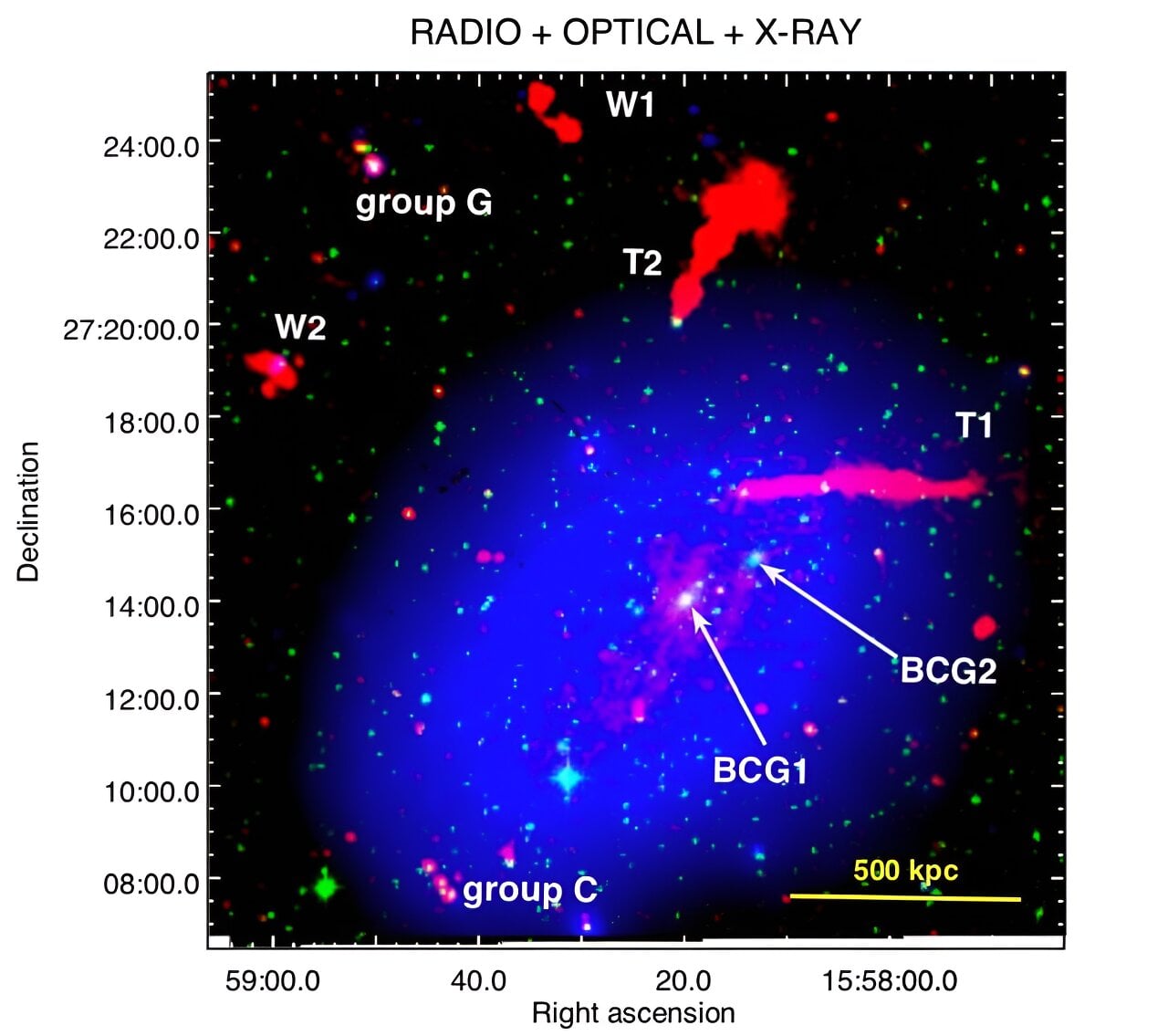
LOFAR maps the magnetic backbone of a galaxy cluster for the first time

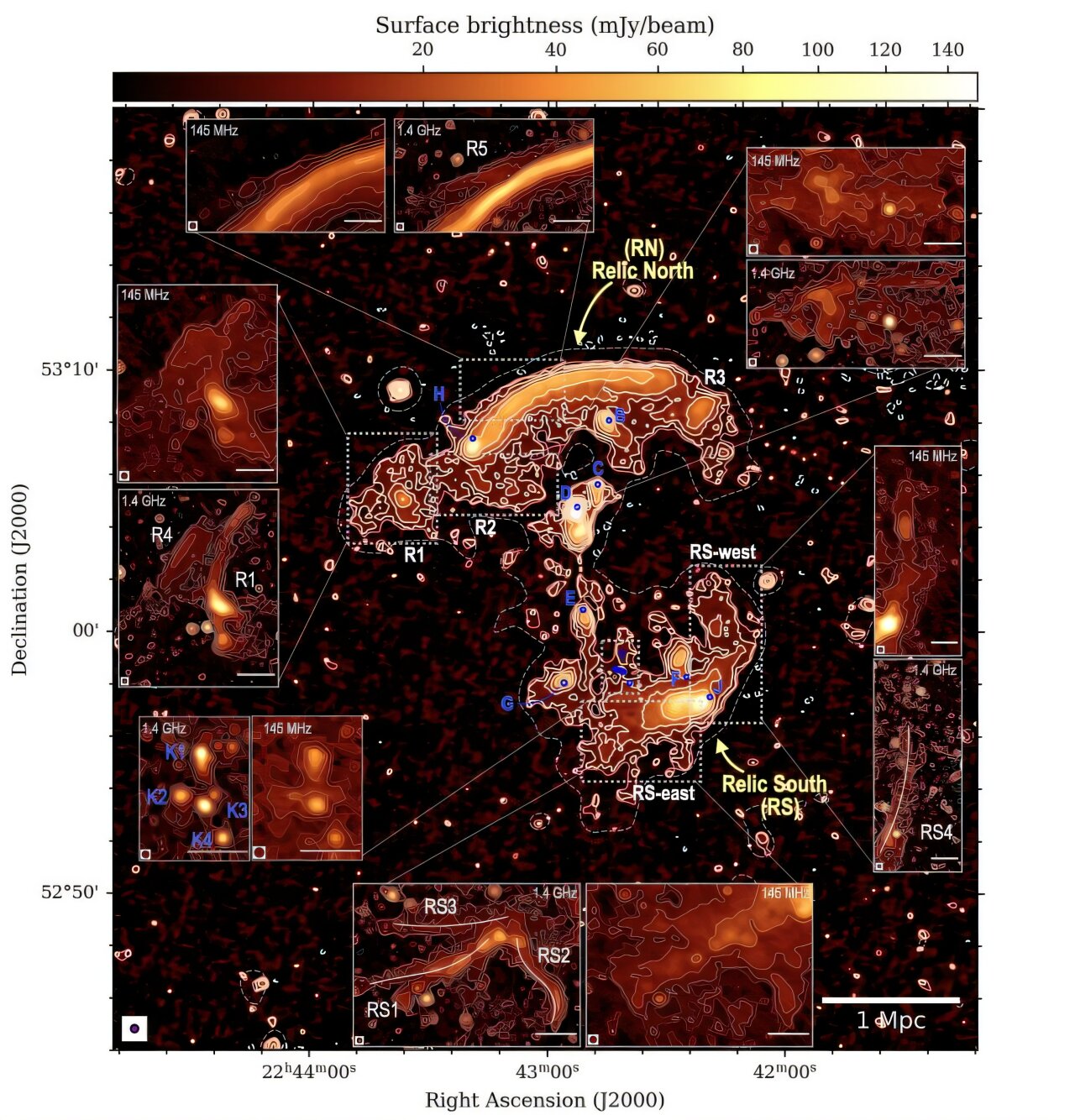
Using 224 hours of LOFAR radio observations, astronomers produced the deepest map yet of the galaxy cluster Abell 2255 and reconstructed its magnetic field from core to outskirts for the first time. The results show the magnetic field is shaped by gas motions during cluster formation, with field lines tracing extended radio emissions and showing tangential orientations in regions affected by shocks, providing new insight into how magnetic fields and the largest cosmic structures grow. The study is accepted for publication in Astronomy & Astrophysics and is available on arXiv.

Porphyrion’s 23-Million-Light-Year Jet Rewrites Galactic Scale
science1 month ago

Porphyrion’s 23-Million-Light-Year Jet Rewrites Galactic Scale

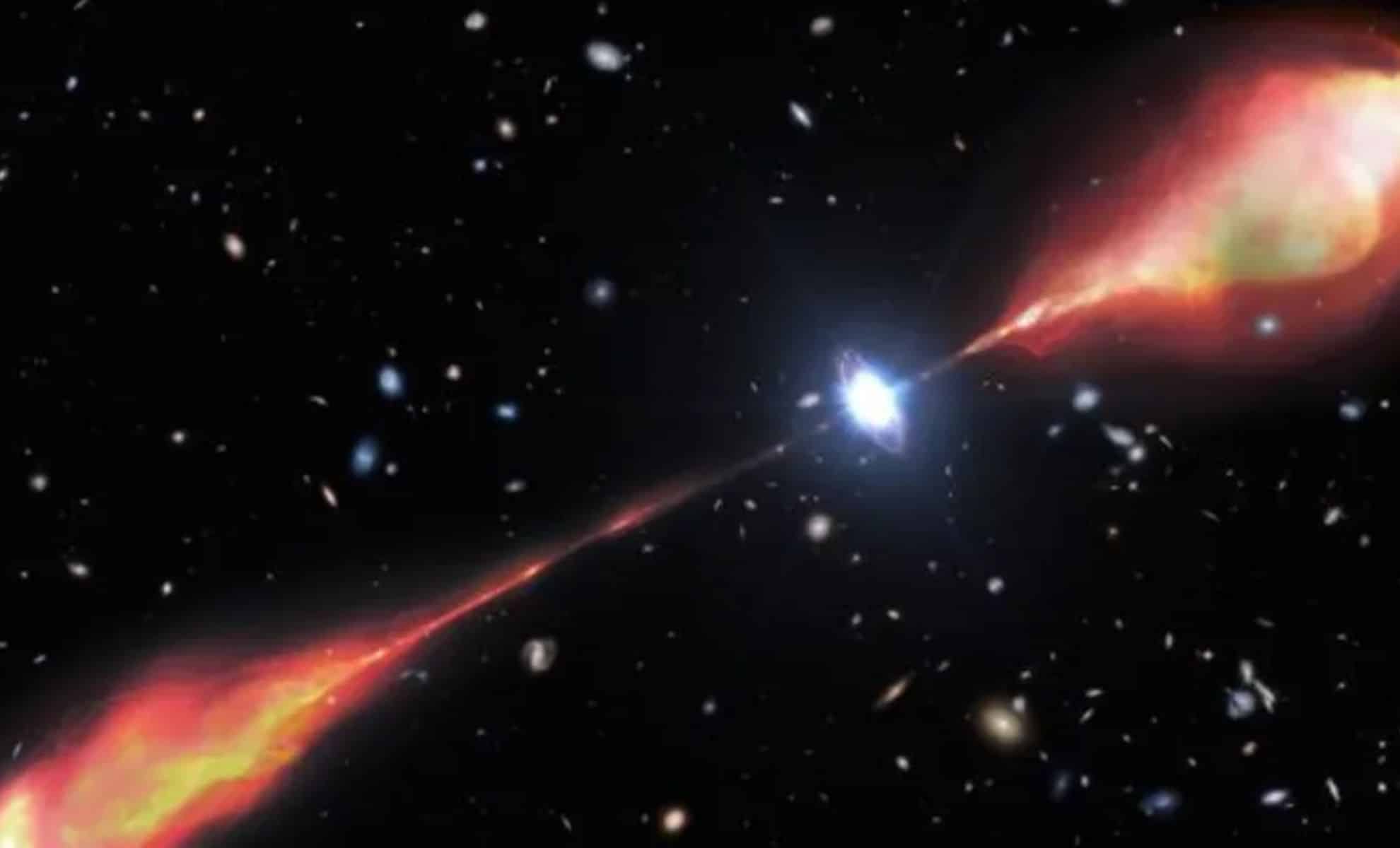
Astronomers using LOFAR have identified Porphyrion, a radio galaxy whose jets span about 23 million light-years (7 Mpc)—roughly 140 Milky Ways end-to-end—making it one of the largest known galactic-origin structures. The colossal jets suggest prolonged black-hole feeding over ~1 billion years and may influence the cosmic web’s temperature and magnetic fields, though newer discoveries like TXS 0033+252 have since surpassed its size, hinting that even bigger jets await detection.

Bow-and-Arrow Galaxy BAARG Signals Supersonic Dive into a Galaxy Cluster
space1 month ago

Bow-and-Arrow Galaxy BAARG Signals Supersonic Dive into a Galaxy Cluster

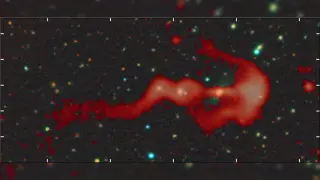
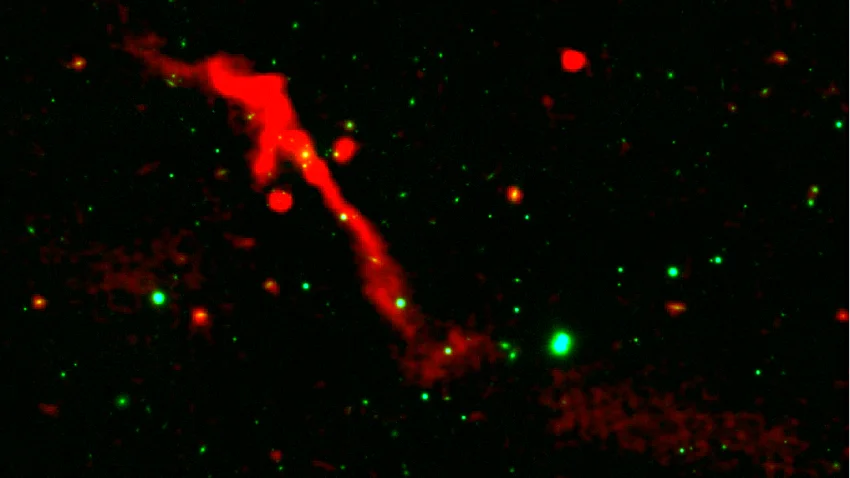
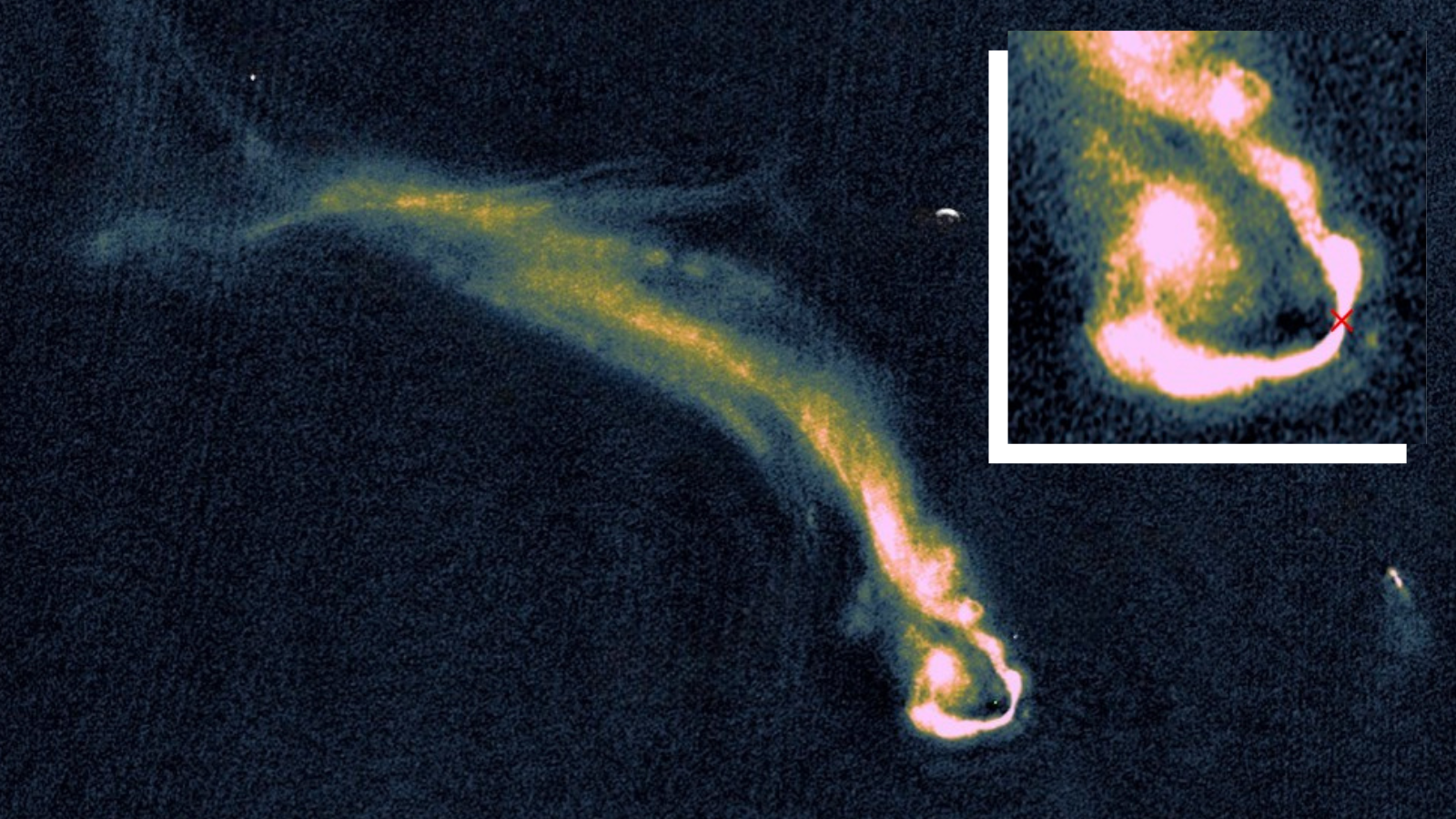
A Himalayan citizen scientist using LOFAR’s LoTSS data spotted BAARG, a colossal radio galaxy spanning about 1.8 million light-years at redshift z≈0.159. Its bow-shaped western arc and bent eastern jet are interpreted as the host elliptical plunging supersonically into a nearby cluster, producing a bow shock that reshapes the jets. BAARG sits in a crowded, multi‑halo environment near Abell 1081, offering the clearest direct radio image yet of this morphology and suggesting many more such systems will emerge with future SKA-era surveys.

Giant bow-and-arrow radio galaxy RAD-BAARG reveals colossal cluster shock wave
space1 month ago

Giant bow-and-arrow radio galaxy RAD-BAARG reveals colossal cluster shock wave

Astronomers have identified RAD-BAARG, a 1.8-million-light-year-wide radio galaxy with a bow-and-arrow shape likely produced by a galaxy moving supersonically through a galaxy cluster, creating a giant bow shock; discovered by citizen scientists in the RAD@home project and studied with LOFAR's LoTSS survey, its asymmetric jets highlight how cluster environments reshape radio galaxies. The system lies in a complex, multi-halo gas environment, offering insights into jet–environment interactions; findings published June 22 in Monthly Notices of the Royal Astronomical Society: Letters, demonstrating LOFAR's ability to detect faint, diffuse radio emission.

Radio Sky Census Unveils 13.7 Million Hidden Objects
science5 months ago

Radio Sky Census Unveils 13.7 Million Hidden Objects

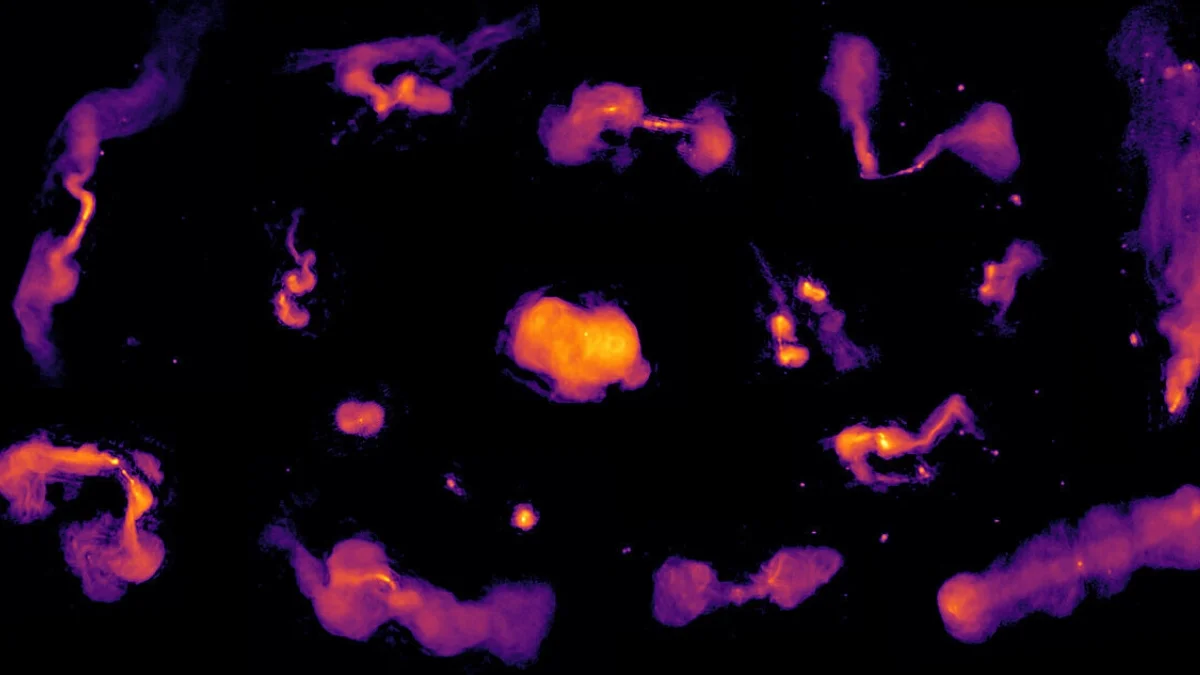
Scientists released the LOFAR DR3 dataset—the largest radio sky survey to date—mapping about 13.7 million radio-emitting objects across 88% of the northern sky, drawn from 18.6 petabytes of data processed with Europe’s supercomputers; the survey reveals extreme phenomena like black-hole jets and distant active galaxies, and demonstrates the massive data-handling required to stitch signals from 70,000 antennas, setting the stage for future SKA projects and widespread follow-up studies.

Unprecedented Low-Frequency Radio Sky Map Reveals 13.7 Million Cosmic Sources
science6 months ago

Unprecedented Low-Frequency Radio Sky Map Reveals 13.7 Million Cosmic Sources

Astronomers released LoTSS-DR3, the most detailed low-frequency radio sky map from the LOFAR network, cataloging 13.7 million cosmic sources and offering new insights into supermassive black holes, their jets, and galaxy clusters, while tackling ionospheric distortions with advanced data-processing techniques on ~18.6 petabytes of data.

Cosmic Volcano: Monster Black Hole Reawakens After 100 Million Years
space7 months ago

Cosmic Volcano: Monster Black Hole Reawakens After 100 Million Years

Astronomers using LOFAR observed a supermassive black hole at the center of a giant galaxy (J1007+3540) that had been quiet for about 100 million years. The black hole’s enormous radio jets have reactivated, interacting with the surrounding hot gas and forming a layered structure—signaling episodic active galactic nucleus activity and a dramatic wake-up in the cosmic engine.

Astronomers Uncover Massive Radio Jet in Quasar J1601+3102
science1 year ago

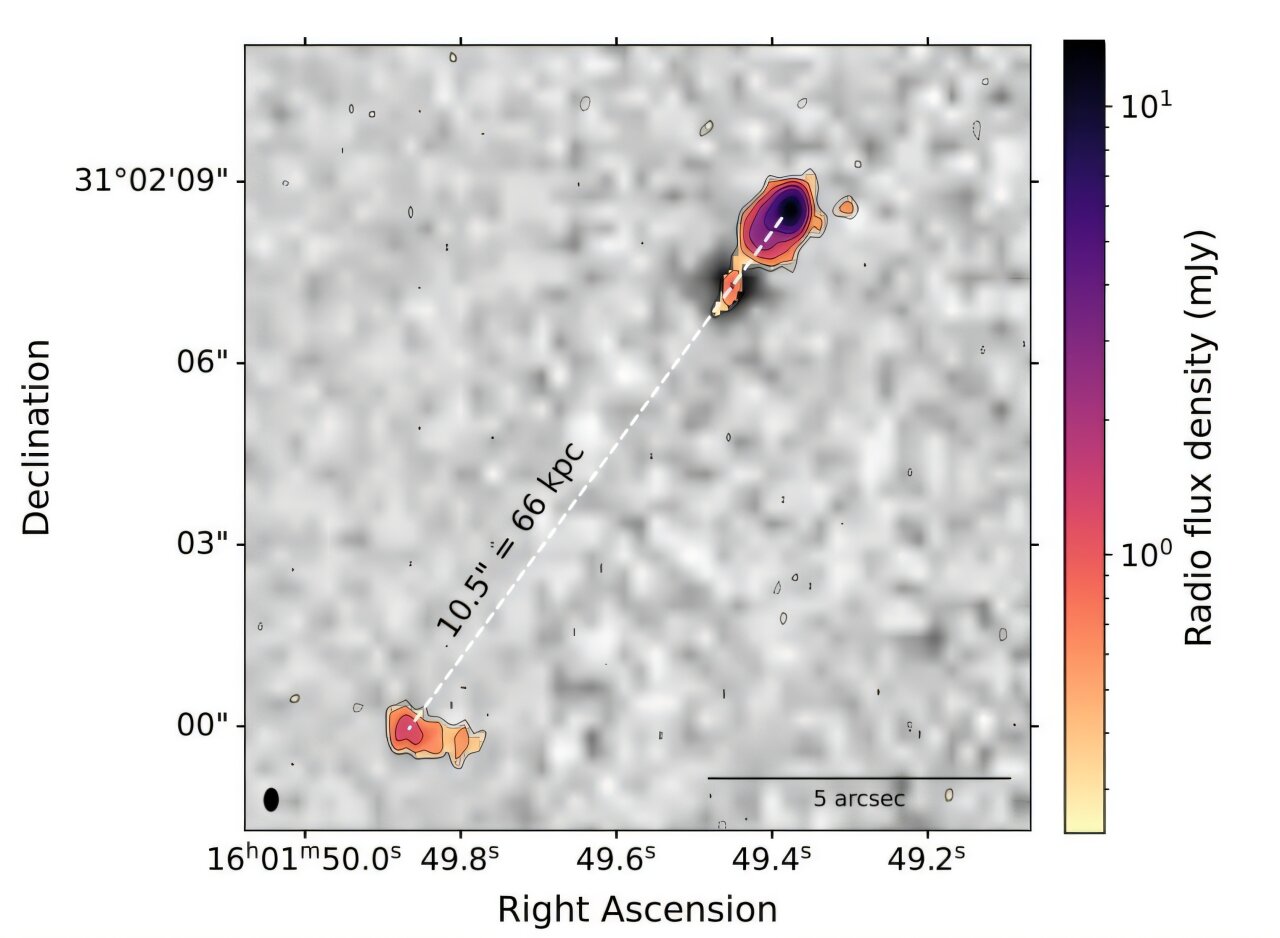
Astronomers Uncover Massive Radio Jet in Quasar J1601+3102

Astronomers have discovered a large extended radio jet in the quasar J1601+3102, located at a redshift of 4.9. Using the Low Frequency Array (LOFAR) and Gemini Near-Infrared Spectrograph (GNIRS), they found the jet spans at least 215,000 light years, making it the most extended radio jet observed at such a high redshift. The quasar's supermassive black hole is about 450 million solar masses, suggesting that exceptionally massive black holes are not necessary to produce powerful jets.

"Unveiling the Mysteries of Galaxy Cluster G113: European Astronomers Lead the Way"
astronomy2 years ago

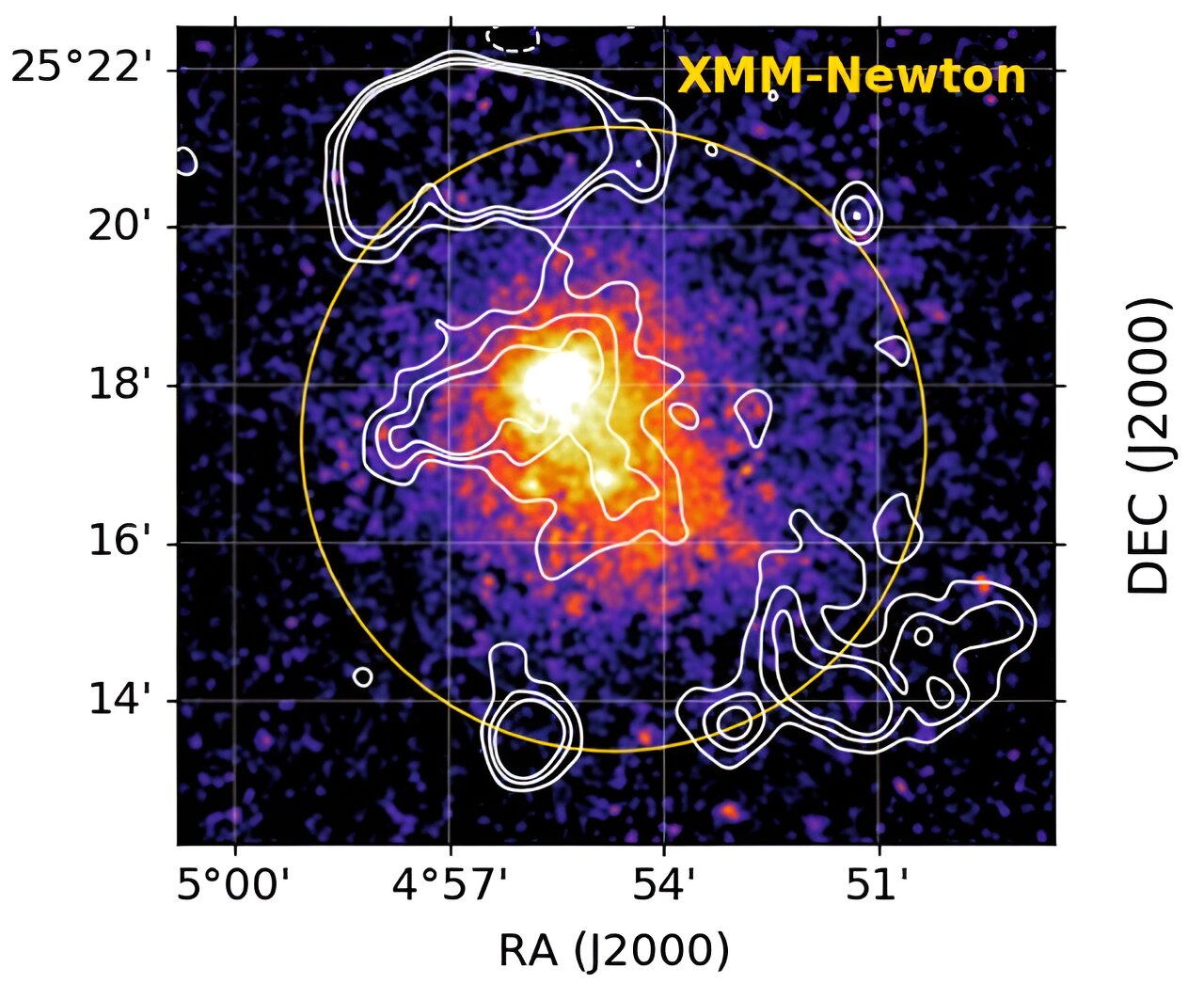
"Unveiling the Mysteries of Galaxy Cluster G113: European Astronomers Lead the Way"

European astronomers have used ESA's XMM-Newton satellite and the Low-Frequency Array (LOFAR) to study the galaxy cluster PSZ2G113.91-37.01 (G113). The observations revealed that G113 is undergoing a merger and confirmed the presence of a radio halo and two radio relics. The study also identified a cold front and a cold region within the cluster. Further analysis found a strong correlation between X-ray and radio emissions in the halo region, while an anti-correlation was observed in the relic region. The researchers propose further observations to understand the physical processes behind these findings.

"Discovery: European Astronomers Uncover Radio Halo's New Element in Nearby Galaxy Cluster"
astronomy3 years ago

"Discovery: European Astronomers Uncover Radio Halo's New Element in Nearby Galaxy Cluster"

European astronomers using the LOFAR telescope have discovered a new component, named H3, in the radio halo of the nearby galaxy cluster Abell 2142. The radio halo is a diffuse region of radio emission found at the center of galaxy clusters. The discovery of H3 provides further insights into the structure of the halo and its relationship with the X-ray thermal distribution of the intracluster medium. The researchers propose two hypotheses for the origin of H3, suggesting it may be the result of an old energetic merger or turbulent re-acceleration induced by ongoing minor mergers.

"Starlink Satellites' 'Unintended' Radiation Disrupts Radio Astronomy"
science-and-astronomy3 years ago

"Starlink Satellites' 'Unintended' Radiation Disrupts Radio Astronomy"

The Low Frequency Array (LOFAR) telescope in the Netherlands has detected radiation from the onboard electronics of SpaceX's Starlink satellites, which could disturb radio astronomy observations. The unwanted low-frequency radio hum emitted by the satellites falls within a protected band allocated to radio astronomy. This finding raises concerns about the impact of megaconstellations like Starlink on sensitive radio telescopes and large-scale observatories. While SpaceX is collaborating with astronomers to find solutions, there is currently no clear regulation to protect radio astronomy bands from unintended radiation.