Tag

Homo Naledi

All articles tagged with #homo naledi

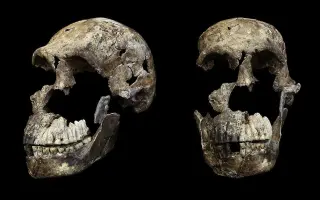
Tooth proteins hint Homo naledi at Rising Star may have been all female
science15 days ago

Tooth proteins hint Homo naledi at Rising Star may have been all female

A new study of preserved dental enamel proteins from about 20 Homo naledi individuals at South Africa’s Rising Star cave finds no signature of amelogenin Y, suggesting the group could be all female and fueling the idea of deliberate burial at the site. However, absence of Y does not prove all-female status, and alternative explanations—such as genetic variation, inbreeding, or a loss of the Y gene—could also explain the results. More evidence is needed before drawing firm conclusions about the population’s sex composition or burial practices.
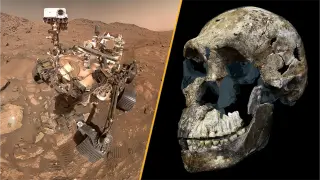
Martian organics, two-liquid water and all-female Homo naledi headline this week’s science news
science17 days ago

Martian organics, two-liquid water and all-female Homo naledi headline this week’s science news

NASA’s Perseverance rover has found the highest concentration of complex organic molecules to date in Jezero crater, hinting at past microbial life on Mars; JWST observations show early galaxies forming and dying quickly, a newborn star was seen in Orion, and Euclid produced the Milky Way’s most detailed image yet. In paleoanthropology, nearly two dozen Homo naledi skeletons from Rising Star cave are all female. Closer to home, AI-assisted research adds support to the idea that water may consist of two interconverting liquids.

Mars organics, female Homo naledi, and water’s two-faced nature: this week's science roundup
science17 days ago

Mars organics, female Homo naledi, and water’s two-faced nature: this week's science roundup

NASA’s Perseverance has found the highest concentration of organic molecules yet in Jezero crater’s mudstones, hinting at fossilized microbes on Mars; archaeologists report that all Homo naledi remains from the Rising Star cave system in South Africa are female; new AI-assisted research suggests water may consist of two interchanging liquids, challenging a single-liquid view of the substance; JWST observations illuminate how early galaxies formed and evolved (dying young), and Euclid has produced the most detailed image of the Milky Way yet, with a separate note of a newly forming star in Orion.

Rising Star Homo naledi Remains All Female, Reshaping Hominin History
science19 days ago

Rising Star Homo naledi Remains All Female, Reshaping Hominin History

A paleoproteomics analysis of 23 Homo naledi teeth from the Rising Star Cave found no AMELY (Y chromosome) and AMELX in all samples, suggesting the known individuals were all genetically female. The result supports the idea that the Rising Star remains may reflect intentional burial and hints at gender identity in this species, while noting that a rare AMELY deletion could complicate the picture. The study also shows potential for ancient proteins to illuminate early hominin relationships and points to future DNA sequencing as methods improve.

Proteomics suggests all Homo naledi skeletons from Rising Star cave are female
sciencearchaeology20 days ago

Proteomics suggests all Homo naledi skeletons from Rising Star cave are female

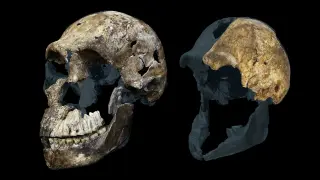
A proteomic analysis of 20 Homo naledi teeth from the Rising Star cave in South Africa found no AMELY (male) markers, suggesting all examined skeletons are female. The finding includes specimens once thought to be male (e.g., DH1 and Neo) and raises questions about sex representation or a possible AMELY deletion, with researchers noting this is a surprising result that requires more sampling to understand the biology and evolution of the species. The study, published in Cell (2026), also highlights shared protein variants with Paranthropus robustus and underscores the potential of ancient proteins to illuminate sex in extinct hominins.

Rising Star Homo naledi fossils appear all female, fueling debate over burial practices
science20 days ago

Rising Star Homo naledi fossils appear all female, fueling debate over burial practices

A paleoproteomics study of 20 Homo naledi teeth from the Rising Star cave in South Africa found all samples belonged to females, suggesting a female-biased representation at the site. The team used amelogenin protein markers to infer sex, but the absence of a Y-chromosome signal could also reflect a mutation or deletion of the AMELY gene. The fossils, dated roughly 335,000–241,000 years old, raise questions about sex-segregated mortuary practices or other biases, though researchers caution that a single-site, small-sample finding is not definitive and alternative explanations remain possible.

Late-Stage Size Jump in Homo Rewrites Hominin Growth Story
anthropology21 days ago

Late-Stage Size Jump in Homo Rewrites Hominin Growth Story

A University of Reading-led analysis of 386 fossil specimens across 21 hominin species used phylogenetically informed models to test how body size evolved. Contrary to a simple, steady increase, the data point to a major size jump late in the genus Homo, with Homo ergaster/erectus reaching ~60 kg on average and aligning with other shifts like increased bipedality and carnivory. Small-bodied lineages such as Homo floresiensis and Homo naledi remain exceptions, and any gradual, across-the-board size rise is only moderately supported and sensitive to dataset and methods. The study highlights a mosaic pattern of body-size evolution rather than a single upward trend.

"World's Oldest Burial Site Predates Homo Sapiens"
science2 years ago

"World's Oldest Burial Site Predates Homo Sapiens"

Paleontologists in South Africa have discovered the world's oldest known burial site, containing remains of Homo naledi, a small-brained hominid previously thought incapable of complex behavior. This finding, led by Lee Berger, challenges the belief that only large-brained species like Homo sapiens engaged in burial practices, suggesting that complex emotional and cognitive behaviors may have a more diverse evolutionary history.

"Challenging Homo Naledi Burial Claims: Rethinking Human Ancestry"
anthropologyarchaeology2 years ago

"Challenging Homo Naledi Burial Claims: Rethinking Human Ancestry"

A recent study challenges previous claims that Homo naledi deliberately buried their dead and created rock art in Rising Star Cave, South Africa, with experts calling for more rigorous scientific analysis and documentation. The evidence presented so far was deemed not compelling enough to support the deliberate burial of the dead by Homo naledi, nor that they made the purported engravings, leading to a reevaluation of the findings. The critique emphasizes the need for additional documentation and scientific analyses before ruling out natural agents and post-depositional processes as responsible for the accumulation of bodies and to prove intentional excavation and filling of pits by Homo naledi.

Experts Debunk Overhyped Claims on Small-Brained Human Ancestor
science2 years ago

Experts Debunk Overhyped Claims on Small-Brained Human Ancestor

Experts have criticized the claims made by paleoanthropologist Lee Berger and his team regarding the small-brained human ancestor Homo naledi. The team suggested that H. naledi engaged in ritualistic behaviors such as burying their dead and creating art. However, critics argue that the evidence presented is not compelling enough to support these claims. They point out that the bones were scattered and not arranged in a burial form, and the purported burial pits may be natural hollows or sinkholes. The age of the charcoal and the nature of the markings have also not been sufficiently determined. Further investigations are needed to clarify the behaviors and significance of H. naledi.

Reevaluating Homo Naledi: Debunking Claims of Advanced Behavior
anthropologyarchaeology2 years ago

Reevaluating Homo Naledi: Debunking Claims of Advanced Behavior

A new study challenges the claims made by researchers earlier this year that Homo naledi, an ancient hominid species, deliberately buried its dead and created rock art. The study highlights flaws in the evidence presented, including the scattered nature of the bones and the lack of scientific techniques used to date the alleged engravings. The authors argue that there is no convincing scientific evidence to support the claims of burial practices and rock art production by Homo naledi in the Rising Star Cave system.

Ancient Burial Site Predates Human Existence
archaeologyanthropology2 years ago

Ancient Burial Site Predates Human Existence

Paleontologists in South Africa have discovered the oldest known burial site in the world, challenging the current understanding of human evolution. The site contains the remains of Homo naledi, a small-brained distant relative of humans previously thought incapable of complex behavior. The burial site, dating back to at least 200,000 BC, contains deliberately dug holes filled in to cover the bodies, suggesting mortuary practices. The findings also include engravings on cave surfaces, indicating symbolic practices. These discoveries suggest that mortuary practices and symbolic behaviors were not limited to Homo sapiens or hominins with large brain sizes, potentially altering our understanding of human evolution.

"Unveiling the Ancient Secrets: Extinct Apes' Burial Rituals and Artistry Explored by Scientist Lee Berger"
science-and-anthropology2 years ago

"Unveiling the Ancient Secrets: Extinct Apes' Burial Rituals and Artistry Explored by Scientist Lee Berger"

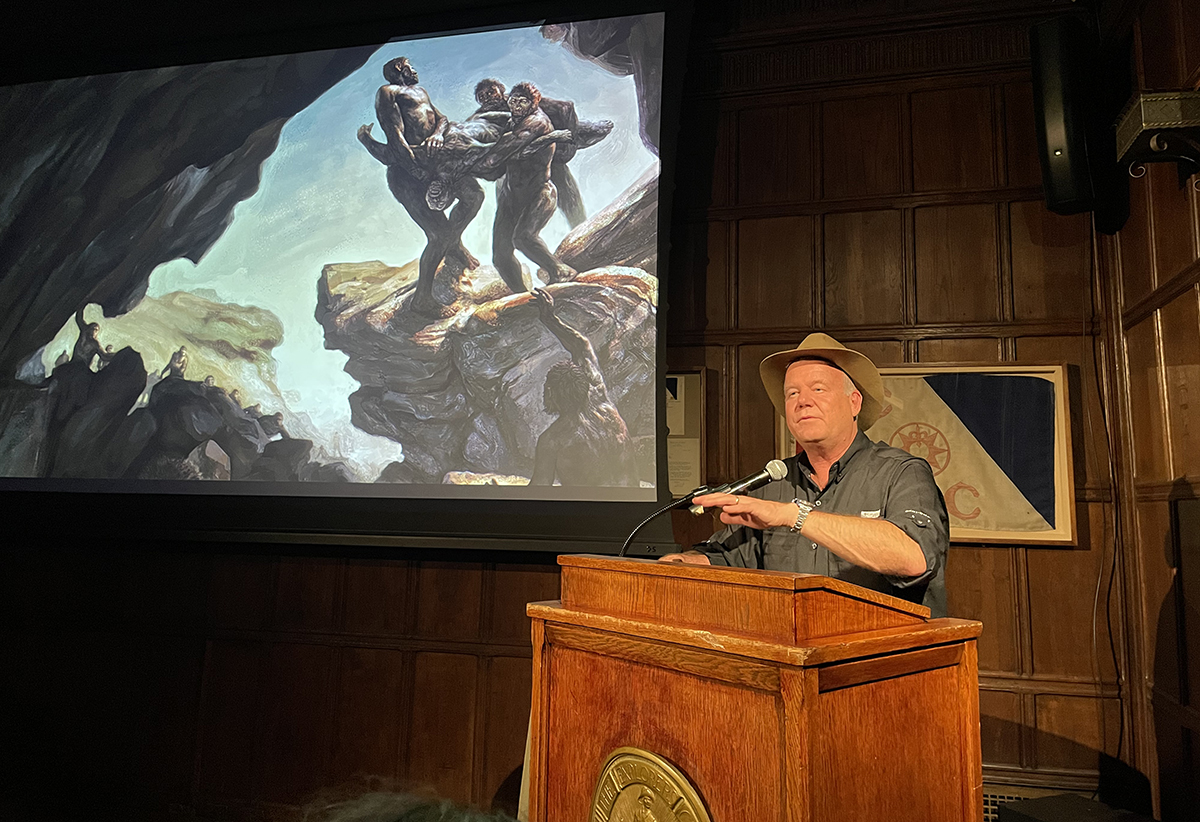
Lee Berger, the lead scientist at the "Cave of Bones" site in South Africa, discusses his controversial claims about the Homo naledi fossils found in the Rising Star cave system. Berger believes that these small-brained hominins used fire, buried their dead in chambers, and adorned the burial site with primitive art. Despite criticism from peers, Berger argues that we should reconsider our bias for human exceptionalism and recognize the cultural complexity of other animals. He also speculates about interbreeding between humans and naledi. Berger announced plans to further explore the Rising Star site and respect its significance to the naledi.