Tag

Iot

All articles tagged with #iot

DreameHome Patch Fixes Critical Flaw Allowing Camera Hijacking
technology16 hours ago

DreameHome Patch Fixes Critical Flaw Allowing Camera Hijacking

Dreame Innovation Technology has released a security update for its DreameHome cloud API, addressing a high-severity vulnerability that allowed attackers to hijack smart cameras. The flaw, identified as CVE-2026-49965, stemmed from an insecure direct object reference in the bindDevice endpoint. This error permitted authenticated users to reassign cameras owned by others to their own accounts, effectively denying the original owners access to their devices. The vulnerability was rated 7.1 on the CVSS scale, indicating a high risk due to its impact on data integrity and system availability. The fix was deployed on November 19, 2026, closing the gap that existed in versions prior to this date.


DreameHome API Flaw Lets Users Hijack Camera Feeds via IDOR
technology16 hours ago

DreameHome API Flaw Lets Users Hijack Camera Feeds via IDOR

A high-severity vulnerability in DreameHome's cloud API allowed attackers to access other users' camera feeds and audio by exploiting an insecure direct object reference in the redirectAndLogin endpoint. The flaw, which affected versions prior to October 14, 2026, enabled the theft of session credentials and live video access. A patch has been released to address the issue.

Europe’s Cyber Crisis: From Spoiled Freezers to Secret UK Defenses
technology1 day ago

Europe’s Cyber Crisis: From Spoiled Freezers to Secret UK Defenses

A wave of cyberattacks targeting refrigeration systems across Europe has exposed critical vulnerabilities in industrial internet of things devices, leading to massive food spoilage and prompting urgent security overhauls. While no group has formally claimed responsibility, the incidents highlight the risks of legacy hardware with default passwords.

Nabu Casa Launches $69 AUX-2 to Revive Legacy Hardware via Serial and Audio Bridges
technology12 days ago

Nabu Casa Launches $69 AUX-2 to Revive Legacy Hardware via Serial and Audio Bridges

Nabu Casa has released the Home Assistant Connect AUX-2, a $69 multi-function device designed to integrate legacy electronics into smart home ecosystems. The compact box features RS-232 serial ports, analog and optical audio outputs, Bluetooth Low Energy, and USB connectivity. It allows users to control older TVs, AV receivers, and audio equipment without relying on manufacturer cloud services or proprietary apps. The device runs on ESPHome firmware and integrates directly with Home Assistant, supporting synchronized audio via the Sendspin standard. It also serves as a bridge for Z-Wave adapters and Bluetooth proxies, extending the reach of smart home hubs to non-smart or abandoned devices.

Google bans Videostrong after 1.3 million Android TV boxes found with backdoor
technology19 days ago

Google bans Videostrong after 1.3 million Android TV boxes found with backdoor

Google has severed ties with Shenzhen-based manufacturer Videostrong Technology after discovering that it pre-loaded a backdoor named XCPE on over 1.3 million certified Android TV boxes. The malware, which evaded security screening by installing itself after the first boot, enrolled devices in a global botnet used for ad fraud and residential proxy services. Google, alongside international law enforcement and cybersecurity firms, has shut down the command-and-control infrastructure and banned Videostrong from producing certified Android devices. While the botnet is dismantled, the backdoor remains in the firmware of affected units, which users cannot easily remove.

Second Wave of Cyberattacks Spoils Millions in European Food as Freezers Heat to 50C
technology20 days ago

Second Wave of Cyberattacks Spoils Millions in European Food as Freezers Heat to 50C

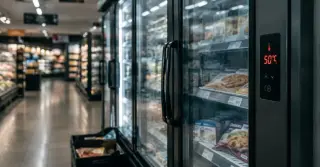
A second wave of cyberattacks has targeted refrigeration systems in at least 11 European countries, causing freezers to heat to 50 degrees Celsius and spoiling millions of euros worth of food. The attacks exploit legacy hardware from manufacturers like Danfoss and Copeland, which are connected to the internet with default passwords. While no group has claimed responsibility, experts warn that these incidents highlight critical vulnerabilities in industrial internet of things devices. The European Union is coordinating a response, emphasizing that these are not isolated incidents but part of a broader risk to essential services.

Second Wave of European Supermarket Freezer Hacks Spills Into Germany
security20 days ago

Second Wave of European Supermarket Freezer Hacks Spills Into Germany

A second wave of cyberattacks has targeted refrigeration systems in supermarkets across Europe, including Germany, Belgium, and Sweden, causing temperatures to spike and spoiling millions of euros worth of food. The incidents exploit vulnerabilities in legacy internet-connected controllers, prompting EU crisis meetings and highlighting critical infrastructure security gaps.

Google terminates partnership with Videostrong after dismantling 1.3 million-device botnet
technology20 days ago

Google terminates partnership with Videostrong after dismantling 1.3 million-device botnet

Google and a coalition of security partners have dismantled the 'x.cpe' botnet, which compromised over 1.3 million Android TV boxes. The malware, embedded by Shenzhen-based manufacturer Videostrong, secretly rented users' internet connections for ad fraud and proxy services. Google has banned Videostrong from producing certified Android devices, though the backdoor remains active on affected hardware.

European Supermarkets Suffer Second Wave of Refrigeration Hacks, Spoiling Food
cybersecurity21 days ago

European Supermarkets Suffer Second Wave of Refrigeration Hacks, Spoiling Food

Attackers remotely manipulated refrigeration controls in supermarkets across Belgium, Sweden, Estonia, Ireland, and other European nations on November 2, 2026. The intrusions forced cooling units into defrost mode or raised temperature settings to 50°C, causing significant food spoilage and temporary removal of chilled goods from shelves. While no single chain reported more than several dozen affected stores, the incidents impacted major retailers including Delhaize, ICA, and SuperValu. The attacks targeted internet-connected industrial hardware, specifically Danfoss and Copeland controllers, exploiting outdated software and default passwords. Although the incidents mirror a similar attack on French supermarkets in October, no group has claimed responsibility, and it remains unclear if the same actors are involved.

European Supermarket Freezers Hit by Second Wave of Cyberattacks
technology21 days ago

European Supermarket Freezers Hit by Second Wave of Cyberattacks

A suspected cyberattack disrupted refrigeration systems in supermarkets across seven European countries on November 2, 2026, causing temperatures to spike and spoiling food. The incident follows a similar attack in France in October and highlights vulnerabilities in internet-connected industrial hardware. While no group has claimed responsibility, experts warn that legacy software and lack of updates leave critical infrastructure exposed to state-sponsored or opportunistic hackers.

French Supermarket Freezers Hacked to 80C, Spoiling Food and Sparking Fires
cybersecurity1 month ago

French Supermarket Freezers Hacked to 80C, Spoiling Food and Sparking Fires

A coordinated cyberattack on Sunday night targeted internet-connected refrigeration controllers in approximately 700 French supermarkets, causing temperatures to spike from -27C to over 50C. The breach, which exploited outdated firmware and default passwords, resulted in massive food spoilage, fires, and estimated losses of tens of millions of euros. While no group has claimed responsibility, experts suspect state-sponsored sabotage or opportunistic criminals, highlighting critical gaps in industrial security.

Anthropic’s Red Team Demonstrates AI Models Can Run on 15 Smart TVs, Warning of Future Self-Replicating Worms
technology1 month ago

Anthropic’s Red Team Demonstrates AI Models Can Run on 15 Smart TVs, Warning of Future Self-Replicating Worms

Anthropic’s Frontier Red Team reported that small AI models can currently run across 15 low-power smart TV boxes, predicting that fully autonomous, self-replicating 'AI worms' could emerge by late 2026. These potential threats would spread across insecure Internet of Things (IoT) devices without a central server, making them difficult to shut down. While experts debate the immediate risk, noting that current experiments required orchestration by larger models, the trend suggests a significant shift in cybersecurity threats.