Tag

Coronal Heating

All articles tagged with #coronal heating

Laser Plasma Experiments Reveal How Magnetic Instability Heats the Sun's Corona
science1 month ago

Laser Plasma Experiments Reveal How Magnetic Instability Heats the Sun's Corona

Researchers in China have demonstrated a laboratory mechanism that may explain why the Sun's outer atmosphere is hundreds of times hotter than its surface. By using laser beams to create plasma with rippled surfaces, they triggered the Rayleigh-Taylor instability, which caused magnetic fields to reconnect and release energy. This process heated the plasma to approximately 820,000 degrees Celsius, nearly double the temperature of a control experiment with a flat surface. The findings suggest that similar instabilities in the Sun's corona, potentially triggered by falling plasma known as coronal rain, could generate the nanoflares necessary to maintain the extreme temperatures of the solar atmosphere. While the lab setup did not replicate the Sun's full magnetic energy buildup, the results provide a testable model for how small-scale magnetic events contribute to coronal heating.

Solar Vortices: New Simulations Link Plasma Mixing to Kelvin–Helmholtz Instabilities
science2 months ago

Solar Vortices: New Simulations Link Plasma Mixing to Kelvin–Helmholtz Instabilities

New observations and simulations confirm that Kelvin-Helmholtz instabilities drive plasma mixing on the Sun. While earlier reports highlighted the discovery of these vortices, recent studies clarify that solar spicules are not isolated spinning tubes but folds in larger plasma curtains. These findings help explain energy transport to the corona and improve space weather models.

Maui Telescope Captures First Direct Evidence of Solar Plasma Whirlpools
science3 months ago

Maui Telescope Captures First Direct Evidence of Solar Plasma Whirlpools

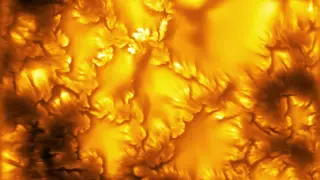
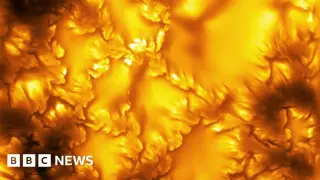
Researchers using the Daniel K. Inouye Solar Telescope in Hawaii have captured the highest-resolution images of the Sun’s surface ever recorded, revealing tiny plasma vortices known as Kelvin-Helmholtz instabilities. Published in Nature on August 5, 2026, these findings confirm a long-predicted phenomenon and offer potential explanations for why the Sun’s outer atmosphere is hotter than its surface.

Telescope reveals solar whirlpools driving magnetic energy and heat
science3 months ago

Telescope reveals solar whirlpools driving magnetic energy and heat

Astronomers using the Daniel K. Inouye Solar Telescope have captured the highest-resolution images of the Sun’s surface, revealing ubiquitous Kelvin-Helmholtz instabilities. These tiny whirlpools, previously only theorized, appear at magnetic boundaries and may explain how the Sun’s corona becomes hotter than its surface and how magnetic energy builds up to fuel flares.

Hawaii Telescope Captures First Direct Evidence of Solar Plasma Whirlpools
science3 months ago

Hawaii Telescope Captures First Direct Evidence of Solar Plasma Whirlpools

The Daniel K. Inouye Solar Telescope (DKIST) has captured the highest-resolution images of the Sun’s photosphere to date, revealing ubiquitous Kelvin-Helmholtz instabilities (KHIs) at magnetic boundaries. These vortex-like structures, previously only theorized, are now confirmed through direct observation and numerical simulation. The findings suggest KHIs drive plasma mixing and magnetic flux braiding, offering a potential solution to the long-standing mystery of why the Sun’s corona is millions of degrees hotter than its surface.

Hawaii Telescope Captures First Clear View of Solar Vortices Driving Space Weather
science3 months ago

Hawaii Telescope Captures First Clear View of Solar Vortices Driving Space Weather

Astronomers using the Daniel K. Inouye Solar Telescope in Hawaii have captured the highest-resolution images ever of the Sun’s surface, revealing previously unseen swirling vortices. Published in Nature, these images confirm the presence of Kelvin-Helmholtz instabilities on the photosphere, a phenomenon that twists magnetic fields and generates energy. This discovery offers a potential explanation for the long-standing mystery of why the Sun’s corona is millions of degrees hotter than its surface and may improve future space weather forecasting.

NASA's Parker Probe Reveals New Insights Into the Sun's Atmosphere and Solar Wind
science1 year ago

NASA's Parker Probe Reveals New Insights Into the Sun's Atmosphere and Solar Wind

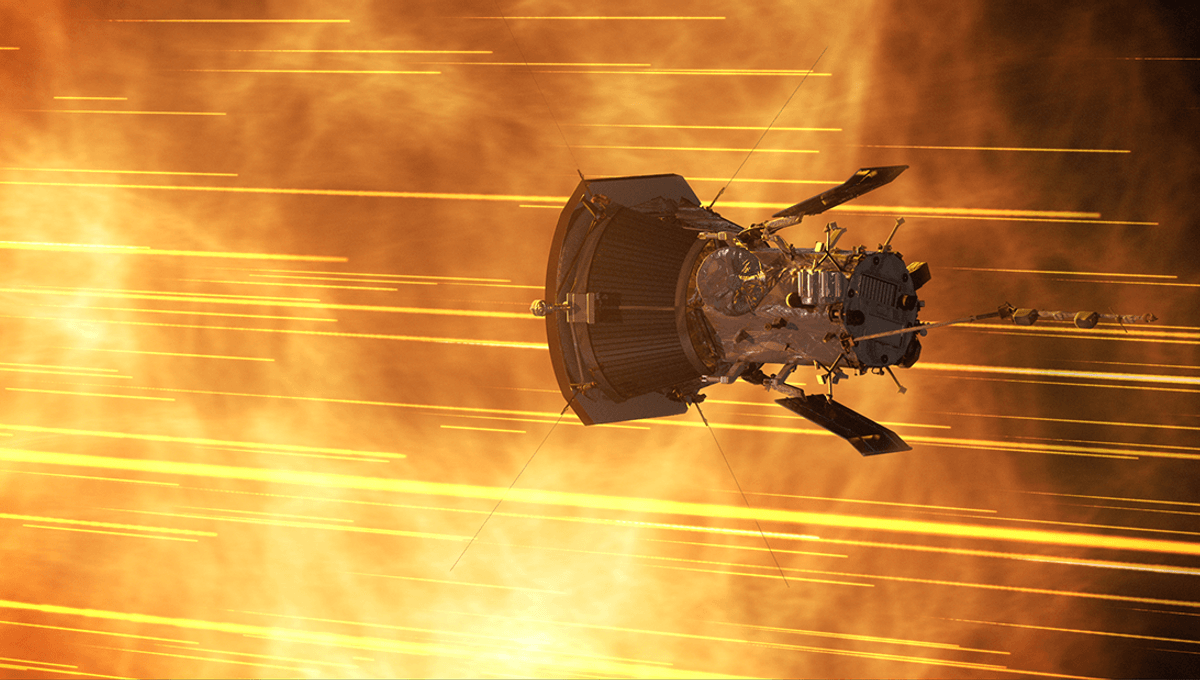
NASA's Parker Solar Probe has found evidence of a 'helicity barrier' in the Sun's atmosphere, which could help explain the long-standing mystery of why the Sun's corona is much hotter than its surface and improve understanding of solar wind acceleration. The study suggests that this barrier influences plasma heating and magnetic fluctuations, with implications for space weather and astrophysics. Further analysis is needed, but the findings are promising for solving key solar physics puzzles.

Unveiling the Hidden Depths of the Sun: Solar Orbiter's Miniflare Revelations
space-science2 years ago

Unveiling the Hidden Depths of the Sun: Solar Orbiter's Miniflare Revelations

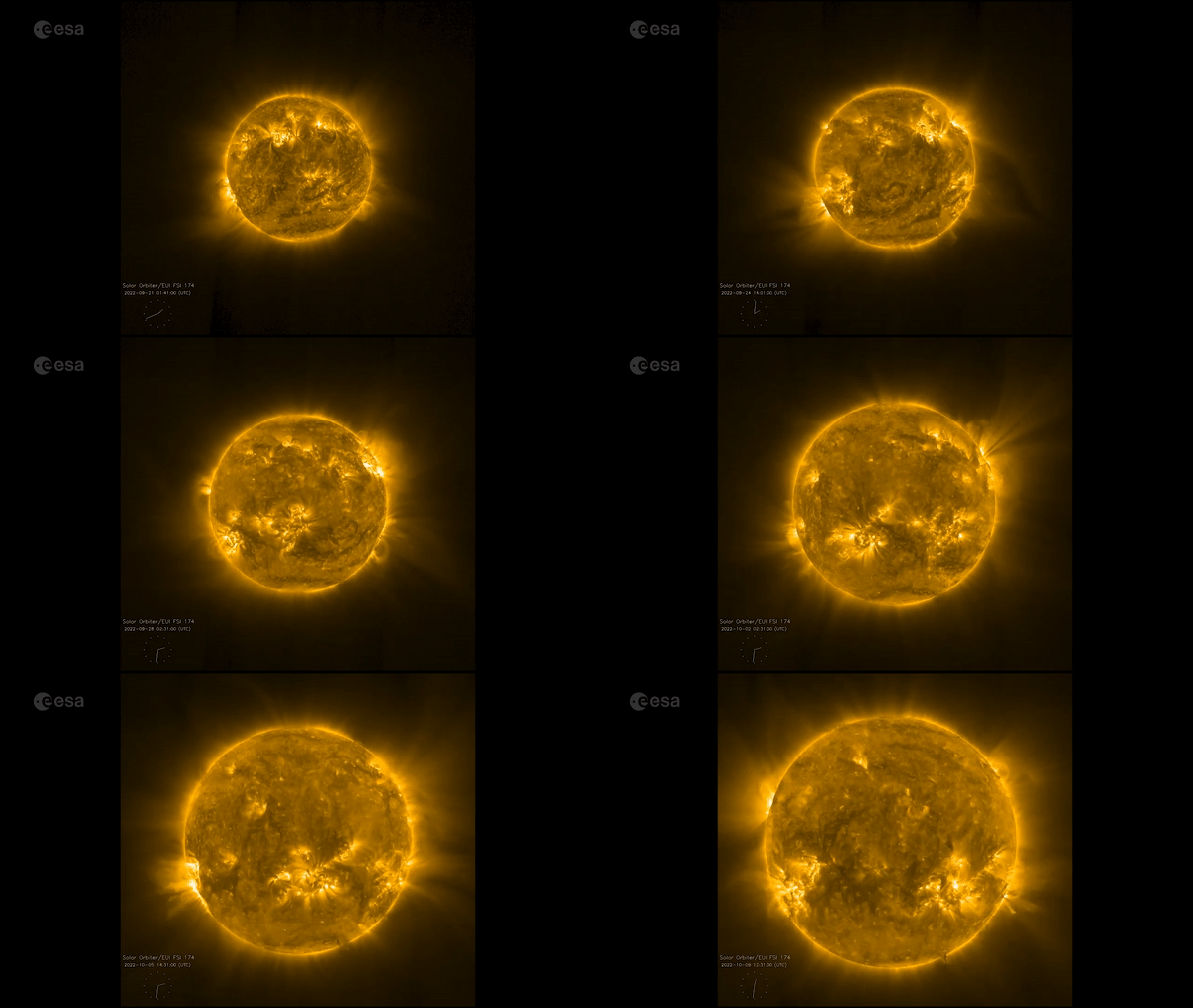
Solar Orbiter, a joint mission by the European Space Agency (ESA) and NASA, has captured images of tiny energy jets called picojets or picoflares on the sun's surface. These short-lived jets, lasting only 20 to 100 seconds, carry a significant amount of energy and could contribute to the mystery of why the sun's corona is much hotter than its visible surface. The spacecraft's discoveries also include flickering flares called campfires. By teaming up with NASA's Parker Solar Probe, Solar Orbiter aims to gather more data to better understand these phenomena and the origin of the solar wind.

"Solar Orbiter Unravels Decades-Old Solar Enigma"
science-and-exploration3 years ago

"Solar Orbiter Unravels Decades-Old Solar Enigma"

The Solar Orbiter spacecraft and NASA's Parker Solar Probe have provided the first simultaneous measurements of the large-scale configuration of the Sun's corona and the microphysical properties of the plasma, helping to solve the 65-year-old mystery of why the Sun's atmosphere is hotter than its surface. By comparing the newly measured rate of coronal heating to theoretical predictions, researchers have shown that turbulence in the solar atmosphere is likely responsible for transferring energy and heating the plasma. This groundbreaking research represents a significant step forward in understanding the coronal heating problem.

Unraveling the Mystery of the Sun's Scorching Outer Atmosphere
space-science3 years ago

Unraveling the Mystery of the Sun's Scorching Outer Atmosphere

Scientists have discovered that weak but steady waves, known as low amplitude decayless kink oscillations, may explain the extreme heat in the sun's outer atmosphere, or corona. These waves, which do not decay in strength over multiple cycles, vibrate in the same direction and are likely associated with long-duration flows on the solar surface. The findings suggest that energy from the sun's surface can reach the corona and heat it, providing important insights into the long-standing question of what heats the sun's outer atmosphere.

"Unveiling the Enigma: Scientists Unravel the Sun's Greatest Mystery"
science-and-astronomy3 years ago

"Unveiling the Enigma: Scientists Unravel the Sun's Greatest Mystery"

Scientists using the Solar Orbiter spacecraft have discovered small-scale fast-moving magnetic waves on the sun's surface that may explain the inexplicably high temperatures of the corona, the sun's outer atmosphere. These waves produce significant energy and could account for the temperature difference between the sun's surface and the corona. The findings provide new evidence that magnetic waves play a key role in heating the corona, a mystery that has puzzled scientists for decades.

The Sun's Role in the Origin of Life: New Findings by Scientists and Students.
science3 years ago

The Sun's Role in the Origin of Life: New Findings by Scientists and Students.

A team of physicists recruited around 1,000 undergraduate students at the University of Colorado Boulder to help answer one of the most enduring questions about the sun: How does the star's outermost atmosphere, or "corona," get so hot? The students' results cast doubt on the theory that especially tiny flares, or "nanoflares," may be responsible for superheating the sun's corona, as a popular theory in astrophysics suggests. The study's actual findings aren't its only important results. The students were able to learn first-hand about the collaborative and often-messy way that scientific research works in the real world.