Laser Plasma Experiments Reveal How Magnetic Instability Heats the Sun's Corona
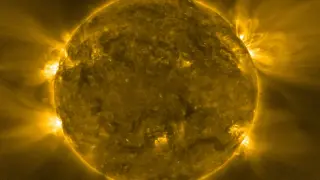
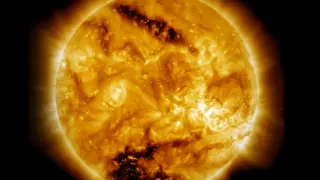
Researchers in China have demonstrated a laboratory mechanism that may explain why the Sun's outer atmosphere is hundreds of times hotter than its surface. By using laser beams to create plasma with rippled surfaces, they triggered the Rayleigh-Taylor instability, which caused magnetic fields to reconnect and release energy. This process heated the plasma to approximately 820,000 degrees Celsius, nearly double the temperature of a control experiment with a flat surface. The findings suggest that similar instabilities in the Sun's corona, potentially triggered by falling plasma known as coronal rain, could generate the nanoflares necessary to maintain the extreme temperatures of the solar atmosphere. While the lab setup did not replicate the Sun's full magnetic energy buildup, the results provide a testable model for how small-scale magnetic events contribute to coronal heating.