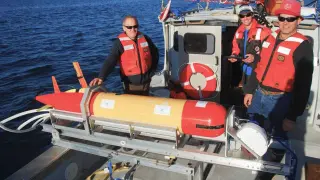
MBARI sent two autonomous underwater vehicles to a mooring off California to track a drifting sediment trap, aiming to measure the ocean's biological carbon pump during an El Nino event.
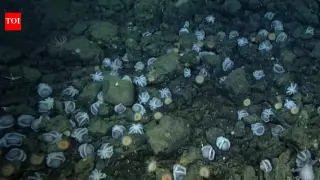
Researchers have identified the planet's largest known octopus nursery, dubbed the 'Octopus Garden,' located approximately 10,500 feet below the surface off Central California. Situated near the base of the extinct Davidson Seamount, this site hosts an estimated 20,000 pearl octopuses (Muusoctopus robustus). The concentration is driven by hydrothermal vents that warm the water to nearly 11°C, significantly accelerating embryonic development compared to the surrounding cold abyssal waters. This thermal advantage allows eggs to hatch in under two years, reducing mortality risks for the developing embryos.
Scientists from the Monterey Bay Aquarium Research Institute (MBARI) have identified three massive lava flow fields on Axial Seamount, an active underwater volcano in the Pacific. Using autonomous and remotely operated vehicles over two decades, researchers mapped these 'voluminous inflated lobate flows,' which are up to 100 times larger than typical eruptions. The findings suggest these flows drained magma from the volcano's summit, potentially causing caldera collapses roughly every 12,000 years.
MBARI scientists documented more than 6,000 Muusoctopus robustus (Pearl octopuses) at the Octopus Garden, a deep-sea hub near a hydrothermally active volcano off California, with estimates up to 20,000 animals. Warmer, ~11°C patches around hydrothermal springs shorten egg development and boost reproductive success, turning a harsh deep-sea site into a dense nursery. The finding, published in Science Advances, highlights how subtle geology can create critical habitats and why such hotspots should be protected from climate change and human threats.
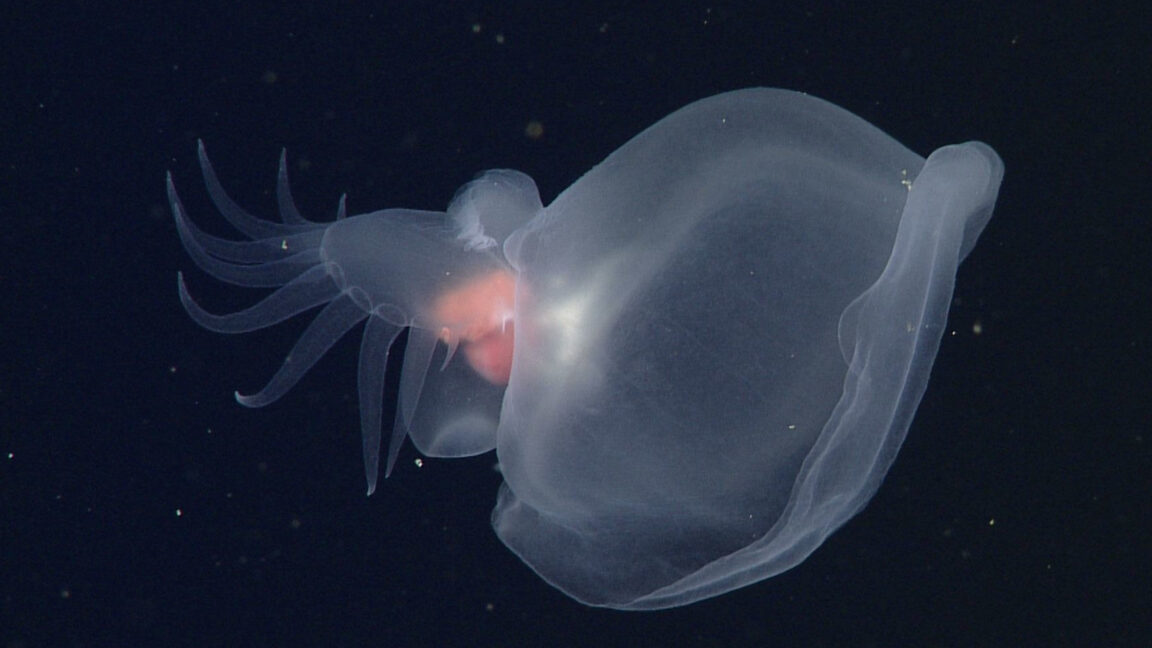
Researchers from the Monterey Bay Aquarium Research Institute have identified a previously unknown deep-sea nudibranch, named Bathydevius caudactylus, which inhabits the ocean's bathypelagic zone at depths of 1,000–4,000 meters. This bioluminescent creature, observed over two decades, moves like a jellyfish and captures prey with an oral hood similar to a Venus flytrap. Its unique anatomy and genetic makeup have led to its classification in a new phylogenetic family, marking it as the first nudibranch known to live at such depths.
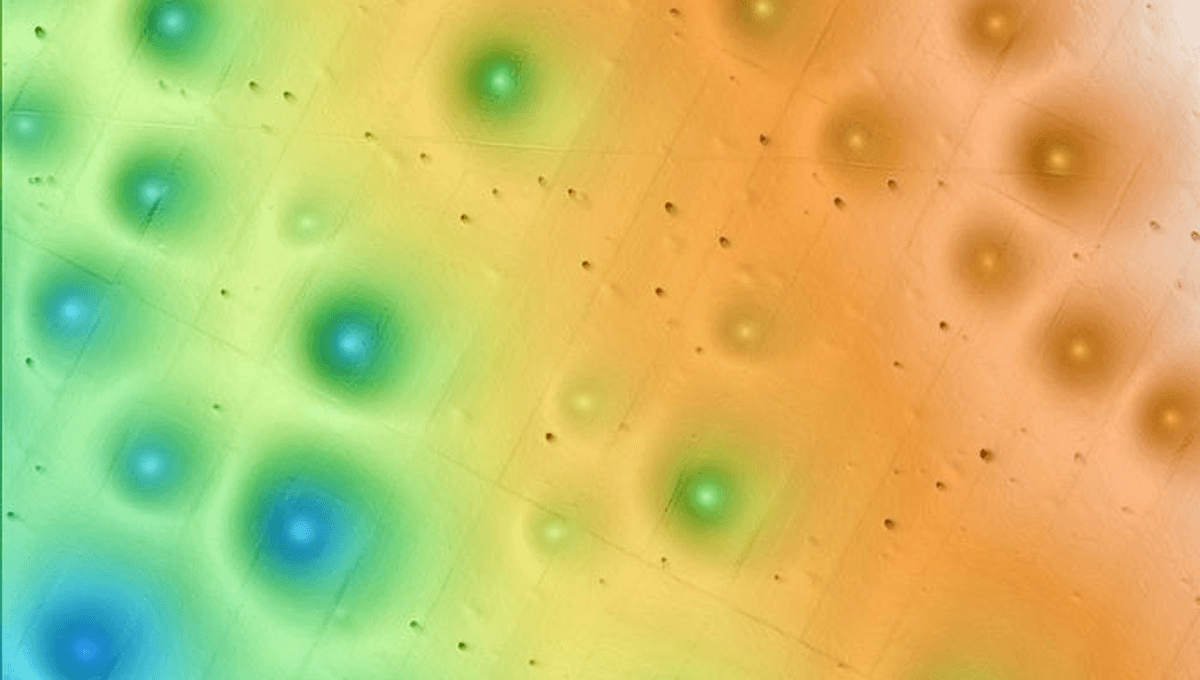
Researchers from the Monterey Bay Aquarium Research Institute (MBARI) have partially solved the mystery of ancient circular depressions off the coast of Central California, known as the Sur Pockmark Field. These depressions, which are around 150 meters wide and 5 meters deep on average, are maintained by sediment gravity flows, a type of underwater avalanche. However, the initial cause of these formations remains unknown. The study, which involved mapping and sediment sampling, provides valuable data for resource managers considering offshore infrastructure.