Tag

Nanopore Technology

All articles tagged with #nanopore technology

Engineered Peptide Nanopores Detect Parkinson’s Biomarkers with Nanomolar Precision
science-and-technology2 months ago

Engineered Peptide Nanopores Detect Parkinson’s Biomarkers with Nanomolar Precision

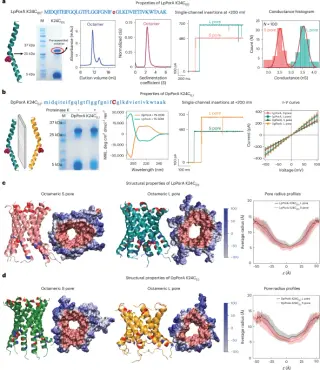
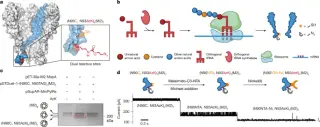
Researchers have developed a self-assembling peptide nanopore system capable of detecting disease biomarkers with high sensitivity. The system uses a single peptide, pPorA, which forms octameric structures in lipid membranes. By incorporating unnatural amino acids, scientists created two distinct pore sizes with conductances of 2.4 nS and 3.5 nS. These pores can detect intrinsically disordered proteins, including alpha-synuclein variants linked to Parkinson’s disease, with nanomolar affinity. The technology allows for the differentiation of protein aggregates and the monitoring of aggregation pathways in real-time.
Computational design yields stable antimicrobial nanopores effective against drug-resistant bacteria
science3 months ago

Computational design yields stable antimicrobial nanopores effective against drug-resistant bacteria

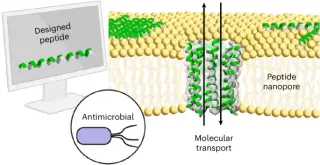
Researchers have developed a computational framework to design synthetic alpha-helical peptides that self-assemble into stable, membrane-spanning nanopores with potent antimicrobial activity. By using molecular dynamics simulations to optimize aromatic stacking and salt bridge interactions, the team created 52 modular sequence templates. The lead candidate, KDFA2i + 9-NH2, selectively kills multidrug-resistant ESKAPEE pathogens, including Acinetobacter baumannii, by disrupting bacterial cytoplasmic membranes. Preclinical mouse models confirmed efficacy in both skin abscess and deep thigh infections without significant toxicity, offering a new class of antibiotics resistant to traditional resistance mechanisms.

Nanjing researchers achieve single-amino-acid peptide sequencing via nanopore enzymatic digestion
science-and-technology3 months ago

Nanjing researchers achieve single-amino-acid peptide sequencing via nanopore enzymatic digestion

A new nanopore method called transient pore analyte looping (tPAL) enables the precise, stepwise reading of peptide sequences by immobilizing them on an engineered MspA pore and using an enzyme to shorten them one amino acid at a time. Developed by researchers at Nanjing University, this technique achieves single-amino-acid resolution, allowing for the detection of mutations, post-translational modifications, and unnatural amino acids, which addresses a major challenge in proteomics.

"Dung Beetles: Nature's DNA Collectors for Biodiversity Studies"
science-and-technology2 years ago

"Dung Beetles: Nature's DNA Collectors for Biodiversity Studies"

Scientists in Peru's Manu Biosphere Reserve are using dung beetles to collect DNA samples from various wildlife species for biodiversity studies. By sequencing the DNA found in the beetles' stomachs using Nanopore technology, researchers are able to identify the animals represented in the region. This innovative approach allows for non-invasive data collection and provides insights into the diets and interactions of different species within the rainforest ecosystem.

"Breakthrough in Protein Sequencing: Engineered Nanopore Translocates Full Length Proteins"
science-and-technology3 years ago

"Breakthrough in Protein Sequencing: Engineered Nanopore Translocates Full Length Proteins"

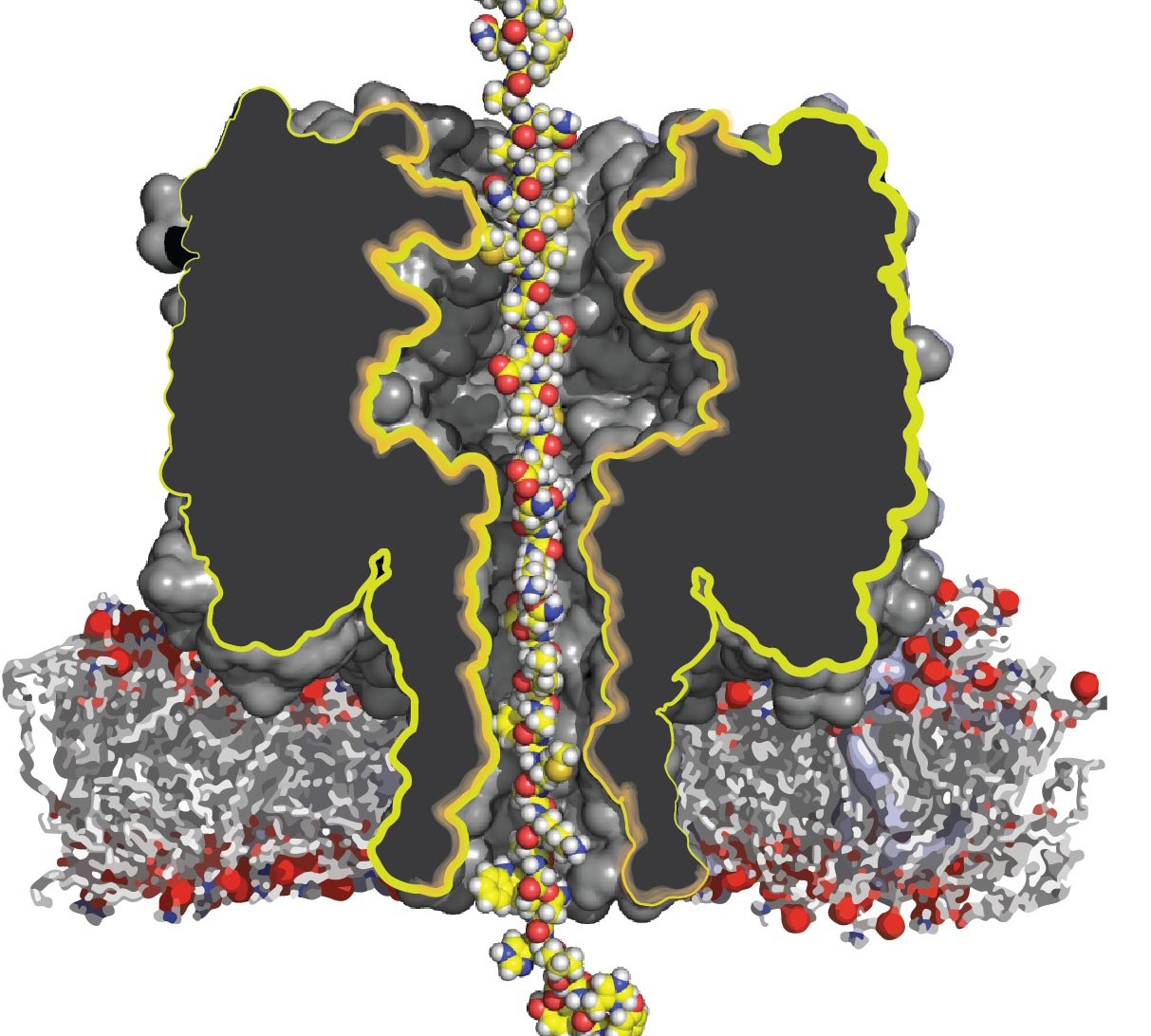
Researchers at the University of Groningen have developed a method to transport proteins through a nanopore, overcoming the challenge of moving proteins through the tiny hole. By using a solution of ions and attaching a lot of charge on the nanopore, they were able to create a directional flow strong enough to pull proteins through the nanopore. This breakthrough paves the way for single-molecule protein sequencing and has the potential to unlock new areas of the proteome. Giovanni Maglia's startup company, Portal Biotech, plans to commercialize this nanopore technology for protein sequencing.

"Nanopore Technology Revolutionizes Protein Variant Detection"
science-and-technology3 years ago

"Nanopore Technology Revolutionizes Protein Variant Detection"

Scientists at the University of Oxford have made a breakthrough in detecting modifications on protein structures using nanopore technology. The method allows for the identification of structural variations at the single-molecule level, even within long protein chains. By capturing and unfolding proteins using nanopores, the researchers were able to measure changes in electrical current to identify different post-translational modifications. This technique could enable the rapid building of protein inventories in single cells and tissues, potentially revolutionizing point-of-care diagnostics and personalized medicine.

Advancements in Super-Resolution DNA Analysis for Extreme Precision and Control.
science-and-technology3 years ago

Advancements in Super-Resolution DNA Analysis for Extreme Precision and Control.

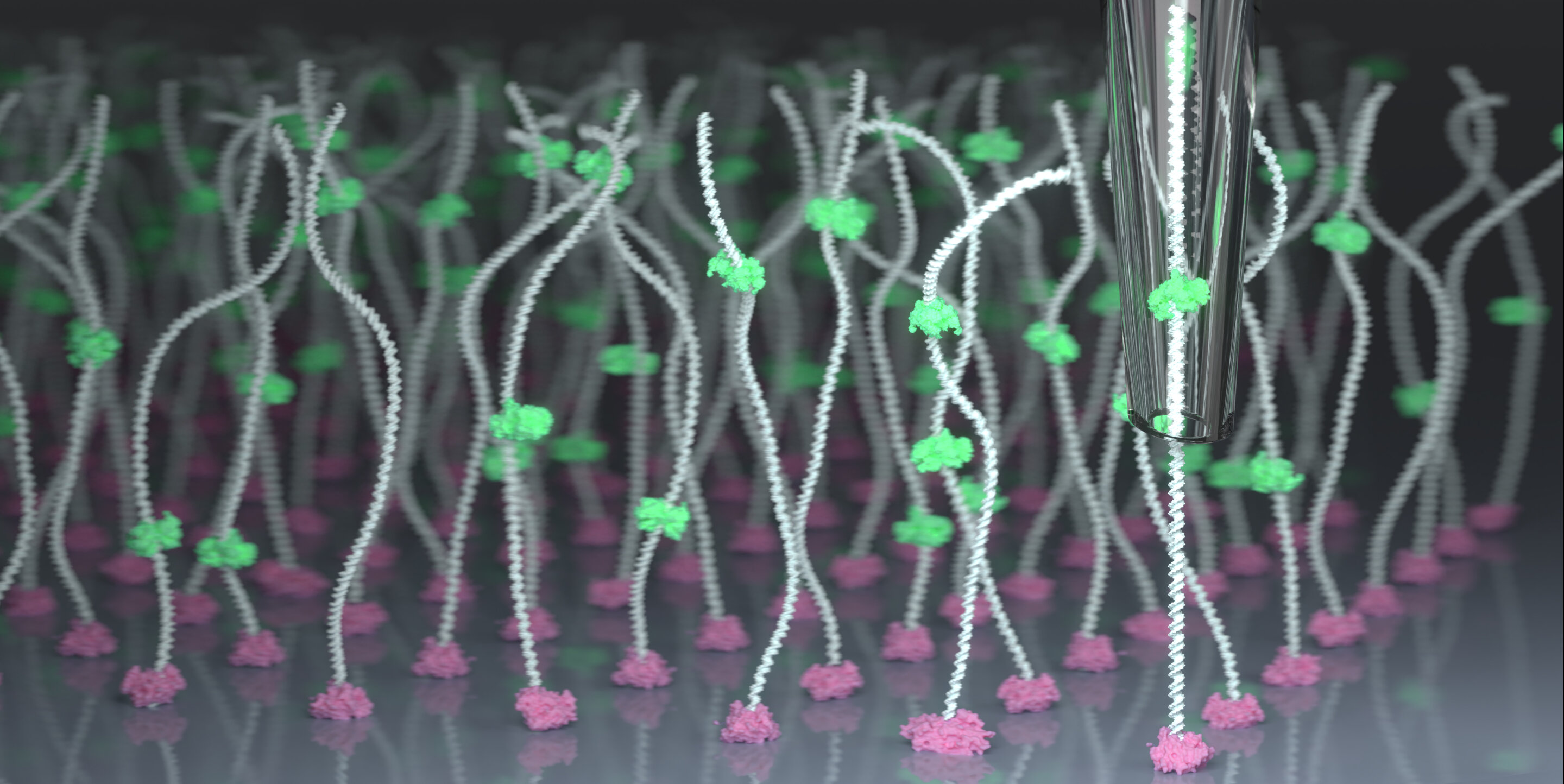
EPFL researchers have developed a new technique called scanning ion conductance spectroscopy (SICS) by integrating nanopore technology with scanning ion conductance microscopy. This technique allows for near-perfect control over the manipulation of individual molecules, resulting in unprecedented precision in identifying and characterizing molecules. The researchers achieved this control by slowing down molecule transit through the nanopore, allowing thousands of consecutive readings to be taken of the same molecule, and even of different locations on the molecule. This innovation could greatly impact DNA analysis, proteomics, and clinical research.

EPFL researchers achieve extreme DNA resolution through controlled single-molecule translocations.
science-and-technology3 years ago

EPFL researchers achieve extreme DNA resolution through controlled single-molecule translocations.

EPFL researchers have combined nanopore technology with scanning ion conductance microscopy to achieve near-perfect control over the manipulation of individual molecules, allowing them to be identified and characterized with unprecedented precision. The innovation, called scanning ion conductance spectroscopy (SICS), slows molecule transit through the nanopore, allowing thousands of consecutive readings to be taken of the same molecule, and even of different locations on the molecule. The precision and versatility of this approach could be applied to molecules beyond DNA, such as protein building blocks called peptides, which could help advance proteomics as well as biomedical and clinical research.