Tibial Compression Boosts Brain Recovery via Osteocyte Signaling
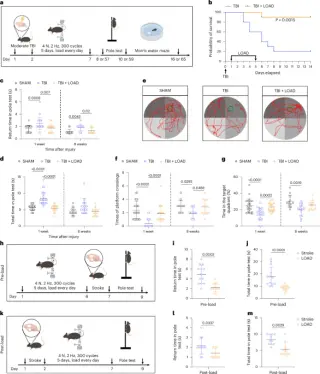
A new study in Nature Neuroscience demonstrates that mechanical compression of the tibia bone significantly improves survival and cognitive recovery in mice and pigs suffering from stroke or traumatic brain injury (TBI). The research identifies a direct 'bone-brain axis' where osteocytes, the cells within bone tissue, respond to mechanical stress by releasing specific protective factors into the bloodstream. These factors, including IL-1R2, APOL11a, and HSP70, reduce neuron loss and chronic inflammation in the brain. The findings suggest that modulating bone endocrine function through physical loading could be a viable therapeutic strategy for enhancing neurological repair after injury.