Tag

Laser Communications

All articles tagged with #laser communications

From hacker to space-light pioneer, Roelker bets on laser-powered space data
technology19 days ago

From hacker to space-light pioneer, Roelker bets on laser-powered space data

Dan Roelker, a former hacker and DARPA program manager, now leads Observable Space, where software and advanced optics are used to track satellites with sub-arcsecond precision and to enable high-bandwidth laser communications from space to Earth; the company emerged from a merge of OurSky and PlaneWave, won a Space Force contract, and just closed a $90 million Series A to scale telescope production and laser-link tech for orbital data centers and NASA’s Artemis missions.

Moon-to-Earth laser link brings Artemis 2 data home in HD
space-exploration25 days ago

Moon-to-Earth laser link brings Artemis 2 data home in HD

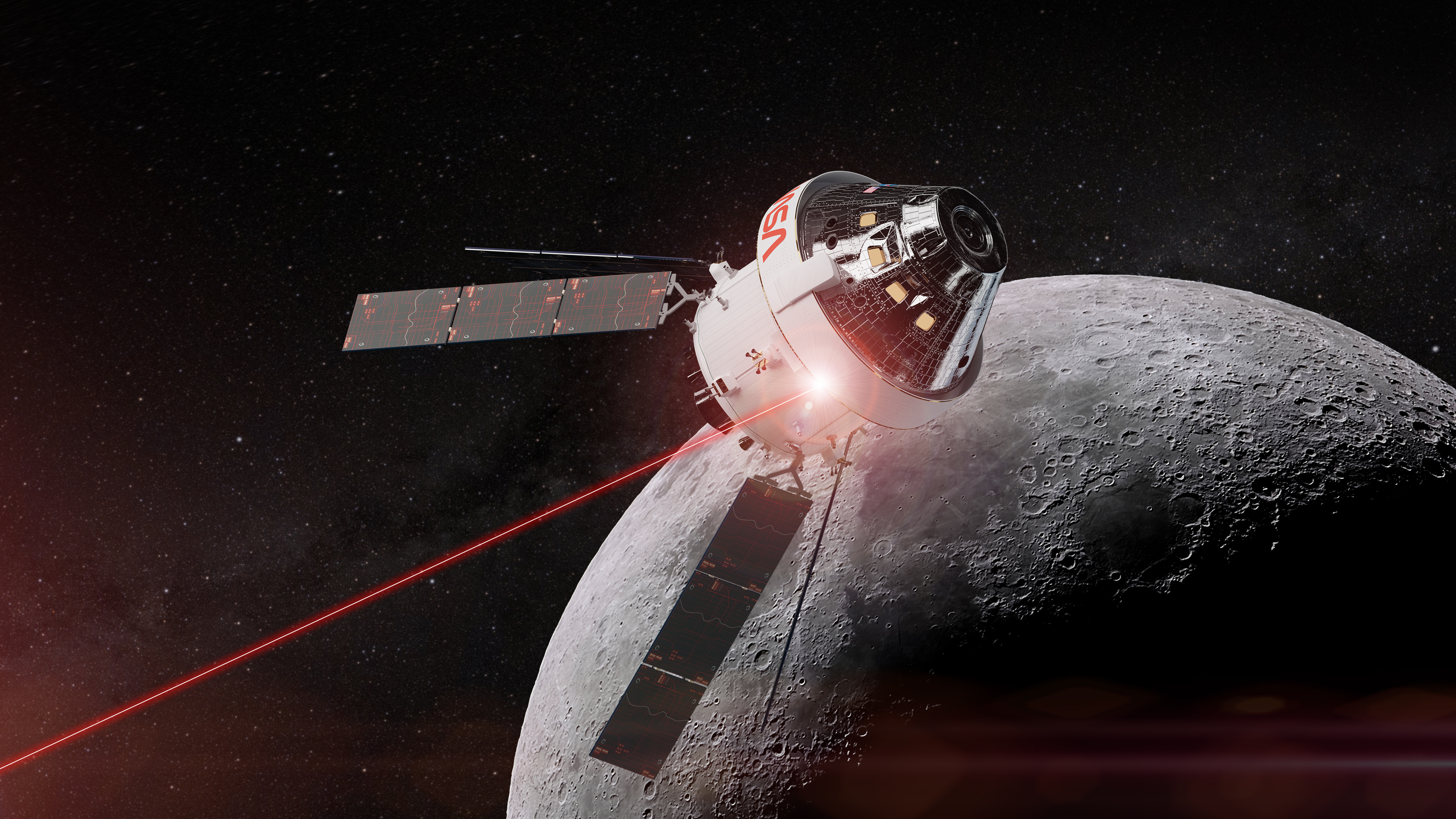
Space.com reports that NASA’s Artemis 2 mission used the Orion Artemis 2 Optical Communications System (O2O) to beam back high‑definition video and images from the Moon via infrared laser links, delivering data at up to about 260 MB/s to ground stations and downlinking roughly half a terabyte over the 10‑day flight, enabling near real‑time public coverage and setting the stage for higher‑bandwidth communications on future Artemis missions.

2-Watt GEO Laser Achieves 1 Gbps Ground Link
technology1 month ago

2-Watt GEO Laser Achieves 1 Gbps Ground Link

A Chinese team demonstrated a 1 Gbps optical downlink from a geostationary satellite to a ground telescope using only 2 watts of transmitter power. By combining adaptive optics and mode-diversity reception, they recovered a usable signal despite atmospheric turbulence, showing that low-power GEO laser links can achieve high data rates and enable continuous, ground-connected space communications—though this remains a single demonstration with specialized ground infrastructure, not a commercial service.

Laser-Driven Data for Artemis II: Rossoni’s Mission-Critical Role
space2 months ago

Laser-Driven Data for Artemis II: Rossoni’s Mission-Critical Role

Peter Rossoni, flight manager for the Orion Artemis II Optical Communications System, oversaw NASA’s first laser communications link on a crewed deep-space mission, enabling up to 260 Mbps downlink and transferring about 450 gigabytes of data from Orion to Earth over the roughly 10-day Artemis II test, while integrating laser and radio networks and ensuring robust mission communications.

"NASA's Breakthrough Hybrid Antenna Enhances Deep Space Communication"
space-technology2 years ago

"NASA's Breakthrough Hybrid Antenna Enhances Deep Space Communication"

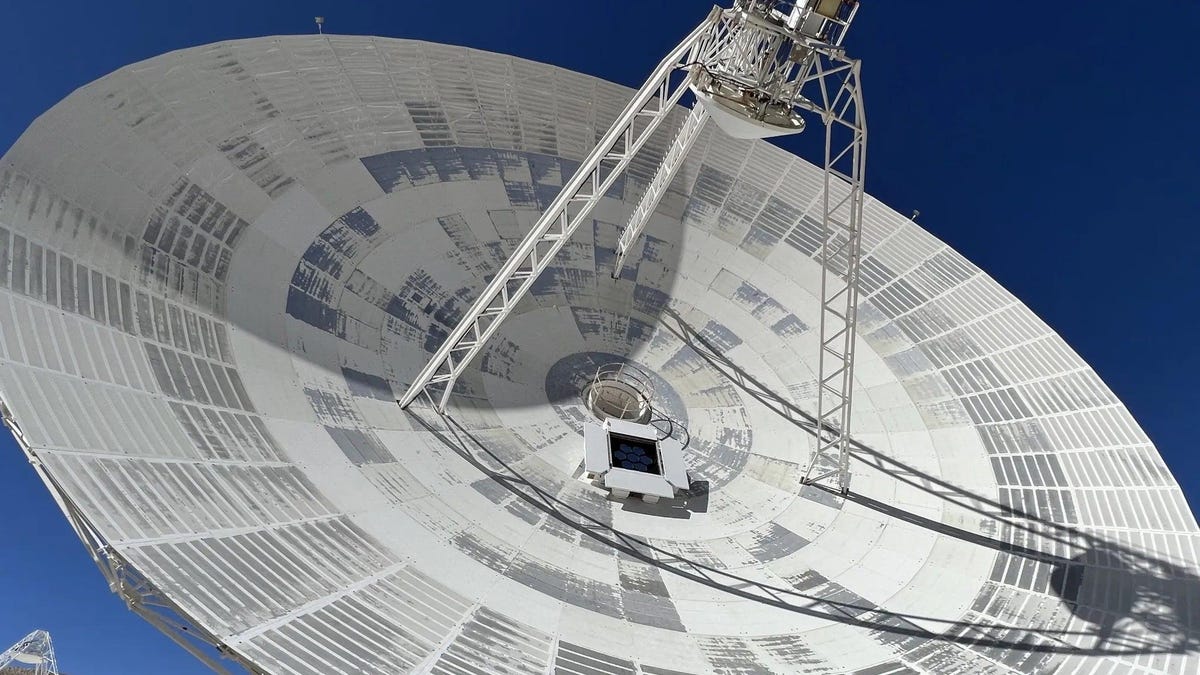
NASA has upgraded its Deep Space Network with a hybrid antenna capable of receiving both radio frequency and laser signals, marking a significant advancement in deep space communication. The experimental antenna, located at the California facility, successfully tracked and decoded a signal from a gold-capped laser transceiver attached to NASA’s asteroid probe Psyche, demonstrating synchronous radio and optical frequency deep space communications for the first time. This upgrade aims to meet the increasing demand for data transmission from deep space missions, with the hybrid antenna achieving data transfer speeds 40 times faster than traditional radio frequency communications at a distance of 20 million miles. The new technology paves the way for more efficient communication with future space explorations and enables the rapid transfer of high-resolution images and extensive scientific data from distant space missions.

"Fibertek Inc. Receives NASA Funding for Laser Communications on Artemis II"
space-technology2 years ago

"Fibertek Inc. Receives NASA Funding for Laser Communications on Artemis II"

NASA has funded the development of new laser communications technology through small business Fibertek Inc. to enable greater exploration and discovery beyond Earth. The Basestation Optical Laser Terminal, developed by Fibertek Inc., will be used during the Artemis II flight test to transmit high-resolution images and video of the lunar region to ground stations. This technology, which provides increased data rates, is essential for NASA's future communications capacity and navigation needs as it prepares to send humans back to the Moon and eventually to Mars.

NASA's Laser Experiment Sends Cat Video from Deep Space
space2 years ago

NASA's Laser Experiment Sends Cat Video from Deep Space

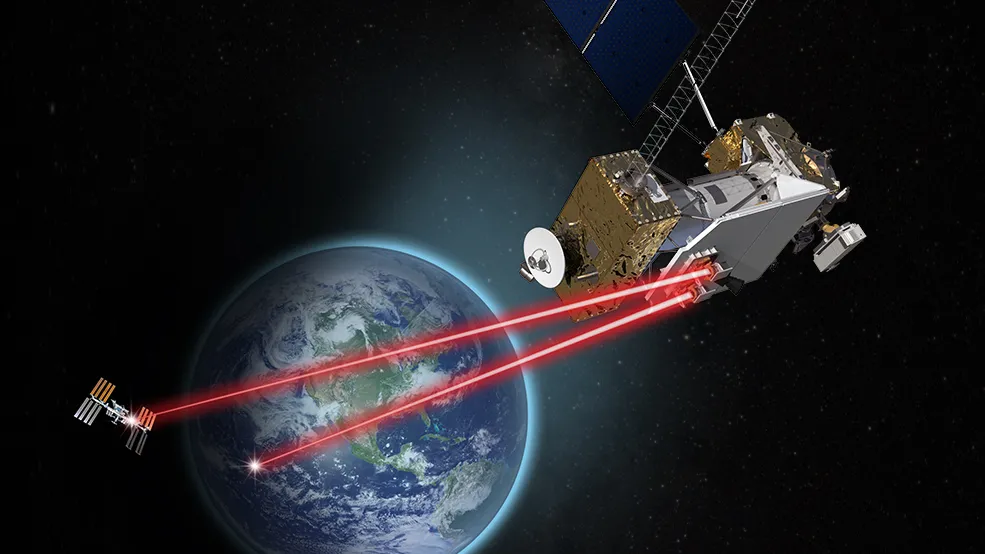
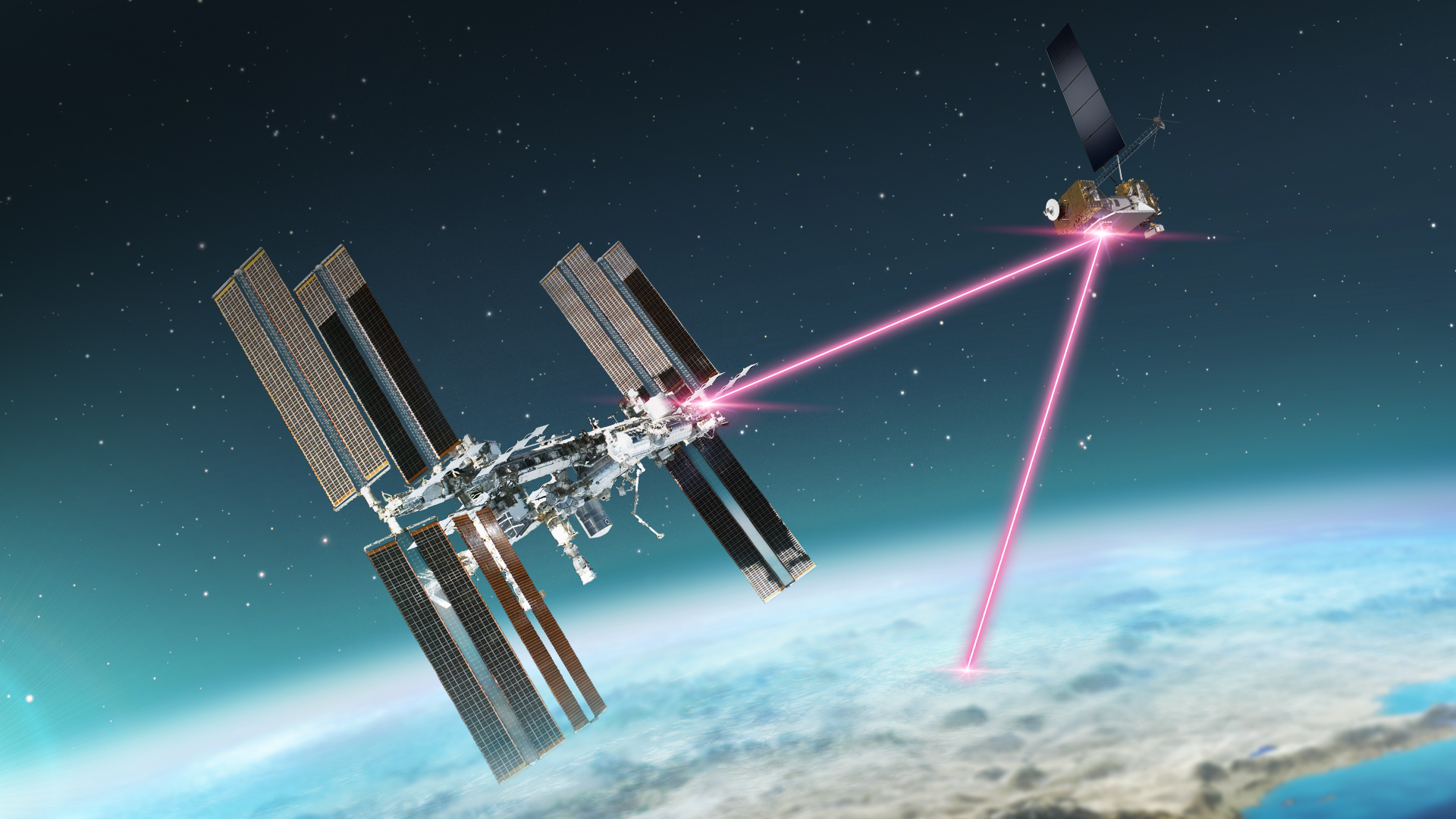
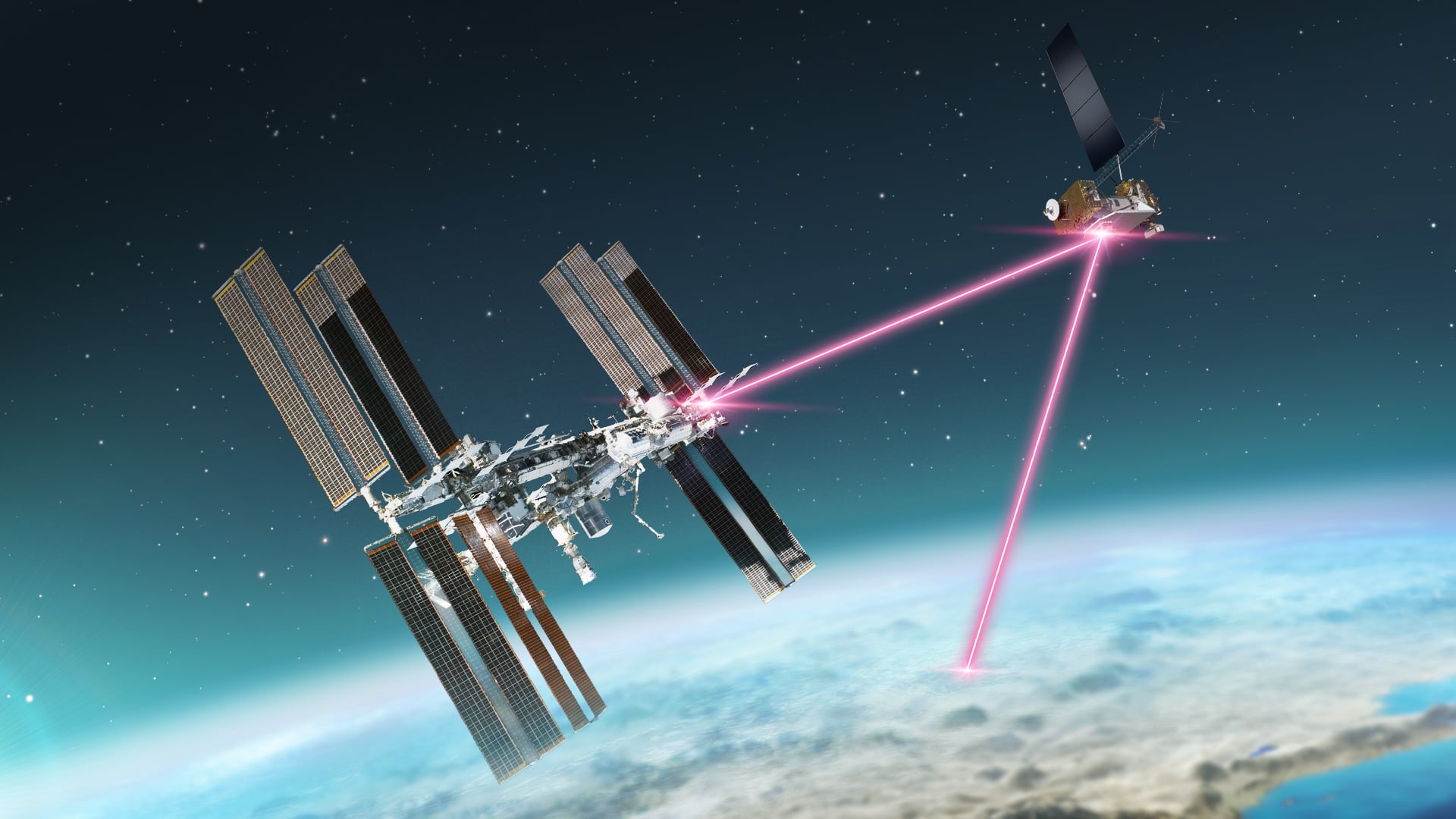
NASA has successfully completed its first two-way laser communication experiment using an in-orbit laser relay system, marking a significant advancement in space communication technology. The experiment, which involved laser terminals in different orbits, could pave the way for faster communications between Earth and the moon, and even beyond. The successful demonstration took years to set up and involved the use of the Integrated LCRD Low Earth Orbit User Modem and Amplifier Terminal (ILLUMA-T) payload, which was delivered to the International Space Station (ISS) and used to communicate with NASA's Laser Communications Relay Demonstration (LCRD) satellite. Laser communications offer greater efficiency and data transfer capabilities compared to traditional radio waves, making them crucial for future space exploration missions.

NASA's Laser Communication Breakthrough: Beaming Cat Videos from Deep Space
space-technology2 years ago

NASA's Laser Communication Breakthrough: Beaming Cat Videos from Deep Space

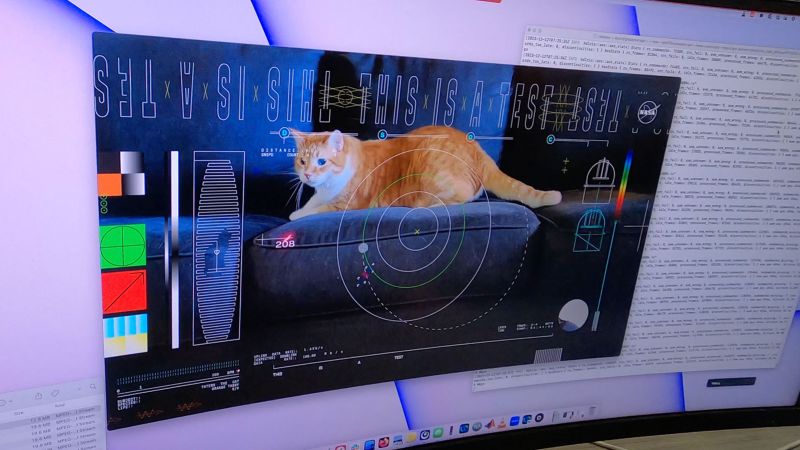
NASA's Deep Space Optical Communications experiment, part of the Psyche mission, has successfully beamed back a video from deep space using a laser. The video, featuring a cat named Taters chasing a laser pointer, was transmitted from the Psyche spacecraft to Earth using an invisible near-infrared laser. This technology could potentially be used to quickly transmit data, imagery, and videos during future interplanetary missions. The laser can send data at 10 to 100 times the speed of traditional radio wave systems, marking a significant advancement in optical communications for space exploration.

Revolutionizing Space Communication: NASA's Breakthrough Laser Technology
space-technology2 years ago

Revolutionizing Space Communication: NASA's Breakthrough Laser Technology

Laser communications are becoming increasingly important for space exploration, with recent advancements in the field. Two test missions, ILLUMA-T and Psyche, have successfully demonstrated data exchange using laser communication systems. The upcoming Artemis II mission plans to carry the Optical Communications System (O2O), which will enable live footage transmission from cis-lunar space. Laser communication systems offer higher data transmission rates and capacity compared to traditional radio wave communication, allowing for increased data volume and improved scientific measurements. However, integrating laser communication into existing systems like the International Space Station presents additional challenges.

"NASA's Laser Comm Terminal Makes Historic Link in Space Station"
space-technology2 years ago

"NASA's Laser Comm Terminal Makes Historic Link in Space Station"

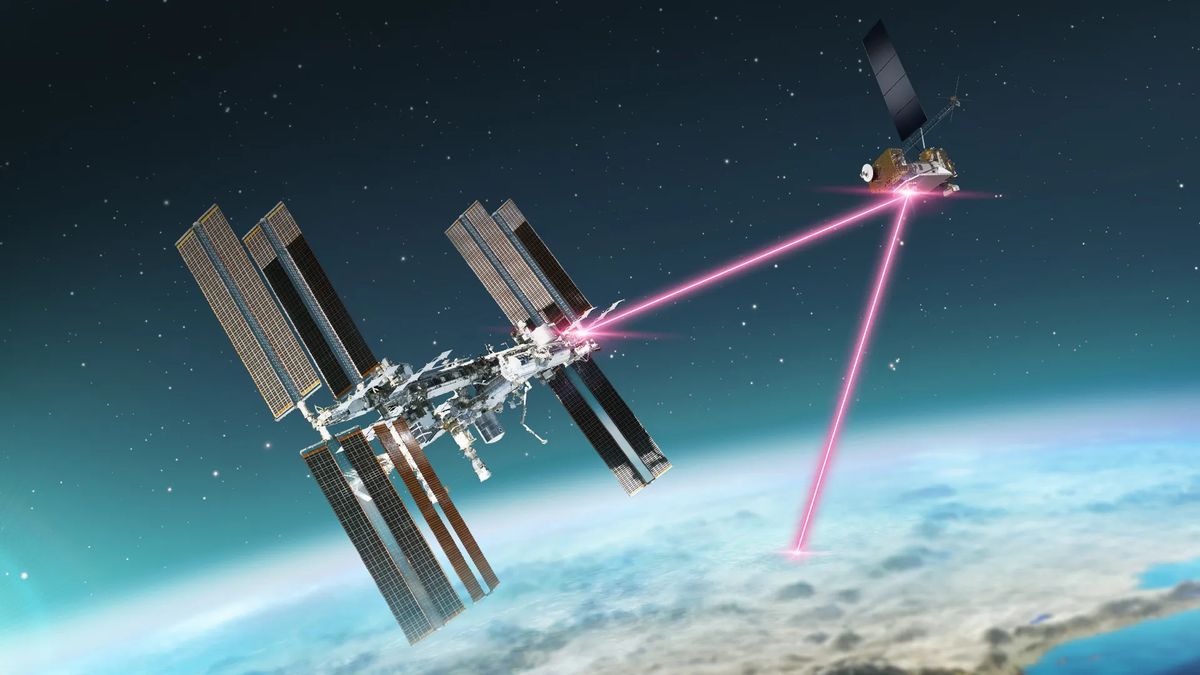
NASA's Laser Communications Relay Demonstration (LCRD) and the Integrated LCRD Low Earth Orbit User Modem and Amplifier Terminal (ILLUMA-T) have successfully completed their first two-way laser link, marking NASA's first end-to-end laser relay system. This technology, using infrared light instead of radio waves, allows for more efficient data transfer and has the potential to accelerate scientific discoveries. The experiments are part of NASA's Space Communications and Navigation program and demonstrate how laser communications can benefit future space missions, including keeping astronauts connected during exploration of the Moon, Mars, and beyond.

"NASA's Laser Comm Terminal Makes Historic Link in Space Station"
space-technology2 years ago

"NASA's Laser Comm Terminal Makes Historic Link in Space Station"

NASA's Laser Communications Relay Demonstration (LCRD) and the Integrated LCRD Low Earth Orbit User Modem and Amplifier Terminal (ILLUMA-T) have successfully completed their first two-way laser link, marking NASA's first end-to-end laser relay system. This technology, which uses infrared light instead of radio waves, allows for more efficient data transfer and has the potential to significantly benefit science and exploration missions. The ILLUMA-T payload was installed on the International Space Station and is now communicating with LCRD, exchanging data at 1.2 gigabits-per-second. NASA is actively seeking experiments to work with LCRD to further optimize laser communications technologies.