Tag

Outer Solar System

All articles tagged with #outer solar system

Ocean Worlds Grow: Subsurface Seas Likely Beneath More Outer Solar System Moons
science-space29 days ago

Ocean Worlds Grow: Subsurface Seas Likely Beneath More Outer Solar System Moons

A growing body of evidence suggests several outer‑solar‑system moons—Europa, Ganymede, Callisto, Enceladus and Titan among the strongest cases—may harbor global oceans beneath ice, inferred from magnetic, gravitational and geological signals. Mimas, Triton and some Uranian moons remain plausible additions. Archived mission data continue to yield insights, and future missions like Europa Clipper and ESA’s Juice will further test these ocean models, even as not every frozen moon is expected to host liquid water.

Could Distant Planetary Flybys Have Triggered Earth's Mass Extinctions?
science2 months ago

Could Distant Planetary Flybys Have Triggered Earth's Mass Extinctions?

A conference-backed hypothesis by Daniele Fargion suggests gravitational tides from flybys of planetary-mass bodies or outer Solar System dwarfs near Earth could have driven major extinctions by triggering huge tides, volcanism, climate shifts, and altered meteoritic delivery. Citing correlations with known extinctions (including the Permian/Triassic) and clues in the Earth–Moon system, the idea is speculative and not yet dated or widely validated, but it frames tidal encounters as a possible common cause alongside impacts and volcanism.

Huygens' Titan Landing Still the Solar System's Farthest Reach
space2 months ago

Huygens' Titan Landing Still the Solar System's Farthest Reach

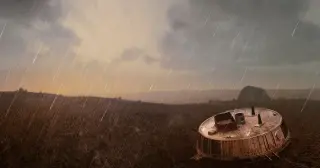
Only one spacecraft has ever landed in the outer solar system: the European Huygens probe touched Titan in January 2005 during the Cassini-Huygens mission, revealing a methane-driven hydrological cycle and ground of water-ice pebbles; it operated about 72 minutes after landing, but a missed command meant half of its wind data and some descent images were lost, leaving Titan the only outer-solar-system surface world visited—though NASA's Dragonfly aims to visit Titan in the 2030s.

Planet Nine Debate Persists as New Distant-World Detections Complicate the Search
space2 months ago

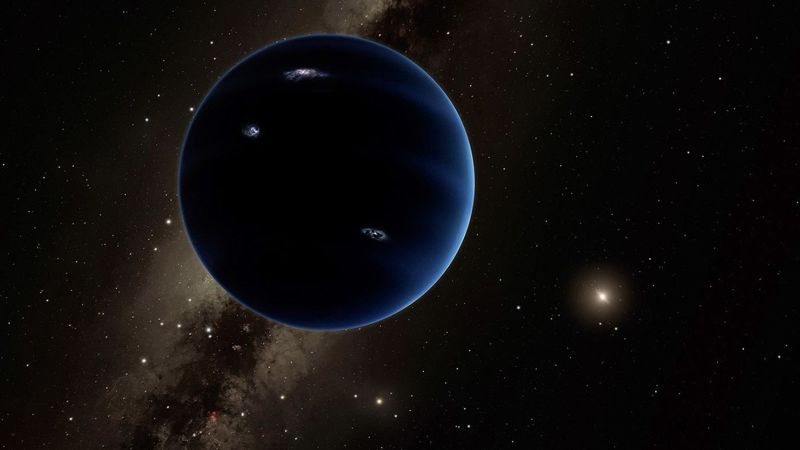
Planet Nine Debate Persists as New Distant-World Detections Complicate the Search

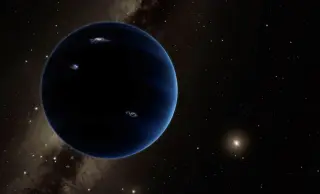
The article reviews renewed evidence and ongoing controversy over Planet Nine, noting that irregular orbits of distant Kuiper Belt objects and new distant bodies like 2023 KQ14 have kept the hypothesis viable but unproven. Long orbital periods and limited data mean there is no definitive detection yet; if a ninth planet exists, it would likely lie farther than ~500 AU. Ongoing ground- and space-based observations—and future missions—are needed to clarify whether a massive unseen planet shapes these orbits.

Huygens on Titan: the 2005 landing that still stands as humanity’s only outer-solar-system touchdown
space3 months ago

Huygens on Titan: the 2005 landing that still stands as humanity’s only outer-solar-system touchdown

ESA’s Huygens lander descended through Titan’s orange haze in January 2005, touched down after about 2.5 hours, and transmitted for roughly 72 minutes from the surface; as the part of the Cassini-Huygens mission, it remains the only landing in the outer solar system to date. Titan’s thick nitrogen-rich atmosphere, frigid surface around -179 C, and the mission’s long, multi-step descent informed future exploration (e.g., NASA’s Dragonfly) and underscored the scale and distance of far-off planetary exploration; the mission cost was about $3.9 billion.

Vera Rubin Observatory Poised to Probe Planet 9’s Existence
space3 months ago

Vera Rubin Observatory Poised to Probe Planet 9’s Existence

New statistical work strengthens the case for a hidden ninth planet beyond Neptune: distant objects show non-random clustering that simulations including Planet 9 reproduce, while models without it do not. The exact location remains unknown, but the Vera Rubin Observatory’s first observations are expected to provide a decisive test of Planet 9’s existence.

Uranus’s Distant Rings Reveal Two Separate Origins
space-and-spaceflight4 months ago

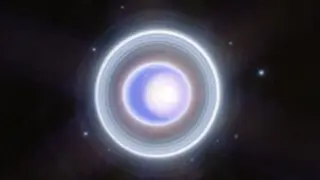
Uranus’s Distant Rings Reveal Two Separate Origins

Astronomers using Keck, Webb, and Hubble analyzed Uranus’ faint outer rings and found two distinct compositions: the blue μ ring consists of tiny icy grains likely sourced from Mab, while the red ν ring is rocky with about 10–15% carbon-rich organics, suggesting different formation histories for the planet’s second ring system. The study, published in the Journal of Geophysical Research: Planets, highlights how ring material traces back to source bodies and collisions, with implications for Uranus’s formation and a need for future close-up observations.

Scientists suggest a hidden Earth-sized planet may be closer than 'Planet Nine'
science10 months ago

Scientists suggest a hidden Earth-sized planet may be closer than 'Planet Nine'

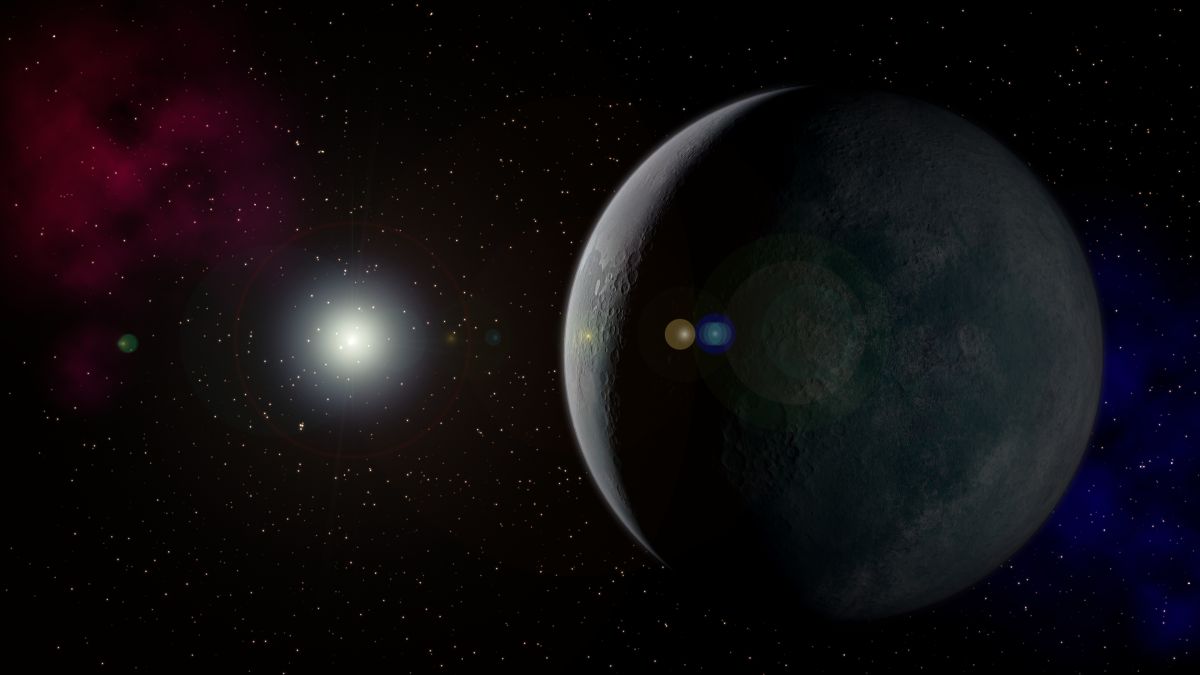
A recent study suggests the possible existence of a small, Earth-sized planet, dubbed 'Planet Y', in the outer Solar System, inferred from a 15-degree tilt in the Kuiper Belt objects' orbital plane, which could explain gravitational influences in that region. The discovery is not confirmed but provides a promising direction for future planetary searches.

Scientists Discover Evidence of Hidden Planet Y Beyond Neptune
science11 months ago

Scientists Discover Evidence of Hidden Planet Y Beyond Neptune

Scientists analyzing the orbits of Kuiper Belt objects have found evidence suggesting the existence of a hidden planet, called Planet Y, which could be at least 25 times more massive than Pluto and located 100-200 times Earth's distance from the Sun. This discovery is based on the warped orbital plane of distant Kuiper Belt objects, and upcoming surveys like the LSST may confirm its existence.

Scientists Search for Hidden Massive Object at Solar System's Edge
science1 year ago

Scientists Search for Hidden Massive Object at Solar System's Edge

Scientists continue to investigate the possibility of a massive undiscovered planet, 'Planet Nine', influencing the orbits of distant objects in the Kuiper Belt, though recent discoveries and limited observational data make its existence uncertain. The search relies on telescopic observations, as space travel to the outer solar system would take over a century.

Mysterious Trans-Neptunian Object Moves in Sync with Neptune
science1 year ago

Mysterious Trans-Neptunian Object Moves in Sync with Neptune

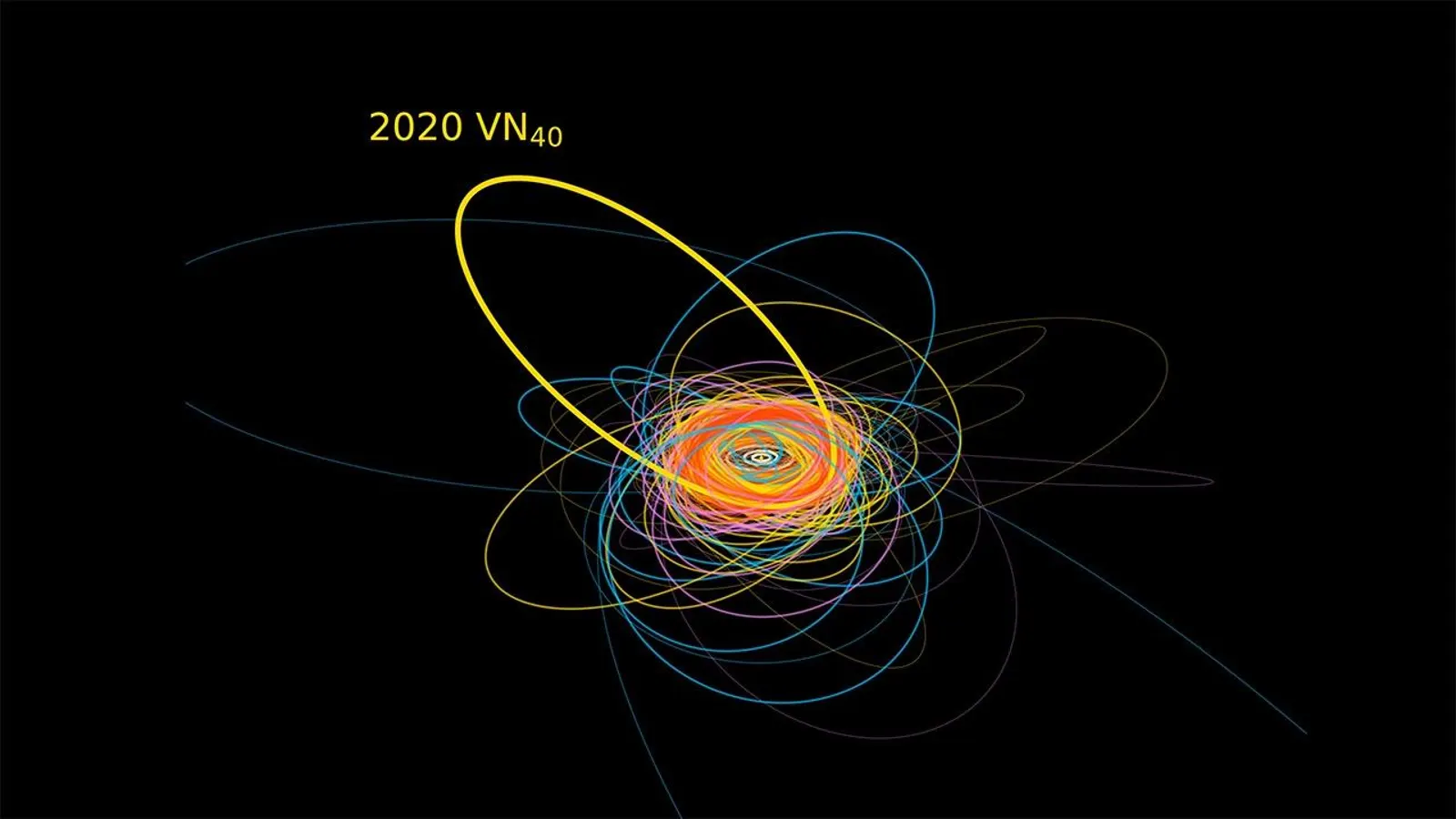
Astronomers have discovered a rare object, 2020 VN40, in the outer solar system that moves in a unique 10:1 resonance with Neptune, challenging existing ideas about the movement and evolution of distant solar system objects. This discovery, along with others like 'Ammonite,' provides new insights into the gravitational influences and history of our solar system's outer regions.

Astronomers Uncover New Clues About Potential Ninth Planet and Solar System Fossil
science1 year ago

Astronomers Uncover New Clues About Potential Ninth Planet and Solar System Fossil

Taiwanese astronomers have found promising evidence for the existence of Planet 9, a hypothesized distant planet beyond Pluto, by analyzing infrared data from the IRAS and AKARI satellites. They identified a slow-moving object consistent with the expected characteristics of Planet 9, though further observations are needed for confirmation.