Tag

Outer Space Treaty

All articles tagged with #outer space treaty

CubeSat concept to verify the Outer Space Treaty with cosmic protons
science2 days ago

CubeSat concept to verify the Outer Space Treaty with cosmic protons

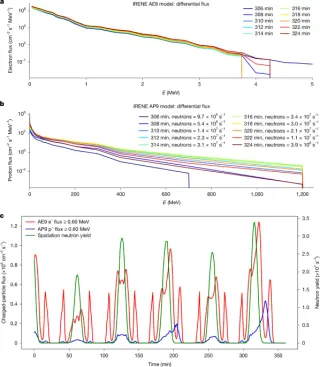
A Nature paper proposes a physics-based method to verify OST compliance by monitoring neutrons produced by GeV protons in the inner Van Allen belts. The study suggests a 9U‑CubeSat detector could identify a thermonuclear device on a suspect satellite from about 4 km away with roughly a week of observation, offering a conceptual pathway for in‑space verification of nuclear weapons bans. The work is theoretical, grounded in simulations and open code, and is intended to spur further research rather than immediate deployment.

MIT Plan to Detect Hidden Nuclear Weapons in Space With a Neutron-Sensor Satellite
science3 days ago

MIT Plan to Detect Hidden Nuclear Weapons in Space With a Neutron-Sensor Satellite

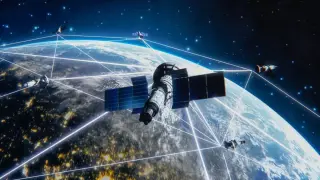
MIT physicist Areg Danagoulian proposes a proof-of-concept “inspector” satellite that would orbit beneath a suspect spacecraft and use a specialized neutron detector to pick up signals from uranium in a thermonuclear warhead as it traverses the inner Van Allen belt, while filtering out protons and Earth-originating background neutrons through directional detection. The concept aims to verify Outer Space Treaty commitments by detecting potential space-based nukes, but it remains theoretical and would require prototypes and further development to address practical challenges.

Moon Deeds: Four Decades of Unenforceable Property Claims
space22 days ago

Moon Deeds: Four Decades of Unenforceable Property Claims

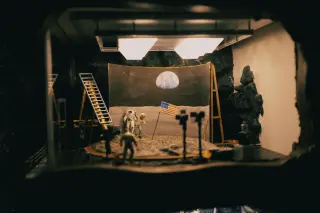
Dennis Hope began selling Lunar Embassy deeds in 1980, claiming ownership of the Moon and other celestial bodies for about $20–$30 per acre and reporting over 2.5 million parcels sold to a celebrity-filled clientele. However, international law, notably the 1967 Outer Space Treaty, bans national appropriation and, by consensus, private ownership of celestial bodies, rendering these deeds unenforceable. The 1979 Moon Agreement is not widely ratified and adds little to the legal picture. Buyers receive novelty certificates, drawn by psychology of ownership and storytelling rather than enforceable title. Hope’s business persists as a curiosity while real space rights trend toward resource extraction frameworks under national laws, not ownership of the bodies themselves.

Rethinking the Red Planet: the Mars settlement dream meets brutal realities
science22 days ago

Rethinking the Red Planet: the Mars settlement dream meets brutal realities

Henry Wismayer surveys the Mars dream—from enthusiasts at the British Interplanetary Society to advocates like Zubrin and SpaceX—against sobering biology, physics, and governance challenges. He reports that Mars’ radiation, low gravity, extreme temperatures, and pervasive dust threaten human health and reproduction; the Outer Space Treaty and Artemis Accords offer little enforcement, raising questions about sovereignty and safety. Skeptics warn against turning Mars into a fragile, centralized frontier, while proponents call for cautious Moon-first testing and phased exploration. The piece concludes that while the allure remains, a careful, wait-and-go-big approach is prudent before any permanent Martian settlement is attempted.

Lunar Mining Takes Center Stage in the New Space Resource Race
space3 months ago

Lunar Mining Takes Center Stage in the New Space Resource Race

Renewed interest in lunar mining has scientists and private firms exploring how to extract water ice, helium-3, and other minerals to enable in-space propulsion and life-support, rather than merely bringing material back to Earth. Early rovers and robotic systems are testing the step-by-step, environmentally sensitive process, while experts emphasize ground-truth measurements to calibrate lunar composition. Legal and ethical questions loom under the Outer Space Treaty and the Moon Treaty about sovereignty, environmental protection, and whether private actors can mine without undermining scientific goals. Artemis II will push knowledge forward, as nations and space billionaires race to establish the Moon as a hub for future exploration, including missions to Mars.

The New Space Race: Lunar Resources and Global Power Shifts
space-exploration8 months ago

The New Space Race: Lunar Resources and Global Power Shifts

The article argues that comparing the moon to the South China Sea is flawed because the moon is governed by international law that prohibits sovereignty claims, and the current lunar efforts are more collaborative than competitive. It emphasizes that the real challenge is managing shared access and resources, and advocates for a race towards restraint and shared stewardship rather than dominance, highlighting the importance of viewing Earth as one from the lunar surface.

Experts Urge US-China Collaboration in Lunar Exploration
space-exploration1 year ago

Experts Urge US-China Collaboration in Lunar Exploration

American space security scholars advocate for a U.S.-China accord to ensure peaceful coexistence in lunar exploration, as both nations plan extensive Moon missions. The proposed agreement would involve sharing data to prevent spacecraft collisions and reaffirm commitments to the Outer Space Treaty, which prohibits militarization of celestial bodies. This collaboration could also address gaps in lunar resource governance, with the potential to set international standards. The scholars emphasize the importance of this cooperation, especially in light of Russia's potential space militarization efforts.

"Escalating Space Race Threatens Global Conflict"
space-exploration2 years ago

"Escalating Space Race Threatens Global Conflict"

AC Grayling warns that the commercial space race for lunar resources could lead to conflict and war, as private companies like SpaceX and Blue Origin invest in lunar missions. The 1967 Outer Space Treaty, which prohibits military use of the Moon, is outdated and inadequate for regulating commercial activities. Grayling draws parallels to the Scramble for Africa, highlighting the potential for destabilization and conflict. He calls for a new, robust treaty to prevent exploitation and manage competition in space, emphasizing the need for cooperation and restraint in the pursuit of lunar resources.

"US Raises Alarm Over Russian Space-Based Nuclear Weapon Threat"
world2 years ago

"US Raises Alarm Over Russian Space-Based Nuclear Weapon Threat"

The United States has informed Congress and its European allies about Russian advances on a new space-based nuclear weapon designed to threaten America's satellite network. The weapon, if deployed, could potentially destroy civilian communications, surveillance, and military operations. Concerns have been raised about Russia potentially abandoning the Outer Space Treaty of 1967, which bans orbital nuclear weapons. While the launch of the antisatellite weapon does not appear imminent, there is a limited window of time to prevent its deployment.

"The Lunar Ownership Debate: Who Will Claim Rights to the Moon?"
space-exploration2 years ago

"The Lunar Ownership Debate: Who Will Claim Rights to the Moon?"

The Outer Space Treaty, signed in 1967, prohibits any country from claiming ownership of the moon or other celestial bodies. While individuals cannot own the moon, states retain ownership of objects they send into space. The treaty's open-ended approach to the definition of "use" may lead to future activities that resemble ownership. The debate over mining moon resources under the treaty continues, with some advocating for usage rights and others opposing any form of appropriation. As the race to establish lunar settlements heats up, the legal framework for space activities is being tested, raising concerns about potential conflicts and the need for updated regulations.

The Looming Threat: Space Junk Endangers All Satellites
science-and-technology3 years ago

The Looming Threat: Space Junk Endangers All Satellites

The destruction of a single satellite in space could trigger a catastrophic chain reaction, destroying hundreds of other satellites and rendering low Earth orbit unusable. The risk of this happening has increased due to Russia's anti-satellite missile test in 2019, which created hazardous debris. The Kessler syndrome, proposed by NASA scientist Donald Kessler, suggests that ongoing collisions and space debris could lead to the destruction of all satellites within 40 years. This would have severe consequences for communication, GPS systems, power grids, and banking systems. The United States has banned the testing of anti-satellite weapons, but the risk remains.